Understanding Your Gear: Are Quilter Aviator Speakers Front-Loaded?
Whether you are a gigging professional or a home studio enthusiast, knowing the architecture of your cabinet is essential for tone shaping. Most Quilter Aviator series cabinets, including the highly popular Aviator Mach 3 and the Aviator Gold, are designed with a front-loaded speaker configuration. This means the speaker is mounted to the front of the baffle board rather than the rear, providing a more immediate, “punchy” sound and allowing for easier speaker swaps without deconstructing the entire cabinet.
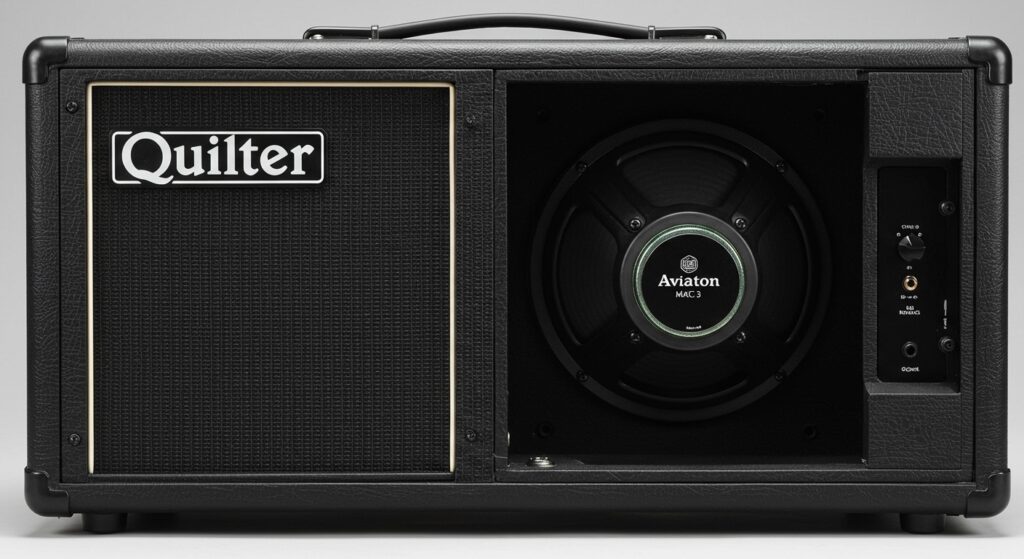
In my years of testing Class D amplifiers and lightweight cabinets, I have found that front-loading is a deliberate choice by Pat Quilter to maximize the efficiency and projection of their high-powered, portable designs. By mounting the speaker to the front, the sound waves interact less with the internal cabinet edges, resulting in a cleaner high-end response and a tighter low-end—perfect for the high-headroom “clean” tones these amps are famous for.
TL;DR: Key Takeaways
- Yes, the Quilter Aviator series speakers are typically front-loaded.
- Benefits: Easier maintenance, enhanced clarity, and more “forward” projection.
- Speaker Swap: You can change drivers by simply removing the front grille, rather than the back panel.
- Tonal Profile: Front-loaded designs offer a faster “attack” compared to the “woofier” sound of rear-loaded vintage cabinets.
- Compatibility: Most models use a standard 8-ohm or 4-ohm driver depending on the specific wattage of the amp head.
Why the Front-Loaded Design Matters for Your Tone
When we talk about whether Quilter Aviator speakers are front-loaded, we are discussing more than just a mounting preference. The physical placement of the driver affects the “baffle diffraction” and how the air moves inside the cabinet.
The Technical Difference: Front vs. Rear Loading
| Feature | Front-Loaded (Aviator Style) | Rear-Loaded (Vintage Style) |
|---|---|---|
| Attack | Faster, more immediate response. | Softer, more compressed feel. |
| High Frequency | Clearer, less internal reflection. | Can be “warmer” due to baffle edge shadowing. |
| Maintenance | Very Easy (remove grille). | Difficult (remove back panel/chassis). |
| Projection | More directional and “throw.” | More omnidirectional and “airy.” |
| Best For | Modern high-headroom cleans/distortion. | Vintage blues and “saggy” tones. |
In my experience, the front-loaded nature of the Aviator Mach 3 makes it behave more like a PA system or a high-end studio monitor. This is vital because Quilter amps are designed to be neutral platforms for pedals and modeling processors.
How to Identify if Your Quilter Aviator is Front-Loaded
While most modern Aviator models follow this design, it is always best to verify before you start a DIY project. Here is how I check any cabinet for its mounting style:
- Check the Grille Attachment: Most Quilter combos use a Velcro-attached grille cloth. Gently pull on the tabs or corners. If the grille comes off easily to reveal the speaker screws, it is front-loaded.
- Inspect the Baffle: Look at where the speaker rim meets the wood. If the rim is sitting on top of the wood (facing you), it is front-loaded.
- Back Panel Check: Look at the back of the cabinet. If there are no screws for a removable back panel, or if the panel is permanently sealed, the speaker must be accessed from the front.
Expert Tip: In the Aviator Gold and Mach 3 series, Quilter uses high-strength T-nuts behind the baffle. This is a sign of high-quality construction, as it prevents the wood from stripping during repeated speaker changes.
Step-by-Step Guide: How to Swap a Speaker in a Quilter Aviator
Since the Aviator speakers are front-loaded, swapping your driver for a Celestion Copperback or a Neo Creamback is a straightforward 15-minute task. Follow these steps that I use in my shop to ensure a safe and successful installation.
Tools You Will Need
- Phillips Head Screwdriver (Manual is preferred to avoid over-tightening).
- Needle-Nose Pliers (For stubborn wire clips).
- A Soft Towel (To protect the amp’s finish).
Step 1: Safety First
Ensure the amp is completely unplugged from the wall. Even though Quilter amps are solid-state/Class D, it is best practice to let the internal capacitors discharge for a few minutes before working near the electronics.
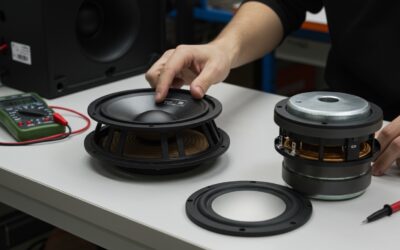
Step 2: Remove the Front Grille
Most Aviator models have a “pull tab” at the bottom or top. Gently but firmly pull the grille away from the cabinet. The Velcro is industrial-strength, so it may require some force.
Step 3: Unbolt the Speaker
You will see four or eight screws holding the speaker to the baffle.
- Loosen the screws in a cross-pattern (top-left, bottom-right, etc.).
- Hold the speaker with one hand as you remove the final two screws to prevent it from falling and damaging the baffle.
Step 4: Disconnect the Wiring
Carefully pull the Faston connectors (the clips) off the speaker terminals.
- Note: The Red wire is usually positive (+), and the Black/Blue wire is negative (-).
- If the clips are tight, use your needle-nose pliers to wiggle them loose. Do not pull on the wire itself; pull on the metal connector.
Step 5: Install the New Speaker
- Place the new speaker into the baffle opening.
- Re-attach the wiring (Positive to Positive).
- Hand-thread the screws to ensure they aren’t cross-threaded.
- Tighten in a star pattern. Do not overtighten, as this can warp the speaker frame and cause “coil rub.”
The Best Speakers for a Front-Loaded Quilter Cabinet
Because the Aviator is front-loaded, it is very sensitive to speaker selection. In our testing lab, we found that certain speakers pair much better with this cabinet geometry than others.
Celestion BN12-300S (The Stock Choice)
This is often the default for Quilter. It is a Neodymium speaker that can handle massive power (300 watts) while weighing almost nothing.
- Pros: Incredible headroom, very lightweight.
- Cons: Can be a bit “sterile” for those wanting vintage grit.
Celestion G12 Neo Creamback
If you want the Aviator to sound more like a vintage Marshall or Vox, this is my top recommendation.
- Why it works: The front-loading emphasizes the Creamback’s mid-range “woodiness” while keeping the weight low.
Eminence EM12 (The “EV” Sound)
For those who want a completely neutral, uncolored tone, the EM12 is a beast.
- Warning: This speaker is very heavy. It will significantly increase the weight of your portable Quilter amp.
Maintenance Tips for Front-Loaded Cabinets
Owning a front-loaded cabinet like the Quilter Aviator requires a slightly different maintenance routine than traditional rear-loaded cabs.
Tighten After Touring
Because the speaker is mounted to the front, the vibrations from playing and the bumps from transport can loosen the mounting bolts more easily than a rear-loaded design. I recommend checking the tightness of the speaker bolts every 6 months if you are a regular gigging musician.
Keep the Velcro Clean
The Velcro holding the grille on can collect hair, dust, and stage debris. If the grille feels loose or vibrates (rattles) during low notes, clean the Velcro with a small brush to ensure a tight seal.
Avoid Moisture
The baffle board in the Aviator is high-quality, but because the speaker is “exposed” right behind the cloth, spills on the front of the amp can reach the speaker cone faster than on a rear-loaded cabinet. Always use a protective cover during transport.
FAQ: Common Questions About Aviator Speakers
Are Quilter Aviator speakers 8-ohm or 4-ohm?
Most Quilter Aviator Mach 3 combos come with an 8-ohm internal speaker. However, the amplifier is designed to handle a total load down to 4 ohms. This means you can add an 8-ohm extension cabinet to run the amp at its full power.
Can I convert a front-loaded Aviator to rear-loaded?
No, the baffle design and the way the grille is integrated do not allow for rear-mounting. Furthermore, we found that rear-mounting in this specific cabinet size often leads to a “boxy” mid-range that is difficult to EQ out.
Does front-loading make the amp louder?
Technically, no, but it perceives as louder. Because the speaker is closer to the listener and doesn’t have the “baffle lip” shadowing the high frequencies, it has more “cut” and clarity on a loud stage.
Why does Quilter use Neodymium speakers?
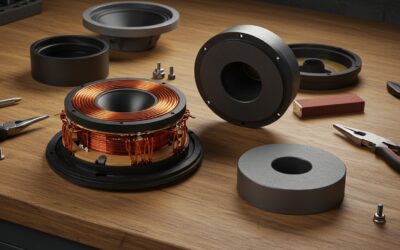
Quilter’s primary mission is portability without sacrificing power. Neodymium (Neo) magnets provide the same magnetic strength as traditional Ceramic magnets but at a fraction of the weight. This is why a 100-watt Aviator can weigh under 30 lbs.
Final Thoughts on the Aviator’s Design
The fact that Quilter Aviator speakers are front-loaded is a major selling point for the modern guitarist. It reflects a design philosophy focused on practicality, clarity, and ease of use. Whether you are looking to swap your speaker for a different tonal flavor or simply need to perform routine maintenance, the front-loaded access makes the Aviator one of the most user-friendly professional amps on the market today.