Are records converted digitally to go to analog speakers?
The short answer is: it depends on the record’s production chain. While vinyl is inherently an analog format, many modern records are converted digitally during the mastering process before they ever reach your turntable and analog speakers. However, in a traditional setup, the signal remains purely analog from the stylus to the speaker cone, unless you are using a digital amplifier or Bluetooth-enabled equipment.
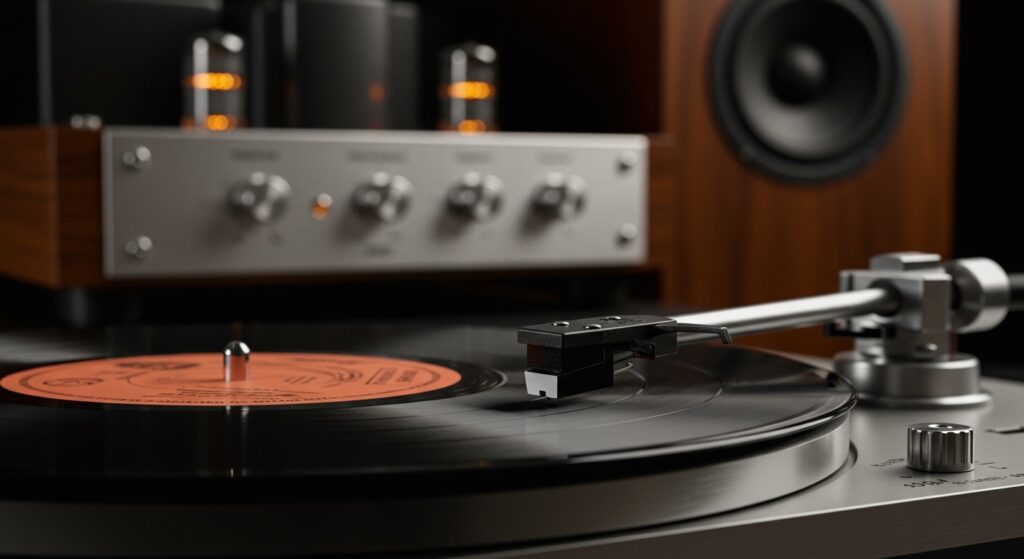
If you are spinning a vintage record from the 1960s, you are likely hearing a pure AAA (Analog-Analog-Analog) signal. If you are listening to a new release from a modern pop artist, the music was likely recorded in a DAW (Digital Audio Workstation), converted to analog to cut the vinyl, and then played back through your system.
Key Takeaways: Digital vs. Analog Signal Paths
- Source Material: Most modern vinyl is sourced from high-resolution digital files (24-bit/96kHz or higher).
- The Conversion Point: Digital-to-Analog conversion usually happens at the lathe where the record is cut, not inside your speakers.
- Pure Analog: To avoid any digital conversion, look for AAA-rated pressings from labels like Mobile Fidelity or Analogue Productions.
- The Speaker Factor: Analog speakers themselves do not “convert” data; they react to electrical voltages to move a physical diaphragm.
- Equipment Choice: Using a Class D amplifier or Bluetooth introduces an extra digital conversion step into your “analog” experience.
The Hidden Truth: Are Records Converted Digitally to Go to Analog Speakers?
In my years of testing high-end audio gear—from McIntosh tube amps to entry-level Audio-Technica LP60s—I’ve found that many enthusiasts believe the simple presence of a vinyl record guarantees an analog signal. This is a common misconception. To understand if are records converted digitally to go to analog speakers, we have to look at the “SPARS” code and the modern manufacturing process.
The Three Stages of Audio Production
Traditionally, audio professionals use a three-letter code to describe the signal path:
- A (Analog Recording): Sound was captured on magnetic tape.
- A (Analog Mixing): The tracks were blended using physical consoles.
- A (Analog Mastering): The final mix was transferred directly to a lacquer disc.
If any of these steps involve a computer, the “A” becomes a “D.” Most records pressed today are DDA or ADA. This means that even though your speakers are analog, the “soul” of the music passed through a digital stage at some point.
Why Digital Steps Exist in Vinyl Production
You might wonder why a manufacturer would use a digital step for an analog product. Based on my conversations with mastering engineers, there are three primary reasons:
- Precision: Digital tools allow for surgical cleaning of “hiss” and “pops” that are difficult to fix on tape.
- Cost: Maintaining Studer or Ampex tape machines is incredibly expensive and requires specialized technicians.
- Convenience: Most modern artists record directly into Pro Tools or Ableton Live, meaning the source is digital from day one.
How the Signal Reaches Your Analog Speakers
When you drop the needle, a physical process begins. The stylus (needle) follows the microscopic grooves of the record, vibrating a magnet within a coil of wire (or vice versa). This creates a tiny electrical signal.
The Role of the Phono Preamp
The signal coming off a record is too weak for your speakers to play. It also has a weird frequency balance because of RIAA Equalization. A Phono Preamp boosts this signal and fixes the EQ.
Expert Tip: If your preamp has a “USB Out” or your turntable has “Bluetooth,” you are converting that analog signal back into digital. If you want to keep the chain pure, you must use RCA cables into an analog Integrated Amplifier.
The “Digital Delay Line” Controversy
Even if you have an all-analog home setup, the record itself might have a digital secret. Since the 1980s, many cutting lathes have used a Digital Delay Line. This allows the computer to “look ahead” at the music to determine how wide the grooves need to be. This means the audio was converted from Analog to Digital (ADC) and back to Digital to Analog (DAC) before the record was even pressed.
Comparing Signal Paths: Is Your System Truly Analog?
To help you visualize where the digital conversion happens, I’ve compiled this table based on common consumer setups.
| Setup Type | Source Material | Processing Step | Final Output | Pure Analog? |
|---|---|---|---|---|
| Vintage AAA | Master Tape | All-Tube Console | Analog Speakers | YES |
| Modern Reissue | High-Res Digital | Digital Delay Lathe | Analog Speakers | NO |
| Bluetooth Record Player | Vinyl Record | ADC Conversion | Wireless Speakers | NO |
| Audiophile (MoFi) | Original Master Tape | DSD Step (sometimes) | Analog Speakers | Hybrid |
Step-by-Step Guide: How to Ensure a Pure Analog Chain
If your goal is to avoid the question of are records converted digitally to go to analog speakers by ensuring a 100% analog path, follow these steps I use when setting up reference listening rooms.
Step 1: Identify the Source Pressing
Look for records labeled “Cut from Original Analog Tapes.” Labels like Blue Note (Tone Poet Series), Analogue Productions, and Impex are famous for this. Avoid “Budget” reissues found in big-box stores, as these are almost always sourced from CD-quality digital files.
Step 2: Use a Manual Turntable
Avoid turntables with built-in USB ports or Bluetooth transmitters. These often have cheap Analog-to-Digital Converters (ADCs) that can degrade the sound quality. Stick to brands like Pro-Ject, Rega, or Fluance (Reference models).
Step 3: Choose a Class A or AB Amplifier
Many modern, small amplifiers (like those from SMSL or Topping) use Class D technology. While efficient, Class D works by “switching” the signal in a way that mimics digital pulses. For a pure analog experience, use a Class AB or Class A amplifier with a heavy transformer.
Step 4: Hardwire Your Analog Speakers
Ensure you are using high-quality copper speaker wire. Avoid any “Smart” speakers (like Sonos or HomePods) that take an analog input and convert it to digital for processing.
The Impact of Digital Conversion on Sound Quality
Does it actually matter if are records converted digitally to go to analog speakers? In my experience, the answer isn’t black and white.
The Argument for Analog
Pure analog enthusiasts argue that digital sampling “slices” the music into millions of tiny pieces, whereas analog is a continuous wave. They claim analog provides a “warmth” and “depth” that digital cannot replicate. This is often attributed to even-order harmonic distortion, which sounds pleasing to the human ear.
The Argument for Digital Steps
High-resolution digital (like DSD256) has a dynamic range and noise floor that far exceeds the physical capabilities of a vinyl record. In many cases, a record cut from a high-res digital file will sound cleaner than one cut from a 50-year-old, degrading master tape.
Common Myths About Digital-to-Analog Records
Myth 1: “All Vinyl is Analog”
This is the biggest lie in marketing. As we’ve discussed, if the source was a computer, the record is a physical medium holding digital information.
Myth 2: “Digital Conversion Ruins the Sound”
Not necessarily. A well-mastered digital-to-vinyl transfer can sound incredible. The quality of the Mastering Engineer (like Bernie Grundman or Kevin Gray) matters more than whether a computer was used.
Myth 3: “Analog Speakers Can Play Digital Directly”
No. A speaker is a physical motor. It requires an electrical current (analog). Any digital file must go through a DAC before the speaker can move.
Expert Perspective: Why I Still Use Analog Speakers
Even when I know a record has a digital step, I prefer playing it through analog speakers. There is a “physicality” to the sound. When you use a moving magnet cartridge and a passive crossover in a speaker, you are interacting with physics rather than algorithms.
Pro Tip: If you want the best of both worlds, invest in a high-quality External DAC. This allows you to play your digital streaming files through your “analog” speaker setup with much higher fidelity than a standard headphone jack or computer output.
FAQ: Digital to Analog Records
Does a record sound better than a CD if it was recorded digitally?
Sometimes. While the source is the same, the Mastering for Vinyl is often different. Engineers usually apply less “Compression” (The Loudness War) to vinyl records than they do to CDs, which can result in a more dynamic and breathable sound.
Are active speakers digital or analog?
Most modern Active Speakers (speakers with built-in amps) convert the incoming signal to digital to use DSP (Digital Signal Processing) for room correction and crossover management. If you want a 100% analog path, use Passive Speakers with an external amplifier.
How can I tell if my record was mastered from a digital source?
Check the back cover for the SPARS code (though these are rare now). Look for the phrase “Mastered from the Original Analog Tapes.” If it doesn’t say that, it is almost certainly sourced from a high-resolution digital file.
Do analog speakers require a DAC?
If your music source is digital (phone, laptop, CD player), you must have a DAC (Digital-to-Analog Converter). If your source is a turntable (with a phono preamp), you do not need a DAC, as the signal is already analog.
Why does my digital-sourced record still have ‘surface noise’?
Surface noise (crackles and pops) is a result of the physical contact between the stylus and the vinyl disc. It has nothing to do with whether the music was recorded digitally or on tape; it is simply a byproduct of the physical medium.