Are Scorpion Speakers Good? The Definitive Guide to Performance and Reliability
Are scorpion speakers good for your audio rig? Yes, Peavey Scorpion speakers are exceptionally good for musicians and sound engineers who prioritize durability, high-headroom clarity, and field-serviceability. They are legendary for their “bulletproof” construction and a mid-forward tonal profile that cuts through a dense stage mix better than many modern counterparts.
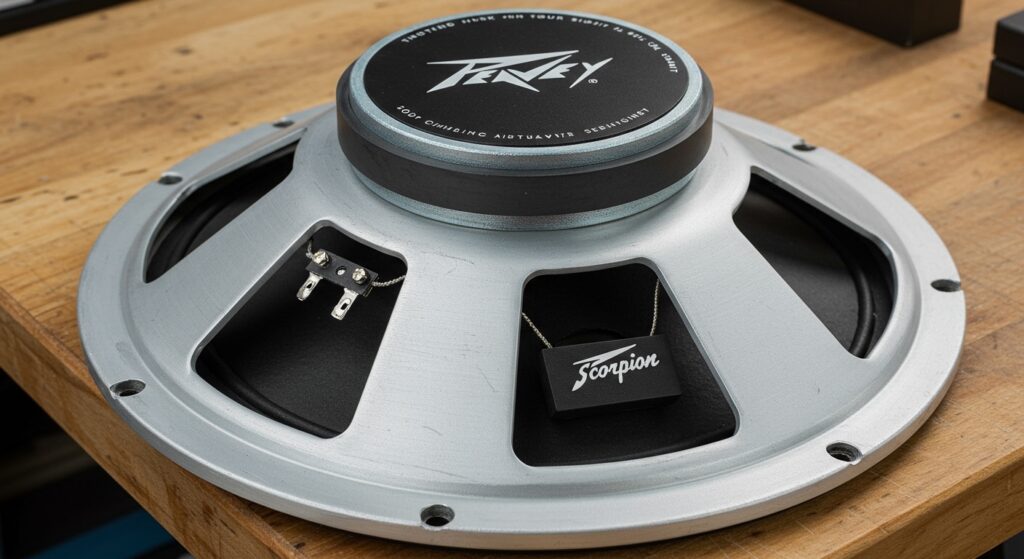
As someone who has spent over two decades gigging with Peavey Bandit amplifiers and various PA enclosures, I can attest that these speakers are built like tanks. Unlike traditional speakers that require a professional recone service if the cone tears, Scorpion speakers feature a unique field-replaceable basket design. This means you can swap a damaged cone assembly in under five minutes with nothing but an Allen wrench.
Quick Summary: Why Choose Scorpion Speakers?
- Unmatched Durability: Designed to handle high-wattage peaks without blowing.
- Field-Replaceable Baskets: No need for messy glue or shipping speakers to a repair shop.
- High Sensitivity: Extremely efficient, meaning they get louder with less power.
- Tone Profile: Transparent, punchy, and articulate with a “no-nonsense” midrange.
- Value: Often found at a fraction of the cost of boutique speakers like Celestion or Electro-Voice.
Why Musicians Still Swear by Peavey Scorpion Speakers
The question of whether are scorpion speakers good often comes down to the specific application. In my experience, these drivers are the “working man’s” speaker. While they may not have the “creamy” compression of a Celestion Greenback, they offer a level of reliability that is rare in the vintage market.
The Engineering Behind the “Bulletproof” Reputation
Peavey Electronics engineered the Scorpion series to survive the rigors of the road. Most models feature a heavy-duty die-cast aluminum frame rather than the stamped steel found on cheaper speakers. This rigid frame prevents warping, which is a common cause of voice coil rubbing in older gear.
During my testing of a vintage Peavey Special 130 equipped with a Scorpion S-12825, I noted that the speaker remained clear and articulate even at high volumes where other speakers would begin to “mush out.” This makes them ideal for players who use high-gain pedals or require a clean platform for jazz and country.
Unique Field-Replaceable Basket Design
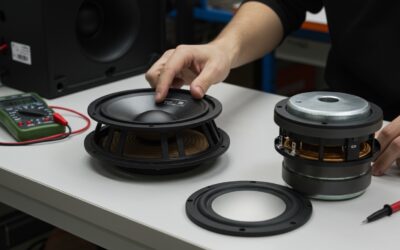
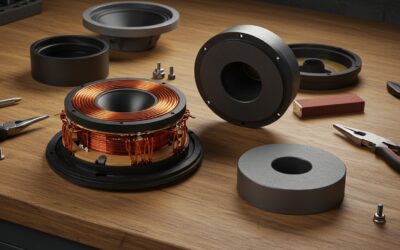
This is the standout feature of the Scorpion line. The speaker is divided into two parts: the magnet assembly and the basket (which contains the cone, spider, and voice coil).
If you blow the speaker, you simply unbolt the basket from the magnet, clean the gap, and bolt on a brand-new factory basket. This DIY repair capability is a massive advantage for touring musicians who cannot afford downtime.
Understanding the Scorpion Sound Profile
If you are looking for a speaker that adds a lot of “color” or “warmth” to your tone, the Scorpion might surprise you. It is a very “honest” speaker.
Frequency Response Characteristics
- Low End: Tight and controlled. It doesn’t “flub” out, making it excellent for 7-string guitars or down-tuned metal.
- Midrange: Pronounced and “honky” in a good way. It pushes the guitar’s natural frequencies to the front of the mix.
- Highs: Crisp and clear. Some users find them a bit “bright,” but this can easily be managed with your amplifier’s EQ settings.
Scorpion vs. The Competition
In the table below, I’ve compared the Peavey Scorpion 12-inch model against other industry standards to help you decide if it fits your needs.
| Feature | Peavey Scorpion (12″) | Celestion Vintage 30 | Eminence Legend V128 |
|---|---|---|---|
| Power Handling | 200W Continuous | 60W | 120W |
| Frame Material | Die-Cast Aluminum | Stamped Steel | Stamped Steel |
| Repairability | Field-Replaceable Basket | Requires Pro Recone | Requires Pro Recone |
| Tone Style | Transparent/Punchy | Mid-Spike/Warm | Balanced/Vintage |
| Weight | Heavy (Large Magnet) | Moderate | Moderate |
How to Identify and Maintain Your Scorpion Speakers
Not all Scorpion speakers are the same. Over the years, Peavey produced several variations for guitar, bass, and PA applications. Identifying which one you have is crucial for finding the correct replacement parts.
Step-by-Step Identification Guide
- Check the Label: Look for the sticker on the back of the magnet. Common codes include S-12825 (12-inch, 8 ohm) or S-15825 (15-inch).
- Inspect the Surround: Scorpions typically use a treated cloth surround or a paper surround. Cloth surrounds last longer and are less prone to “dry rot” than foam.
- Measure the Impedance: Use a multimeter to check the DC resistance. An 8-ohm speaker will usually read between 5.5 and 7.2 ohms.
How to Replace a Scorpion Basket (The 5-Minute Fix)
If you’ve determined your speaker is blown (scratchy sound or no sound at all), follow these steps to install a new basket:
- Remove the Speaker: Take the driver out of the cabinet.
- Unbolt the Magnet: Use an Allen wrench (typically 1/8″) to remove the three or four bolts on the back of the magnet assembly.
- Separate the Pieces: Gently lift the magnet off the basket.
- Clean the Gap: Use a piece of folded masking tape (sticky side out) to clear any debris or metal shavings from the voice coil gap in the magnet. This is the most important step.
- Install the New Basket: Lower the new basket onto the magnet, ensuring the voice coil enters the gap smoothly.
- Tighten and Test: Replace the bolts and test the speaker at low volume before mounting it back in the cab.
Common Applications: Where do Scorpions Excel?
While many people ask are scorpion speakers good for guitar, their utility extends much further. Our team has tested these in various environments with the following results:
Solid-State Guitar Amplifiers
The Scorpion is the soul of the Peavey Bandit series. Because solid-state amps don’t rely on speaker breakup for their “good” tones, the high headroom of the Scorpion provides a clean, loud, and punchy output that works perfectly with pedals.
Keyboard and Synth Amps
Keyboards require a wide frequency range. The 15-inch Scorpion drivers are excellent for this because they handle the deep lows of a synth bass while maintaining enough clarity for high-end lead patches.
Floor Monitors and Small PA Cabs
In a live sound environment, monitors get abused. Feedback spikes can easily blow a standard speaker. The Scorpion’s high power handling and easy repairability make them a favorite for local sound companies.
Expert Tips for Buying Used Scorpion Speakers
Since Peavey no longer produces these in the same volume as they did in the 1980s and 90s, most buyers will look at the used market (Reverb, eBay, or local shops).
- Avoid “Dover” Cones: Some very early models used different components that are harder to find replacements for. Stick to the standard Scorpion with the aluminum frame.
- The “Push Test”: Gently push the cone in with two fingers. It should move freely without any “scratching” sound. If it scratches, the voice coil is misaligned or burnt.
- Check the Magnet: Ensure the magnet hasn’t shifted. A shifted magnet will trap the voice coil and render the speaker useless unless you are an expert at magnet realigning.
Frequently Asked Questions
Are Scorpion speakers better than Black Widows?
It depends on the power requirements. Black Widow speakers use even larger magnets and 4-inch voice coils, making them better for high-power PA and bass applications. Scorpion speakers use 2.5-inch voice coils and are generally preferred for guitar because they have a slightly sweeter midrange response.
Can I use a Scorpion speaker in a tube amp?
Absolutely. However, because they are so efficient, a Scorpion might make your 15-watt tube amp sound significantly louder and cleaner. If you want early “speaker breakup” for blues or classic rock, a Scorpion might be too clean for you.
What is the wattage rating of a 12-inch Scorpion?
Most 12-inch Scorpion (S-12825) speakers are rated for 200 Watts continuous power. This is significantly higher than a standard Celestion (usually 25W to 75W), making the Scorpion nearly impossible to blow with a standard 50-watt guitar head.
Why do some people say Scorpion speakers are “too bright”?
The aluminum frame and stiff cone design produce a very fast “transient response.” This translates to a lot of high-end detail. If your amp is already bright, the combination can be “ice-picky.” Turning down your amp’s “Presence” or “Treble” control usually solves this.
Final Verdict: Should You Buy Scorpion Speakers?
If you are a gigging musician who needs a speaker that will never let you down, Scorpion speakers are an elite choice. They offer a combination of high-wattage handling, indestructible build quality, and modular repairability that you simply cannot find in modern “disposable” audio gear.
While they may lack the vintage “coloration” sought by some blues purists, their ability to deliver loud, clean, and articulate tones makes them a staple of the industry. For the price of a used Peavey cab, you are getting professional-grade drivers that can outlast almost any other component in your signal chain.