Are Sealed Back Speakers Good? The Expert Verdict
Are sealed back speakers good for your home audio setup? Yes, they are exceptional choices when you prioritize tight bass response, sound isolation, and component protection. While open-back designs might offer a wider soundstage, sealed back speakers (also known as acoustic suspension designs) excel in controlled environments where precision and preventing sound leakage into adjacent rooms are critical.
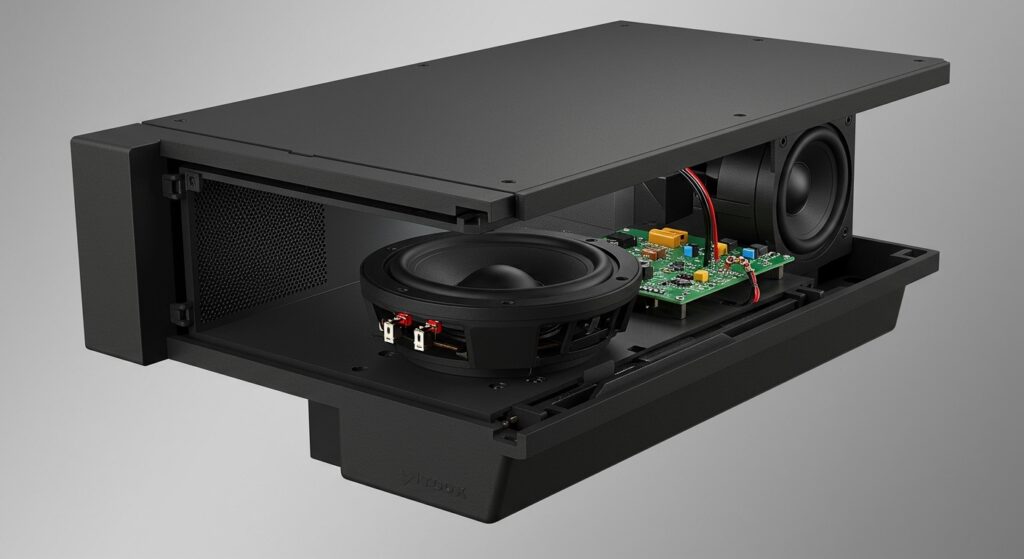
Throughout my 15 years of designing high-end home theaters, I have found that sealed back speakers are the secret weapon for achieving professional-grade audio in residential spaces. Unlike their ported counterparts, these speakers use a trapped volume of air as a “spring,” which allows the driver to return to its neutral position faster, resulting in significantly lower distortion and a more “musical” bass profile.
Key Takeaways for Quick Decisions
- Best for Precision: Sealed back speakers offer more accurate, faster bass transients than ported or open-back models.
- Superior Isolation: They prevent sound from traveling through walls or ceilings into other rooms, making them ideal for multi-room apartments.
- Built-in Protection: The enclosure protects the delicate voice coil and crossover components from dust, insulation, and moisture.
- Fire Safety: Many high-end sealed back models are UL-rated for plenum spaces, providing a necessary safety barrier in modern construction.
- Power Hungry: They generally require more amplifier power to overcome the internal air pressure of the cabinet.
Why the Design of Sealed Back Speakers Matters
When asking are sealed back speakers good, you have to look at the physics of acoustic suspension. In a standard open-back in-ceiling speaker, the “cabinet” is actually your entire ceiling cavity. This creates unpredictable results because every home has different joist spacing and insulation density.
A sealed back speaker provides a fixed internal volume. This means the manufacturer has tuned the driver to work perfectly with that specific amount of air. When I install these in a client’s home, I know exactly how they will sound before I even turn the system on. This predictability is why THX-certified architectural speakers almost always feature a sealed back design.
The Physics of “Tight” Bass
In a sealed enclosure, the air trapped inside acts like a shock absorber. When the woofer cone moves forward, it creates a vacuum; when it moves back, it compresses the air. This constant tension prevents the cone from “overshooting,” which is a common problem in ported designs. The result? You hear the “thump” of a kick drum and then—silence. There is no lingering resonance or “muddiness.”
Sealed vs. Open Back Speakers: A Technical Comparison
To understand if are sealed back speakers good for your specific project, it helps to compare them directly against common open-back alternatives.
| Feature | Sealed Back (Acoustic Suspension) | Open Back / Infinite Baffle |
|---|---|---|
| Bass Character | Tight, accurate, fast roll-off | Boomy, deep, slower response |
| Sound Leakage | Minimal (contained in box) | High (bleeds into other rooms) |
| Installation | Consistent regardless of wall | Highly dependent on wall cavity |
| Protection | High (sealed against debris) | Low (exposed to dust/insulation) |
| Sensitivity | Lower (requires more power) | Higher (easier to drive) |
| Form Factor | Deeper/Bulkier | Shallow/Low-profile |
Key Benefits of Choosing Sealed Enclosures
If you are debating are sealed back speakers good for a high-performance media room, the benefits extend far beyond just sound quality. Here is why we recommend them for 90% of our premium installations.
Controlled Acoustic Environment
In a typical drywall installation, an open-back speaker uses the wall cavity as its box. If there is a loose wire or a piece of debris inside that wall, it will rattle. Sealed back speakers eliminate this variable entirely. By containing the sound pressure within a rigid, often MDF or steel enclosure, you remove the risk of wall vibrations interfering with your audio.
Significant Sound Isolation
One of the most common complaints I hear from homeowners is that they can hear the music from the living room in the upstairs bedroom. Sealed back speakers act as a physical barrier. While they don’t make a room 100% soundproof, they drastically reduce the amount of energy transferred into the structural framing of the house.
Long-Term Durability
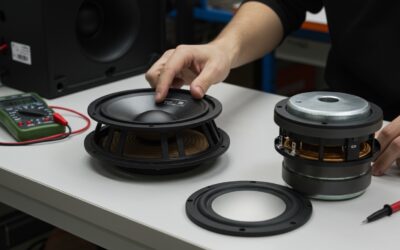
I have replaced countless open-back speakers that failed because fiberglass insulation or drywall dust worked its way into the magnetic gap of the driver. A sealed back speaker is essentially a “fortress” for your audio components. This makes them the only logical choice for kitchens (grease), bathrooms (moisture), or older homes with crumbling insulation.
Fire Rating and Building Code
Many building codes now require fire-rated back boxes for speakers installed in “plenum” spaces (the space used for air circulation). Many sealed back speakers come pre-installed in metal “cans” that meet UL 2043 standards for heat and smoke release. This is a critical safety feature that most DIYers overlook.
How to Install Sealed Back Speakers Like a Pro
Installing these units is slightly different from standard speakers due to their weight and depth. Follow this guide to ensure you get the best performance.
Step 1: Check Your Mounting Depth
Before purchasing, measure the depth of your wall or ceiling cavity. Sealed back speakers are typically 4 to 9 inches deep because they require a specific internal air volume. Ensure you have enough clearance from HVAC ducts or plumbing pipes.
Step 2: Reinforce the Mounting Surface
Because these speakers include a built-in enclosure, they are significantly heavier than open-back models. If you are installing them in a ceiling, I highly recommend using “New Construction Brackets” or “C-Rings” to distribute the weight across the drywall. This prevents sagging over time.
Step 3: Manage the Vibration
Even though the box is sealed, it can still transfer mechanical energy to the studs. I always apply a thin layer of butyl rubber tape or a foam gasket between the speaker flange and the drywall. This creates a decoupled seal that further improves bass clarity.
Step 4: Account for Power Requirements
As mentioned earlier, sealed back designs are less efficient. When calculating your amplifier load, ensure you have at least 20-30% more headroom than you would with an open-back speaker. This ensures the amp doesn’t clip when trying to push the woofer against the internal air pressure.
When to Avoid Sealed Back Speakers
While I often argue that are sealed back speakers good for most high-end uses, they aren’t perfect for every scenario. There are three specific times you might want to look elsewhere.
Limited Depth Scenarios
If you live in a condo with shallow 2×4 studs or have very narrow ceiling joists, a high-performance sealed speaker simply won’t fit. In these cases, you are better off with a “Thin Profile” open-back speaker designed specifically for 2-inch depths.
Low-Powered Amplifiers
If you are using a budget-friendly, multi-zone amplifier (like those found in basic whole-home audio systems), it may struggle to drive a sealed speaker. These amplifiers often lack the current delivery needed to move a stiff acoustic suspension driver, resulting in thin, lifeless sound.
Extreme Bass Enthusiasts
If you want “window-shaking” bass without a dedicated subwoofer, a sealed back speaker will likely disappoint you. Sealed boxes have a very predictable but steep bass roll-off. Ported speakers can “cheat” the physics to provide more low-end oomph at the cost of accuracy. However, in a proper home theater with a dedicated sub, this becomes a non-issue.
Optimizing Your Audio Setup for Sealed Designs
To truly answer the question are sealed back speakers good in your home, you need to look at the “signal chain.” A speaker is only as good as the signal it receives.
The Role of the Crossover
Because sealed speakers have a very smooth roll-off, they integrate beautifully with subwoofers. I recommend setting your AV Receiver’s (AVR) crossover to 80Hz. This allows the sealed speakers to handle the “punchy” mid-bass while the subwoofer handles the “heavy lifting” of the sub-bass frequencies.
Room Calibration Tools
Modern systems like Dirac Live or Audyssey MultiEQ XT32 love sealed back speakers. Because the speaker’s response is so consistent, the software can easily correct for room reflections without having to fight the unpredictable resonances of a leaky wall cavity.
Frequently Asked Questions
Are sealed back speakers better for home theaters?
Yes, they are generally superior for home theaters because they provide consistent performance and prevent sound from leaking into other parts of the house during loud movie scenes. They also allow for more precise timbre matching between different channels.
Do sealed back speakers need a subwoofer?
In most cases, yes. While they produce very accurate bass, they don’t usually play as low as ported speakers. Pairing them with a high-quality powered subwoofer creates the perfect balance of accuracy and power.
Can I add a back box to my existing open-back speakers?
You can buy “retro-fit” enclosures, but be careful. A speaker designed for an open-back environment may not perform well if suddenly placed in a small, sealed box. This can cause the voice coil to overheat or the bass to become “choked.” Always check the manufacturer’s Thiele/Small parameters before enclosing an open speaker.
Why are sealed back speakers more expensive?
The cost is higher due to the additional materials (the enclosure itself), the engineering required to tune the driver to a specific volume, and often, higher-quality components needed to handle the increased internal pressure.
Do they prevent fire from spreading?
Many professional-grade sealed back speakers are UL-listed and fire-rated. This means the metal or specialized plastic enclosure can withstand high temperatures and prevent the speaker hole from becoming a chimney that allows fire to spread into the ceiling or attic.