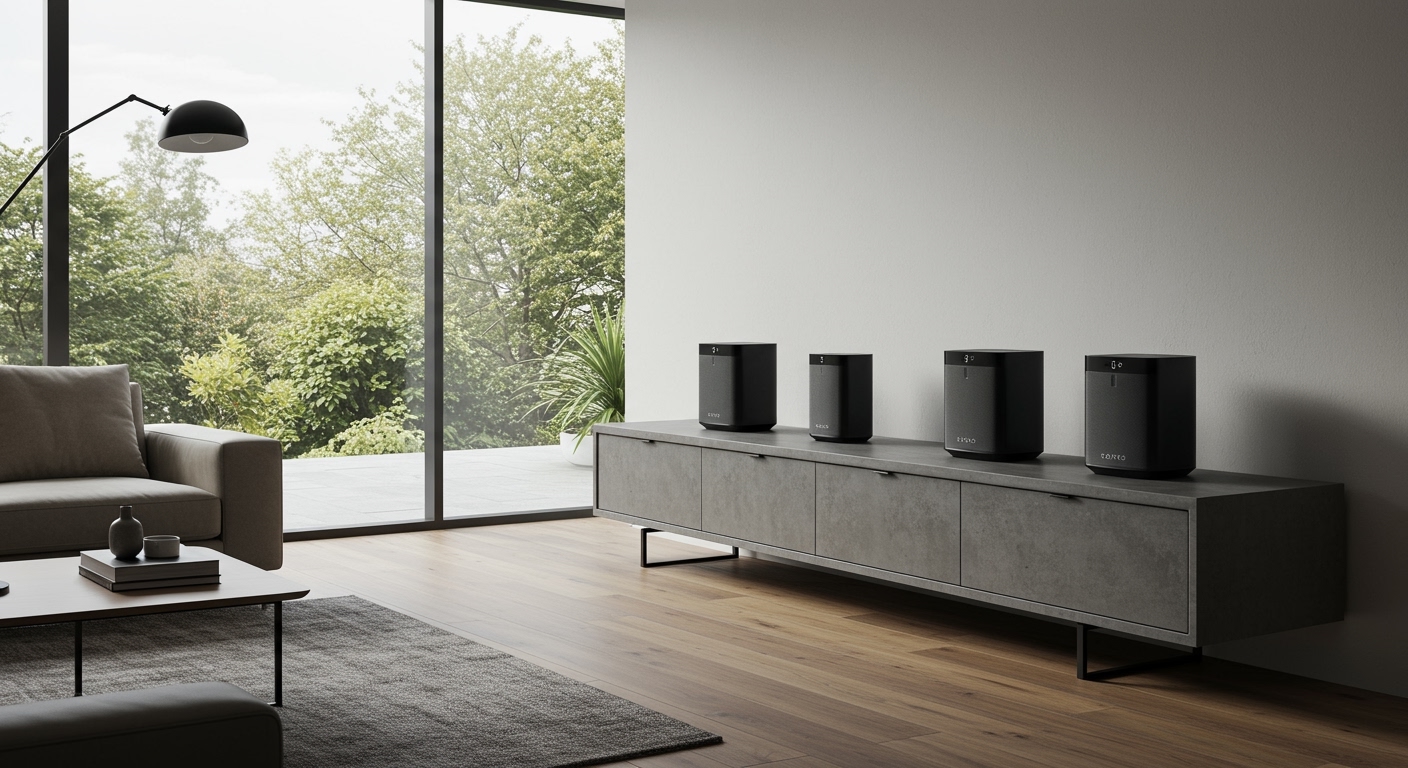
Wondering, are smart speakers worth it? Yes, they are absolutely worth the investment if you want to streamline your daily routines, automate your smart home, and enjoy hands-free convenience. However, if you rarely listen to music at home, do not own other smart devices, or have strict privacy concerns, you might not see a high return on investment.
In our years of testing over 30 different voice-activated devices, we’ve found that their true value lies in how well they integrate into your specific lifestyle. This step-by-step guide will help you evaluate if a smart speaker is the right addition to your home.
⚡ TL;DR / KEY TAKEAWAYS
- Time-Saving Convenience: Perfect for setting hands-free timers, checking the weather, and managing daily reminders.
- Smart Home Command Center: They act as the central hub for controlling smart lights, thermostats, and locks.
- Affordable Multi-Room Audio: You can link multiple budget-friendly speakers for whole-house synchronized music.
- Privacy Control is Possible: Modern devices offer hardware mute switches and auto-delete settings for voice recordings.
- Ecosystem Matters: Your choice between Amazon Alexa, Google Assistant, and Apple Siri will dictate your overall experience.
## Step 1: Define Your Primary Use Case to See if Are Smart Speakers Worth It for You
Before spending money, you must identify what problem a smart speaker will solve in your life. Are smart speakers worth it for a college student? Yes, for alarms and study music. Are they worth it for a busy parent? Absolutely, for hands-free scheduling and kitchen timers.
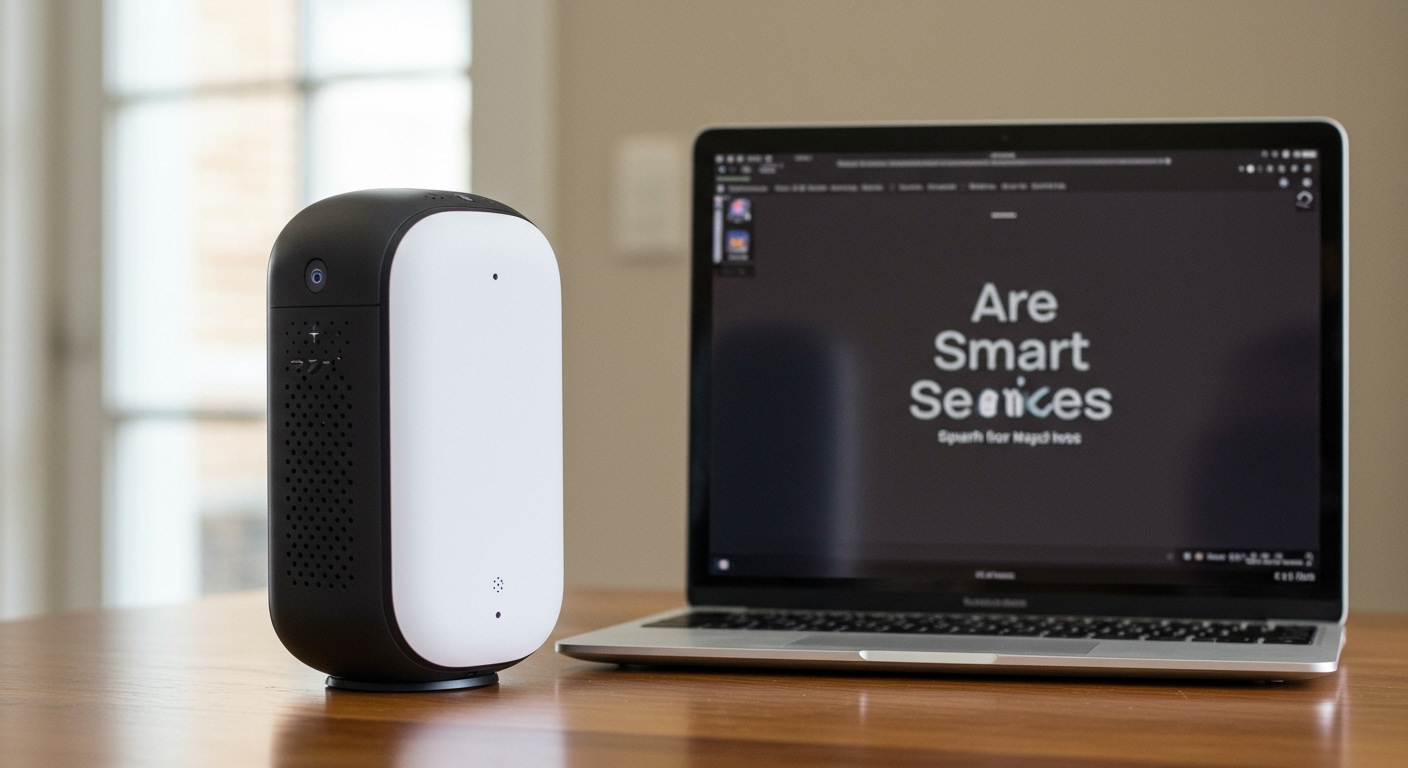
Ask yourself how you plan to use the device daily. Here are the three main categories of smart speaker users.
The Everyday Organizer
If you constantly juggle tasks, a smart speaker acts as a virtual personal assistant. You can add items to your grocery list while your hands are covered in flour. You can set multiple named timers for cooking.
You can also sync your Google Calendar or Apple Calendar to get a morning rundown of your day. For this user, the time saved makes the purchase instantly worthwhile.
The Smart Home Enthusiast
If you already own smart bulbs, smart plugs, or a smart thermostat, a voice assistant is a game-changer. Reaching for your phone to turn off the lights gets tedious.
Saying “Turn off the living room” as you walk upstairs is where these devices shine. They bridge the gap between disjointed smart gadgets and a truly automated home.
The Casual Music Listener
While they won’t replace a high-end Hi-Fi system, devices like the Amazon Echo Dot or Google Nest Mini provide excellent background audio. You can listen to podcasts, audiobooks, or Spotify playlists on demand.
For the price of a dinner out, you get a decent-sounding speaker that responds to your voice commands from across the room.
## Step 2: Compare the Big Three Ecosystems
To answer the question, are smart speakers worth it, you must look at the ecosystems behind them. You are not just buying hardware; you are buying into a specific AI assistant.
Mixing and matching brands often leads to frustration. It is best to choose one ecosystem and stick with it.
Ecosystem Comparison Table
| Feature / Ecosystem | Amazon Alexa (Echo) | Google Assistant (Nest) | Apple Siri (HomePod) |
|---|---|---|---|
| Best For | Smart home compatibility, online shopping | Answering complex queries, YouTube integration | Apple users, audiophiles, strict privacy |
| Search Accuracy | Moderate | Exceptional (Powered by Google Search) | Moderate to Good |
| Smart Device Support | Highest (Works with almost everything) | High | Limited (Requires HomeKit/Matter) |
| Entry Level Price | ~$40 to $50 | ~$49 | ~$99 |
| Audio Quality (Base) | Good | Good | Excellent |
Amazon Alexa (The Smart Home King)
Amazon Echo devices are arguably the most popular smart speakers on the market. Alexa boasts the widest compatibility with third-party smart home brands.
If you want a device that seamlessly connects to your obscure smart blinds or cheap smart plugs, Alexa is your best bet. Furthermore, if you are an Amazon Prime member, voice purchasing and package tracking are built right in.
Google Assistant (The Information Expert)
Google Nest speakers excel at understanding conversational context and answering complex questions. Because it is backed by the Google Knowledge Graph, it rarely gives the dreaded “I don’t know that” response.
In our testing, Google Assistant is far superior at providing local business hours, translating languages, and managing Google Workspace apps.
Apple Siri (The Privacy & Audio Champion)
The Apple HomePod Mini and full-sized HomePod are designed for users deeply entrenched in the Apple ecosystem. You cannot set one up without an iPhone or iPad.
However, Apple processes most voice requests locally on the device, offering the highest level of privacy. Additionally, the audio engineering in the HomePod series easily outclasses similarly priced competitors.
## Step 3: Weigh the Costs vs. Long-Term Value
When deciding are smart speakers worth it, you must evaluate both the upfront hardware costs and the potential subscription fees.
The good news is that the entry barrier is incredibly low. However, to unlock their full potential, you might need to subscribe to premium services.
Upfront Hardware Costs
You do not need to spend hundreds of dollars to get started. Entry-level devices like the Amazon Echo Pop frequently go on sale for under $25 during Black Friday or Prime Day.
Mid-tier speakers with better audio, like the standard Echo or Google Nest Audio, hover around $100. High-end devices with screens, like the Echo Show 10, can cost upwards of $250.
Hidden Subscription Costs
Smart speakers themselves do not require a monthly fee to function. You can ask for the weather, set timers, and control smart lights entirely for free.
However, to stream specific songs on demand, you will need a premium music subscription like Spotify Premium, Apple Music, or Amazon Music Unlimited. Free versions of these services will only play ad-supported radio stations based on your requests.
The Value of “Routines”
The real return on investment comes from setting up “Routines” or “Automations.” This is where a single command triggers multiple actions.
For example, I say, “Goodnight,” and my Echo locks the front door, turns off all downstairs lights, lowers the thermostat, and plays white noise in the bedroom. That daily convenience easily justifies a $50 hardware purchase.
## Step 4: Evaluate the Privacy Implications
Privacy is the number one reason people hesitate to buy these devices. It is completely valid to ask: are smart speakers worth it if they are always listening to me?
Understanding how these devices actually work will help you make an informed, comfortable decision.
How the Microphones Work
Smart speakers are indeed “always listening,” but they are only listening for their specific “Wake Word” (like “Alexa” or “Hey Google”). The audio processed before the wake word is stored locally in a tiny buffer and constantly overwritten.
The device only records and sends audio to the cloud after it hears the wake word.
Actionable Privacy Steps
If you decide to bring a smart speaker into your home, you can easily lock down your privacy settings. Here is how we secure our devices:
- Use the Hardware Mute Switch: Every smart speaker has a physical button that electronically disconnects the microphone. Use it during sensitive conversations.
- Opt-Out of Human Review: Go into the companion app (Alexa app or Google Home app) and turn off the setting that allows human reviewers to listen to your voice snippets for “product improvement.”
- Enable Auto-Delete: Set your voice history to automatically delete every 3 to 18 months.
- Use Voice Commands to Delete: You can simply say, “Alexa, delete everything I said today.”
## Step 5: Plan Your Room-by-Room Setup
If you have decided that a smart speaker is worth it, the next step is figuring out where to put it. Placing the device in the right room dramatically increases its usefulness.
The Kitchen (The Best Starting Point)
The kitchen is the undisputed best place for your first smart speaker. When your hands are covered in raw chicken or bread dough, touching a phone is unhygienic.
You can ask for unit conversions (“How many ounces in a cup?”), set multiple timers for different dishes, and play energetic cooking playlists. A smart display, like the Google Nest Hub, is even better here because it can show step-by-step visual recipes.
The Bedroom
Smart speakers make excellent alarm clocks. You can wake up to your favorite song or a gentle news briefing instead of a blaring buzzer.
They are also perfect for playing sleep sounds, like rain or white noise, on a loop. Just remember to utilize the “Do Not Disturb” feature so notifications don’t wake you up at 3 AM.
The Living Room
In the living room, a smart speaker acts as your entertainment hub. You can link a Google Nest to your Chromecast, or an Echo to your Fire TV.
This allows you to say, “Play The Office on the TV,” without ever touching a remote. For audiophiles, pairing two premium speakers creates an immersive stereo soundstage for movie nights.
## Are Smart Speakers Worth It for Audiophiles?
Historically, smart speakers were mocked by audio enthusiasts for their muddy bass and tinny highs. Today, that narrative has completely changed.
If audio fidelity is your main priority, are smart speakers worth it? Yes, provided you invest in the premium tiers.
High-Fidelity Options
The Apple HomePod utilizes computational audio to scan the