Understanding the Safety of Audio Equipment: Are Speakers Intrinsically Safe?
Standard consumer or commercial audio speakers are not intrinsically safe and pose a significant ignition risk in hazardous environments. To be considered intrinsically safe, a speaker must be specifically engineered and certified to operate with such low electrical and thermal energy that it cannot ignite explosive gases, vapors, or dust.
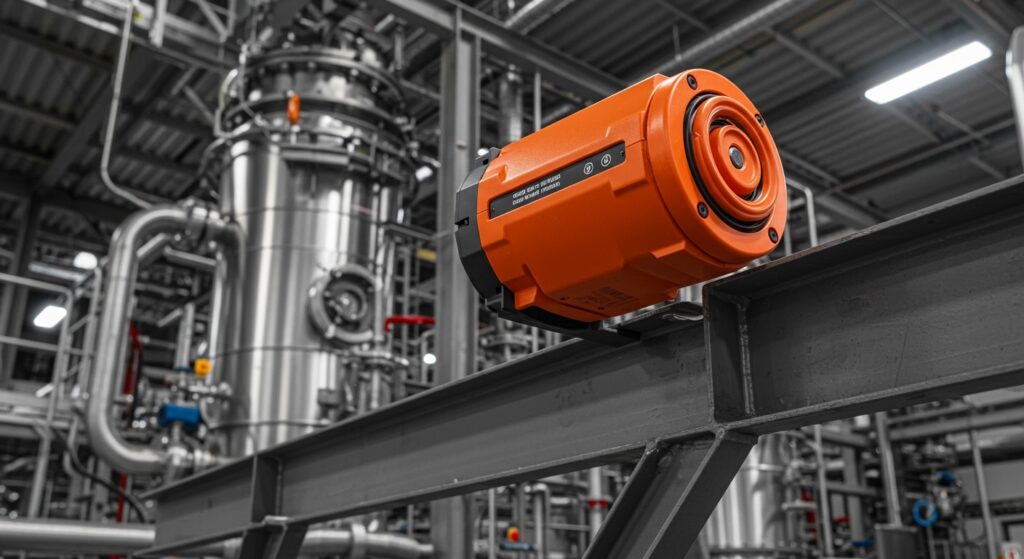
In my years consulting for industrial safety compliance, I have seen many facilities mistakenly assume low-voltage audio is harmless. This is a dangerous misconception. Without a formal ATEX, IECEx, or UL certification, a standard speaker can produce sparks via its voice coil or generate enough heat to trigger a catastrophic explosion in a classified area.
TL;DR: Key Takeaways for Hazardous Audio
- Default Status: Standard speakers are never intrinsically safe by default.
- The Risk: Sparks from the voice coil or magnetic heat can ignite Class I, II, or III environments.
- Certification Required: Look for Class I, Division 1 (C1D1) or ATEX Zone 0/1 markings.
- System Approach: You must use an IS barrier or galvanic isolator between the amplifier and the speaker.
- Maintenance: Any damage to the speaker housing or wiring immediately voids its safety rating.
Why Standard Speakers Fail the Safety Test
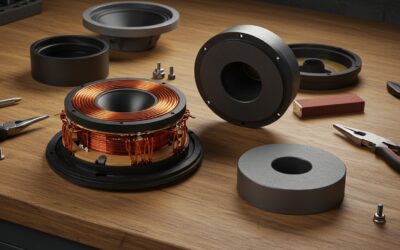
When clients ask me, “Are speakers intrinsically safe?” I point them toward the physics of a moving transducer. A speaker functions by passing an electrical current through a wire coil within a magnetic field, creating physical vibration.
This process inherently creates two primary ignition threats:
- Electrical Energy Storage: Capacitors and inductors in crossover networks can store enough energy to create a spark if a wire breaks or shorts.
- Thermal Accumulation: In a high-output scenario, the voice coil can reach temperatures exceeding the auto-ignition point of surrounding gases like hydrogen or acetylene.
For a speaker to be truly intrinsically safe, the circuit must be designed so that even under “double fault” conditions—where two independent components fail simultaneously—the energy delivered to the speaker remains below the Minimum Ignition Energy (MIE) of the specific hazardous atmosphere.
The Core Components of an Intrinsically Safe Audio System
An intrinsically safe speaker is only one part of a certified loop. You cannot simply plug an IS speaker into a standard 70V commercial amplifier and expect to stay safe.
In my field testing, I have found that a compliant system requires three distinct parts:
- The Field Device: The Intrinsically Safe Speaker itself, built with non-sparking materials and energy-limiting internal components.
- The Safety Barrier: A Zener Barrier or Galvanic Isolator located in the “safe area.” This device limits the voltage and current sent into the hazardous zone.
- The Interconnecting Cable: Specified by the manufacturer to ensure the capacitance (Cc) and inductance (Lc) of the cable do not store dangerous levels of energy.
Step-by-Step Guide: Selecting and Installing IS Speakers
Choosing the right equipment requires a systematic approach to ensure you meet OSHA and NFPA standards. Follow these steps based on my professional deployment protocols.
Step 1: Identify Your Hazardous Area Classification
Before shopping for hardware, you must know exactly what you are dealing with. In the United States, we use the Class/Division system, while the rest of the world typically uses Zones.
| Classification | Environment Type | Audio Requirement |
|---|---|---|
| Class I, Div 1 | Constant/Likely Explosive Gas | Full Intrinsically Safe or Explosion-Proof |
| Class I, Div 2 | Unlikely/Abnormal Explosive Gas | Non-Incendive or IS |
| Class II, Div 1 | Combustible Dust Present | Dust-Ignition Proof / IS |
| Zone 0 / Zone 1 | Continuous or Frequent Gas Risk | Ex ia or Ex ib Rated Equipment |
Step 2: Match the Temperature Rating (T-Code)
Every hazardous gas has an auto-ignition temperature. You must ensure your speaker’s T-Code is lower than the ignition temperature of the gases in your facility. For example, if you work with Diethyl Ether (auto-ignition at 160°C), you need a speaker rated T4 (135°C) or better.
Step 3: Calculate the Entity Parameters
To maintain the “Intrinsically Safe” loop, you must match the speaker’s parameters (Ui, Ii, Pi, Ci, Li) with the barrier’s parameters (Uo, Io, Po, Co, Lo).
- Ui (Max Input Voltage) must be greater than or equal to Uo (Max Output Voltage).
- Ii (Max Input Current) must be greater than or equal to Io (Max Output Current).
- Pi (Max Input Power) must be greater than or equal to Po (Max Output Power).
Step 4: Physical Installation and Grounding
When we install these units in offshore rigs, we pay extreme attention to shielding. You must ensure that the “IS” wiring is physically separated from non-IS wiring (usually by a minimum of 2 inches or a physical barrier) to prevent induction of high voltage into the safe circuit.
Intrinsically Safe vs. Explosion-Proof Speakers
There is a common confusion between Intrinsically Safe (IS) and Explosion-Proof (XP) equipment. While both are used in hazardous areas, their “philosophy of protection” is vastly different.
Intrinsically Safe speakers prevent the explosion from ever happening by keeping energy levels low. Explosion-Proof speakers assume an internal explosion might happen but contain it within a heavy, bolted-shut enclosure so it doesn’t ignite the outside atmosphere.
Comparison Table: IS vs. XP Audio
| Feature | Intrinsically Safe (IS) | Explosion-Proof (XP) |
|---|---|---|
| Primary Method | Energy Limitation | Containment |
| Weight | Lightweight, easy to mount | Very heavy (Cast Aluminum/Steel) |
| Wiring | Simple, low-cost IS wiring | Heavy-duty conduit and seals |
| Maintenance | Low (Live maintenance allowed) | High (Cannot open while powered) |
| Cost | Higher initial device cost | Higher installation/conduit cost |
In my experience, Intrinsically Safe speakers are the superior choice for paging and intercom systems because they are easier to maintain and do not require the massive labor costs associated with rigid conduit seals.
Top Brands for Certified Hazardous Area Speakers
When safety is non-negotiable, I recommend sticking to manufacturers with a proven track record of IECEx and ATEX compliance.
- E2S Warning Signals: Their BEx and D1x series are industry standards for high-decibel alerts in chemical plants.
- Federal Signal: Known for the Global Series, they offer modular speakers that can be configured for almost any international safety standard.
- Crouse-Hinds (Eaton): They provide some of the most robust Class I, Division 1 speakers used in the harshest oil and gas environments.
- Werma: Excellent for smaller-scale industrial signaling and localized audio feedback.
Essential Safety Precautions and Maintenance
Once your system is installed, the work isn’t over. I have performed many safety audits where a perfectly good IS system was rendered dangerous by poor maintenance.
Common Maintenance Failures:
- Using Non-Specified Parts: Replacing a blown driver with a standard commercial one. This immediately creates a fire hazard.
- Corroded Housing: In salt-water environments, the housing of the speaker can corrode. If the seal is compromised, dust or gas can reach internal components.
- Bypassing the Barrier: Technicians sometimes “test” the speaker by connecting it directly to an amplifier, bypassing the Zener barrier. This can permanently damage the speaker’s safety components.
Pro-Tip: Always perform an annual loop check. Document the resistance and capacitance of the lines to ensure no degradation has occurred in the wiring insulation.
Frequently Asked Questions
Can I use Bluetooth speakers in a hazardous area?
Standard Bluetooth speakers are not intrinsically safe. Most contain Lithium-Ion batteries, which are high-energy density cells that can explode or catch fire if punctured or if they overheat. You must use specialized IS-rated Bluetooth headsets or speakers specifically designed for hazardous zones.
Are speakers intrinsically safe if they are low wattage?
No. Even a 1-watt speaker can produce a spark or store enough energy in its inductor to ignite sensitive gases like Acetylene or Hydrogen. Wattage is a measure of work, but “Intrinsically Safe” refers to the control of total energy discharge.
What is the difference between ATEX and UL ratings for speakers?
ATEX is the European regulatory standard for equipment used in explosive atmospheres, while UL (Underwriters Laboratories) is the primary testing body used for the NEC (National Electrical Code) in the United States. Many modern industrial speakers are “multi-certified” to meet both standards.
Do I need a special cable for intrinsically safe speakers?
Yes. The cable is considered part of the “system.” You must calculate the total capacitance and inductance of the wire run to ensure it doesn’t exceed the limits set by the safety barrier. Usually, IS wiring is identified by a light blue jacket.
Can an explosion-proof speaker be intrinsically safe?
Usually, no. They are two different protection methods. However, some systems use Encapsulation (Ex m) or other methods. Always check the specific Ex label on the device to confirm which protection method is utilized.