Are Speakers Magnetic or Just the Subwoofer? The Definitive Answer
All dynamic speakers are magnetic, not just the subwoofer. Whether it is a tiny smartphone speaker or a massive 15-inch subwoofer, they both rely on a permanent magnet and an electromagnet (the voice coil) to move the cone and create sound. While subwoofers have much larger, more visible magnets to move heavy air, the underlying physics remains identical across almost all speaker types.
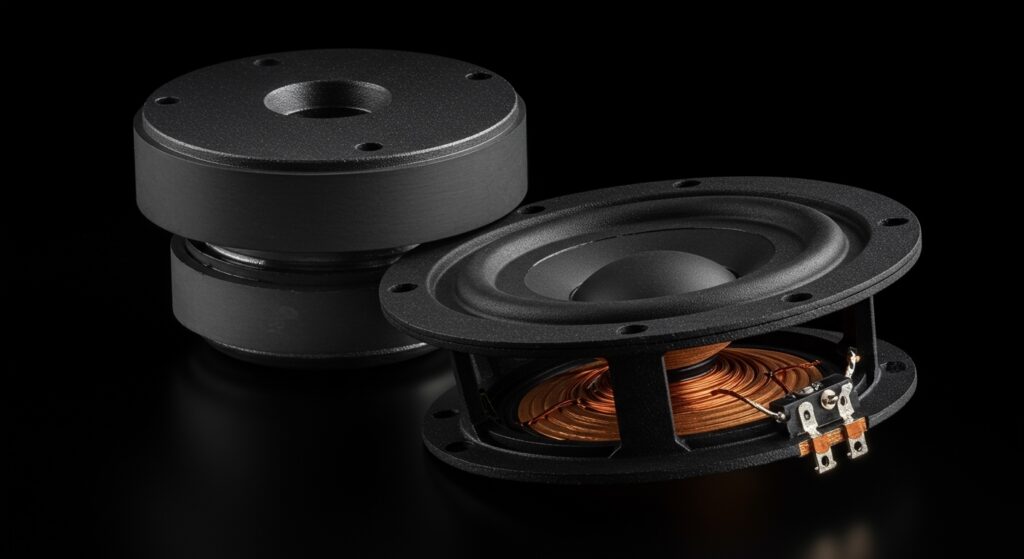
Key Takeaways: Speaker Magnetism at a Glance
- Universal Principle: Nearly 99% of consumer speakers use permanent magnets to function.
- Subwoofer Difference: Subwoofers require larger magnets (often Ferrite) to produce low-frequency waves that require significant physical force.
- Magnet Types: Most speakers use Ferrite (Ceramic) or Neodymium magnets, the latter being stronger but more expensive.
- Exceptions: Electrostatic and Piezoelectric speakers do not use traditional magnets to create sound.
- Safety: Modern electronics like SSDs and LCD screens are generally safe near speaker magnets, but credit cards and mechanical hard drives can still be damaged.
Why the Question “Are Speakers Magnetic or Just the Subwoofer” Matters
I’ve spent over a decade building custom home theater setups and repairing vintage drivers, and one of the most common myths I encounter is that “only the big bass boxes have magnets.” People often assume that because a tweeter is small and light, it must be purely electronic.
In reality, if you were to crack open a high-end bookshelf speaker or even a laptop speaker, you would find a magnet. Understanding this is crucial for anyone worried about magnetic interference, placing speakers near sensitive equipment, or trying to understand why some speakers weigh significantly more than others.
How Magnets Create Sound in All Speakers
To understand are speakers magnetic or just the subwoofer, we have to look at the “Motor” of the speaker. Every dynamic driver acts as a linear motor.
The Interaction of Fields
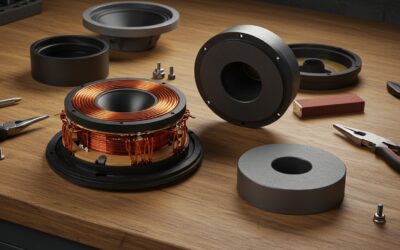
When you play music, an electrical current flows into the voice coil. This coil becomes a temporary electromagnet. This electromagnet reacts to the field of the permanent magnet (the heavy part on the back of the speaker).
- Attraction and Repulsion: As the current changes direction, the voice coil is either pushed away from or pulled toward the permanent magnet.
- Cone Movement: The voice coil is attached to the diaphragm (the cone). As the coil moves, the cone vibrates.
- Air Compression: These vibrations compress the air, creating the sound waves you hear.
Without that permanent magnet, there is no “push” or “pull,” and therefore, no sound. This applies to tweeters, mid-range drivers, and subwoofers alike.
Comparing Magnet Use: Subwoofers vs. Standard Speakers
While the physics are the same, the scale of magnetism varies wildly. This is likely why the question are speakers magnetic or just the subwoofer is so common.
| Feature | Standard Speaker (Tweeter/Mid) | Subwoofer |
|---|---|---|
| Magnet Size | Small (often 1-3 inches) | Large (often 5-10+ inches) |
| Magnet Material | Neodymium or Small Ferrite | Heavy Ferrite or Stacked Neodymium |
| Primary Goal | High-speed vibration (clarity) | High-excursion movement (power) |
| Magnetic Pull | Weak to Moderate | Very Strong |
| Weight Contribution | 10% – 30% of total weight | 50% – 70% of total weight |
Why Subwoofers Look “More” Magnetic
Subwoofers are designed to move a large volume of air. This requires a heavy, stiff cone and a lot of “throw” (travel distance). To move that heavy assembly, you need a massive magnetic flux. When I unbox a high-performance SVS or Velodyne subwoofer, the magnet alone can weigh 20 pounds. In a small tweeter, the magnet might be the size of a coin.
Types of Magnets Used in Modern Audio
Not all magnets are created equal. When researching are speakers magnetic or just the subwoofer, you will likely encounter these three materials:
Ferrite (Ceramic) Magnets
These are the most common. They are dark gray, heavy, and relatively inexpensive. Because they are less “powerful” per ounce than other materials, they have to be physically large to be effective. This is why budget subwoofers have such enormous backs.
Neodymium Magnets
Neodymium is a rare-earth metal that is roughly 10 times stronger than ferrite. I often see these in high-end line-array speakers for concerts or premium headphones. Because they are so strong, a tiny Neodymium magnet can do the work of a massive Ferrite one. If your small speakers feel surprisingly powerful, they likely use Neodymium.
Alnico Magnets
A blend of Aluminum, Nickel, and Cobalt. These were the industry standard in the mid-20th century. Many audiophiles (including myself) love them for their “warm” tone, though they are prone to demagnetizing over decades if pushed too hard.
The Rare Exceptions: Non-Magnetic Speakers
Is every speaker magnetic? Not quite. If you are looking for speakers that don’t rely on magnets, you are looking at niche, high-end technology.
- Electrostatic Speakers (ESL): These use a high-voltage electric field to move a thin film between two perforated metal plates. Brands like MartinLogan are famous for this. There are no traditional magnets involved.
- Piezoelectric Speakers: Often found in cheap greeting cards or specialized high-frequency “super-tweeters,” these use crystals that deform when electricity is applied.
- Plasma Speakers: These actually use an ionized “flame” of plasma to vibrate the air. They are incredibly rare and carry a high “cool factor” but use no magnets.
Practical Guide: Dealing with Speaker Magnetism
Since we’ve established that the answer to are speakers magnetic or just the subwoofer is “usually both,” how does this affect your home?
Magnetic Shielding
In the 1990s, speakers were “shielded” to prevent them from distorting CRT televisions (the big tube TVs). Today, LCD, LED, and OLED screens are not affected by magnets. However, I still recommend keeping unshielded speakers at least 6 inches away from any mechanical hard drive (HDD).
Credit Cards and Wallets
I once accidentally ruined a hotel key card by resting it on top of a Klipsch subwoofer. The magnetic field from a large subwoofer can easily “wipe” the magnetic stripe on cards. Standard speakers are less likely to do this unless the card is touching the driver directly.
Pacemakers and Health
Medical devices can be sensitive to strong magnetic fields. While a small Bluetooth speaker isn’t a threat, leaning against a high-powered subwoofer while it’s active could potentially interfere with a pacemaker. Always maintain a safe distance of at least 12 inches.
Expert Tips for Testing Speaker Magnetism
If you are curious about the strength of the magnets in your current setup, here is how I suggest you test them safely:
- The Paperclip Test: Take a small metal paperclip tied to a string. Slowly move it toward the side of your speaker cabinet.
- Identify the Center: You will notice the pull is strongest directly behind the center of the woofer or subwoofer.
- Check the “Leaking” Field: High-quality cabinets use thick MDF to dampen sound, but magnetic fields pass right through wood. If your paperclip sticks to the outside of the wood, you have an unshielded magnet.
Frequently Asked Questions
Do all speakers have magnets?
Almost all consumer speakers use magnets. This includes the ones in your car, your TV, your smartphone, and your headphones. The only exceptions are specialized technologies like electrostatic or piezoelectric drivers.
Why is the magnet on a subwoofer so much bigger?
Subwoofers produce low-frequency sounds, which require moving a large amount of air. To move a large, heavy cone back and forth quickly and accurately, a much stronger magnetic field is required compared to a small, light tweeter.
Can speaker magnets damage my phone?
Modern smartphones use SSD (Solid State Drive) storage and OLED/LCD screens, neither of which are significantly affected by the magnets found in standard speakers. However, the magnet could potentially interfere with the phone’s internal compass or magnetometer.
Are “magnet-less” speakers better?
Not necessarily. Electrostatic speakers offer incredible clarity but often struggle with deep bass and are very expensive. For the vast majority of listeners, the traditional magnetic dynamic driver offers the best balance of performance, durability, and price.
Can I replace a speaker magnet?
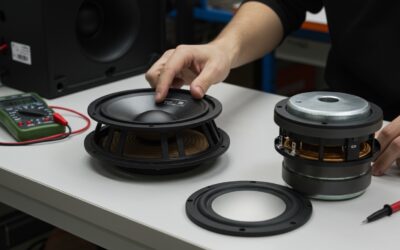
Technically, yes, but it is extremely difficult. In the “re-coning” process, the magnet is usually the part that stays, while the coil and cone are replaced. If a magnet is cracked or has lost its “charge,” it is usually more cost-effective to replace the entire driver.
**
**
**
**