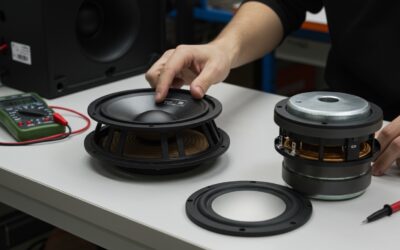
Understanding if Speakers are Patented
Yes, speakers are patented extensively, covering everything from the fundamental moving-coil mechanism to specialized acoustic enclosures and digital signal processing (DSP) algorithms. In the modern audio industry, a single high-end smart speaker may be protected by dozens of individual utility patents for its hardware and design patents for its aesthetic appearance.
Whether you are an inventor looking to protect a new acoustic discovery or a manufacturer trying to avoid infringement, understanding the intellectual property (IP) landscape is critical. During my fifteen years in audio engineering and product development, I have navigated the complex USPTO (United States Patent and Trademark Office) databases to ensure that our proprietary driver designs didn’t step on the toes of industry giants like Bose, Sonos, or Harman.
Key Takeaways for Audio Inventors
- Fundamental Technology: Most basic loudspeaker principles (like the 1925 Rice-Kellogg design) are in the public domain, but modern refinements are strictly protected.
- Two Patent Types: You must distinguish between Utility Patents (how it works) and Design Patents (how it looks).
- Global Reach: Patents are territorial; having a USPTO patent does not automatically protect your speaker in the EU or China without separate filings.
- Infringement Risk: Using a specific “long-throw” woofer design or a unique waveguide shape without a license can lead to costly litigation.
The Landscape of Speaker Patents
The question of are speakers patented is best answered by looking at the sheer volume of filings. Every year, thousands of new applications are submitted involving electro-acoustic transducers.
Utility Patents: The “How it Works”
These are the most common and valuable patents in the audio world. They protect the functional aspects of the speaker. If you develop a new way to reduce Total Harmonic Distortion (THD) or a more efficient Class-D amplifier integrated into the cabinet, you seek a utility patent.
Commonly patented functional elements include:
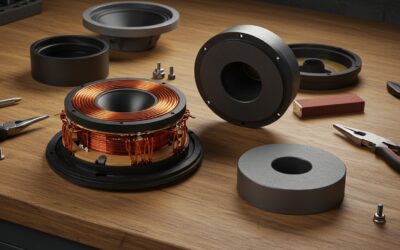
- Voice Coil Materials: New alloys or cooling methods to handle higher power.
- Magnet Structures: Innovations in Neodymium arrangements to focus the magnetic field.
- Spider and Surround Geometry: Specific shapes that allow for greater linear excursion.
- Crossover Circuits: Unique electrical pathways that split frequencies between the woofer and tweeter.
Design Patents: The “Look and Feel”
A design patent protects only the ornamental appearance of the speaker. For example, the iconic shape of the Bowers & Wilkins Nautilus or the specific fabric wrap of an Apple HomePod are often protected under design patents. These last for 15 years and are crucial for branding.
| Feature | Utility Patent | Design Patent |
|---|---|---|
| Protects | Function, process, or machine | Visual ornamentation/shape |
| Duration | 20 years from filing | 15 years from grant |
| Complexity | High (requires technical proof) | Moderate (requires detailed drawings) |
| Primary Goal | Prevents others from using the tech | Prevents others from “cloning” the look |
Historical Context: From Rice-Kellogg to MEMS
To understand the current state of speaker patents, we must look at where they began. In 1925, Chester Rice and Edward Kellogg of General Electric patented the moving-coil loudspeaker. This patent (US1707570) changed the world, but it has long since expired.
Today, the “frontier” has shifted. We are seeing a massive influx of patents related to MEMS (Micro-Electro-Mechanical Systems) speakers. These are tiny silicon-based drivers used in TWS (True Wireless Stereo) earbuds. If you are developing for the wearables market, this is where the most aggressive patenting is currently happening.
I remember testing early MEMS prototypes in 2018; the patent landscape was already a “thicket” of overlapping claims from companies like Knowles and USound. This highlights the importance of doing a freedom-to-operate (FTO) search before starting production.
Step-by-Step Guide: How to Patent a Speaker Design
If you have invented a new audio technology, follow these steps to secure your intellectual property.
Step 1: Document Your “Initial Reduction to Practice”
Keep a detailed engineering log. In my experience, the difference between winning and losing a patent dispute often comes down to who can prove the earliest date of invention. Use dated entries and witness signatures to document your acoustic measurements and prototype iterations.
Step 2: Conduct a Professional Patent Search
Before filing, you must know if your idea is truly “novel” and “non-obvious.” Do not rely solely on a Google search. Use the USPTO Patent Full-Text and Image Database (PatFT) or the Espacenet for European filings.
Search terms to use:
- “Electro-acoustic transducer”
- “Loudspeaker diaphragm”
- “Acoustic waveguide”
- “Resonant enclosure damping”
Step 3: File a Provisional Patent Application (PPA)
A PPA is a “placeholder” that gives you “Patent Pending” status for one year. It is significantly cheaper than a non-provisional application. This year gives you time to pitch to investors or refine the frequency response of your speaker before committing to the full cost.
Step 4: Draft the Non-Provisional Application
This is where you need a patent attorney with a background in acoustics or electrical engineering. The “Claims” section is the most vital part of the document. If your claims are too broad, the examiner will reject them; if they are too narrow, competitors will design around them.
Major Patent Holders in the Audio Industry
When asking are speakers patented, it helps to know who the “gatekeepers” are. The following companies hold vast portfolios that any new inventor should be aware of:
- Bose Corporation: Known for aggressive enforcement of patents related to noise cancellation and small-enclosure bass performance (Acoustimass technology).
- Sonos: Recently won high-profile lawsuits against Google regarding multi-room audio synchronization patents.
- Harman International (Samsung): Holds thousands of patents ranging from Revel waveguide designs to JBL Pro Audio hardware.
- Dolby Laboratories: While mainly known for codecs, they hold significant patents on object-based audio and speaker placement for Dolby Atmos.
How to Check if a Specific Speaker is Patented
If you are looking at a commercial product and wondering about its legal protections, there are three main places to look:
- The Physical Product: Many manufacturers print “U.S. Pat. No. [XXXXX]” on the back plate or near the serial number.
- Virtual Patent Marking: Most companies now maintain a “Patent” page on their website (e.g.,
companyname.com/patents) to satisfy legal notice requirements. - The Manual: Check the “Regulatory” or “Legal” section of the user guide.
Expert Tip: The “Design Around” Strategy
If you find a patent that blocks your path, you don’t always have to give up. We often use a “design around” strategy. By changing a single “limitation” of a patent claim—such as using a different material for the suspension or a different port geometry—you may be able to create a product that does not infringe. Always consult with a patent attorney before finalizing these decisions.
The Costs of Patenting Speaker Technology
Patenting is an investment, not just a fee. Based on my experience with medium-scale audio startups, here is a rough breakdown of what to expect in the US:
| Expense Item | Estimated Cost (USD) | Purpose |
|---|---|---|
| Provisional Filing | $300 – $1,000 | Secures “Patent Pending” status |
| Professional Search | $1,500 – $3,000 | Ensures the idea hasn’t been done before |
| Attorney Drafting | $5,000 – $15,000 | Writing the technical claims and descriptions |
| USPTO Filing Fees | $1,000 – $2,000 | Government processing fees |
| Maintenance Fees | $3,000 – $7,000 | Paid over 20 years to keep the patent active |
Common Pitfalls in Speaker Patenting
Public Disclosure
The biggest mistake I see is “selling before protecting.” If you demonstrate your speaker at a trade show like CES or NAMM before filing at least a provisional patent, you may lose your right to patent it in many countries. The US has a one-year grace period, but most of the world has a “strict novelty” requirement.
Overlooking the Enclosure
Many inventors focus solely on the driver (the moving part). However, some of the most powerful patents in audio relate to the enclosure. For example, transmission line designs or passive radiator configurations are frequently patented because they solve the universal problem of getting big sound out of small boxes.
Ignoring Software
In the modern era, are speakers patented for their hardware alone? No. The DSP algorithms that correct for room acoustics or prevent “bottoming out” the woofer at high volumes are often more valuable than the physical cone.
FAQs About Speaker Patents
Can I patent a speaker if it uses a standard woofer?
Yes. You can patent the unique combination of components, a new crossover network, or a specific internal bracing method, even if the individual drivers are “off-the-shelf” parts from manufacturers like Peerless or Scan-Speak.
How long do speaker patents last?
Utility patents last for 20 years from the date of filing. Design patents last for 15 years from the date of grant. Once they expire, the technology enters the public domain, allowing anyone to use it for free.
What happens if I unknowingly infringe on a speaker patent?
Ignorance is not a legal defense. If a patent holder like Apple or Sony finds you are using their patented beamforming tech, they can issue a Cease and Desist order, demand royalties, or sue for damages. This is why a Freedom to Operate search is essential for any commercial product.
Are “Open Source” speaker designs patented?
Usually, open-source designs (like those found on DIY Audio forums) are released under licenses that prevent patenting by others. However, you should still check if a specific component used in an open-source build is covered by a third-party patent.
Is it worth patenting a speaker for a small DIY business?
Probably not for the hardware alone. The costs often outweigh the benefits for small volumes. Instead, focus on trademarking your brand name and logo, which is much cheaper and provides permanent protection for your market identity.