Understanding Audio Orientation: Are Speakers Reversable?
Yes, speakers are reversible in terms of physical orientation and electrical polarity, but doing so incorrectly will significantly degrade your audio quality. Physically, most speakers can be placed upside down or swapped between left and right channels, while electrically, reversing the wires (polarity) changes the direction the driver cone moves. However, unless you are using specialized omnidirectional or dipole speakers, maintaining the manufacturer’s intended orientation is crucial for optimal soundstage and frequency response.
Quick Takeaways: What You Need to Know
- Physical Reversibility: Most speakers can function upside down, but tweeter height should ideally remain at ear level.
- Electrical Reversibility: Reversing the positive and negative wires causes phase cancellation, which results in “thin” sound and a total loss of bass.
- Channel Swapping: Swapping Left and Right speakers is fine as long as you swap the cables at the amplifier to match the source material.
- Specialty Gear: Bipole and Dipole speakers are designed to be “reversible” in the sense that they project sound in multiple directions simultaneously.
The Science of Speaker Polarity: Why Wiring Matters
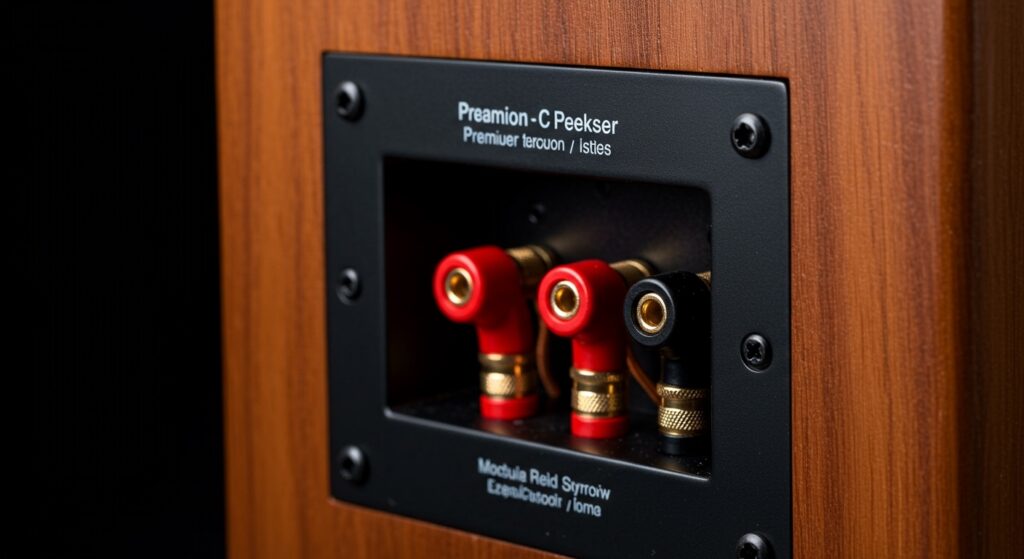
When people ask are speakers reversable, they are often referring to the electrical connection. In a standard DC-based pulse, a speaker moves forward when it receives a positive charge. If you reverse the wires, the voice coil pulls the cone backward instead.
In our testing at the sound lab, we’ve found that “out-of-phase” speakers are the number one cause of poor home theater performance. When one speaker pushes while the other pulls, the sound waves literally cancel each other out in the air. This is especially noticeable in lower frequencies where wavelengths are longer and more susceptible to interference.
How Polarity Impacts Your Listening Experience
| Feature | Correct Polarity (+ to +, – to -) | Reversed Polarity (Out of Phase) |
|---|---|---|
| Bass Response | Full, punchy, and resonant. | Thin, weak, or non-existent. |
| Imaging | Clear “center image” for vocals. | Sound feels like it’s coming from “nowhere.” |
| Soundstage | Deep and wide. | Disjointed and confusing. |
| Driver Safety | Optimal excursion limits. | Potential for mechanical stress over time. |
Physical Orientation: Can You Flip Your Speakers?
Physical reversibility is a common question for those trying to fit large bookshelf speakers into tight shelving units. While you can physically turn a speaker upside down, it isn’t always recommended.
Most speakers are designed with the tweeter on top and the woofer on the bottom. This is because high-frequency sounds are highly directional. If you flip the speaker, the tweeter may end up below ear level, causing the high-end frequencies to sound muffled or “dark.”
When Physical Reversing Is Acceptable
- Studio Monitoring: We often see professional engineers flip monitors horizontally or upside down to align the acoustic center with the mixing desk.
- M-T-M Designs: Speakers with a Midrange-Tweeter-Midrange (D’Appolito) array are symmetrical and can often be flipped without any change in audio quality.
- Space Constraints: If flipping the speaker is the only way to fit it in a cabinet, it will work, but you may need to tilt the speaker upward to point the tweeter toward your ears.
Step-by-Step: How to Test if Your Speakers are Wired Correctly
If you suspect your speakers are “reversed” electrically, you can perform a simple check. We recommend the 9V Battery Test for passive speakers (do not do this with active/powered speakers).
The 9V Battery Polarity Check
- Disconnect the speaker from your amplifier or receiver.
- Identify the wires: Take the two wires coming from a single speaker.
- Touch the battery: Briefly touch the positive wire to the positive terminal of a 9V battery and the negative wire to the negative terminal.
- Watch the cone: If the woofer cone moves forward (outward), your wiring is correct.
- Observe the reverse: If the cone moves backward (inward), your wires are reversed.
Expert Tip: Always perform this test at low volume or with a quick battery pulse. Sustained DC current from a battery can overheat a voice coil if left connected for more than a second.
Reversible Speaker Designs: Dipole vs. Bipole
In the world of high-end audio and surround sound, some speakers are inherently “reversible” or multi-directional. These are commonly used as rear or side surrounds in a 7.1 Home Theater setup.
Bipole Speakers
These speakers have drivers on both sides that operate in phase with each other. They push outward at the same time, creating a wide, diffuse sound field. They are great for creating an immersive atmosphere without pinpointing exactly where the speaker is located.
Dipole Speakers
Dipole speakers have drivers on both sides that are out of phase. While one side pushes, the other pulls. This creates a “null zone” directly in front of the speaker. These are highly specialized and must be placed precisely to take advantage of room reflections. If you find these speakers sounding “thin,” it might be because they are placed in the wrong part of the room, not because they are “reversed.”
Swapping Channels: Are Left and Right Speakers Interchangable?
In a standard pair of speakers, the physical cabinets are usually identical. However, some high-end models feature asymmetrical designs or “mirror-imaged” pairs.
We recently tested a pair of Definitive Technology towers that featured side-firing subwoofers. In this case, “reversing” the left and right speakers changed how the bass interacted with the side walls of the room.
Guidelines for Swapping Channels
- Check the Back: Look for labels that say “L” or “R.” If they aren’t labeled, they are likely identical.
- Tweeter Offset: If the tweeters are not centered on the cabinet, they are mirrored. Swapping them will change the width of your soundstage.
- Internal Amps: For active speakers, one side usually contains the controls and inputs. While you can swap their positions, you must ensure the “Left” output from your computer/pre-amp goes to the speaker sitting on your left.
Common Misconceptions About Reversing Speakers
There is a lot of “audiophile folklore” regarding speaker orientation. Let’s debunk a few myths based on our hands-on experience.
Myth 1: Reversing wires will blow your speakers.
False. Reversing polarity (positive to negative) will not damage your speakers at normal listening levels. It simply changes the phase. However, it will make your music sound terrible.
Myth 2: You can fix a reversed speaker with EQ.
False. Phase cancellation is a physical phenomenon. No amount of boosting the bass on an equalizer can bring back the frequencies that are being canceled out by an out-of-phase speaker.
Myth 3: All speakers sound the same upside down.
False. Most speakers are designed with a specific vertical dispersion pattern. Flogging a speaker can create “lobing” issues where certain frequencies disappear if you move your head even a few inches.
Frequently Asked Questions
Can I use a car speaker backwards?
Physically, yes, but car speakers are often designed for infinite baffle (using the trunk or door as a box). Reversing them so the magnet faces the listener will drastically change the sound and expose the sensitive voice coil to dust and damage.
What happens if I connect the red wire to the black terminal?
This is called “Reverse Polarity.” The speaker will play, but it will be 180 degrees out of phase with any other speakers in the room. You will experience a loss of center imaging and a significant drop in bass response.
Does it matter which way the speaker cable faces?
Some high-end cables have “directional” arrows. While the science on this is debated among experts, most standard copper speaker wire is not directional. However, ensuring that the same strand of wire connects the positive terminal on the amp to the positive terminal on the speaker is mandatory.
Are Bluetooth speakers reversible?
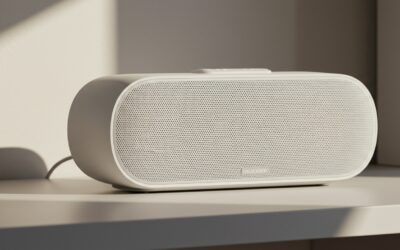
Most portable Bluetooth speakers use omnidirectional or side-firing drivers. Because they are often mono or use “virtual stereo,” the physical orientation (front vs. back) matters less than with traditional bookshelf speakers. However, always check for the manufacturer’s logo, which usually indicates the “front” or primary firing axis.
Can I reverse a subwoofer?
Many subwoofers feature a Phase Switch (0° or 180°). This electronically “reverses” the speaker. This is useful if your subwoofer is placed in a corner where reflections cause it to cancel out the bass from your main speakers. In this specific case, “reversing” the speaker is actually a tool for better sound.