Are Speakers Worth Scrapping? The Hard Truth About Profitability
Are speakers worth scrapping? Yes, speakers are worth scrapping because they contain high-value materials like #2 copper wire, aluminum, stainless steel, and occasionally precious metals in the circuit boards. While a single small speaker might only yield a few cents, large-scale collection and proper disassembly of woofers and amplifiers can produce a significant ROI for dedicated scrappers.
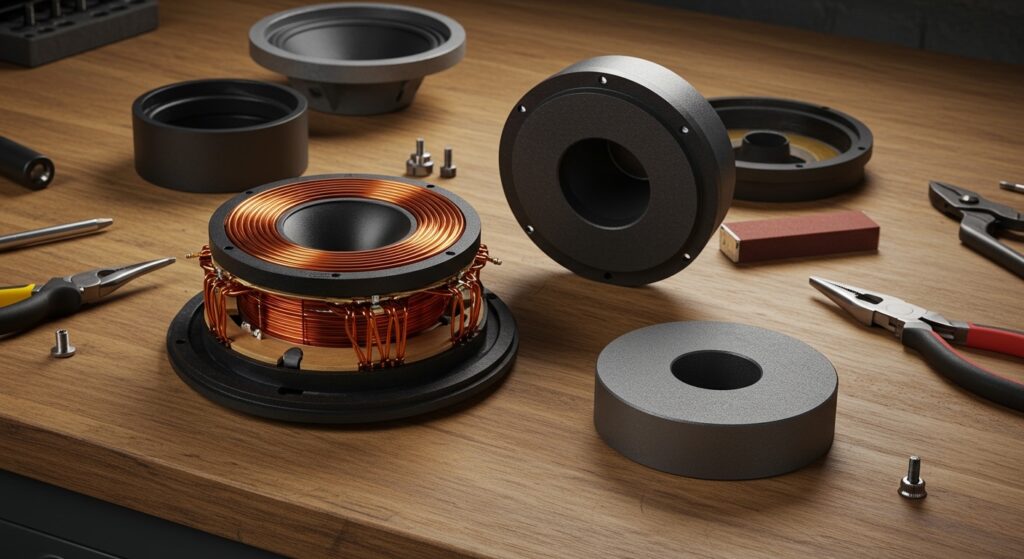
I have spent years dismantling everything from vintage Magnavox cabinets to modern Bose systems. The real value isn’t just in the weight; it is in the purity of the sorted metals. If you have the right tools and a steady supply of “e-waste,” scrapping speakers can be a highly lucrative side hustle.
Key Takeaways: Scrap Speaker Value at a Glance
- High-Value Components: The voice coil (copper) and magnets (neodymium or ferrite) are your primary profit drivers.
- Time vs. Reward: Large floor-standing speakers offer the best ratio of metal weight to labor time.
- Don’t Overlook the Boards: Modern “smart” speakers contain Printed Circuit Boards (PCBs) that may contain trace amounts of gold and silver.
- Resale Check: Always check the brand before smashing; high-end vintage speakers often sell for 10x their scrap value on the secondary market.
Understanding the Core Value: What’s Inside a Speaker?
When asking are speakers worth scrapping, you must understand the “anatomy of value.” A speaker isn’t just a plastic box; it is a mechanical assembly of diverse industrial materials.
In my experience, the average home theater speaker is composed of roughly 40% wood/MDF, 30% steel, 20% magnets, and 10% copper and plastics. To maximize your profit, you must separate these cleanly. Scrap yards pay “dirty” rates if you leave plastic or wood attached, which can cut your profit by 60% or more.
The Material Breakdown
| Component | Material Type | Scrap Value Category |
|---|---|---|
| Voice Coil | Thin Gauge Copper | #2 Copper Wire |
| Magnet | Ferrite or Neodymium | Specialized Scrap / Resale |
| Basket/Frame | Steel or Cast Aluminum | Prepared Steel or Old Sheet Aluminum |
| Transformer | Copper & Iron | Copper Transformer |
| Wiring | Insulated Copper | 60% Recovery Copper Wire |
| Spider/Cone | Paper or Plastic | Waste (Zero Value) |
Step-By-Step Guide: How to Scrap Speakers Like a Pro
If you want to determine if speakers are worth scrapping for your specific setup, follow this workflow. I use this exact process to process roughly 50-100 lbs of audio gear per hour.
Step 1: The Resale Audit
Before picking up a hammer, look at the brand name. If you see Klipsch, JBL, Yamaha, or Bang & Olufsen, stop. These units often have Alnico magnets or high-fidelity components that collectors crave. Check eBay “Sold” listings first.
Step 2: Removing the Grill and Housing
Most speaker grills are held on by friction or plastic clips. Use a flathead screwdriver to pry them off. If the housing is wood (MDF), a sledgehammer or crowbar is the fastest way to break the seal. For plastic housings, an impact driver or power drill is essential to remove the perimeter screws.
Step 3: Extracting the Drivers (The “Meat”)
The “driver” is the circular part that produces sound. It is screwed into the front baffle.
- Unscrew the driver from the cabinet.
- Clip the lead wires as close to the cone as possible to save every inch of insulated copper.
- Separate the woofer (large), midrange (medium), and tweeter (small).
Step 4: Harvesting the Voice Coil and Magnet
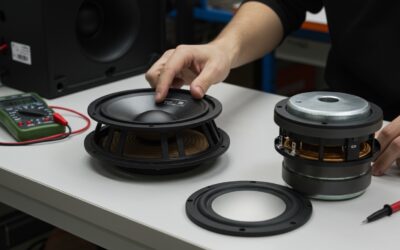
This is where the real money is. The voice coil is a cylinder of tightly wound copper wire hidden behind the dust cap of the speaker.
- Use a utility knife to cut the paper cone away from the frame.
- The magnet is usually glued or bolted to the back of the steel frame. A sharp hit with a ball-peen hammer will often pop a ferrite magnet clean off.
- The copper coil can be slid off the pole piece. This is pure #2 copper.
Are Speakers Worth Scrapping Based on Magnet Type?
Not all magnets are created equal. In the world of scrapping, the type of magnet significantly influences the “weight-to-value” logic.
Ferrite Magnets (Ceramic)
These are the heavy, grey/black rings found on most standard speakers. They are heavy but have low market value as a standalone material. Most scrappers leave these attached to the iron/steel frame to increase the “heavy melting scrap” weight.
Neodymium Magnets (Rare Earth)
Found in high-end, lightweight modern speakers and headphones. These are incredibly strong and silver-colored. Neodymium is a “Rare Earth Metal.” While many local scrap yards don’t have a specific bin for them, they are highly sought after by specialty buyers and can be sold in bulk online.
Alnico Magnets (Aluminum, Nickel, Cobalt)
Found in vintage speakers from the 1950s-1970s. These are the “Holy Grail” for audio restorers. If you find a speaker with a horseshoe-shaped or “slug” magnet that isn’t ceramic, it is likely Alnico. Do not scrap these; sell them to guitar amp enthusiasts.
Advanced Extraction: Recovering Copper from Transformers
If you are scrapping an active speaker (one that plugs into a wall, like a computer speaker or a subwoofer), it contains a power supply. Inside that power supply is a transformer.
Why transformers matter:
Transformers consist of a heavy steel core wrapped in a massive amount of enameled copper wire.
- The Trick: Use a reciprocating saw (Sawzall) to cut through the copper windings on one side of the transformer.
- Once cut, use a punch or a flathead screwdriver to knock the copper “U” shapes out of the steel core.
- This turns “transformer scrap” (low price) into #2 copper (high price) and clean steel.
The Financial Reality: Is the Labor Worth the Payout?
To truly answer are speakers worth scrapping, we have to look at the numbers. Let’s look at a “Standard Haul” scenario I recently processed from a local thrift store buyout.
Scrap Yield Table (10 Typical Bookshelf Speakers)
| Material | Weight (Est.) | Avg. Price per Lb | Total Value |
|---|---|---|---|
| #2 Copper (Coils/Wire) | 1.5 lbs | $3.20 | $4.80 |
| Cast Aluminum (Frames) | 4.0 lbs | $0.55 | $2.20 |
| Mixed Steel (Baskets/Cases) | 12.0 lbs | $0.08 | $0.96 |
| Clean Circuit Boards | 0.5 lbs | $1.50 | $0.75 |
| TOTAL | 18 lbs | — | $8.71 |
Time Invested: 45 Minutes.
Hourly Rate: ~$11.60/hr.
Expert Insight: If you only scrap the copper and dump the rest in a “mixed bin,” your hourly rate drops. To make it “worth it,” you must process at scale. Collecting 100 speakers makes the logistics much more efficient than processing two.
Essential Tools for Speaker Scrapping
I have found that having a “scrapping kit” ready prevents frustration and speeds up the process by 300%. If you want to prove speakers are worth scrapping, don’t use a manual screwdriver.
- Impact Driver: For rapid removal of long wood screws.
- Long-Nose Pliers: To reach into tight cabinets and pull wire leads.
- Wire Strippers: If you have high-gauge power cords, stripping them to bare bright copper triples their value.
- Utility Knife: Essential for cutting cones and “surrounds” to get to the voice coil.
- Small Sledgehammer: For breaking apart MDF cabinets and separating magnets from steel.
- Magnet Wand: To quickly identify aluminum frames (non-magnetic) vs. steel frames (magnetic).
Environmental Impact: Why Scrapping Matters Beyond Money
Beyond the question of are speakers worth scrapping for cash, there is an ethical component. Speakers contain adhesives, plastics, and treated papers that do not decompose well in landfills.
More importantly, the neodymium and copper mining processes are environmentally taxing. By recycling these metals, we reduce the demand for virgin mining. When I scrap, I feel a sense of “urban mining” pride. You are taking “dead” technology and putting the raw building blocks back into the manufacturing cycle.
Common Pitfalls to Avoid
- Ignoring the Crossover: Inside the speaker box is a small circuit board called a crossover. These often have high-quality capacitors and copper inductors (coils). Never throw the box away without pulling the crossover!
- Cutting Your Hands: Speaker baskets are often made of stamped steel. When you break them, the edges become razor-sharp. Always wear Level 5 Cut-Resistant Gloves.
- Assuming All “Gold” is Real: Many speaker terminals look gold. Usually, it is just gold-colored brass. Use a file to scratch the surface; if it’s yellow underneath, it’s brass. If it’s white, it might be plated (but rarely worth the chemical extraction cost).
Where to Find Speakers for Free?
If you want to maximize your profit, your “buy cost” must be zero. Here is where I find the best speaker scrap:
- Curbside Trash Days: People often toss surround sound systems when they upgrade to soundbars.
- Thrift Store Dumpsters: Many thrift stores won’t sell “untested” electronics and will throw them away.
- Estate Sales (Last Day): Offer to take all the “junk” electronics for free in exchange for hauling them away.
- Facebook Marketplace: Look for “Free” or “Non-working” listings.
FAQ: Frequently Asked Questions About Speaker Scrapping
Can I scrap car speakers for a profit?
Yes, car speakers are often better for scrapping than home speakers because they frequently use aluminum frames to save weight in the vehicle. The voice coils are also generally more accessible.
How do I tell if a speaker frame is aluminum or steel?
Use a magnet. If the magnet sticks to the frame (the “basket” holding the cone), it is steel. If it doesn’t stick, it is likely cast aluminum, which is worth much more per pound at the scrap yard.
Are the magnets themselves worth money?
Standard ferrite magnets are usually sold as “shred” or “iron” scrap. However, large neodymium magnets can be sold to hobbyists on platforms like eBay or Etsy for use in DIY projects or science experiments.
What is the most valuable part of a speaker?
Weight for weight, the copper voice coil is the most valuable. However, in terms of volume, the heavy copper transformer found in powered subwoofers usually provides the biggest single “payday” per unit.
Is it worth stripping the thin wire inside the speaker?
Generally, no. The internal “hookup wire” is usually 20-24 gauge. It is better to throw this into a “60% recovery” insulated copper bin rather than spending time stripping it to bare wire. Your time is better spent moving on to the next speaker.
**
**
**
**