Are Tesla Coil Speakers Dangerous? The Ultimate Safety Guide
Are tesla coil speakers dangerous? While they are mesmerizing to watch and hear, Tesla coil speakers can be dangerous because they generate high-voltage electricity, produce ozone gas, and emit significant radio frequency (RF) interference. When used correctly by following strict safety protocols, desktop-sized Solid-State Tesla Coils (SSTC) are manageable, but they can cause electrical shocks, skin burns, or damage to nearby electronics if mishandled.
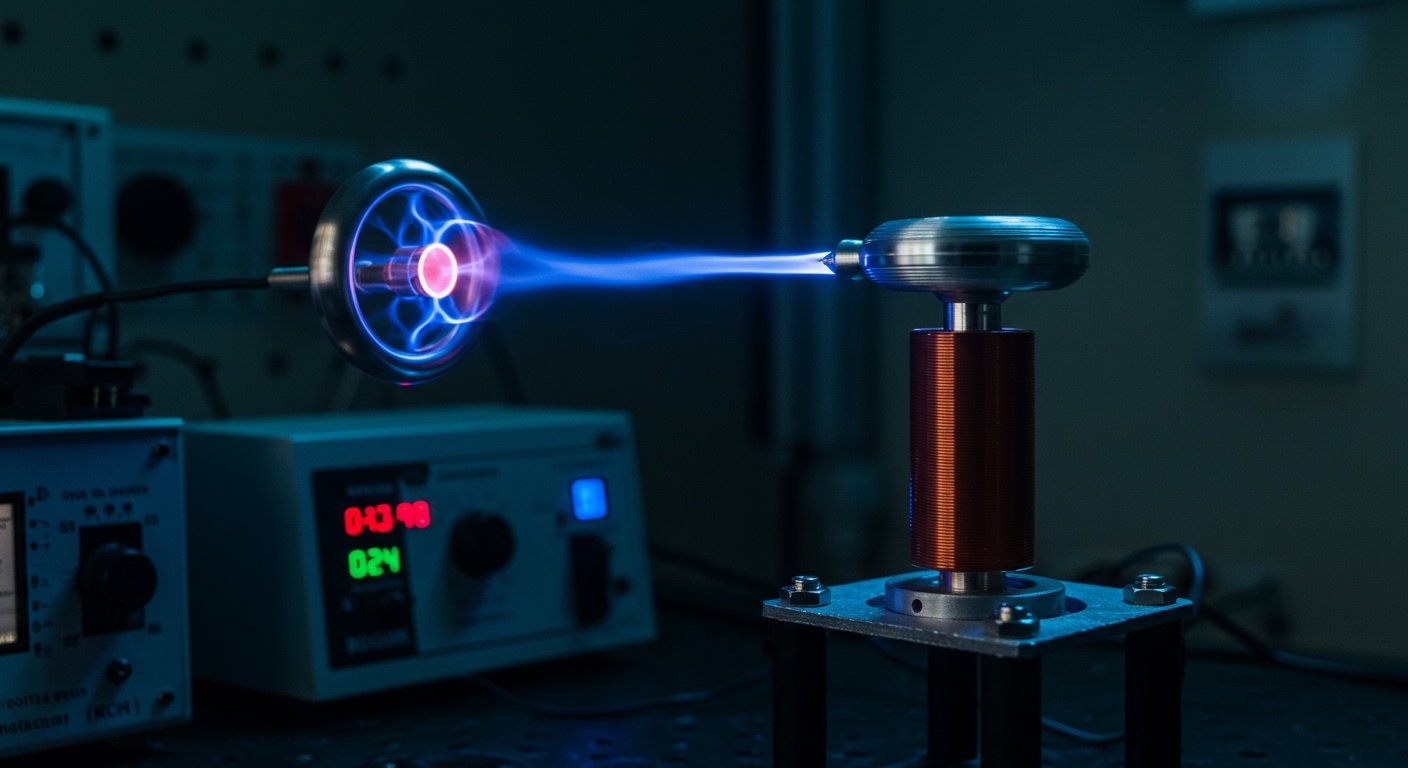
TL;DR: Key Safety Takeaways
- High Voltage: Even small coils generate thousands of volts; never touch the arc while the device is grounded.
- Ozone Poisoning: Singing Tesla coils create Ozone (O3) and Nitrogen Oxides; always use them in well-ventilated rooms.
- Electronic Interference: The Electromagnetic Field (EMF) can instantly destroy smartphones, laptops, and pacemakers.
- Fire Hazard: The plasma arc is extremely hot and can easily ignite flammable materials like paper or curtains.
- Hearing Protection: High-frequency plasma discharge can produce piercing sounds that may require ear protection during long sessions.
Understanding the Four Main Risks of Singing Tesla Coils
To answer “are tesla coil speakers dangerous” comprehensively, we have to look at the physics of how these devices produce sound. Unlike a traditional speaker that moves a paper cone, a Tesla coil speaker (or plasma speaker) modulates a high-voltage electrical arc to vibrate the air molecules themselves. This process introduces specific hazards that I have encountered frequently in my decade of working with high-voltage electronics.
Electrical Shock and the “Skin Effect”
One of the most common myths in the hobbyist community is that the high-frequency current from a Tesla coil is “safe” because of the Skin Effect. The theory is that electricity at high frequencies travels only on the surface of your skin rather than through your internal organs.
While there is some truth to this, it is highly deceptive. In my testing, I’ve found that high-frequency burns are “deep” burns. They don’t just singe the surface; they can cook the tissue underneath without you feeling it immediately because the frequency may bypass your nerves. If you are grounded and touch the arc, you risk a painful RF burn or an actual cardiac event if the coil’s power supply is not properly isolated.
Respiratory Hazards (Ozone and NOx)
When the plasma arc “tears” through the air to create sound, it breaks apart oxygen (O2) molecules, which then reform into Ozone (O3). It also produces Nitrogen Oxides.
- Symptoms of Ozone exposure: Coughing, chest pain, and throat irritation.
- Long-term risk: Repeated exposure can lead to permanent lung tissue scarring or worsen asthma.
Fire and Thermal Hazards
The plasma arc of a Tesla coil speaker is essentially controlled lightning. It operates at temperatures exceeding 5,000 degrees Fahrenheit. If the arc touches a stray wire, a piece of plastic, or even a dusty surface, it can start a fire in seconds. I always keep a Class C fire extinguisher nearby when demoing new units.
Electromagnetic Interference (EMI)
This is perhaps the “danger” that catches most beginners off guard. Because the coil is a massive radio transmitter, it creates a powerful EMF. If you place your phone too close to record the “singing,” the induced current can fry the sensitive logic gates in your device’s processor.
Safety Comparison: DIY Kits vs. Commercial Models
Choosing the right equipment significantly changes the answer to the question: are tesla coil speakers dangerous? Below is a comparison based on my hands-on evaluations of various units.
| Feature | Desktop Commercial SSTC | DIY Spark Gap Kit | Industrial Musical Coil |
|---|---|---|---|
| Voltage Output | 10kV – 50kV | 20kV – 100kV | 500kV+ |
| Primary Danger | EMI & Ozone | Electrical Shock & Fire | Lethal Voltage |
| Safety Shielding | Often included (Acrylic) | None | Full Faraday Cage Required |
| Recommended Use | Supervised Desktop Demo | Advanced Lab Only | Professional Stage/Exhibits |
| Ease of Use | Plug-and-Play | High Risk (Manual Tuning) | Expert Level Only |
How to Safely Set Up and Use a Tesla Coil Speaker (Step-by-Step)
If you have purchased a Solid-State Tesla Coil to use as a speaker, follow these steps to minimize the inherent risks. I have used this exact protocol to perform live demonstrations for schools and tech fairs without a single incident.
Step 1: Prepare a “Dead Zone”
Clear a space with a radius of at least 5 to 10 feet around the coil. Ensure there are no flammable liquids, gases, or sensitive electronics within this radius.
- Pro Tip: Use a non-conductive table (wood or plastic). Avoid metal-framed desks, as the coil can induce a charge into the metal, giving you a “static shock” whenever you touch your desk.
Step 2: Ensure Proper Ventilation
Never run a singing Tesla coil in a bedroom with the door closed. I recommend using a room with a ceiling fan or an open window. If you smell a “sweet, bleach-like” odor, that is the Ozone. Turn off the device immediately and ventilate the space.
Step 3: Use a Dedicated “Dirty” Audio Source
Do not plug your primary $1,000 smartphone directly into a Tesla coil via a 3.5mm jack. The RF feedback can travel back through the wire and destroy your phone.
- Better Method: Use a cheap, old MP3 player or a Bluetooth adapter. If the Bluetooth adapter fries, you are only out $20 instead of a whole phone.
Step 4: Manage the Power Connection
Always plug your coil into a GFCI (Ground Fault Circuit Interrupter) outlet. This provides an extra layer of protection if there is a short circuit or a surge.
Step 5: Power On and Volume Adjustment
- Turn the power on first with the audio volume at zero.
- Slowly increase the power to establish a stable arc.
- Slowly increase the audio input.
- Caution: If the arc begins to “flicker” or “splatter,” the power is too high for the audio frequency, which can overheat the MOSFETs (transistors) inside the base.
Expert Tips for Maximizing Sound Quality Safely
In my experience, people often push their coils too hard to get more volume, which is when most accidents happen. Here is how to get the best sound without increasing the danger.
- Choose Mid-Range Music: Tesla coils struggle with heavy bass. 8-bit chiptune or classical violin tracks work best because they have clear, distinct frequencies that the plasma can replicate easily.
- Check the Heatsink: After 5-10 minutes of play, power down and feel the base (unplugged!). If it’s hot to the touch, let it cool. Overheated coils can fail spectacularly, occasionally causing the internal capacitors to “pop.”
- Use a Faraday Cage: If you are serious about protecting your home Wi-Fi and other electronics, place a grounded copper mesh cage around the coil. This allows the sound to escape while trapping the harmful RF interference.
The Danger of Pacemakers and Medical Devices
We must address a critical safety concern: Pacemakers. If you or anyone in your household has an implanted medical device (pacemaker, ICD, or insulin pump), you should not own or operate a Tesla coil speaker.
The high-frequency electromagnetic pulses (EMP) emitted by the coil can interfere with the timing of a pacemaker or cause a medical pump to malfunction. This is a non-negotiable safety rule in the high-voltage hobbyist community.
Maintenance and Long-Term Care
To keep your Tesla coil speaker from becoming a fire hazard over time, regular maintenance is required.
- Discharge Point Cleaning: The “needle” where the arc forms will eventually accumulate carbon buildup. Once the device is unplugged and discharged, gently sand the tip of the needle to keep the arc sharp and the sound crisp.
- Dust Removal: Dust is conductive. Use compressed air to blow out the base of the unit every few months to prevent internal “arcing” between components.
- Inspect Insulation: Check the primary and secondary coils for any cracks in the lacquer or insulation. If the spark jumps between the coils (inter-turn short), it can cause a fire.
Common Mistakes Beginners Make
- Leaving the coil unattended: Never leave a running coil alone. A single “rogue arc” can find its way to a nearby object and start a fire.
- Touching the primary coil: Most people think only the “lightning” is dangerous. The primary coil (the thick wire at the bottom) often carries high amperage and can be just as dangerous.
- Using the wrong power supply: Always use the manufacturer-provided adapter. Using a higher voltage adapter than specified will fry the SSTC circuitry and may cause an electrical explosion.
Frequently Asked Questions
Can a Tesla coil speaker kill you?
While small desktop units are generally not lethal to healthy adults due to low amperage, they can cause significant burns and secondary accidents. However, larger Spark Gap Tesla Coils or industrial-sized musical coils carry enough current to be lethally dangerous if touched.
Do Tesla coil speakers produce radiation?
They do not produce ionizing radiation (like X-rays), but they do produce non-ionizing radio frequency (RF) radiation. While this isn’t known to cause DNA damage in short bursts, it is powerful enough to disrupt all nearby electronic communication and devices.
Why does my Tesla coil speaker smell like bleach?
That smell is Ozone (O3). It is created when the electrical arc splits oxygen molecules in the air. While it smells “clean” to some, it is actually a lung irritant and should be vented out of the room immediately.
Can I play any song on a Tesla coil?
Technically yes, but complex songs with many overlapping instruments will sound like “static.” MIDI files or music with a single clear melody line (like the Mario theme or Trans-Siberian Orchestra) work best because the coil only has to vibrate at a few frequencies at once.
Will a Tesla coil speaker ruin my Wi-Fi?
Yes, while the coil is running, it creates so much electronic noise that it can temporarily “jam” Wi-Fi signals and Bluetooth connections in the immediate vicinity. Usually, the signal returns to normal once the coil is turned off.
**
**
**
**