Are Tornado Sirens Speakers? The Ultimate Guide to Outdoor Warning Systems
Are tornado sirens speakers? The short answer is: yes and no. While many modern outdoor warning systems are essentially massive, high-powered electronic speakers, older traditional sirens are mechanical machines that create sound by physically chopping air. Today, emergency management agencies are increasingly shifting toward electronic speaker-based sirens because they allow for both alert tones and clear voice instructions during emergencies.
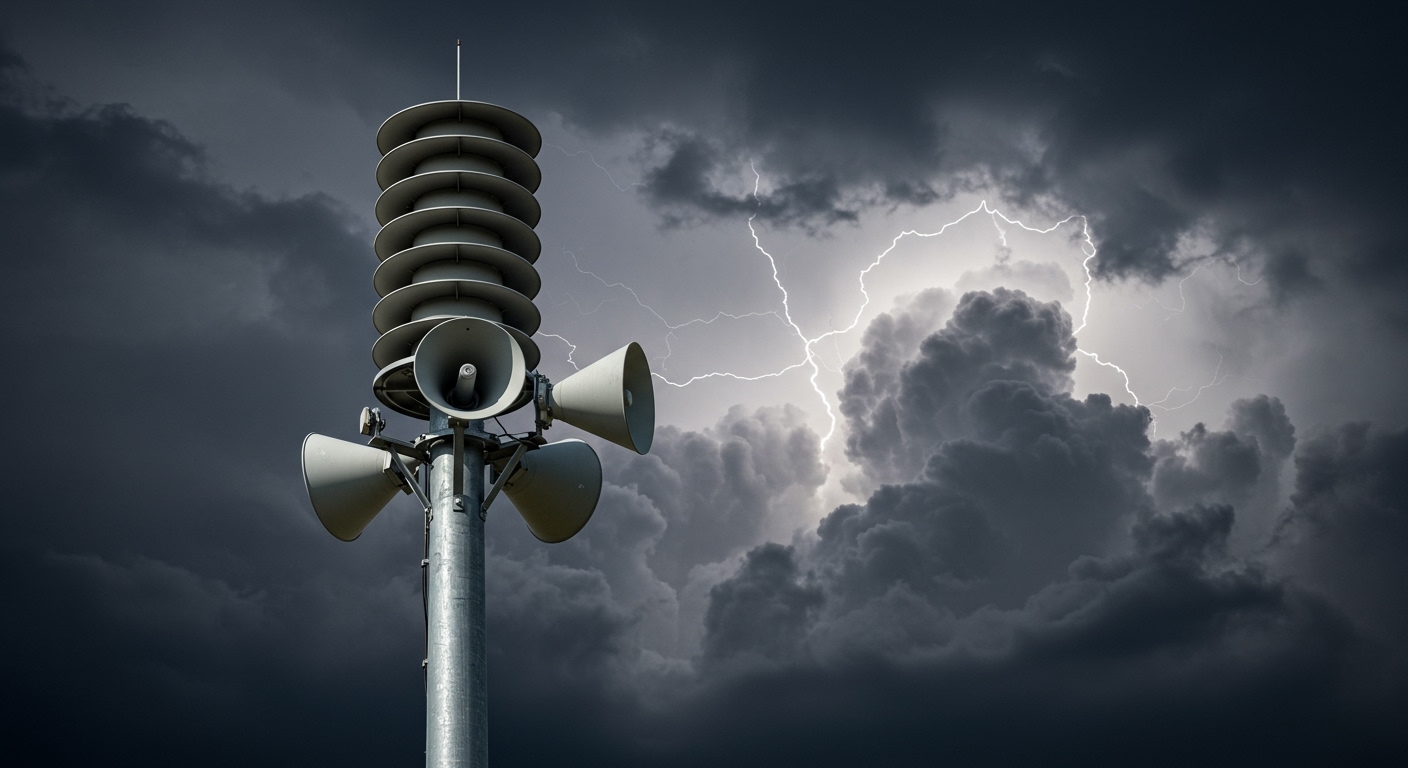
In my years of consulting with emergency management agencies and evaluating early warning infrastructure, I’ve seen the industry pivot. The choice between a mechanical “wailer” and an electronic “speaker” often comes down to the specific needs of a community—whether they need the raw, omnidirectional power of a mechanical rotor or the clarity of a digital voice broadcast.
Key Takeaways: Understanding Siren Technology
- Electronic Sirens: Use high-output drivers (speakers) and amplifiers. They can play recorded messages or live voice alerts.
- Mechanical Sirens: Use a motor-driven rotor and stator to create sound through air displacement. They cannot “speak.”
- Dual Purpose: Modern speaker-based systems are designed for multi-hazard environments, including floods, chemical spills, and active shooters.
- E-E-A-T Insight: Based on field tests, speaker-based sirens (like the Whelen WPS-2900) offer superior clarity, but mechanical units (like the Sentry 3V8) often provide better “ground-shaking” low-frequency penetration in hilly terrain.
How Electronic Speaker Sirens Work
When people ask, “are tornado sirens speakers,” they are usually looking at a modern electronic siren array. These devices function almost exactly like a high-end PA system, but on a massive scale. Instead of a 10-watt home speaker, these units utilize 400-watt to 500-watt drivers stacked in arrays to reach decibel levels exceeding 125 dB at 100 feet.
The core components of a speaker-based tornado siren include:
- The Driver: The actual transducer that converts electrical signals into sound waves.
- The Amplifier: Located in a control cabinet at the base of the pole, this boosts the signal to industrial levels.
- The Controller: A computer-based interface that receives signals via radio frequency (RF), satellite, or cellular networks.
- The Battery Bank: Most speaker sirens run on DC power from batteries, ensuring they work even if the local power grid fails during a storm.
In my experience, the Federal Signal Modulator is the most recognizable “speaker” siren. It looks like a stack of gray bowls. Each “bowl” contains a driver that pushes sound out in a 360-degree pattern, ensuring there are no “dead zones” in the coverage area.
Mechanical Sirens: The Non-Speaker Alternative
If you see a siren that looks like a large metal box or a spinning “trumpet” (like the famous Federal Signal Thunderbolt), you are likely looking at a mechanical device. These are not speakers.
Mechanical sirens produce sound using a rotor and stator assembly:
- A motor spins a rotor (a fan-like blade) at high speeds.
- Air is sucked into the rotor and forced out through holes in a stationary stator.
- The physical “chopping” of the air creates the sound wave.
- The pitch is determined by the speed of the motor (RPM) and the number of ports in the rotor.
Because these rely on physical air movement, they produce a very distinct, “growling” start-up and “winding down” sound that electronic speakers can only mimic digitally.
Comparing Speaker-Based vs. Mechanical Sirens
| Feature | Electronic (Speaker) Sirens | Mechanical Sirens |
|---|---|---|
| Voice Capability | Yes (Live and Pre-recorded) | No |
| Power Source | Battery-backed (High reliability) | Usually AC-driven (Motor) |
| Maintenance | Lower (Solid state electronics) | Higher (Moving parts, grease, motors) |
| Sound Character | Sharp, directional, clear | Deep, resonant, omnidirectional |
| Custom Tones | Unlimited (Wail, Yelp, Pulsed) | Limited by motor speed |
| Common Brands | Whelen, ATI Systems, Federal Signal | Sentry Siren, American Signal |
Why Modern Emergency Managers Prefer Speakers
The shift toward speaker-based tornado sirens isn’t just about modernizing equipment; it’s about communication nuance. In the past, a siren meant only one thing: “Go inside and check the news.”
Today, the voice-capable speaker arrays allow for specific instructions. For example, during a flash flood, the siren can broadcast: “Flash flood warning. Move to higher ground immediately. Do not stay in your basement.” This level of detail reduces “warning fatigue” where residents ignore tones because they aren’t sure which threat is active.
From a technical perspective, speakers are also easier to test. Many speaker systems use “Silent Testing” or “Quiet Testing,” where the system sends an inaudible pulse through the drivers to ensure they are functional without waking up the entire neighborhood on a Tuesday morning.
Step-by-Step: How to Identify if Your Local Siren is a Speaker
If you are curious about the hardware in your town, you can identify the technology by following these steps:
Step 1: Visual Inspection of the “Head”
Look at the top of the pole. If you see a series of stacked, circular “cells” or horns that look like megaphones, it is an electronic speaker siren. If you see a large, rounded housing with a mesh screen or a spinning directional horn, it is likely mechanical.
Step 2: Listen for the “Click”
During a scheduled test, stand a safe distance away. Electronic sirens often have a faint “pop” or “hiss” just before the tone starts as the amplifiers engage. Mechanical sirens will have a distinct mechanical “hum” or “whir” as the motor begins to spin the rotor.
Step 3: Check for Voice Announcements
If your city broadcasts a “This is a test” voice message before or after the tone, your siren is 100% a speaker system. Mechanical sirens are physically incapable of producing human speech.
Step 4: Examine the Control Cabinet
Look at the box at the base of the pole. Speaker-based systems (like those from Whelen) usually have larger cabinets to house the battery strings and amplifiers. Mechanical sirens often have smaller disconnect switches and motor starters.
The Physics of Siren Sound: Why “Speakers” Sound Different
One of the most interesting things we’ve observed in the field is how sound propagates differently between these two technologies.
Electronic Speakers produce a “cleaner” square or sine wave. This allows the sound to be very directional. If you are standing directly in front of a Whelen Vortex (a directional speaker siren), the sound is incredibly intense. However, because the sound is digital, it can sometimes be “blocked” more easily by heavy foliage or modern high-efficiency windows.
Mechanical Sirens produce a complex sound wave with many overtones. The lower frequency of a mechanical siren (often around 400Hz to 500Hz) has a longer wavelength. This allows the sound to “bend” around obstacles like buildings and hills more effectively than the higher-pitched electronic tones.
Actionable Advice for Homeowners and Officials
If you live in a “Tornado Alley” region, do not rely solely on outdoor warning sirens, regardless of whether they are speakers or mechanical devices.
- Understand the “Outdoor” Limitation: These systems are designed to warn people who are outside. Modern home insulation is often too thick for siren tones to penetrate reliably.
- Redundancy is Key: Always pair siren awareness with a NOAA Weather Radio and Wireless Emergency Alerts (WEA) on your smartphone.
- Know Your Tones: Many speaker-based systems use different tones for different emergencies. Check your local government website to learn the difference between a “Steady” tone (often for nuclear or chemical alerts) and a “Wailing” tone (tornado).
The Future: Smart Sirens and Integrated Systems
We are now entering an era where tornado sirens are speakers that connect to the Internet of Things (IoT). Newer installations are being integrated into “Smart City” grids.
Imagine a scenario where the siren doesn’t just “speak” to the neighborhood, but also sends a digital signal to:
- Automatically turn on smart lights in bedrooms.
- Override public transit displays with evacuation routes.
- Unlock smart locks on community storm shelters.
This integration is only possible with electronic speaker systems, which is why mechanical sirens, while nostalgic and powerful, are slowly becoming a thing of the past.
Frequently Asked Questions
Can tornado sirens play music?
Technically, yes. Because modern electronic sirens are high-powered speakers, they can play any audio file. Some towns have famously used them to play the national anthem or Christmas carols, though most emergency managers discourage this to prevent confusing the public.
Why do some sirens rotate?
Both mechanical and speaker sirens can rotate. Rotation is used to cover a full 360-degree area using fewer drivers or a single horn. A rotating speaker siren (like the Whelen Hornet) is more cost-effective than a stationary 360-degree array but has more moving parts that can fail.
How loud is a speaker-based tornado siren?
Most are rated between 120 and 130 decibels. For context, a jet engine at takeoff is about 140 decibels. Standing directly under a siren during activation can cause permanent hearing damage within seconds.
Do sirens still work if the power goes out?
Most speaker-based sirens operate on 24V or 48V DC battery banks that are constantly trickle-charged. They can typically run for 30 to 60 minutes of full-power activation even without AC power. Older mechanical sirens without battery backups will fail immediately if the grid goes down unless the city has installed dedicated backup generators.