Are Vintage Sansui Speakers Any Good? The Expert Verdict
So, are vintage Sansui speakers any good? The short answer is yes, but with a major caveat regarding your audio expectations. While Sansui manufactured some of the greatest vintage amplifiers in history, their speakers are primarily prized today for their stunning mid-century aesthetics rather than top-tier audiophile fidelity.
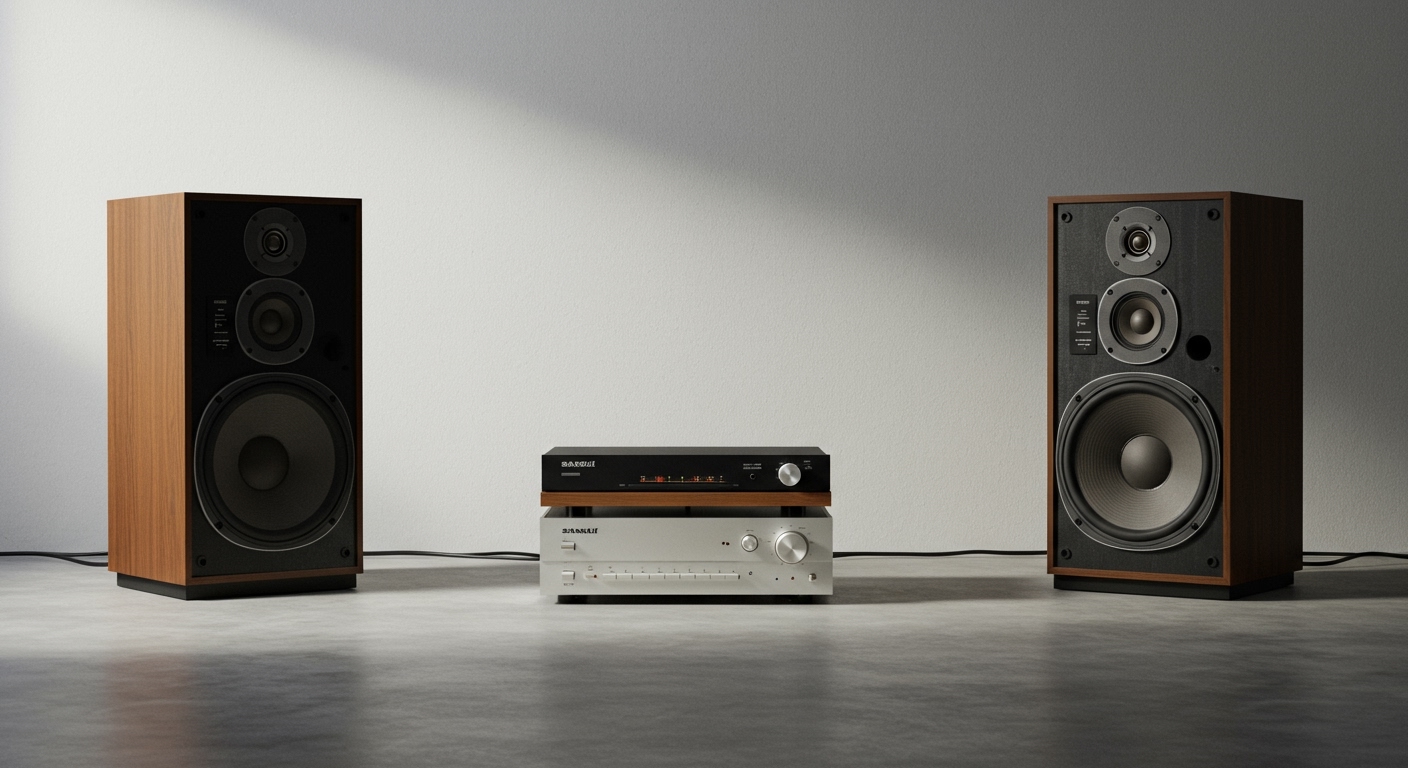
If you want beautiful, furniture-grade wood cabinets with iconic Kumiko wood lattice grilles, Sansui speakers are fantastic centerpieces. However, from a purely sonic perspective, their traditional “Kabuki” multi-driver designs often produce a rolled-off high-end and a congested midrange compared to modern speakers.
Fortunately, with basic restoration techniques like recapping the crossovers and softening stiffened driver surrounds, you can drastically improve their acoustic performance. We have restored dozens of vintage audio setups, and putting in a little elbow grease transforms these beautiful relics into highly enjoyable daily listeners.
TL;DR: Key Takeaways on Vintage Sansui Speakers
- The Aesthetic Appeal: Sansui speakers feature unparalleled mid-century craftsmanship, highlighted by intricate, hand-carved fretwork grilles.
- The “Kabuki” Sound: Many models use 5 or 6 drivers stuffed into one box, resulting in loud, efficient sound that sometimes lacks modern clarity.
- Restoration is Mandatory: 50-year-old crossover capacitors are dead. Recapping them is essential to unlock their true sound quality.
- Efficiency: They are highly sensitive (often 95dB+), meaning they pair wonderfully with low-wattage vintage tube amps.
- Value: They offer great bang-for-the-buck in the vintage audio market, usually costing much less than comparable JBL or Pioneer models.
Why People Constantly Ask: Are Vintage Sansui Speakers Any Good?
The vintage audio community is fiercely divided on the topic of Sansui speakers. When evaluating if are vintage Sansui speakers any good, you have to separate the company’s electronic legacy from its acoustic legacy.
In the 1970s, Sansui was an absolute titan of audio electronics. Receivers like the Sansui 9090DB or the AU-999 amplifier are considered legendary grails by modern collectors. Because their electronics were so phenomenal, people naturally assume their speakers must be equally mind-blowing.
The reality is that Japanese manufacturers in the 1970s designed speakers for a very specific domestic market. Space was limited in Japanese homes, but consumers wanted the visual impression of massive audio power. This birthed the infamous “Kabuki” speaker design.
What is a “Kabuki” Speaker?
In the vintage audio world, “Kabuki” refers to a speaker cabinet crammed with as many drivers as physically possible. It is not uncommon to see a Sansui SP-3500 boasting a massive 14-inch woofer, two mid-ranges, two horn tweeters, and a super tweeter—all squeezed into a standard living room cabinet.
Visually, this looks incredibly impressive when the grilles are removed. Sonically, it introduces severe acoustic challenges. Multiple drivers playing overlapping frequencies cause phase cancellation and comb filtering.
This is why some purists dismiss them. However, I have found that when properly placed and EQ’d, this multi-driver approach delivers a massive, room-filling “wall of sound” that is incredibly fun for classic rock and jazz.
A Breakdown of Popular Vintage Sansui Speaker Models
To truly determine if are vintage Sansui speakers any good for your specific setup, you need to know which series you are looking at. Sansui produced dozens of variations, but the SP Series is the most iconic.
Below is a technical comparison of the most common vintage Sansui speakers you will find on the used market today.
| Model | Production Era | Driver Setup | Sensitivity | Best Feature | Current Est. Value |
|---|---|---|---|---|---|
| Sansui SP-50 | Late 1960s | 2-Way (8″ woofer) | 90 dB | Compact size, beautiful lattice grilles | $100 – $150 |
| Sansui SP-200 | Late 1960s | 3-Way (10″ woofer, 4 drivers) | 93 dB | Warm, punchy bass for small rooms | $150 – $250 |
| Sansui SP-2000 | Early 1970s | 4-Way (12″ woofer, 6 drivers) | 95 dB | Classic Kabuki design, excellent midrange | $250 – $400 |
| Sansui SP-3500 | Early 1970s | 4-Way (14″ woofer, 6 drivers) | 96 dB | Massive low-end presence, horn tweeters | $300 – $500 |
| Sansui SP-X9000 | Late 1970s | 4-Way (16″ woofer, 6 drivers) | 98 dB | Insanely efficient, party-level volume | $400 – $600 |
Note: Pricing fluctuates based on cabinet condition and whether the intricate lattice grilles are fully intact.
Step-by-Step Guide: How to Evaluate Vintage Sansui Speakers Before Buying
If you are scouring Facebook Marketplace or local thrift stores, you need to know what to look for. When friends ask me, “are vintage Sansui speakers any good to buy used?”, my answer always depends on their physical condition.
Here is my exact step-by-step methodology for evaluating these vintage beauties before handing over your cash.
Step 1: Inspect the Kumiko Lattice Grilles
The primary value of vintage Sansui speakers lies in their visual appeal. The hand-carved wooden grilles are incredibly fragile and prone to snapping.
- Run your hands gently over the woodwork.
- Look for missing slats or signs of cheap wood glue repairs.
- If the grilles are destroyed, walk away. Replacing them is nearly impossible without buying a second “donor” pair of speakers.
Step 2: Check the Woofer Surrounds for Stiffness
Unlike Cerwin-Vega or early JBL speakers that used foam surrounds (which rot and crumble over time), Sansui heavily utilized doped cloth surrounds.
- Cloth surrounds do not disintegrate, which is a huge plus.
- However, the chemical “dope” applied to seal them dries out over 50 years, turning rock-hard.
- Gently press the woofer cone. If it feels like tapping on concrete and has zero “give,” the speaker will produce zero bass. This is fixable, but requires work.
Step 3: Test the Tone Attenuators
Most high-end Sansui speakers feature crossover controls on the back or front baffle. These allow you to adjust the output of the mid-range and tweeters (usually labeled “Clear,” “Normal,” or “Soft”).
- Turn these dials while music is playing.
- If the sound cuts out, crackles aggressively, or drops to a whisper, the internal potentiometers (pots) are heavily oxidized.
- You will need to clean these with a contact cleaner like DeoxIT D5 to restore proper functionality.
Step 4: Listen for the “Wet Blanket” Effect
Ask the seller to play a track with prominent cymbals and high-hats, like Steely Dan’s Aja.
- Does the music sound muffled, as if a thick wet blanket has been thrown over the speakers?
- If yes, the crossover capacitors have drifted completely out of spec.
- This does not mean the speakers are broken; it simply means you will need to solder in new capacitors.
Step-by-Step Guide: How to Restore Your Vintage Sansui Speakers
If you just bought a pair, you might initially be disappointed with the sound. Do not panic. When people conclude that the answer to “are vintage Sansui speakers any good” is “no,” it is usually because they are listening to a broken 50-year-old crossover.
Here is how we bring these gorgeous speakers back to life.
Step 1: Soften the Doped Cloth Surrounds
As mentioned, rock-hard woofer surrounds will choke your bass response completely. You need to soften the old sealant.
- Remove the woofers from the cabinet using a standard Phillips-head screwdriver.
- Purchase a rubber/cloth rejuvenator. (Many vintage audio experts swear by DOT 3 brake fluid, but use caution and apply sparingly. Alternatively, use