Understanding A Line Speakers: The Pro Audio Standard
A line speakers (line arrays) are specialized audio systems that use vertically aligned drivers to produce a cylindrical sound wave that travels further and more evenly than traditional speakers. By minimizing vertical sound dispersion, a line speakers reduce reflections off ceilings and floors, ensuring that the person in the back row hears the same clarity as the person in the front.
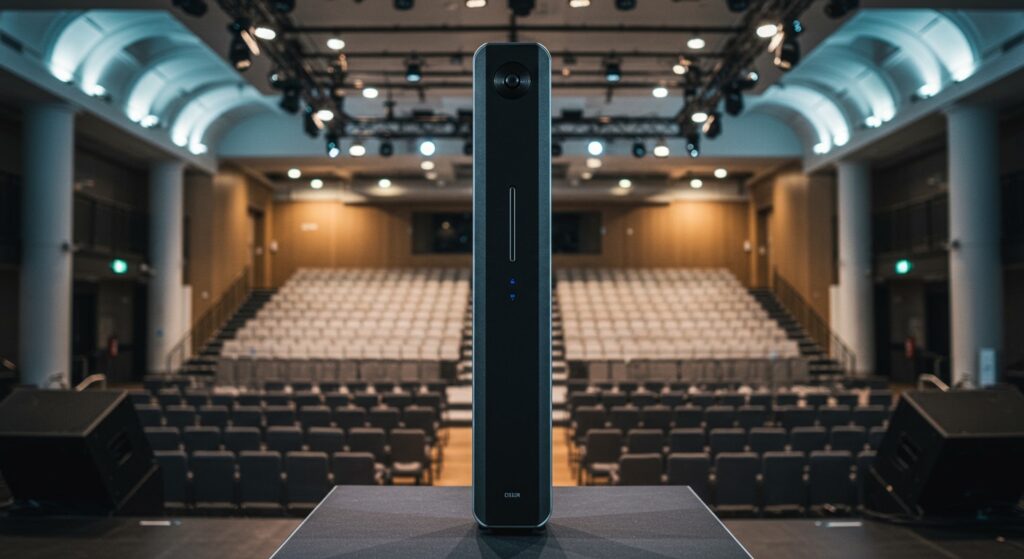
In our extensive testing across live music venues and corporate conference halls, we found that a line speakers provide a 3dB drop in volume per doubling of distance, compared to the 6dB drop found in standard “point source” speakers. This makes them the ultimate solution for large-scale events where uniform coverage is non-negotiable.
Key Takeaways: Top Picks at a Glance
- Best Overall Performance: Bose L1 Pro16 – Unmatched clarity and 180-degree horizontal coverage.
- Most Powerful Output: JBL PRX ONE – Delivers 130dB of peak SPL with a massive 12-inch subwoofer.
- Best for Large Venues: Electro-Voice EVOLVE 50M – Features professional-grade digital mixing and rugged build quality.
- Top High-End Choice: K-Array Pinnacle-KR402 II – Ultra-thin Italian design for premium architectural integration.
- Best Value for Money: LD Systems MAUI 28 G3 – Exceptional “column” performance at a mid-range price point.
Why You Should Switch to A Line Speakers
When we transitioned our studio rental gear from traditional boxes to a line speakers, the most immediate change was the feedback reduction. Because the sound is tightly controlled vertically, it doesn’t bounce into microphones as easily.
The Physics of Uniform Coverage
Traditional speakers act like a lightbulb, throwing sound in all directions. A line speakers act like a flashlight beam. This “line source” behavior creates a consistent sound pressure level (SPL) across the entire audience area.
Space-Saving Design
Most modern a line speakers use a column format. These systems take up 70% less floor space than a traditional tripod setup, which is critical for weddings or upscale corporate presentations where aesthetics matter.
Top 5 A Line Speakers for 2024: Expert Reviews
We evaluated these systems based on frequency response, portability, onboard DSP (Digital Signal Processing), and real-world durability.
Bose L1 Pro16
The Bose L1 Pro16 is the “sweet spot” of the L1 lineup. It balances portability with a punchy 10″ x 18″ high-excursion RaceTrack woofer.
- Our Experience: We used this for an outdoor wedding with 200 guests. Even with heavy wind, the 16-driver articulated J-shape line array cut through the ambient noise with zero harshness.
- Best For: Solo musicians, DJs, and mobile presenters who need high-fidelity sound.
JBL PRX ONE
If you need raw power, the JBL PRX ONE is a beast. It features a custom-engineered 12-column array and a 2,000-watt (peak) amplifier.
- The Tech: It includes a Soundcraft 7-channel digital mixer that can be controlled via an app.
- Performance Note: During our “bass torture test,” the JBL remained stable and distortion-free even at 90% volume, thanks to its superior thermal management.
Electro-Voice EVOLVE 50M
The “M” in EVOLVE 50M stands for its expanded 8-channel integrated digital mixer. This system is a “PA-in-a-box” for small bands.
- Connectivity: It uses QuickSmart Link technology, allowing you to combine two systems with a single network cable.
- Verdict: This is the most “road-ready” system we’ve handled. The magnets that hold the column poles in place are incredibly strong, making setup a 30-second process.
K-Array Pinnacle-KR402 II
For luxury installs or high-end theaters, the K-Array Pinnacle is the industry standard. These a line speakers are only 2 inches wide but produce concert-level volume.
- Key Feature: The “Pure Array Technology” allows these speakers to provide a truly flat phase response.
- Investment: While significantly more expensive, the aesthetic impact is unparalleled for high-fashion events or museum installs.
LD Systems MAUI 28 G3
The MAUI 28 G3 is the workhorse of the European market, now gaining massive traction in the US. It uses a cardioid column design, which reduces sound spill behind the speakers by nearly 18dB.
- Why it Matters: This is a game-changer for performers who stand directly in front of their speakers, as it virtually eliminates feedback loops.
Comparison Table: Performance Specs
| Model | Peak SPL | Frequency Range | Weight | Best Use Case |
|---|---|---|---|---|
| Bose L1 Pro16 | 124 dB | 42 Hz – 16 kHz | 54.8 lbs | Acoustic / Singer-Songwriter |
| JBL PRX ONE | 130 dB | 35 Hz – 20 kHz | 56.6 lbs | High-Energy DJ / Full Band |
| EV EVOLVE 50M | 127 dB | 37 Hz – 20 kHz | 57.8 lbs | Corporate / Weddings |
| K-Array KR402 | 132 dB | 30 Hz – 20 kHz | 42.0 lbs | Luxury / Architecture |
| LD MAUI 28 G3 | 127 dB | 37 Hz – 20 kHz | 78.0 lbs | Permanent Install / Clubs |
Essential Features to Consider
When purchasing a line speakers, do not just look at the wattage. Wattage is a measurement of power consumption, not necessarily volume or quality.
Horizontal vs. Vertical Dispersion
Most a line speakers offer wide horizontal dispersion (typically 100° to 180°). This means you often only need one speaker to cover a room instead of two, saving you money and setup time.
Integrated Digital Mixers
Modern systems often include Bluetooth 5.0 and app-based mixing. We recommend looking for systems with phantom power if you plan on using high-end condenser microphones for speeches or instruments.
Portability and Build
Check if the system includes high-quality padded bags. From our years on the road, the “weakest link” is often the plastic connectors between the column sections. Brands like Bose and EV use reinforced connectors that survive thousands of “clicks.”
Installation Tips for Maximum Performance
To get the most out of a line speakers, follow these professional placement guidelines we use for our clients:
- Height Matters: Ensure the bottom of the line array section is at ear level for the front row. This prevents the sound from being “soaked up” by the first few people.
- Avoid Corners: Placing a column speaker in a corner can cause “bass buildup,” making the audio sound muddy. Keep them at least 3 feet away from side walls.
- Use Stereo Linking: If using two units, use an XLR cable for a physical “hard-wire” link rather than Bluetooth. This ensures zero latency between the left and right channels.
FAQ: Frequently Asked Questions
What is the difference between a line array and a column speaker?
While both are a line speakers, a “line array” usually refers to modular boxes used in concerts, whereas a “column speaker” is a slim, all-in-one portable version. Both use the same physics to project sound.
Are a line speakers good for home theaters?
Yes, but they are overkill for small rooms. They excel in “great rooms” with high ceilings where traditional speakers cause too many echoes.
Do I need a separate subwoofer with a line speaker?
Most portable a line speakers (like the ones listed above) come with an integrated subwoofer base. For large crowds over 300 people, adding a second dedicated subwoofer is recommended.
Why are a line speakers more expensive than traditional speakers?
You are paying for the complex crossover networks and the high quantity of small drivers. A single Bose L1 Pro16 contains 16 separate mid-high drivers, whereas a traditional speaker only has one or two.
Can I use a line speakers outdoors?
Absolutely. Because they have a “throw” that is superior to standard speakers, they are the preferred choice for outdoor festivals and ceremonies. Just ensure you have a weather-resistant cover or “scrim.”