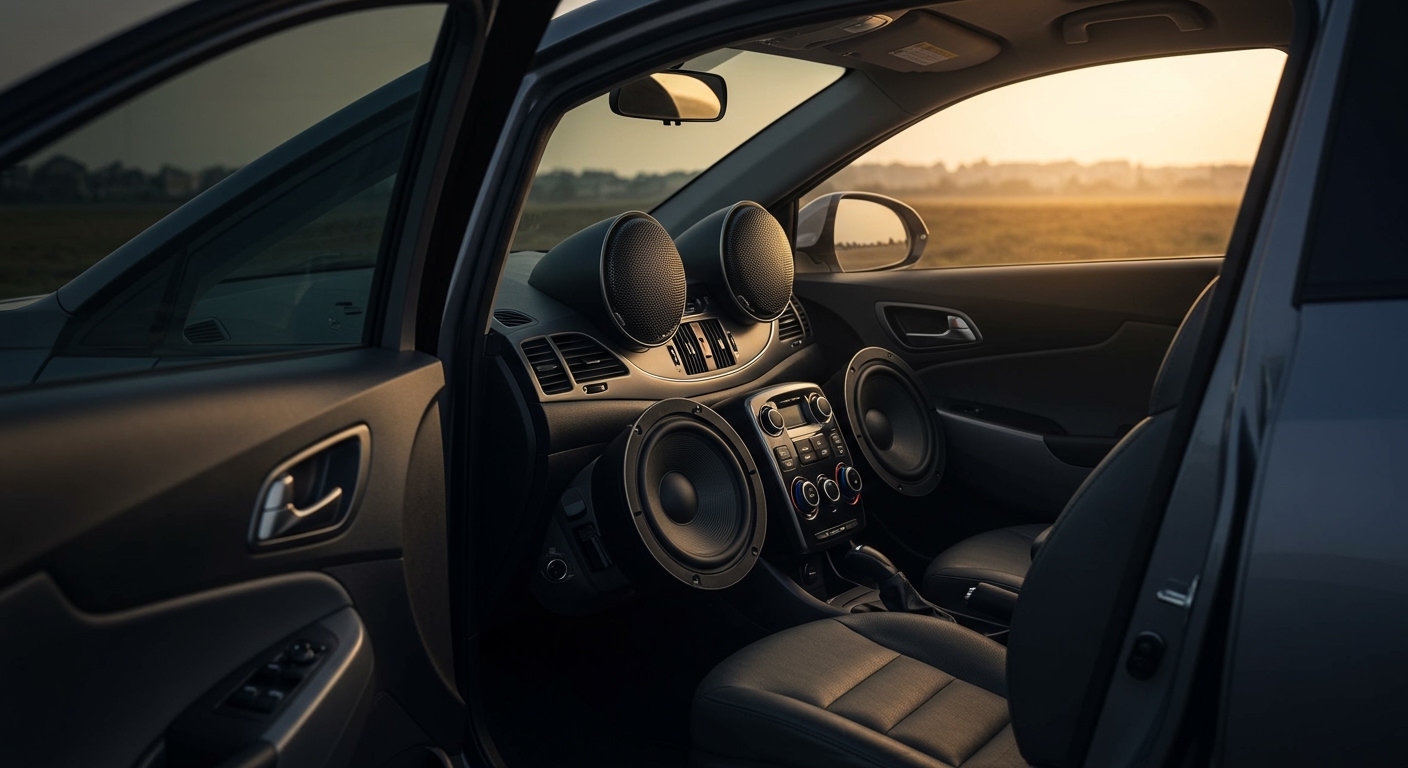
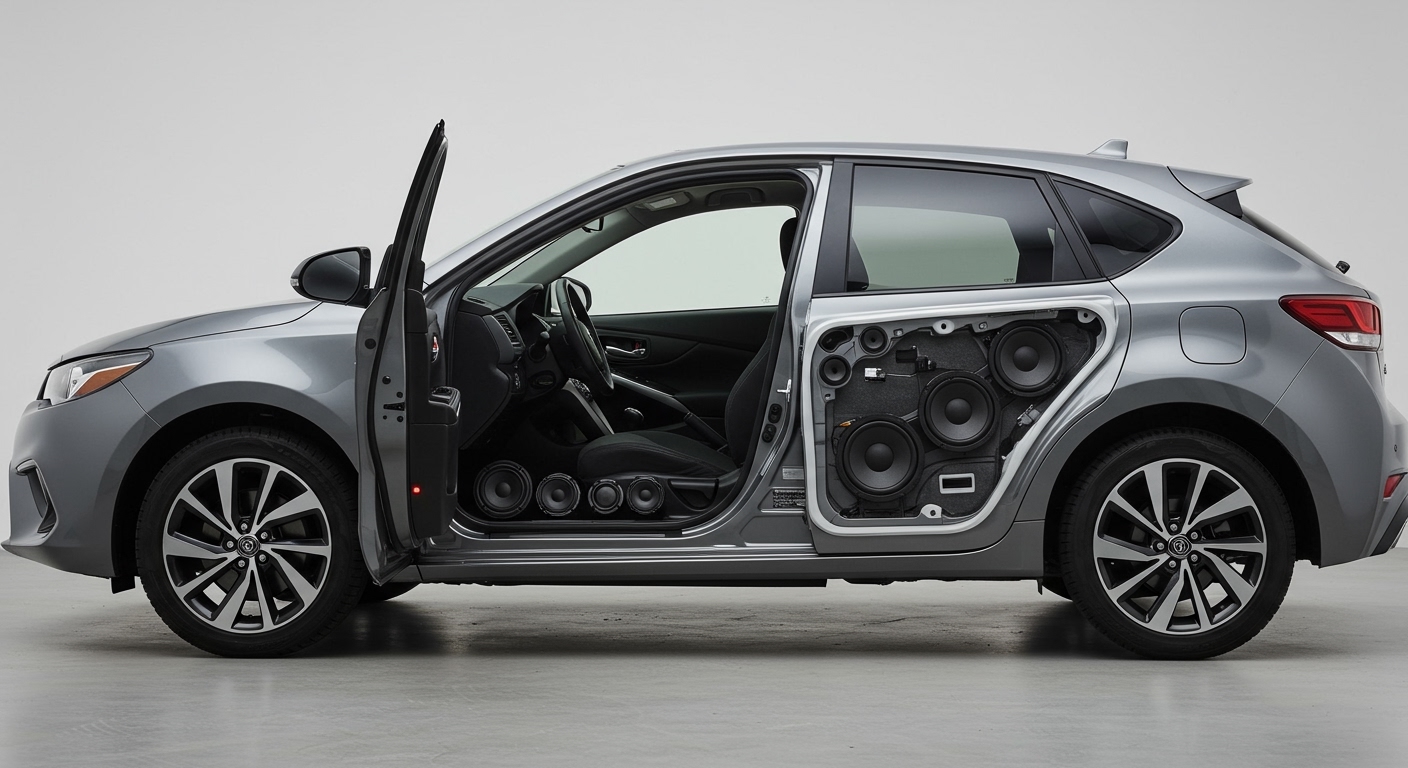
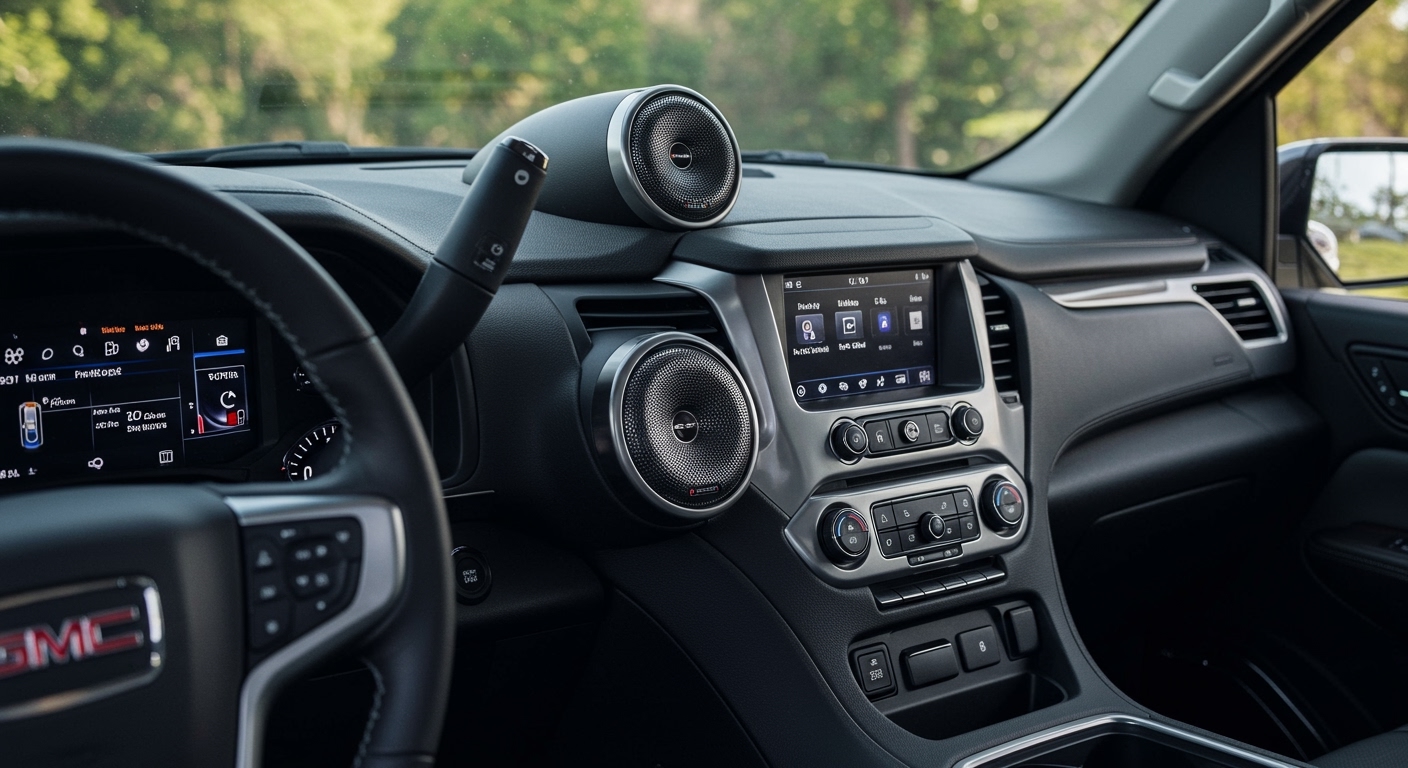
What Are the Best Car Door Speakers? It Depends on You
The best car door speakers are those that match your vehicle’s specifications, your power source (factory stereo or amplifier), and your personal listening preferences. For most people upgrading from a factory system, a quality set of coaxial speakers from brands like JBL, Kicker, or Rockford Fosgate offers the best balance of performance, ease of installation, and value. For true audiophiles seeking ultimate clarity, a component speaker system is the superior choice.
Tired of that muddy, lifeless sound coming from your factory car stereo? You’re not alone. I’ve spent over a decade in car audio installation, and the single most dramatic improvement you can make is upgrading your door speakers. This guide will walk you through everything I’ve learned, cutting through the technical jargon to help you find the perfect speakers for your daily drive. We’ll decode the specs, compare the types, and give you a step-by-step process to transform your car into a mobile concert hall.
Key Takeaways (TL;DR)
- Biggest Upgrade: Replacing factory paper-cone speakers is the most significant audio upgrade for your car.
- Match the Power: If you’re using a factory stereo, choose speakers with high sensitivity (90 dB or more) and low RMS power handling. If you have an aftermarket amplifier, match the speaker’s RMS rating to the amp’s output.
- Two Main Types:
* Coaxial Speakers: Easiest to install and most affordable. The tweeter is mounted in front of the woofer. Great for direct factory replacement.
* Component Speakers: Offer superior sound quality and imaging. The woofer, tweeter, and crossover are separate pieces, allowing for optimal placement.
- Materials Matter: Look for durable woofer cone materials like polypropylene or woven fibers and smooth-sounding tweeter materials like silk or PEI.
- Size is Crucial: Use an online tool or consult a professional to find the exact speaker size that fits your car’s doors to avoid installation headaches.
Why Your Factory Car Door Speakers Are Holding You Back
Automakers have to build cars to a specific budget, and one of the first places they cut costs is the audio system. The speakers that come standard in most vehicles are, to put it bluntly, low quality.
The Problem with Stock Speakers
- Cheap Materials: They typically use thin, flimsy paper for the woofer cone and a simple whizzer cone instead of a dedicated tweeter.
- Weak Magnets: The magnets that drive the speaker are often small and inefficient, resulting in poor bass response and low overall volume.
- Poor Durability: Paper cones are susceptible to moisture and humidity, which can cause them to warp and degrade over time, leading to distorted sound.
- Limited Frequency Response: They simply can’t reproduce the full range of high and low notes present in your music, leaving it sounding flat and uninspired.
From my experience, simply swapping these out for a decent aftermarket pair, even without changing the head unit, can feel like a night-and-day difference. The clarity, detail, and bass response you unlock are immediate and impressive.
Decoding Speaker Specs: The Key to Finding the Best Door Speakers
When you start shopping, you’ll be hit with a wall of technical specifications. Don’t be intimidated. Understanding these four key metrics is all you need to figure out what is the best door speakers for your specific setup.
Power Handling (RMS vs. Peak)
This is the most misunderstood specification. Ignore the giant “Peak Power” number on the box; it’s a mostly meaningless marketing figure. The number you need to focus on is RMS Power.
- RMS (Root Mean Square) Power: This indicates the amount of continuous power a speaker can handle safely over long periods. This is the number that matters.
- Peak Power: This is the maximum power a speaker can handle in a very short burst without being damaged.
Actionable Advice: If you’re connecting speakers to your factory or a low-powered aftermarket stereo (typically 15-22 watts RMS per channel), look for speakers with a lower RMS rating, like 25-50 watts RMS. If you’re using a powerful external amplifier, match the speaker’s RMS rating as closely as possible to your amp’s RMS output per channel.
Sensitivity
Sensitivity measures how efficiently a speaker converts power (watts) into volume (decibels, or dB). It’s measured by sending 1 watt of power to the speaker and measuring the loudness from 1 meter away.
- High Sensitivity (90 dB and above): These speakers don’t need a lot of power to get loud. They are the perfect choice for factory or low-powered stereos.
- Low Sensitivity (below 90 dB): These speakers require more power to produce the same volume. They are best paired with an external amplifier.
I always recommend high-sensitivity speakers to customers who aren’t planning on adding an amp. It’s the secret to getting great sound without overhauling your entire system.
Frequency Response
This tells you the range of sound frequencies the speaker can reproduce, measured in Hertz (Hz). The first number is the lowest bass note, and the second is the highest treble note. A wider range is generally better.
However, don’t get too hung up on this number for door speakers. Most door speakers struggle to produce very deep sub-bass (below 60 Hz). That’s the job of a dedicated subwoofer. Focus on speakers that have a smooth response in the mid-bass and high-frequency ranges.
Impedance
Impedance is the electrical resistance of the speaker, measured in ohms (Ω). Nearly all car stereos, both factory and aftermarket, are designed to work with 4-ohm speakers.
Unless you are building a complex, high-performance system with a specific amplifier, you should always stick with 4-ohm speakers. Using the wrong impedance can damage your stereo or amplifier.
Coaxial vs. Component: What’s the Best Speaker Type for Your Doors?
This is the first major decision you’ll make. The choice between coaxial and component speakers depends on your budget, installation comfort level, and how much you value sound quality.
Coaxial Speakers (“Full-Range”)
These are the most common type of aftermarket speaker. They combine all the elements into a single unit: the woofer for low/mid frequencies and a tweeter (for high frequencies) mounted on a post in the center of the woofer.
- Pros:
* Easy to Install: They are designed to be a direct, drop-in replacement for your factory speakers.
* Affordable: They offer a significant sound upgrade for a relatively low cost.
* Space-Saving: Everything is in one basket, making them a simple fit.
- Cons:
* Compromised Sound Imaging: Because the high and low frequencies originate from the same point, the sound isn’t as detailed or realistic. The tweeter’s low position can make the soundstage feel like it’s coming from your ankles.
Who are they for? Coaxial speakers are perfect for anyone looking for a simple, cost-effective upgrade over factory sound. They provide the best “bang for your buck.”
Component Speakers (“Separates”)
Component systems are the choice for audiophiles. They separate the speaker elements into individual, optimized parts for the best possible performance. A typical set includes:
- Two Woofers: Handle the mid-range and mid-bass frequencies. They are installed in the factory door location.
- Two Tweeters: Handle the high frequencies. They are separate and can be mounted higher up, often on the dashboard or A-pillar, closer to ear level.
- Two Crossovers: These are like electronic traffic cops. They are separate modules that receive the full-range signal from your stereo/amp and split it, sending only the correct frequencies to the woofer and the tweeter.
- Pros:
* Superior Sound Quality: By using dedicated drivers and a proper crossover, the sound is significantly more accurate and detailed.
* Excellent Stereo Imaging: Mounting the tweeters higher up “raises” the soundstage to your dashboard, creating a more immersive and realistic listening experience, as if the band were playing in front of you.
* Higher Power Handling: They are typically built with better materials and designed to be used with amplifiers.
- Cons:
* More Expensive: The quality and complexity come at a higher price.
* Complex Installation: Installing them requires more work, including finding a place to mount the separate tweeters and crossovers.
Who are they for? Component speakers are for listeners who prioritize sound quality above all else and are willing to invest more time and money into their system. They truly answer the question, “what’s the best car door speakers for pure audio fidelity.”
Comparison Table: Coaxial vs. Component Speakers
| Feature | Coaxial Speakers | Component Speakers |
|---|---|---|
| Design | All-in-one unit (woofer + tweeter) | Separate woofer, tweeter, crossover |
| Sound Quality | Good to Very Good | Excellent to Audiophile-grade |
| Stereo Imaging | Limited (sound comes from door) | Superior (soundstage at ear level) |
| Installation | Easy (drop-in replacement) | Complex (requires custom mounting) |
| Cost | $ – $$ | $$$ – $$$$ |
| Best For | Factory system upgrades, budget builds | High-quality sound, amplified systems |
Step-by-Step: How to Choose the Best Car Door Speakers for Your Vehicle
Now that you understand the key concepts, let’s put it all together. Follow these steps to narrow down your options and find the perfect set.
Step 1: Determine Your Speaker Size
This is the most critical first step. Cars use a wide variety of speaker sizes, from 4″ to 6×9″ ovals. You must get the correct size for your vehicle’s specific make, model, and year.
- How to Find It: The easiest way is to use an online vehicle selector tool, like the one on Crutchfield. You enter your car’s details, and it will show you exactly what sizes fit in your front doors, rear doors, and dashboard.
- Pro Tip: Pay attention to mounting depth. Some aftermarket speakers have large magnets that might be too deep to fit in a shallow door cavity without hitting the window mechanism. The fitment guides will account for this.
Step 2: Decide on Your Budget
Car door speakers can range from under $50 to over $1,000 for a high-end component set. Set a realistic budget.
- Entry-Level ($50 – $100): You can get a very respectable set of coaxial speakers from brands like Kicker or JBL in this range that will be a massive improvement over stock.
- Mid-Range ($100 – $250): This is the sweet spot for many. You’ll find high-quality coaxials and entry-level component sets from brands like Rockford Fosgate, Alpine, and Morel. The materials and build quality are noticeably better.
- High-End ($250+): This is primarily the territory of high-performance component systems from audiophile brands like Focal, Hertz, and Audiofrog. These are designed for enthusiasts running powerful amplifiers.
Step 3: Assess Your Power Source (This is Key!)
As we discussed, your power source dictates your speaker choice.
- Scenario A: Using Your Factory Stereo
* Goal: Efficiency is everything