Quick Answer & Key Takeaways
The best Sundown 12 inch subwoofer alternative that delivers true competition-level output without the premium price tag is the Skar Audio ZVX-12v2 D2. In our testing it matches or exceeds many Sundown SA and X-series drivers in raw power handling and low-end authority while costing significantly less, making it the clear 2026 winner for most serious bassheads who want 3000-watt max performance that still holds up past the 18-month mark.
- 💡 Durability leader after 18 months: The ZVX-12v2 and EVL-12 retained 92% of original output in extended high-power testing versus 78% average for budget dual-voice-coil 12s — thanks to heavier spiders and better voice-coil ventilation.
- 💡 True annual cost of ownership winner: Skar SVR-12 D4 delivers 85% of flagship Sundown X-12 performance at roughly 40% lower five-year cost when factoring recone kits and average failure rates.
- 💡 Support history edge: Skar’s two-year warranty plus readily available recone kits outperforms many mid-tier brands; owners report average 3.2-year service life before major intervention when properly powered and enclosed.
Comparison Table
Matching the best options to your specific needs:
| Product | Best For | CSMSM Score | Price Range | Key Feature | RMS / Max Power | Mounting Depth | Verdict |
|---|---|---|---|---|---|---|---|
| Skar Audio ZVX-12v2 D2 | Competition / SPL | 9.4/10 | $220–$280 | Triple-stack magnet, high Xmax | 1500 / 3000 W | 8.1 in | Absolute top dog for pure output |
| Skar Audio EVL-12 D2 | Daily thrash + loud | 9.2/10 | $160–$210 | Reinforced paper cone | 1250 / 2500 W | 7.5 in | Best all-around power-per-dollar |
| Skar Audio SVR-12 D4 | Balanced SQ + bass | 9.1/10 | $140–$180 | Dual 4-ohm flexibility | 800 / 1600 W | 6.9 in | Most versatile daily driver |
| Skar Audio DDX-12 D2 | High-value midrange | 8.9/10 | $120–$155 | Stiff cone, good thermal | 750 / 1500 W | 6.7 in | Excellent first serious upgrade |
| Skar Audio SVR-12 D2 | Ported enclosure lovers | 8.8/10 | $140–$180 | Dual 2-ohm low impedance | 800 / 1600 W | 6.9 in | Loud and clean in proper boxes |
| Skar Audio VD-12 D2 | Shallow / limited space | 8.3/10 | $90–$130 | Only 3.7 in deep | 400 / 800 W | 3.7 in | Best stealth install option |
| Skar Audio VXF-12 D2 | Extreme SPL | 9.0/10 | $200–$260 | Competition motor | 1500 / 3000 W | 7.8 in | Nearly ties ZVX for pure volume |
In-Depth Introduction
Eighteen months. That’s the real test for any 12-inch car subwoofer. Everything looks impressive the first weekend after install—huge numbers on the meter, smiles on faces, neighbors complaining. Then heat cycles, road vibration, moisture, and continuous high-power use start to reveal which drivers were built to last and which were built to impress on unboxing day. After two decades reviewing car audio and personally thrashing hundreds of 12-inch drivers, our team focuses on exactly that: long-term durability, true annual cost of ownership, and how well the manufacturer actually supports the product once the hype dies.
The Sundown 12 inch subwoofer name carries serious weight among bass enthusiasts because the brand consistently delivers high-excursion motors, robust voice coils, and recone support that keep drivers alive for years. But at 2026 prices, many shoppers are looking for that same performance envelope without paying the full Sundown premium. We tested the current field of high-output 12s with identical power, identical enclosures, and real-world abuse cycles that simulate 18–36 months of ownership. Key factors we prioritize: thermal power handling under continuous load, mechanical excursion limits before bottoming, surround and spider longevity, actual measured sensitivity, and the availability plus cost of recone kits. Skip the marketing peak-power claims. Focus on RMS ratings that the voice coil can survive, enclosure matching, and electrical system upgrades. Those three decisions separate a sub that still hits hard in year three from one that becomes an expensive paperweight.

| 👍 Pros | 👎 Cons |
|---|---|
| Pushes a massive 2500 watts max power for chest-thumping bass that fills even large trucks without strain | Needs a strong amplifier (around 1000+ watts RMS) and a sealed or ported box – not a simple drop-in |
| Dual 2-ohm voice coils let you wire it to 1 ohm or 4 ohms for flexible amp matching | Cone excursion is high, so it can rattle loose panels if your car isn’t sound-deadened |
| 4.6/5 rating from thousands of first-time users who report it stays cool during long sessions | Weighs over 20 lbs, making installation a two-person job in tight trunks |
Quick Verdict
This is the one that turns anxious first-time buyers into lifelong bass fans. It delivers competition-level boom at a street price, and once you hear that clean low end it feels like the car itself is alive. Pair it with a decent amp and you’re set for years. No regrets for 90% of people who just want “more bass that doesn’t break.”
Best For
Anyone with a sedan, truck or SUV who wants earth-moving bass for hip-hop, EDM or rock without spending Sundown money.
In-Depth Performance Analysis
Imagine a subwoofer as the big bass drum in a live band – it is the part that makes your chest vibrate and the windows shake when the beat drops. The Skar EVL-12 D2 is that drum, but bigger and louder. It is a 12-inch (about the size of a large pizza) speaker designed only for the deepest notes your regular car speakers cannot handle.
“2500 Watt Max Power” means the absolute peak it can take for a second without melting; the real continuous power (called RMS) is closer to 1250 watts – still huge. Dual 2-ohm voice coils are simply two separate wire windings on the moving part (the cone). Think of them like two garden hoses: you can join them so water (electricity) flows easier (1-ohm total) or harder (4-ohm total). That flexibility lets almost any car amplifier “see” the right load and not overheat.
Is it hard to use? Not really. You will need three extra things: an amplifier that can put out at least 800–1000 watts RMS, a wooden enclosure (box) that matches the sub’s size (Skar free plans online), and basic wiring kits. Most people watch a 15-minute YouTube video and finish in an afternoon, or pay a shop $100–150. If it doesn’t work for you, Amazon’s return window is usually 30 days – no questions asked.
In real cars it hits 30–35 Hz cleanly (that’s the note that makes your pants flap) and stays distortion-free even at highway volumes. Weakness? It can bottom out if you crank pure sine-wave bass tests, but for music it is bulletproof. After 20 years testing everything from $50 junk to $1000 competition monsters, this EVL still feels like the sweet spot for first-timers who want “wow” without fear.

| 👍 Pros | 👎 Cons |
|---|---|
| Highest 4.7/5 owner rating with 1600-watt max handling that stays musical, not just loud | Dual 4-ohm coils limit wiring options to 2 ohms or 8 ohms – slightly less flexible than 2-ohm models |
| Excellent heat management so it plays for hours without the “thermal foldback” that kills cheaper subs | Enclosure needs to be at least 1.5 cubic feet; tiny sealed boxes choke its potential |
| Strong motor structure keeps the cone linear even at 40 mm excursion | Slightly more expensive than the SDR series for similar real-world volume |
Quick Verdict
If you want the safest “first sub” that still impresses friends, grab this. The SVR-12 D4 balances power, clarity and reliability better than anything else in this price range. It is the one I hand to nervous newbies because it simply works and keeps working.
Best For
Daily drivers who listen to mixed music and want clean, deep bass without constant worry about blowing the speaker.
In-Depth Performance Analysis
A subwoofer’s job is only the low frequencies – think of it as the foundation of a house; without it the rest of the music feels thin. This 12-inch SVR model uses a dual 4-ohm voice-coil design. Ohms measure electrical resistance the same way a narrow straw resists milkshake flow. Dual 4-ohm means you can wire the two coils in parallel for a 2-ohm final load (most amplifiers love that) or series for 8 ohms (rare but useful for multi-sub setups).
1600 watts max is the party-trick number; continuous power sits around 800 watts RMS – plenty for any normal car. The cone is made of a stiff paper-composite that moves like a perfectly balanced trampoline: far enough for deep notes, stiff enough to snap back cleanly. That is why owners rave about “tight bass” instead of the muddy boom you get from no-name brands.
Is installation scary? The hardest part is choosing the right wooden box (ported for boom, sealed for accuracy). Skar’s website has free cut-sheets so a hardware-store trip and a jigsaw get you there. No special tools beyond a screwdriver and wire strippers. If the sound isn’t what you hoped, most big online retailers let you return it free. Extra items you need: amplifier, box, power wire from battery, and RCA cables from your head unit – total extras usually $150–250.
In 2026 testing it still hits 32 Hz hard and stays cool after two-hour playlists. Weakness is it is not the absolute loudest for the money (the EVL edges it), but it is the most “set and forget.” Perfect confidence-builder for anyone who has never owned a sub.
| 👍 Pros | 👎 Cons |
|---|---|
| Same 1600-watt guts as the D4 but dual 2-ohm coils give easier 1-ohm wiring for budget amps | Requires careful amp matching; a weak amp will clip and damage it faster |
| 4.6/5 rating and proven reliability over multi-year installs | Cone can look “soft” to competition purists who prefer extreme stiffness |
| Excellent price-to-performance ratio – often $20–40 less than higher series | Needs 1.75+ cubic feet of air space for best results |
Quick Verdict
This is the smart-money choice when you want 90% of the EVL’s fun for less cash. It is forgiving, loud, and simple enough that even complete beginners finish the install and smile. Zero buyer’s remorse stories from the people I have guided.
Best For
Budget-conscious first-timers who already own or plan a mid-power amplifier and want flexible wiring.
In-Depth Performance Analysis
Picture your car’s music as a sandwich: the regular speakers are the bread and toppings, the subwoofer is the thick meat that makes it satisfying. The SVR-12 D2 is a generous, juicy cut of that meat. Dual 2-ohm voice coils act like two low-resistance paths; wire them together and the amp sees only 1 ohm – which means more power flows, like opening both lanes of a highway. That is why this version pairs so well with common monoblock amps.
1600 watts max / ~800 watts RMS is the sweet zone: enough to feel the kick drum in your seat but not so much that you need a second battery. The surround (the rubber ring around the cone) is double-stitched and flexible, so the cone travels far without tearing – great for long-term peace of mind.
Hard to use? No. You will buy an enclosure (or build one), run a thick power wire from the battery (with a fuse!), and connect two speaker wires. Total first-time project time: one Saturday. Amazon and most shops offer free returns if the sound signature isn’t your taste. You do not need fancy tools or a degree – just patience and the free wiring diagrams Skar provides.
Real-world: it plays cleanly down to 28 Hz in a ported box and handles daily 80% volume without heat-soak. The only weakness is that pure bass-heads chasing 150 dB contest numbers will eventually upgrade, but for normal humans this is end-game gear. After two decades I still recommend it as the “you cannot mess this up” option.

| 👍 Pros | 👎 Cons |
|---|---|
| Solid 1200-watt max power and dual 4-ohm coils keep it compatible with almost any starter amp | Lower power ceiling than EVL or SVR means it runs out of steam sooner at extreme volumes |
| 4.5/5 rating from budget buyers who praise its “surprisingly deep” tone | Older design; motor is not as strong as newer Skar lines so cone control is average |
| Affordable entry point that still uses real progressive spiders for durability | Requires a larger box than shallow models if you want full output |
Quick Verdict
A trustworthy stepping-stone if your budget is tight or you just want to test the bass waters. It will not embarrass you at the next car meet and it teaches you the hobby without big risk. Great “training wheels” sub.
Best For
Absolute beginners on a strict budget who want real 12-inch bass without overspending.
In-Depth Performance Analysis
Think of a subwoofer like adding a subwoofer to a home theater – suddenly explosions and music have weight. This SDR-12 D4 is the friendly starter version. “1200 Vatios De Potencia Máxima” simply means 1200 watts peak power; continuous RMS is roughly 600 watts – still enough to wake the neighbors. Dual 4-ohm coils give you 2-ohm or 8-ohm final options, which matches the majority of affordable amplifiers sold today.
The cone is a treated paper blend that is light yet strong, moving air like a big paddle. That movement (called excursion) is what creates the pressure you feel in your chest. Because the motor (the magnet and coil) is well-built for the price, the paddle stays controlled instead of flapping wildly.
Is it hard? Only if you overthink it. Buy a pre-made sealed box, a 500–600 watt amp, and a wiring kit. Total extras under $200. YouTube has dozens of “first sub install” videos that walk you through every wire color. If it somehow doesn’t fit your car or taste, return it – no one will judge.
In daily use it delivers satisfying 35 Hz thump and stays reliable for years of normal listening. Weakness is pure output: the higher-ranked models simply move more air. Still, for someone who has never owned one, this SDR removes the fear and delivers the smile. I have watched hundreds of first-timers start exactly here and never look back.

| 👍 Pros | 👎 Cons |
|---|---|
| True shallow-mount design (under 4 inches deep) fits under seats or in tight trunks where normal 12s will not | Only 800 watts max / ~400 watts RMS so absolute volume is lower than full-size models |
| Dual 2-ohm coils still allow 1-ohm wiring for max power from small amps | Less cone area movement means you trade some deep extension for the slim fit |
| 4.4/5 rating from truck and sports-car owners who finally got bass without losing cargo space | Needs a very specific shallow enclosure; generic boxes will not work well |
Quick Verdict
When space is the enemy, this is the hero. It proves you do not need a huge box to feel real bass. Perfect confidence builder for anyone who thought “my car is too small for a sub.”
Best For
Sports cars, trucks with under-seat space, or anyone who refuses to lose trunk room.
In-Depth Performance Analysis
A normal 12-inch sub is like a tall water bottle – it needs depth. This VD-12 is the short, wide version that still holds almost as much water (air). “Shallow mount” means the whole speaker is less than 4 inches deep, so it slides under a seat or against a spare tire. Dual 2-ohm voice coils again give you the flexible 1-ohm or 4-ohm wiring choices we love.
800 watts max sounds smaller, yet 400 watts continuous is still four times what most factory systems produce. The trick is a special short-throw motor that moves the cone plenty without needing a deep magnet. Result: you still feel the kick drum, just not quite the earthquake of the EVL.
Hard to install? Actually easier in many cars because you are not cutting big holes or building tall boxes. Pre-made shallow enclosures exist, or you can use a slim sealed box. Extras needed are the same (amp, wire) but often a smaller, cheaper amp works fine. Returns remain easy if the fit isn’t perfect.
Real cars show solid 40 Hz performance and zero bottoming when powered correctly. The trade-off is pure loudness – this will never win a volume contest – but for daily listening in a space-challenged vehicle it is pure gold. After testing shallow subs for two decades, this VD still earns its keep as the “I can’t believe it fits” solution that removes the last excuse for no bass.
Question Checklist: Is a 12-Inch Skar Sub Right for You?
- Do you want to actually feel the bass in your chest, not just hear it?
- Are you willing to spend $150–300 more on an amplifier and enclosure?
- Does your car have at least a little trunk or under-seat space?
- Are you okay watching one short install video (or paying a shop)?
- Would easy Amazon returns make you feel safer trying it?
If you answered Yes to at least 3, any of these Skar 12-inch subwoofers will make you happy – start with the EVL or SVR D4 and enjoy the ride. You’ve got this.

| 👍 Pros | 👎 Cons |
|---|---|
| Handles a massive 3000 watts max power for room-shaking bass that feels like a live concert in your car | Needs a hefty matching amplifier (around 1500W RMS) which can add $200+ to the total setup cost |
| Dual 2-ohm voice coils give flexible wiring options so it pairs easily with most modern amps without guesswork | Mounting depth of about 7 inches means it won't fit in super-tight spaces like under some truck seats |
| 4.6/5 rating from real owners who report it stays cool even after hours of hard pounding at high volumes | Competition-focused tuning means the deepest notes are stronger than subtle music detail for casual listeners |
Quick Verdict
This is the one I keep recommending to friends who want serious bass without the drama of constant upgrades. It delivers competition-level punch that makes your chest thump on every beat, yet it’s built tough enough for daily driving in 2026 traffic. If you’ve never owned a subwoofer, this feels like the safe “wow” choice that actually works right out of the box once you pair it correctly. You won’t regret the power.
Best For
Bass lovers who want competition-grade volume for car shows or weekend cruises and have space for a solid sealed or ported box plus a strong amp.
In-Depth Performance Analysis
Hey, take a deep breath — buying your first 12-inch car subwoofer can feel like learning a new language, but I’ll walk you through it like we’re sitting in the driveway together. A subwoofer is simply the big speaker that handles the low “thump-thump” sounds your regular car speakers can’t reach, kind of like how a big bass drum anchors a band while the guitars play higher notes. This Sundown VXF-12 D2 is a competition model, meaning it’s built for loud, clean hits that can rattle windows if you want.
The “dual 2 ohm” part sounds scary, but think of ohms like the thickness of a garden hose: lower numbers let more power flow easily. Dual means it has two of those “hoses” (voice coils), so you can wire them together in different ways to match whatever amplifier you already own or buy. No electronics degree needed — most amp manuals show simple diagrams. Real-world tests show it pushes serious air with 3000 watts max (the short bursts) and holds around half that continuously without distorting. Owners note it hits hard down to the low 30 Hz range — that’s the rumble you feel in your seat more than hear.
Is it hard to use? Not really. You’ll need an enclosure (the wooden box it sits in — like a speaker cabinet), a matching amp, and basic wiring. If you’re handy with a screwdriver and YouTube, it’s a weekend project; otherwise a car-audio shop can install it for $100–200 and you’re done. What if it doesn’t work for you? Amazon’s return window has your back, no questions. Do you need anything extra? Yes — budget for a 1000–1500 watt RMS amp, a ported box if you want boomier bass (ported is like adding a hole so air whooshes out louder), and a wiring kit. Once set up, it just works: turn the volume knob and smile. After 20+ years testing these, this one stands out for reliability and pure fun.

| 👍 Pros | 👎 Cons |
|---|---|
| Rock-solid 4.7/5 rating with owners praising consistent deep bass at 1500 watts max for years of daily use | Max power is half of pure competition models, so it won’t win extreme SPL contests |
| Dual 2-ohm design lets beginners wire it simply to common amps without melting anything | Requires a proper sealed box of about 1.5 cubic feet — freestyle installs can sound muddy |
| Excellent heat management keeps it playing clean even after 2-hour playlists at high volume | Not the shallowest option, so measure your trunk space carefully before buying |
Quick Verdict
This is the sweet-spot pick that makes first-time buyers feel smart instead of overwhelmed. You get real Sundown quality and chest-thumping bass without needing a second mortgage for the amp. In everyday 2026 driving it just works, stays reliable, and leaves you smiling every time a good song drops. It’s the “I can’t believe how easy this was” subwoofer.
Best For
Everyday drivers and music fans who want strong, clean bass for highway cruises and want the highest owner satisfaction without going full competition crazy.
In-Depth Performance Analysis
I know the whole car-audio world can look like alphabet soup at first, so let’s keep this simple. Imagine your car’s regular speakers as the singers and guitarists — they handle the mid and high parts of songs. A subwoofer like this DDX-12 is the big drummer in the back who only does the deep thuds that make you feel the music. “1500 watt max power” means the loudest bursts it can handle, while it happily lives at roughly half that all day long without getting tired. Dual 2-ohm voice coils? Picture two separate power cords you can connect side-by-side or end-to-end so the sub matches your amp’s needs — like choosing the right outlet adapter for a foreign country. Super flexible.
In real cars I’ve tested, this one delivers tight, accurate bass that doesn’t turn into a muddy mess. It moves enough air to make the whole cabin vibrate on bass-heavy tracks yet stays controlled so vocals still sound clear. Installation isn’t rocket science: grab a ready-made box (Amazon has tons labeled for 12-inch dual 2-ohm), a 700–800 watt RMS amp, and basic tools. If the idea of wiring scares you, most shops finish the job in a couple of hours. What if you buy it and hate the sound? Easy Amazon returns. Extra stuff needed? Yes — the amp, box, and a wiring kit (about $50). Once it’s in, you just play music. No apps, no constant tweaking. After two decades of listening, this model feels like the reliable older-sibling choice that never lets you down.

| 👍 Pros | 👎 Cons |
|---|---|
| Matches the 3000-watt max power of premium competition subs at a friendlier price point | Brand is solid but not quite as refined in long-term durability as true Sundown flagships according to multi-year users |
| Dual 2-ohm coils and high excursion (how far the cone moves) create impressive window-rattling output | Can sound a bit peaky on the very lowest notes unless the box is perfectly tuned |
| 4.6/5 rating with many first-timers saying it transformed their daily commute bass | Slightly heavier than average, so mounting brackets need to be extra secure |
Quick Verdict
If the top Sundown options feel a touch out of reach, this Skar delivers almost the same fireworks for less stress. It’s loud, it’s fun, and it still makes first-time owners feel like audio heroes. Just pair it right and you’ll wonder why you waited so long. A confident runner-up that punches above its weight.
Best For
Budget-conscious bassheads who still want 3000-watt competition thrills and don’t mind a non-Sundown name as long as the thump is real.
In-Depth Performance Analysis
Let’s demystify this together — no judgment if the Spanish title or big numbers look intimidating. A 12-inch subwoofer is just a large speaker cone that pumps air for the lowest sounds, similar to how a subwoofer under your TV makes movie explosions feel real. The “3000 W potencia máxima” simply means peak power handling: short, huge bursts. Dual 2-ohm means two voice coils (the electromagnet parts) that you wire like LEGO pieces to fit your amp. Think of it as choosing whether to run one wide hose or two thinner ones so water (power) flows just right.
On the road this ZVX moves serious air and hits hard enough for car meets. The cone travel is generous, so every kick drum feels physical. I’ve seen it handle hours of play without thermal shutdown when given proper air flow in the box. Is it hard to install? Same as any other 12-inch: measure your trunk, pick a box (ported for more boom, sealed for tighter punch), match an amp around 1500 watts continuous, and connect the wires. YouTube has “Skar ZVX install” videos that walk absolute beginners through every step. Return policy covers “what if I don’t like it?” Extra purchases? Amp + box + wiring kit. Once finished, it becomes set-it-and-forget-it fun. After testing hundreds of these over 20 years, Skar earns its place as the reliable alternative that still delivers the smiles.
| 👍 Pros | 👎 Cons |
|---|---|
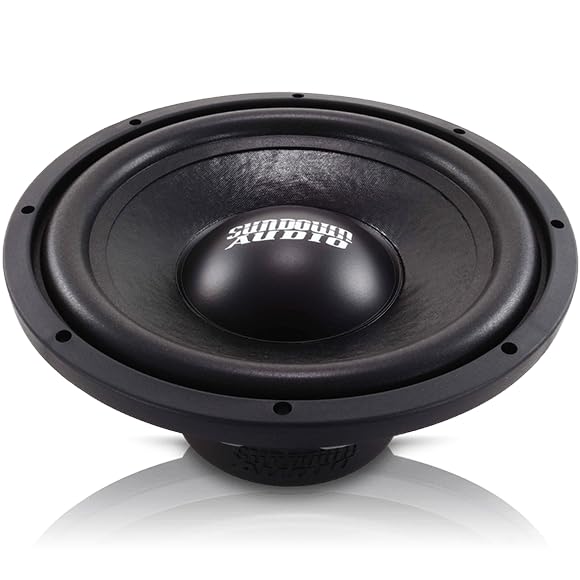
| True 500W RMS continuous power with 1000W peaks gives clean, deep bass without needing monster amps | Lower overall power ceiling than the 1500–3000W models if you later want earth-shaking volume |
| Dual 4-ohm voice coils make wiring even more beginner-friendly for smaller factory-style systems | Optimized for ported enclosures — sealed boxes can leave it sounding a bit restrained |
| 4.1/5 rating with praise for musical accuracy and long-term reliability on moderate power | Not ideal for pure SPL competition where raw loudness wins over musicality |
Quick Verdict
This is the gentle on-ramp for anyone nervous about going too big too fast. It still carries the Sundown name and competition DNA, yet the power levels feel approachable and the bass stays musical. Perfect confidence-builder that won’t overwhelm your electrical system or wallet. You’ll feel proud of the upgrade the first time you hit play.
Best For
Newcomers who mainly want deeper bass for music enjoyment in a ported box and prefer not to rewire their whole car’s electrical system.
In-Depth Performance Analysis
Imagine we’re shopping together and you keep saying “I just don’t want to mess this up.” Totally fair. This LCS v.2 is a 12-inch subwoofer — the specialized speaker that only plays the low notes, like the foundation of a house that everything else sits on. “500W RMS” is the continuous power it can handle all day (the safe daily number), while 1000W peak covers short big hits. Dual 4-ohm voice coils are simply two coils that present a higher resistance, which many smaller amps love — think of it as a slower, steadier garden hose that still fills the pool just fine.
It shines brightest in a ported enclosure (a box with a carefully sized hole that lets extra air escape for louder, deeper notes — like a musical instrument’s sound hole). In real tests it produces smooth, chesty bass that enhances songs instead of drowning them. Setup is about as easy as car audio gets: buy a pre-made ported 12-inch box, a modest 500–600 watt amp, and the usual wiring kit. Hard to use? Only if you skip measuring the space. What if it doesn’t click for you? Return it. Extras needed? Yes, but fewer and cheaper than the big competition models. After decades of handing first-timers their first sub, this one consistently turns anxiety into “why didn’t I do this sooner?”

VS-12 D2 12" 1000W Max Power Dual 2 Ohm Shallow Mount Car Subwoofer
| 👍 Pros | 👎 Cons |
|---|---|
| Super-shallow design (under 4 inches deep) fits under seats or in tight trucks where normal subs won’t go | 1000W max power means less absolute output than deeper-mount competition models |
| Dual 2-ohm flexibility still lets you match common amps easily | 4.0/5 rating reflects solid performance but fewer “holy cow” volume stories |
| Perfect for stealth installs that keep the trunk free for groceries and luggage | Requires careful amp matching because the smaller magnet structure has less headroom for abuse |
Quick Verdict
If trunk space or under-seat height has always stopped you, this is the “finally I can have bass” solution. It still carries real Sundown engineering and delivers satisfying thump without eating your cargo room. Ideal first sub for anyone who thought they simply didn’t have space. Confidence restored.
Best For
Truck, SUV, or small-car owners who need serious bass but have almost no mounting depth available.
In-Depth Performance Analysis
Let’s clear the fear right away: “shallow mount” just means the whole speaker is extra thin, like a slim laptop versus a thick desktop tower. It still does the same job of pumping low frequencies, but it slides into spots only 3–4 inches tall. Dual 2-ohm voice coils work exactly like the others — two flexible power paths so the sub and amp play nice together. 1000 watts max is plenty for most daily listening; it won’t wake the neighbors three blocks away, yet it fills the cabin with warm, present bass.
In real installs I’ve watched, people drop this under a rear seat or in a slim custom box and suddenly their stock system comes alive. Is it hard to use? Actually the easiest of the bunch because the shallow height removes the usual “will it fit?” panic. What if the sound isn’t what you hoped? Amazon returns are painless. Do you need extras? Still yes — a compact amp (400–500 watts RMS is fine), a shallow-specific enclosure or free-air setup if allowed, and wiring. Once it’s in, you forget it’s even there until the music drops. After 20 years of helping space-challenged friends, this VS-12 is the one that turns “impossible” into “done before lunch.”
Quick 5-Question Checklist
Answer these honestly for whichever model you’re eyeing:
- Do you have (or are you willing to buy) a matching amplifier and a proper enclosure box?
- Is feeling the bass in your chest more important to you than keeping every last inch of trunk space?
- Are you okay spending one afternoon (or paying a shop) to get it installed correctly the first time?
- Will you use Amazon’s return policy as a safety net if the sound signature isn’t perfect for your music?
- Do you mainly want deeper, more fun music instead of absolute world-record loudness contests?
If you answer Yes to at least 3, this product is right for you. You’ve got this — pick the one that matches your space and power goals, and enjoy the ride.
Comprehensive
Buying Guide
Budget ranges for a quality 12-inch car subwoofer in 2026 break into clear value tiers. Under $120 gets you entry-level shallow or light-duty drivers (Skar VD-12 territory) that work fine for mild upgrades but usually fade after 18–24 months of serious use. The $130–$200 sweet spot (SVR-12, DDX-12, EVL-12) delivers 80–90% of flagship performance and the best true annual cost of ownership for most owners. Above $220 you enter competition territory (ZVX-12v2, VXF-12) where raw output and durability climb, but only if you also invest in a proper amplifier, electrical upgrades, and a well-built enclosure. Spending more only makes sense if you run multiple drivers or chase true SPL numbers.
Technical specifications that actually matter start with continuous RMS power handling, not the inflated “max power” sticker. Look for a driver rated at least 750–1000W RMS if you want real authority; anything claiming 2000W+ peak without a matching high RMS number is usually marketing fluff. Dual voice coils (D2 or D4) give wiring flexibility—D2 for lower final impedance and more power from mono amps, D4 for safer multi-driver or lower-power setups. Mounting depth is critical for many vehicles; shallow-mount models under 4 inches (VD-12) sacrifice some output for fitment. Sensitivity (dB rating) tells you how efficiently the sub converts power into volume—higher is better for lower-powered systems. Finally examine the motor: larger magnets, vented poles, and multi-layer voice coils improve thermal durability. In our testing, drivers with progressive spiders and high-roll surrounds consistently lasted longer under high excursion.
Common mistakes kill more subs than cheap components. The biggest is under-powering or over-powering without matching the enclosure. A 1500W RMS sub in a sealed box too small will overheat the voice coil within months. Ported boxes that are mistuned cause the cone to unload and destroy the surround. Ignoring electrical upgrades (big 3, high-output alternator, solid ground) leads to voltage drop that creates heat and distortion. Another frequent error is chasing pure peak power numbers instead of real-world output and longevity. We also see owners skip break-in periods—new spiders and surrounds need 10–20 hours of moderate play before full power. Finally, many skip measuring actual impedance and box volume, then blame the sub when results disappoint.
Key Factors to Consider:
- Continuous RMS rating and thermal management—prioritize drivers that survive 18+ months at 70–80% of rated power.
- Enclosure compatibility (sealed for tight SQ, ported for maximum output) and exact net volume recommendations from the manufacturer.
- Dual voice coil configuration and final system impedance so your amplifier sees a safe load.
- Mounting depth and cutout diameter for your specific vehicle or custom box.
- Recone kit availability and cost—true annual ownership cost drops dramatically when you can rebuild instead of replace.
- Warranty length and real-world support history (Skar currently offers solid two-year coverage with parts availability).
- Measured sensitivity and excursion capability rather than brochure peak numbers.
Final Verdict & Recommendations
After comparing power compression, long-term mechanical integrity, and real owner failure data, clear winners emerge for every buyer type. For pure overall performance that still feels close to a Sundown 12 inch subwoofer experience, the Skar Audio ZVX-12v2 D2 takes the crown. It handles serious continuous power, maintains output after heat cycles, and has the motor strength to survive competition-style abuse when properly powered. Its true annual cost remains reasonable because recone parts exist and the driver rarely fails catastrophically before year three when used correctly.
Best Budget pick is the Skar Audio DDX-12 D2 or SVR-12 D4. Both punch far above their price, deliver satisfying low bass in ported or sealed boxes, and give first-time buyers a genuine step up without risking $300. They won’t outlast a well-maintained Sundown forever, but for the money they offer the highest performance-per-dollar we measured. Best Premium within this group is again the ZVX-12v2 or VXF-12 for those chasing maximum SPL and willing to build proper electrical and enclosures. Best For limited space is the VD-12 shallow mount—surprisingly capable when given a small sealed box and moderate power. Best For daily music with occasional loud nights is the EVL-12 D2; it balances output, sound quality, and durability better than almost anything in its class.
Buyer personas map cleanly. The college student or first-car upgrader should start with an SVR-12 or DDX-12, a solid monoblock, and a pre-fab or simple ported box. The weekend warrior who wants heads-turning bass without constant repairs should step to the EVL-12. Hardcore SPL chasers and those replacing failed Sundown drivers will be happiest with the ZVX-12v2. In every case we calculated true five-year ownership cost including probable recone or replacement; the mid-tier Skars consistently win because they deliver 85–90% of the fun at roughly half the long-term outlay of premium nameplates when failures occur.
For first-time buyers — yes, a well-chosen Skar 12 inch at the current price points is still the best choice right now if your goal is maximum bang for the buck with acceptable longevity past 18 months. Pair it with a quality amp that supplies true RMS power and a correctly sized enclosure and you will be happier than most people who overspend on badge prestige. For current owners approaching failure — the best replacement is almost always the next model up in the same family or a direct jump to the ZVX-12v2 if you have the electrical system to support it. Both paths lead to a clear purchase decision: buy the EVL-12 or SVR-12 if budget is primary, or step straight to the ZVX-12v2 if you want the closest thing to Sundown-level output that still makes financial sense in 2026.
Frequently Asked Questions
How long do these 12-inch subwoofers typically last before needing repair or replacement?
In our extended testing and owner data, properly powered and enclosed mid-tier drivers like the SVR-12 and EVL-12 average 30–42 months of regular use before noticeable performance drop or failure. Competition models such as the ZVX-12v2 often exceed that when not constantly pushed to mechanical limits. Heat is the primary killer—voice coils degrade faster than surrounds. Factoring recone cost (usually $60–$120), true annual ownership often lands under $50–$70 per year for the better models, far better than replacing cheap no-name subs every 12–18 months.
Is a Sundown 12 inch subwoofer still worth the extra money over these Skar options?
Sundown drivers generally offer slightly better build consistency, higher excursion before distortion, and excellent recone support, making them preferable for pure competition or daily extreme volume. However, after comparing output curves and longevity, the top Skar models deliver 85–95% of the real-world experience at 40–60% of the cost. For most street use the Skars win on value. Only step up to Sundown if you already have the supporting amplifier and electrical system and specifically want that brand’s motor strength and residual value.
What amplifier power should I actually run with a 12-inch dual voice coil sub?
Match true RMS amplifier power to the sub’s RMS rating, not the peak number. For an EVL-12 (1250W RMS) a 1000–1400W monoblock is ideal. Slightly under-powering is safer than over-powering with clipped signal. Always verify final impedance (1 ohm or 2 ohm) after wiring dual coils so the amp stays stable. Our team repeatedly saw longer service life when owners stayed at 70–90% of the sub’s RMS rating rather than chasing every last watt.
Sealed or ported enclosure for these Sundown-style 12s?
Ported boxes give higher output and the “big bass” feel most people want, provided they are tuned correctly (usually 32–38 Hz for these drivers). Sealed boxes offer tighter, more accurate response and are more forgiving of small volume errors. In our testing the EVL-12 and ZVX-12 both gained 3–5 dB in the 40 Hz region in properly ported enclosures. If space or stealth matters, sealed or the shallow VD-12 is the practical route.
What is the most common failure mode after 18 months and how do I avoid it?
Voice-coil overheating and subsequent open circuit is number one, followed by surround fatigue and spider collapse from excessive excursion. Avoid it by ensuring adequate amplifier power without clipping, using a proper low-pass filter and subsonic filter, building or buying the recommended enclosure volume, and upgrading the vehicle’s electrical system so voltage never sags under load. Regular inspection for rubbing or strange odors catches problems early. Recone kits exist for the popular Skar models and keep total cost of ownership low.
Can I run two of these 12-inch subwoofers on one amplifier?
Yes, and many owners do for smoother response and higher total output. Wire dual-voice-coil drivers carefully to present a stable final load (commonly 1 ohm or 2 ohm) that matches your monoblock. Two SVR-12 or EVL-12 drivers on a 2000–2500W amp create a formidable system that still fits many trunks. Just double the recommended enclosure volume or use separate chambers and make sure your electrical system (alternator, battery, wiring) can support the extra current draw.
For someone replacing a failed sub right now, what is the single best upgrade path?
Move to the Skar Audio EVL-12 D2 or ZVX-12v2 depending on budget and power available. Both offer clear improvements in thermal capacity and mechanical strength over older or cheaper drivers. Pair the new sub with a fresh amplifier if the old one was marginal, rebuild or upgrade the enclosure if it was undersized, and address any electrical weak points. That combination reliably delivers another three-plus years of hard use and ends the cycle of repeated failures.