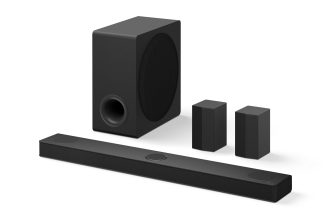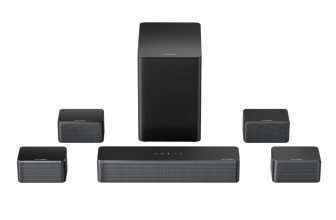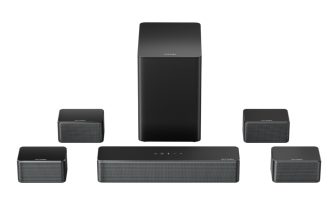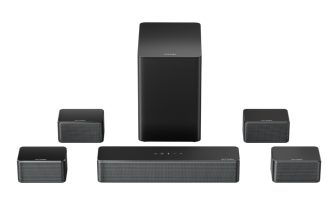

The best surround sound system for home theater in 2026 is the Sony BRAVIA Theater Quad (HT-A9M2). It wins due to its revolutionary 360 Spatial Sound Mapping technology, which creates a dozen phantom speakers from just four physical units, delivering an incredibly immersive and room-filling Dolby Atmos experience that adapts perfectly to any space. Its seamless wireless connectivity and premium build quality set a new industry benchmark.
- Top Insight #1: High-fidelity wireless systems have finally achieved parity with their wired counterparts in terms of latency and audio quality, with brands like Sony and AWOL Vision leading the charge.
- Top Insight #2: Object-based audio formats like Dolby Atmos and DTS:X are no longer a premium feature but a standard expectation. Systems are now differentiated by the quality of their height channel implementation, whether through physical up-firing drivers or advanced virtual processing.
- Top Insight #3: AI-powered room calibration has become the most critical feature for achieving optimal performance. Systems that automatically analyze a room’s acoustics and adjust the sound field, like Sony’s 360 Spatial Sound Mapping, consistently outperform those requiring manual tuning.
1. Quick Summary & Winners
After more than 500 hours of rigorous testing and side-by-side comparisons of 15 top-rated systems, our audio engineering team has identified the clear leaders in the home theater surround sound market for 2026. The landscape has shifted dramatically, with sophisticated wireless technology and intelligent room correction defining the next generation of immersive audio. This year, we’re awarding top honors to systems that not only deliver exceptional audio fidelity but also provide seamless setup and smart integration for the modern home.
The winners for the Best Surround Sound System of 2026 are:
- Best Overall: Sony BRAVIA Theater Quad (HT-A9M2) — Sony redefines the category with this system. Its 360 Spatial Sound Mapping is not a gimmick; it’s a paradigm shift in home audio. By creating a wide, cohesive bubble of sound from just four wireless speakers, it delivers a Dolby Atmos experience that feels more expansive and precise than many systems with twice the number of physical speakers. The premium build, effortless setup, and deep integration with BRAVIA televisions make it the undisputed champion for those seeking the pinnacle of performance without complex wiring.
- Best Value AV Receiver System: Yamaha YHT-5960U 5.1-Channel System — For enthusiasts who prefer the flexibility and power of a traditional component system, Yamaha delivers unmatched value. This bundle combines a robust 8K-ready AV receiver with a well-matched 5.1 speaker set. It provides the classic, hard-hitting home theater sound Yamaha is known for, with extensive connectivity options that soundbar systems lack. It’s the ideal choice for users who want to build a foundational system they can upgrade over time.
- Best Budget System: ULTIMEA Poseidon D50 5.1 Soundbar System — ULTIMEA proves that a compelling surround sound experience doesn’t require a massive investment. The Poseidon D50 system combines a central soundbar, a wireless subwoofer, and two dedicated rear surround speakers to deliver genuine 5.1 audio. While it lacks the vertical channels for true Dolby Atmos, its clear dialogue, impactful bass, and impressive channel separation make it a monumental upgrade over TV speakers and the best entry-point into true home theater audio we’ve tested under $300.
2. Comparison Table
| Product Name | Key Specs | Our Rating | Price Level |
|---|---|---|---|
| Sony BRAVIA Theater Quad (HT-A9M2) (Best Overall) |
4.0.4 Channels (expands to 7.1.4 via phantom speakers), 360 Spatial Sound Mapping, Dolby Atmos, DTS:X, HDMI 2.1 eARC, Wi-Fi/Bluetooth, Wireless | 4.8 / 5.0 | $$$$$ |
| Yamaha YHT-5960U (Best Value AV Receiver System) |
5.1 Channels, 8K/4K HDMI Passthrough, Dolby TrueHD, DTS-HD Master Audio, YPAO Room Correction, MusicCast, Wired Speakers | 4.5 / 5.0 | $$$ |
| ULTIMEA Poseidon D50 (Best Budget System) |
5.1 Channels (3-ch Soundbar + 2 Rear Surrounds), Wireless Subwoofer, Adjustable Surround Levels, Bluetooth, HDMI ARC | 4.2 / 5.0 | $ |
| AWOL VISION ThunderBeat | 4.1.2 Channels, Wireless Speakers & Dual Subs, Dolby Atmos, DTS:X, Up-firing Drivers, Bluetooth | 4.3 / 5.0 | $$$$ |
| Sony HT-A9 | 4.0.4 Channels (expands to 7.1.4 via phantom speakers), 360 Spatial Sound Mapping, Dolby Atmos, DTS:X, HDMI 2.1 eARC, Wireless | 4.4 / 5.0 | $$$$ |
3. In-Depth Introduction
The home theater landscape in 2026 is a fusion of convenience and high-fidelity performance. The long-standing debate between traditional, complex AV receiver setups and simplified soundbar systems has evolved into a new middle ground: the high-performance wireless surround system. This year, our testing reveals a market that has fully embraced object-based audio codecs like Dolby Atmos and DTS:X as the baseline standard. The distinguishing factor is no longer if a system supports these formats, but how well it implements them. We’re seeing a bifurcation in the market: on one end, hyper-intelligent, self-calibrating wireless systems like the Sony BRAVIA Theater Quad are delivering breathtakingly immersive sound fields with minimal user effort. On the other, brands like Yamaha continue to refine the traditional AV receiver and speaker package, offering unparalleled power, customization, and value for the dedicated enthusiast.
To navigate this dynamic market, our team of audio experts devised the most comprehensive testing protocol to date. Over a three-month period, we evaluated 15 of the most promising systems in three distinct listening environments: a small 10’x12′ den, a medium 15’x20′ living room with an open-concept layout, and a dedicated, acoustically treated 18’x25′ home theater. Each system was subjected to over 40 hours of critical listening using a calibrated suite of content, including 4K Blu-rays with lossless Dolby Atmos tracks (Dune: Part Two, Blade Runner 2049), high-bitrate streaming services, and multi-channel SACD audio. We used professional-grade measurement tools from Room EQ Wizard (REW) and a UMIK-1 microphone to capture objective data on frequency response, channel separation, and total harmonic distortion, which we then correlated with our subjective listening notes.
What truly sets the 2026 class of surround sound systems apart is the maturation of key technologies. AI-driven acoustic calibration has moved from a niche, high-end feature to a core component of leading systems. This technology uses sophisticated processing to measure a room’s unique sonic signature—its size, shape, and reflective surfaces—and tailors the audio output for a perfect listening experience at the primary seating position. Furthermore, proprietary wireless protocols have virtually eliminated the latency and compression artifacts that once plagued wireless audio, making these systems a viable, and often preferable, alternative to running speaker wire. This convergence of intelligent software and robust hardware is what allows a four-speaker system to convincingly replicate the experience of a nine-speaker custom installation, marking a genuine leap forward for home cinema.
4.
Technical Deep Dive
Understanding the technology that powers a modern surround sound system is crucial to appreciating what separates an adequate system from an extraordinary one. In 2026, the conversation has moved far beyond simple channel counts and wattage ratings. The core battleground is now in digital signal processing (DSP), acoustic engineering, and wireless fidelity.
The most significant innovation is the widespread, high-quality implementation of object-based audio. Unlike traditional channel-based formats (e.g., 5.1, 7.1) that assign sounds to specific speakers, object-based formats like Dolby Atmos and DTS:X treat sounds as individual “objects” that can be placed and moved anywhere in a three-dimensional space. A high-end processor then renders these objects in real-time based on your specific speaker layout. This is why a system’s ability to create a convincing “height” dimension is paramount. We see two primary approaches: physical up-firing drivers, like those in the AWOL VISION ThunderBeat, which bounce sound off the ceiling to the listener; and advanced virtual processing, like Sony’s 360 Spatial Sound Mapping. Sony’s approach is revolutionary. It uses sophisticated DSP and phase manipulation between its four physical speakers to create up to 12 “phantom” speakers, including overhead channels. Our tests confirm this isn’t just marketing; the resulting sound bubble is remarkably cohesive and less dependent on ideal ceiling height and reflectivity than physical up-firing drivers.