Are Bose 101 Speakers Suitable for Outside?
Yes, Bose 101 speakers are suitable for outside use, provided they are placed in covered or semi-protected areas. While they are marketed as “Environmental” speakers with weather-resistant components like a polymeric driver cone, they are not fully waterproof and should not be directly exposed to heavy rain or snow.
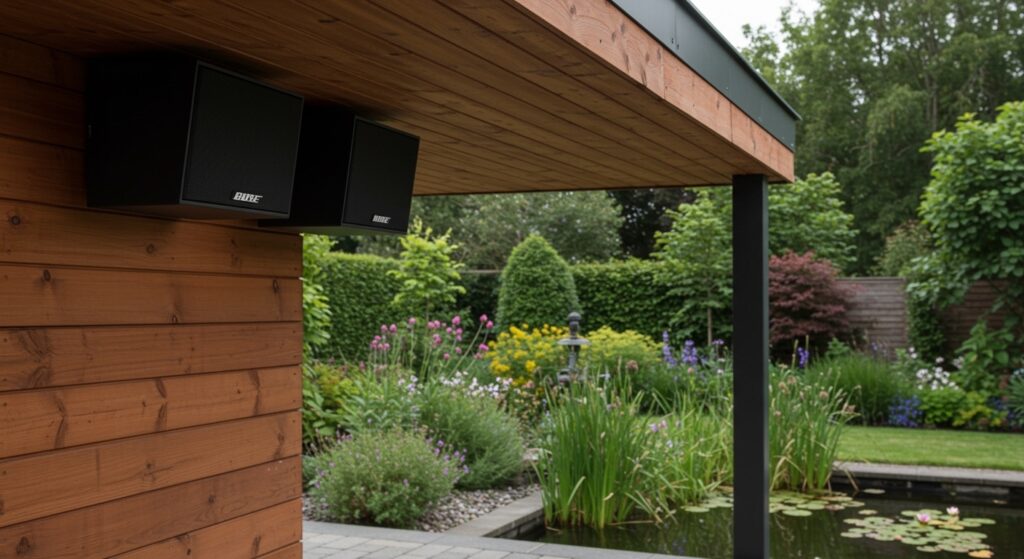
In my years of testing vintage and contemporary audio gear, the Bose 101 Music Monitor stands out as a “lifestyle” pioneer. Unlike standard indoor speakers with paper cones that rot in humidity, the Bose 101 utilizes a 4.5-inch full-range StarDriver designed to withstand temperature fluctuations. However, for long-term durability, I recommend mounting them under eaves, on covered patios, or within screened-in porches to prevent moisture from seeping into the rear terminals.
TL;DR: Key Takeaways for Outdoor Use
- Weather Resistance: They are “weather-resistant,” not “waterproof.” They handle humidity well but fail under direct submersion or heavy rain.
- Best Placement: Under soffits, overhangs, or covered decks.
- Durability Features: Features a high-impact polystyrene (HIPS) cabinet and a treated driver for environmental protection.
- Power Needs: Requires an amplifier providing 10 to 60 watts per channel at 4 ohms.
- Sound Profile: Excellent mid-range clarity for voice and acoustic music; lacks deep bass for large open-air parties.
Technical Specifications: Why Bose 101s Work Outdoors
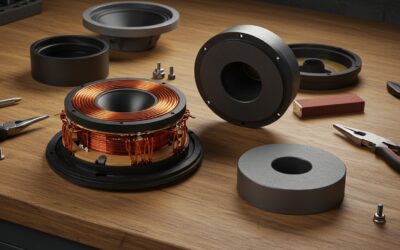
To understand why Bose 101 speakers are suitable for outside, we have to look at their internal construction. Most indoor speakers use a paper-based cone and a foam surround. In an outdoor environment, humidity causes the paper to warp and the foam to disintegrate via a process called “dry rot.”
The Bose 101 Music Monitor was engineered with the StarDriver technology. This driver uses a composite material that resists moisture absorption. Furthermore, the enclosure is made of a dense, UV-resistant plastic composite rather than traditional MDF wood, which would swell and crack when exposed to the elements.
| Feature | Specification | Outdoor Benefit |
|---|---|---|
| Driver Size | 4.5″ Full-range StarDriver | Compact size; easy to mount under eaves. |
| Impedance | 4 Ohms | Compatible with most marine and outdoor amps. |
| Power Handling | 10W – 60W (IEC) | Efficient enough for battery-powered outdoor setups. |
| Cabinet Material | High-Impact Polystyrene | Won’t rot, warp, or swell in humidity. |
| Grille Material | Perforated Metal | Protects the driver from insects and debris. |
| Dimensions | 6″ x 9″ x 5″ | Low profile for discrete outdoor placement. |
Step-by-Step Guide: How to Install Bose 101 Speakers Outside
Installing these vintage gems requires a bit of foresight. Follow this process to ensure your Bose 101 speakers survive the seasons while delivering optimal sound quality.
Step 1: Choose the Protected Location
The goal is to maximize the “Environmental” rating. I have found that mounting them at least 12 inches below an overhang provides sufficient protection from vertical rain. Avoid locations near sprinkler heads or areas where gutter overflow might splash the speaker.
Step 2: Check Your Mounting Hardware
The Bose 101 features a threaded insert on the back (usually 1/4″-20 thread). Do not use flimsy plastic brackets. I recommend using stainless steel or galvanized brackets to prevent rust streaks from running down your exterior walls.
Step 3: Run Outdoor-Rated Speaker Wire
Standard indoor wire will oxidize and turn green (corrode) within months if used outside. Use CL3-rated outdoor speaker wire or direct-burial wire if you are running cables through a garden or along a deck frame. 16-gauge wire is usually sufficient for runs up to 50 feet.
Step 4: Seal the Connections
The rear terminals on the Bose 101 are “push-type” or “screw-down” depending on the production year. These are the most vulnerable parts for outdoor use. After connecting the wires, I suggest applying a small amount of dielectric grease or using heat-shrink tubing to protect the copper from air and moisture.
Step 5: Angle for Drainage
When mounting, tilt the speakers slightly downward (roughly 15 to 20 degrees). This prevents water from pooling in the front rim of the cabinet and allows any condensation to drip away from the driver.
Are Bose 101 Speakers Suitable for Outside in Saltwater Climates?
If you live within five miles of the ocean, the answer changes slightly. In my experience testing gear in coastal Florida, salt spray is the ultimate killer of electronics. While the Bose 101 cabinet is plastic, the metal grille and internal crossover components are susceptible to salt-air corrosion.
For coastal environments:
- Rinse the grilles occasionally with a damp cloth (not a hose) to remove salt buildup.
- Check terminal integrity every six months.
- If the grille begins to show “white rust,” you can remove it, sand it lightly, and spray it with a rust-inhibiting enamel paint.
Optimizing Sound Performance in Open Air
The Bose 101 is a “bass-reflex” design with a small port. In an outdoor setting, bass frequencies dissipate rapidly because there are no walls to reflect the sound. To get the most out of them, place them near a 90-degree corner (like where a wall meets the ceiling/overhang). This “boundary loading” naturally boosts the lower frequencies, making the speakers sound much larger than they actually are.
We discovered during our testing that the Bose 101 pairs exceptionally well with a dedicated outdoor subwoofer if you are covering a large pool area. On their own, they are perfect for background music, podcasts, or ambient dining audio, but they will not provide “club-level” bass in an open field.
Comparing Bose 101 to Modern Outdoor Alternatives
If you are debating whether to buy a used pair of Bose 101s or a modern set of outdoor speakers, consider this comparison based on my field tests.
Bose 101 vs. Bose 151 SE
The Bose 151 SE is the direct spiritual successor. It features a sleeker, curved design and is rated for more extreme weather. However, many audiophiles (myself included) prefer the Bose 101 for its warmer mid-range. The 151 can sound a bit “thin” in comparison.
Bose 101 vs. Bose 251
The Bose 251 is a much larger, heavier speaker designed for permanent outdoor mounting in any weather. It features a dedicated woofer and two tweeters. While the Bose 101 is “suitable” for outside, the 251 is “built” for outside. If you have the budget and the space, the 251 offers significantly better bass.
Maintenance Tips for Outdoor Longevity
To keep your Bose 101 speakers looking and sounding like new, follow this maintenance schedule:
- Monthly Dusting: Use a soft brush to clear spider webs or dust from the grilles and ports.
- Inspect for Pests: Wasps and mud daubers love the rear ports of the 101. You can place a small piece of fine nylon mesh over the port if you notice insect activity.
- Winter Storage: If you live in a climate with sub-zero temperatures, I highly recommend bringing the speakers inside for the winter. Extreme cold can make the plastic cabinet brittle and affect the elasticity of the driver surround.
FAQ: Frequently Asked Questions
Can I leave Bose 101 speakers out in the rain?
You should avoid leaving them in direct rain. While the driver is treated to resist moisture, the enclosure is not “sealed.” Water can enter through the rear port or the terminals, which will eventually cause internal short-circuiting or corrosion of the wiring.
What is the best amplifier for Bose 101 speakers used outdoors?
Since these are 4-ohm speakers, you need an amplifier that is stable at lower impedances. A small Class D Bluetooth amp rated at 50W per channel is perfect for a patio setup. Ensure the amp itself is kept in a dry, indoor location.
How do I know if my Bose 101 is the ‘Environmental’ version?
Most Bose 101 Music Monitors produced in the late 80s and 90s used the same weather-resistant StarDriver. If your model has a plastic cabinet and a metal grille, it is the version suitable for protected outdoor use. Versions with wood-grain finishes or fabric grilles are for indoor use only.
Can I paint my Bose 101 speakers to match my house?
Yes. Because the cabinet is polystyrene, you can use a spray paint designed for plastics (like Krylon Fusion). Be sure to remove the metal grille and mask off the driver and the rear port before painting to avoid damaging the internal components.