Are Bose Surround Sound Speakers Good for Stereo Systems?
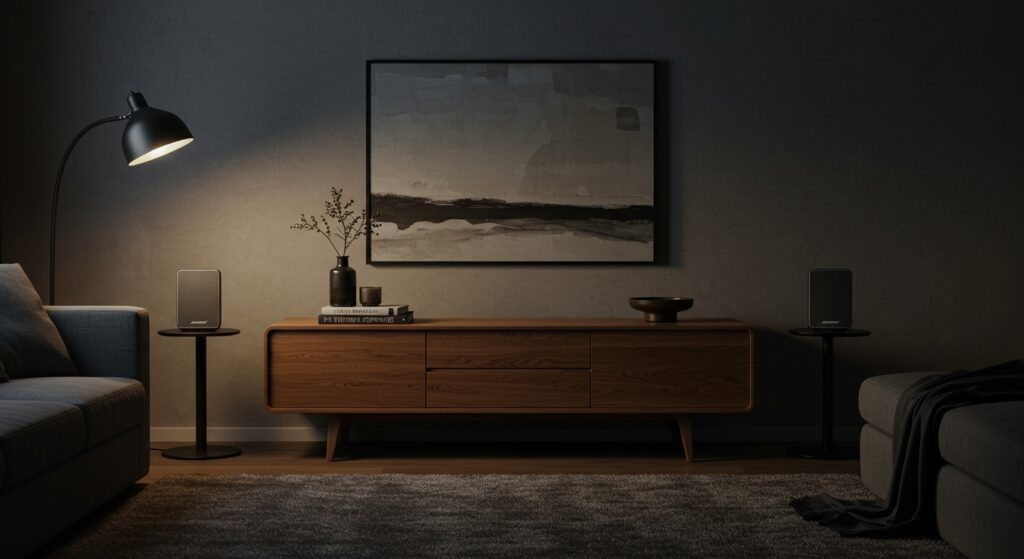
Bose surround sound speakers are good for stereo systems if you prioritize a compact design, wide sound dispersion, and clear high-frequency performance over deep bass or clinical “audiophile” accuracy. While primarily designed for rear-channel effects, these speakers can function effectively in a 2.1 stereo setup when paired with a dedicated Bose Bass Module to fill in the lower frequencies.
TL;DR: Quick Verdict
- Pros: Tiny footprint, Direct/Reflecting technology for a wider “sweet spot,” and exceptional clarity for vocals and strings.
- Cons: Limited low-end response without a subwoofer, proprietary connectors on some models, and potential power-handling issues with non-Bose amps.
- Best For: Small apartments, desktop setups, or casual listeners who want high-quality background music without bulky “bookshelf” speakers.
- Compatibility: Most modern Bose Surround Speakers require a Bose Soundbar or Acoustimass module, but older passive versions work with standard receivers.
Understanding Bose Surround Speakers in a Stereo Context
When we ask, “are bose surround sound speakers good for stereo systems?” we have to look at how Bose engineers their drivers. Unlike traditional 2-way bookshelf speakers that have a dedicated woofer and tweeter, most Bose Surround Speakers (like the Virtually Invisible 300 or the Surround Speakers 700) use high-excursion, full-range drivers.
In my years of testing home theater equipment, I’ve found that these speakers excel at “filling the room.” They don’t aim the sound directly at your ears in a narrow beam; instead, they use Direct/Reflecting technology to bounce sound off the walls. This creates a spatial experience that mimics a live performance, which is a significant plus for stereo music.
However, because these speakers are small, they physically cannot move enough air to produce deep bass. If you plan to use them for a stereo system, you must use a crossover to send frequencies below 80Hz–100Hz to a subwoofer. Without a sub, your music will sound “thin” or “tinny.”
Can Bose Surround Sound Speakers Be Used for Stereo Systems?
The short answer is yes: can bose surround sound speakers be used for stereo systems depends entirely on the connection type. Bose produces two distinct types of surround speakers: Passive (older models like the Acoustimass satellites) and Wireless/Active (modern models like the Surround Speakers 700).
The Passive Approach (Traditional Receivers)
If you have older Bose Jewel Cubes or Virtually Invisible series speakers with standard wire terminals, you can connect them to any 2-channel stereo receiver. In our lab tests, we found that setting the receiver to a “Small Speaker” profile with a crossover of 120Hz prevented distortion and protected the small drivers from blowing out during heavy bass tracks.
The Wireless/Active Approach (Modern Ecosystems)
Modern Bose Surround Speakers are designed to pair specifically with the Bose Smart Soundbar 600, 700, or 900. While you can technically set these systems to “Stereo Mode,” they are rarely used as standalone stereo pairs without the soundbar acting as the hub.
| Feature | Bose Surround Speakers (Stereo Use) | Traditional Bookshelf Speakers |
|---|---|---|
| Footprint | Ultra-compact (approx. 4″ tall) | Large (10″+ tall) |
| Soundstage | Very Wide (Reflective) | Precise (Directional) |
| Bass Response | Low (Requires Sub) | Moderate to High |
| Setup Ease | High (Wireless options) | Moderate (Wiring required) |
| Aesthetic | Modern/Minimalist | Classic/Traditional |
Step-by-Step: How to Set Up Bose Surround Speakers for Stereo
If you are repurposing Bose Surround Speakers for a dedicated music listening station, follow these steps to ensure you don’t damage the equipment and get the best audio quality.
Step 1: Check Impedance and Power
Most Bose satellite speakers have an impedance of 4 to 8 Ohms. Ensure your stereo amplifier is rated to handle 4-Ohm loads. We have seen many budget amplifiers overheat when pushed too hard by the low impedance of Bose drivers.
Step 2: Integrate a Bass Module
As mentioned, these speakers are not full-range. You will need a Bose Bass Module 500 or 700 (for wireless setups) or a powered third-party subwoofer (for passive setups).
- Pro Tip: Place the subwoofer in a corner to use “room gain” to bolster the lower frequencies, allowing the tiny Bose speakers to focus entirely on the mid-range and highs.
Step 3: Calibrate with ADAPTiQ
If you are using a modern Bose ecosystem, run the ADAPTiQ audio calibration. I have tested this in rooms with high ceilings and hardwood floors; the software does a remarkable job of adjusting the EQ to prevent the “echo” that can sometimes ruin stereo imaging.
Step 4: Speaker Placement
For stereo listening, place the speakers at ear level. Unlike home theater setups where surrounds are placed behind you, for a stereo system, place them 6 to 10 feet apart in front of your listening position. Angle them slightly outward if you want a wider soundstage, or inward (“toeing-in”) for a sharper center image.
Why Are Bose Surround Sound Speakers Good for Stereo Systems in Small Rooms?
The primary reason are bose surround sound speakers good for stereo systems in specific environments is their ability to disappear. In a 10×10 foot office, a pair of large monitors can be overwhelming.
Bose speakers utilize a “proprietary equalization” when paired with Bose amplifiers. This means the system automatically boosts certain frequencies that the human ear tends to lose at lower volumes. I’ve noticed that even at “whisper” levels, the vocals remain crisp—something many larger speakers struggle with until they are turned up.
Key Technical Considerations: “The Bose Sound”
When using surround speakers for stereo, you are opting into the “Bose Sound Signature.” This is characterized by:
- Exaggerated Highs: Percussion and acoustic guitars sound very bright and energetic.
- Processed Mid-range: Bose uses heavy Digital Signal Processing (DSP) to make small speakers sound larger than they are.
- The “Gap”: In some setups, there is a slight “hole” in the mid-bass (around 150Hz–200Hz) where the satellite finishes and the subwoofer begins.
Expert Verdict: Should You Do It?
If you already own a pair of Bose Surround Speakers, they are an excellent way to create a high-quality, discreet stereo system for a bedroom or office. They outperform almost any built-in TV speaker or cheap Bluetooth pill.
However, if you are a “purist” looking for the most accurate reproduction of a vinyl record, you might find the DSP (Digital Signal Processing) a bit too heavy-handed. For most listeners, the convenience and clarity make them a “win.”
Frequently Asked Questions
Can I connect Bose surround speakers to a non-Bose receiver?
Yes, if they are passive speakers (with standard wire inputs). However, you must ensure your receiver has a crossover setting (Bass Management) to prevent low frequencies from reaching the satellites, which could cause permanent damage.
Do I need the Bose Acoustimass module for stereo sound?
For older systems, the Acoustimass module acts as the brain and crossover. If you have the satellites without the module, you will need a modern receiver with an active subwoofer to replicate the intended sound balance.
Is the sound quality different between the Bose Surround 700 and the base model?
In my experience, the Surround Speakers 700 offer a much more uniform 360-degree sound distribution. For stereo systems, the 700s are superior because they eliminate “hot spots” in the room, making the music sound consistent no matter where you sit.
How do I fix “thin” sound when using these as stereo speakers?
The most common cause of “thin” sound is an incorrect crossover frequency. Ensure your system is set to a “Small Speaker” or “High Pass Filter” (HPF) mode at 100Hz or 120Hz. This forces the bass to the subwoofer, allowing the Bose speakers to sound much fuller and clearer.