How to Buy Good Speakers: The Ultimate Guide to Superior Sound
To learn how to buy good speakers, you must first match the speaker type to your room size and primary use case, whether it is for dedicated music listening or a home theater. Focus on three critical metrics: sensitivity (aim for 88dB+), frequency response (20Hz-20kHz is ideal), and impedance (usually 8 ohms for most receivers).
Finding the perfect audio setup often feels overwhelming due to technical jargon and endless options. This guide simplifies the process, providing expert insights into how to shop for speakers that deliver crisp highs, rich mids, and bone-shaking bass without overspending.
Quick Summary: Key Takeaways
Best Overall: KEF LS50 Meta for unmatched clarity and soundstage.
Best for Home Theater: Klipsch Reference Premiere series for high efficiency and “live” feel.
Best Value: ELAC Debut 2.0 B6.2 offers audiophile-grade sound under $400.
Critical Tip: Always prioritize room acoustics and placement; even the most expensive speakers sound poor in a room with too many hard surfaces.
Pro Advice: When learning how to find good speakers, trust your ears over spec sheets—bring a familiar track to a demo room if possible.
Comparison of Top-Rated Speakers for 2024
| Product Name | Speaker Type | Sensitivity | Frequency Range | Best Use Case |
|---|---|---|---|---|
| KEF LS50 Meta | Bookshelf (Passive) | 85dB | 47Hz – 45kHz | Critical Music Listening |
| Klipsch RP-8000F II | Floorstanding | 98dB | 35Hz – 25kHz | Large Home Theaters |
| ELAC Debut 2.0 B6.2 | Bookshelf (Passive) | 87dB | 44Hz – 35kHz | Budget Audiophile Setup |
| Sonos Era 300 | Smart / Wireless | N/A | Variable | Spatial Audio & Streaming |
| Audioengine A5+ | Powered / Active | N/A | 50Hz – 22kHz | Desktop & Small Rooms |
| SVS Prime Pinnacle | Floorstanding | 88dB | 22Hz – 25kHz | Bass-Heavy Music/Movies |
| Q Acoustics 3020i | Compact Bookshelf | 88dB | 64Hz – 30kHz | Small Apartments/Offices |
KEF LS50 Meta: The Gold Standard for Precision
The KEF LS50 Meta is widely regarded by experts as the benchmark for bookshelf speakers. It utilizes the Uni-Q driver array, which places the tweeter in the acoustic center of the bass/midrange cone, creating a single point source for sound.
This design eliminates “sweet spot” limitations, allowing you to hear consistent detail regardless of where you sit. The addition of Metamaterial Absorption Technology (MAT) eliminates 99% of unwanted distortion from the rear of the driver.
Best For: Audiophiles who prioritize imaging and vocal clarity.
Pros:
Incredible soundstage and “holographic” imaging.
Modern, sleek aesthetic with multiple color options.
Revolutionary MAT technology reduces ear fatigue.
Cons:
Requires a high-quality amplifier to truly shine.
Bass extension is limited without a separate subwoofer.
Verdict: If you want to know how to buy speakers that will last a decade, the KEF LS50 Meta is a timeless investment in pure audio fidelity.
Klipsch Reference Premiere RP-8000F II: Cinema at Home
When researching how to buy speakers for home cinema, the Klipsch RP-8000F II often tops the list. Known for their signature copper-spun woofers and Tractrix horn-loaded tweeters, these floorstanders are incredibly efficient.
Efficiency (sensitivity) means they can produce high volumes with very little power from your receiver. This makes them ideal for dynamic movie soundtracks where sudden explosions or orchestral swells require immediate impact.
Best For: Large living rooms and dedicated home theater enthusiasts.
Pros:
Extremely high sensitivity (98dB) works with almost any amp.
Dynamic, energetic sound that mimics a live concert.
Dual 8-inch woofers provide deep, punchy bass.
Cons:
Large footprint requires significant floor space.
The “bright” sound profile may be too sharp for some listeners.
Verdict: The Klipsch RP-8000F II is the ultimate choice for those who want a visceral, high-energy listening experience.
ELAC Debut 2.0 B6.2: Unbeatable Value
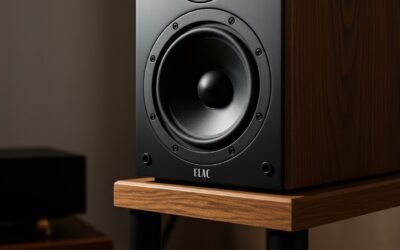
Designed by legendary engineer Andrew Jones, the ELAC Debut 2.0 B6.2 proves you don’t need to spend thousands to get high-end sound. These speakers feature a front-firing port, making them easier to place against walls without bloating the bass.
The aramid-fiber woofers provide more stiffness and damping than standard paper or plastic cones. This results in a smoother frequency response and a more natural sound across the midrange.
Best For: Beginners looking for their first pair of serious hi-fi speakers.
Pros:
Exceptional performance-to-price ratio.
Front-firing port allows for flexible placement on bookshelves.
Neutral sound signature that works well with all genres.
Cons:
The vinyl wrap finish looks a bit utilitarian/plain.
Requires a decent break-in period to sound its best.
Verdict: For anyone learning how to buy stereo speakers on a budget, the ELAC B6.2 is the safest and most rewarding bet.
Sonos Era 300: The Future of Spatial Audio
The Sonos Era 300 represents a shift in how to shop for speakers in the digital age. Unlike traditional wired speakers, this is a standalone unit designed specifically for Dolby Atmos and spatial audio.
With six drivers positioned all around the device, it bounces sound off the walls and ceiling to create an immersive 3D soundstage. It integrates seamlessly into the Sonos ecosystem, making multi-room audio effortless.
Best For: Tech-savvy users who prioritize convenience and streaming services.
Pros:
Best-in-class spatial audio performance for a single unit.
Trueplay tuning optimizes sound based on your room’s layout.
Supports Bluetooth, Wi-Fi, and Line-in (with adapter).
Cons:
Requires a stable Wi-Fi network for full functionality.
Not a traditional “stereo” experience unless you buy two.
Verdict: The Sonos Era 300 is the best choice for modern homes where ease of use and immersive streaming are top priorities.
Audioengine A5+: The Desktop Powerhouse
If you are looking for how to buy good speakers for a computer or turntable without needing an external receiver, the Audioengine A5+ is an active (powered) solution. The amplifier is built directly into the left speaker.
These speakers use custom Kevlar woofers and silk tweeters to provide a warm, punchy sound. They are versatile enough for gaming, professional video editing, or casual vinyl listening.
Best For: Desktop setups, small apartments, and turntable enthusiasts.
Pros:
No external amplifier or receiver required.
Includes a remote control and high-quality thermal management.
Rich, room-filling sound despite the compact size.
Cons:
Lacks modern digital inputs like Optical or HDMI ARC.
The “pro” look might not fit all home decors.
Verdict: The Audioengine A5+ simplifies your audio chain while delivering a performance that rivals many separate components.
SVS Prime Pinnacle: The Bass Master
SVS is famous for their subwoofers, and they brought that low-end expertise to the SVS Prime Pinnacle floorstanders. These speakers feature three 6.5-inch woofers, each with its own internal tuning frequency.
This design ensures that the bass is not just loud, but incredibly accurate and fast. The midrange driver is housed in its own dedicated enclosure to ensure vocals remain crystal clear even during heavy action scenes.
Best For: Listeners who want full-range sound without needing a separate subwoofer.
Pros:
Exceptional low-frequency extension (down to 22Hz).
Very transparent midrange for clear dialogue.
Built like a tank with premium finish options.
Cons:
Very heavy and difficult to move alone.
Demands a high-current amplifier to reach full potential.
Verdict: The SVS Prime Pinnacle offers a massive, full-scale sound that makes it a top contender for how to buy speakers for home theaters.
Q Acoustics 3020i: Style and Substance
The Q Acoustics 3020i is a masterclass in industrial design and acoustic engineering. It features P2P (Point to Point) bracing, which reinforces the parts of the enclosure that need to be stiffest, drastically reducing cabinet vibration.
The sound is characterized by a “relaxed” high end, making it perfect for long listening sessions without causing ear fatigue. Its rounded corners and modern finishes make it one of the most attractive speakers on the market.
Best For: Small rooms, offices, and listeners who prefer a “smooth” sound.
Pros:
Beautiful, modern design that fits any interior.
Excellent mid-bass punch for its size.
Very affordable pricing for the build quality.
Cons:
Deep cabinet design requires deeper shelves or stands.
Not ideal for very large rooms or high-volume parties.
Verdict: The Q Acoustics 3020i is the perfect blend of aesthetic appeal and high-fidelity performance for smaller spaces.
Comprehensive Buying Guide: How to Buy Good Speakers
Choosing the right audio gear requires more than just picking the most expensive model. Use these expert metrics to guide your purchase.
Understand Speaker Types
Bookshelf: Compact, usually 2-way designs. Best for small-to-medium rooms. Often require speaker stands for optimal height.
Floorstanding (Tower): Larger cabinets with more drivers. They offer better bass and higher volume. Best for large, open-concept living areas.
Active vs. Passive: Active speakers have built-in amps (plug into the wall). Passive speakers require an external amplifier or receiver (plug into the amp).
Key Technical Specifications
When you shop for speakers, pay attention to these numbers:
Sensitivity: Measured in decibels (dB). 85dB is low, 88-90dB is average, and 92dB+ is high. Higher sensitivity means the speaker is easier to drive.
Impedance: Measured in Ohms (Ω). Most speakers are 8 ohms. If you buy 4-ohm speakers, ensure your amplifier is “4-ohm stable” to avoid overheating.
Frequency Response: The range of sound the speaker can produce. Humans hear from 20Hz to 20,000Hz. Look for a low number (e.g., 40Hz) if you want good bass without a subwoofer.
Room Acoustics and Placement
Your room is the most important “component” in your system.
The Rule of Thirds: Try to place your speakers about 1/3 of the way into the room to reduce bass reflections.
Toe-in: Angle the speakers slightly toward your listening position to improve the stereo image.
Damping: Use rugs, curtains, or acoustic panels to stop sound from bouncing off hard walls, which causes “smearing.”
How to Buy Used Speakers
Buying used can save you 50% or more. Follow these steps to ensure quality:
Visual Inspection: Check the tweeter domes for dents. If they are pushed in, the sound will be distorted.
The “Woofer Push”: Gently and evenly push the woofer cone. It should move smoothly without any scratching sounds (which indicates a burnt voice coil).
Listen at Low Volume: Distortion is often easier to hear at very low volumes where the signal is weakest.
Check the Surrounds: Ensure the rubber or foam ring around the woofer isn’t rotting or cracking.
Where to Buy Good Speakers
Knowing where to buy good speakers is as important as knowing which ones to buy.
Local Hi-Fi Shops: Best for auditioning. Many offer “trade-up” programs.
Crutchfield: Excellent customer service and a 60-day return policy, which is vital for testing in your own room.
Music Direct / Audio Advisor: Specialized in high-end audiophile gear and turntables.
Amazon: Good for budget brands like ELAC or Edifier, but check the seller’s return policy.
Frequently Asked Questions
(FAQs)
What is the most important factor when buying speakers?
The room size and **