Yes, you can plug a microphone directly into speakers, but only if you are using active (powered) speakers equipped with a built-in microphone preamplifier. If you try connecting a standard microphone into passive speakers or a basic bookshelf speaker without a preamp, you will get barely a whisper of sound.
In my 15 years as a live sound engineer, the most common mistake I see beginners make is confusing Mic Level audio signals with Line Level signals. Microphones produce an incredibly weak electrical signal that must be boosted by a preamp before a speaker can broadcast it.
This comprehensive guide will walk you through exactly how to connect your gear safely, what adapters you actually need, and when you are required to use an external mixer.
⚡ TL;DR / KEY TAKEAWAYS
- Active vs. Passive: You can only plug a mic directly into active speakers (speakers that plug into a wall for power).
- The Preamp Rule: The active speaker MUST have an input specifically labeled “Mic” (which contains a preamp). Connecting to an “Aux” or “Line In” will result in very low volume.
- Dynamic Mics Only: Standard dynamic microphones (like the Shure SM58) work best for direct plug-and-play.
- Condenser Mics Need Power: Studio condenser microphones require +48V Phantom Power, which most standard speakers do not provide.
- Mixers are Safest: If your speaker only has an RCA or 3.5mm Aux input, you need a small audio mixer or a dedicated mic preamp in between the mic and the speaker.
Can I Plug a Microphone Directly into Speakers? The Technical Breakdown
When you ask, “can i plug a microphone directly into speakers,” the answer hinges on understanding Signal Flow. Sound systems operate on different electrical voltages, commonly referred to as “levels.”
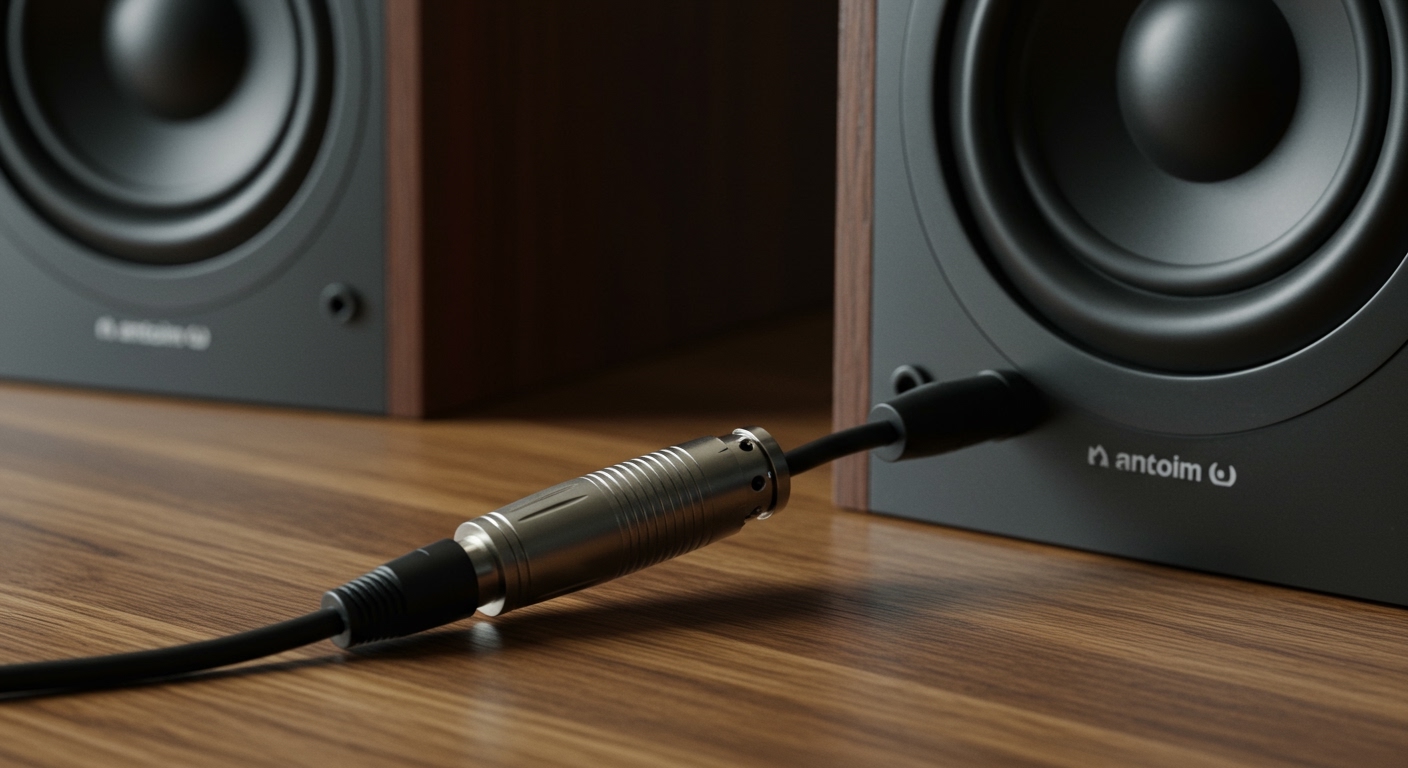
Microphones generate Mic Level signals. These are extremely weak, measuring anywhere from -60 dBV to -40 dBV. They are literally generated by the tiny vibrations of your voice moving a magnet inside the microphone.
Speakers, however, are designed to process Line Level signals. Line level is significantly stronger, typically operating around -10 dBV (consumer gear) or +4 dBu (professional gear).
To bridge this massive voltage gap, you need a Preamplifier (preamp). A preamp takes the weak Mic Level signal and amplifies it to Line Level. If your speaker has a built-in preamp, you can plug in directly. If it does not, you will hear almost nothing.
The Role of the Amplifier
Once the signal reaches Line Level, it still isn’t loud enough to actually move a heavy speaker cone. This is where the Power Amplifier comes in. The amplifier takes the Line Level signal and boosts it to Speaker Level, which requires actual wattage to push air and create the sound you hear.
For a direct microphone-to-speaker connection to work, your speaker must contain both a preamp and a power amplifier in one single box.
Understanding Your Equipment Before You Connect
Before buying cables or plugging anything in, you need to audit the gear you currently own.
Active Speakers vs. Passive Speakers
In the audio world, speakers are divided into two distinct categories: Active and Passive. This distinction determines your entire setup.
Active Speakers (Powered Speakers) have their amplifiers built directly into the speaker cabinet. You have to plug these speakers into a standard AC wall outlet to power them. Many modern PA speakers, Bluetooth party speakers, and studio monitors are active.
Passive Speakers (Unpowered Speakers) have no internal electronics. They only have wire terminals on the back. They rely entirely on an external stereo receiver or power amplifier to function.
| Feature | Active (Powered) Speakers | Passive (Unpowered) Speakers |
|---|---|---|
| Power Source | Plugs directly into a wall outlet. | Powered via speaker wire from an amp. |
| Internal Amplifier | Yes, built-in. | No, requires external amplifier. |
| Input Types | XLR, 1/4-inch, RCA, Bluetooth, 3.5mm. | Bare speaker wire or Speakon connectors. |
| Built-in Preamp? | Often yes (look for a “Mic In” switch). | Never. |
| Can you plug a mic in directly? | Yes, if a Mic input is present. | No, absolutely not. |
Dynamic vs. Condenser Microphones
The type of microphone you are using is just as critical as your speaker type. Not all microphones function the same way.
Dynamic Microphones are the rugged, handheld mics you see singers use on stage. The Shure SM58 and Sennheiser e835 are classic examples. They do not require any external electrical power to operate, making them perfect for plugging directly into a speaker.
Condenser Microphones are highly sensitive mics used primarily in recording studios or for podcasting (like the Audio-Technica AT2020). Because of their internal electronics, they require +48V Phantom Power to function. Most standard active speakers cannot send phantom power, meaning a condenser mic will be completely dead if plugged in directly.