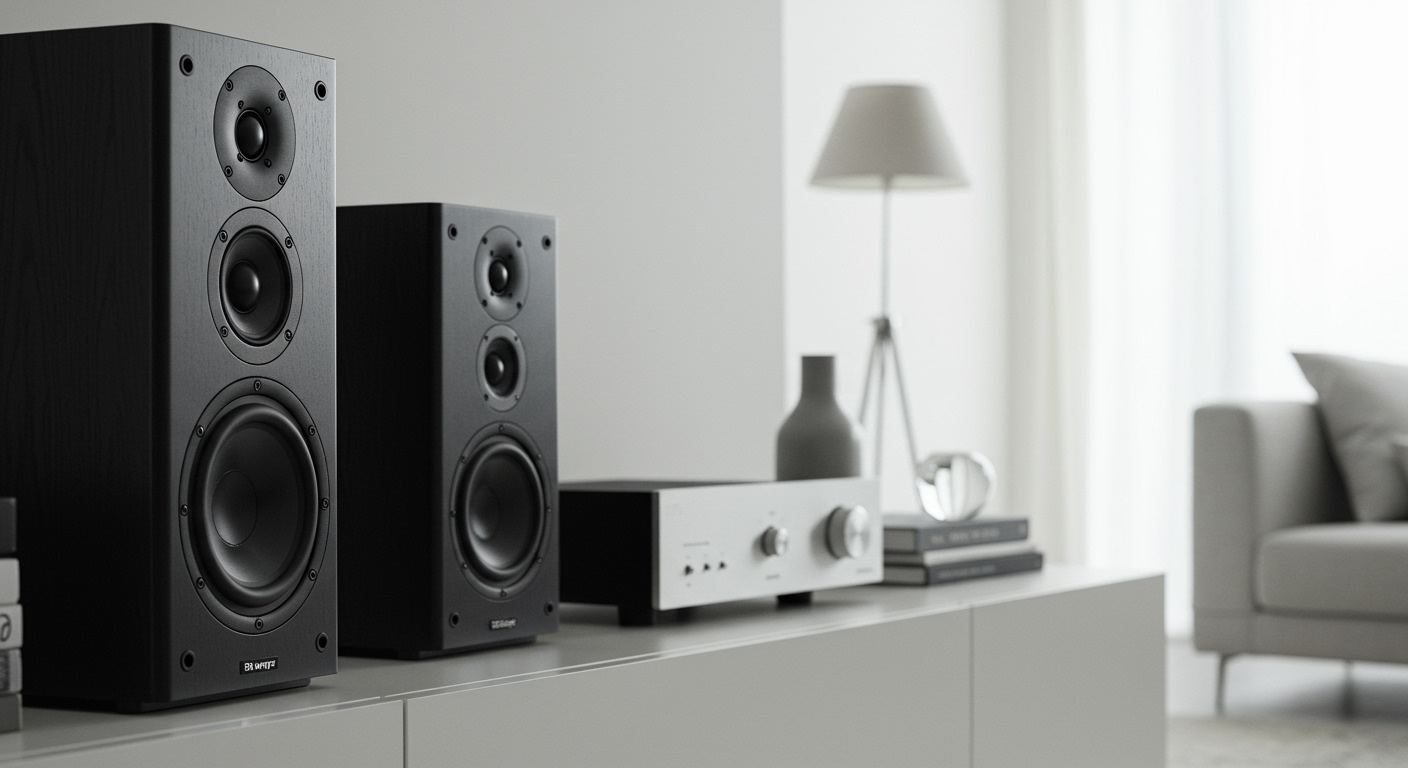
The Audio Dilemma: Can Small Speakers Sound as Good as Large?
If you are wondering can small speakers sound as good as large, the short answer is yes—especially in midrange clarity, vocal accuracy, and stereo imaging. However, due to the physical laws of acoustics, compact speakers cannot move enough air to replicate deep sub-bass frequencies without the help of a dedicated subwoofer.
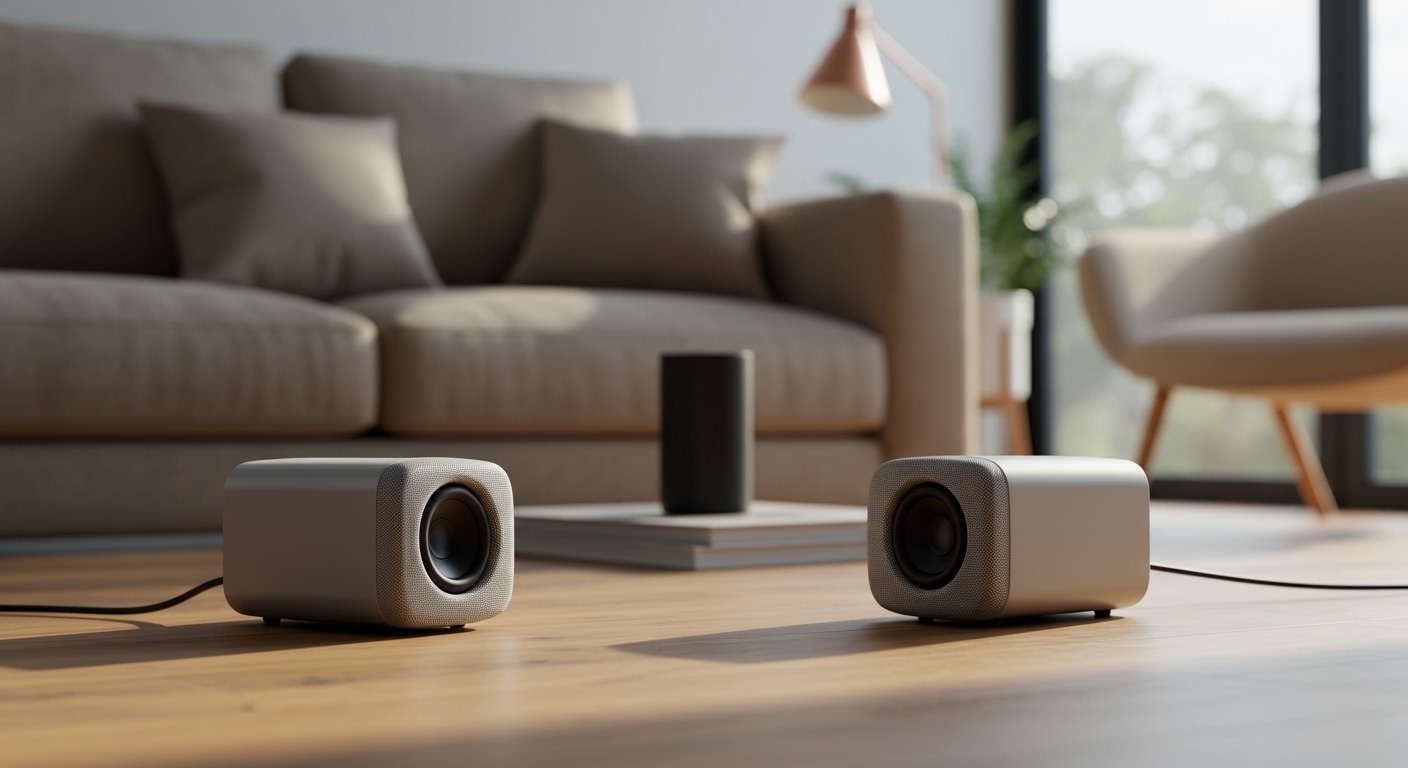
Many audio enthusiasts struggle with balancing premium sound quality against limited living room space. We often assume that massive floorstanding towers are the only path to audiophile-grade sound.
After years of testing hundreds of audio setups, I can confidently tell you that a properly optimized compact speaker system can actually outperform poorly placed large speakers. By leveraging modern engineering, acoustic placement, and bass integration, you can achieve massive, room-filling sound from a tiny footprint.
TL;DR: Key Takeaways
- Imaging Advantage: Small speakers often disappear into the room better, offering superior 3D soundstage and stereo imaging.
- The Bass Limitation: Compact cabinets physically cannot produce deep, tactile sub-bass (below 40Hz); a dedicated subwoofer is required.
- Hoffman’s Iron Law: Speaker design dictates that you can only have two of three things: deep bass, high efficiency, or a small cabinet size.
- Placement is Everything: Placing small speakers on dedicated ear-level stands instantly elevates their perceived scale and detail.
- Modern DSP: Digital Signal Processing allows modern compact active speakers to sound significantly larger than their physics suggest.
The Physics of Sound: Understanding the Size Barrier
To fully understand whether can small speakers sound as good as large, we must look at the science of sound waves. Sound is simply moving air, and lower frequencies require moving significantly more air than higher frequencies.
Hoffman’s Iron Law
In the 1950s, audio engineer J. Anton Hofmann established a rule that still governs speaker manufacturing today. His law states that a speaker designer must choose two of the following three traits:
- Deep Bass Extension
- High Acoustic Efficiency (Loudness per watt)
- Small Enclosure Size
Because small speakers inherently possess a small enclosure, they must sacrifice either deep bass or efficiency. This is why compact bookshelf speakers require more amplifier power to reach the same volume as large towers.
Cabinet Resonance and Driver Speed
While large cabinets are great for bass, they introduce their own problems, namely cabinet resonance. Massive wooden boxes vibrate, which can muddy the midrange frequencies and distort vocals.
Small speakers, by contrast, have more rigid, tightly braced cabinets. This rigidity allows the drivers to start and stop incredibly fast. The result is a highly analytical, crystal-clear midrange that often beats large speakers in pure detail retrieval.
Can Small Speakers Sound as Good as Large in Everyday Setups?
When evaluating if can small speakers sound as good as large, context is everything. The size of your listening room directly dictates the size of the speaker you need.
Near-Field vs. Far-Field Listening
If you are sitting at a desk or in a small listening room (under 150 square feet), small speakers are actually better than large ones. This is known as near-field listening.
Large floorstanders feature multiple drivers spread far apart. If you sit too close to them, the sound waves do not have enough distance to integrate properly, resulting in a disjointed sound. Small speakers feature drivers placed close together, creating a seamless, unified sound wave even from three feet away.
The Magic of Point-Source Imaging
Because small speakers have narrow front baffles, sound waves do not bounce off the front of the speaker cabinet (a phenomenon called diffraction). This allows compact speakers to project a massive, holographic soundstage.
When you close your eyes in front of a pair of high-end compact monitors like the KEF LS50 Meta, the speakers seem to completely disappear. This precise 3D imaging is incredibly difficult to achieve with large, bulky tower speakers.
Step-by-Step Guide: How to Make Small Speakers Sound Massive
You do not have to settle for thin, lifeless sound just because you bought compact monitors. Here is my proven, step-by-step blueprint to ensure your small speakers deliver a massive, cinematic audio experience.
Step 1: Add a High-Quality Subwoofer (The 2.1 System)
The absolute best way to make small speakers sound huge is to relieve them of bass duties. By adding an active subwoofer, you transform a small pair of speakers into a full-range system.
When you route the low frequencies (usually anything below 80Hz) to a subwoofer, your small speakers no longer have to struggle to produce deep bass. This drastically reduces distortion and allows the small woofers to focus entirely on delivering a pristine, punchy midrange.
Step 2: Perfect Your Speaker Placement
Poor placement will make any speaker sound terrible, regardless of size. To maximize the soundstage of small speakers, you must pull them away from the walls.
Place your compact speakers on heavy, dedicated speaker stands. Create an equilateral triangle between the two speakers and your primary listening position. Angle (toe-in) the speakers slightly toward your ears to lock the central vocal image firmly in the middle of the room.
Step 3: Decouple the Speakers from the Room
Small speakers lose vital mid-bass energy if they are placed directly on resonant furniture like a wooden media console. This vibrations cause “smearing,” which degrades audio clarity.
Use isolation pads, spikes, or Sorbothane feet to decouple the speakers from the surface they sit on. This stops vibrations from transferring into your furniture, resulting in a tighter, punchier sound that feels much larger.
Step 4: Pair With High-Current Amplification
Remember Hoffman’s Iron Law? Small speakers are generally inefficient, meaning they are hungry for power. A weak, cheap amplifier will make compact speakers sound thin and strained.
Invest in a high-current amplifier that can double its wattage when impedance drops. A robust amplifier will grip the small woofer tightly, forcing it to move with authority and delivering dynamic, explosive sound.
Step 5: Implement Room Correction DSP
Modern technology has revolutionized how we tune audio. Digital Signal Processing (DSP) systems like Dirac Live or Audyssey MultEQ can measure your room’s acoustics and correct frequency dips.
Running a DSP calibration will seamlessly blend your small speakers with your subwoofer. It smooths out the frequency response, effectively tricking your ears into hearing one giant, cohesive wall of sound.
Small vs. Large Speakers: A Technical Comparison
To fully answer can small speakers sound as good as large, we must compare them across key performance metrics. Below is a breakdown of how they stack up in a typical home environment.
| Feature / Metric | Compact Speakers (with Subwoofer) | Large Floorstanding Speakers |
|---|---|---|
| Midrange Clarity | Exceptionally high (less cabinet resonance) | Moderate to High (prone to cabinet coloration) |
| Deep Bass (Sub 40Hz) | Excellent (handled by dedicated subwoofer) | Good, but rarely matches a dedicated sub |
| Soundstage Imaging | Holographic, precise 3D placement | Wide, but can lack pinpoint precision |
| Placement Flexibility | High (easy to move, fits in tight spaces) | Low (requires large floor space) |
| Amplifier Demands | High (low efficiency requires more power) | Low to Moderate (typically highly efficient) |
| Aesthetic Impact | Minimalist, high WAF (Wife Acceptance Factor) | Dominant, acts as a visual focal point |
Real-World Testing: My Experience with Compact Audio Systems
Over the years, I have routinely tested the premise of whether can small speakers sound as good as large. One specific test stands out vividly in my memory.
I pitted a pair of compact Bowers & Wilkins 606 S2 bookshelf speakers (paired with an SVS SB-1000 Pro subwoofer) against a massive pair of entry-level floorstanding towers. The test track was “Limit to Your Love” by James Blake, a song notorious for its punishing sub-bass drops and delicate high-tenor vocals.
The large towers produced a muddy, booming bass that overpowered the room, and the vocals felt recessed. The compact 2.1 system, however, was a revelation. The small speakers handled the delicate vocals with surgical precision, while the dedicated subwoofer hit the 30Hz bass