[Your Article Content in Markdown — START directly with ## H2 headings]
Have you ever unearthed a classic CD player from your attic, found a pair of speakers, and thought, “Can I just plug these in and rock out?” It’s a common question, but the answer isn’t a simple yes or no. In most cases, you’re missing a crucial piece of the puzzle. This guide will demystify the process, explaining exactly what you need to bridge the gap between your CD collection and your speakers, ensuring you get the best possible sound without damaging your equipment. We’ll cover every scenario, from simple powered speakers to complex hi-fi setups.
Key Takeaways: Connecting a CD Player to Speakers
- Direct Answer: You generally cannot connect a standard CD player directly to passive speakers (the most common type). You need an amplifier or receiver in between.
- The Exception: You can connect a CD player directly to active (or powered) speakers because they have a built-in amplifier.
- The Missing Link: An amplifier takes the weak “line-level” signal from the CD player and boosts it with enough power to physically move the drivers in passive speakers to create sound.
- Common Connection: The most common way to connect a CD player to an amplifier or active speakers is with a stereo RCA cable (the red and white plugs).
Why You Usually Can’t Connect a CD Player Directly to Speakers
To understand why a direct connection usually fails, you need to know the three core jobs in any sound system: the source, the amplification, and the output.
- The Source (Your CD Player): The CD player’s job is to read the digital data on a disc and convert it into a very weak analog electrical signal. This is called a “line-level” signal. It contains all the musical information but has virtually no power.
- The Amplification (The Missing Piece): An amplifier’s job is to take that weak line-level signal and, as its name suggests, amplify it. It adds significant electrical power to the signal, making it strong enough to do physical work.
- The Output (Your Speakers): Standard, or “passive,” speakers are simple devices. They need that powerful, amplified signal to create magnetic fields that push and pull the speaker cones (drivers), physically moving the air to create the sound waves you hear.
Trying to connect a CD player’s line-level output directly to passive speakers is like trying to start a car with a single AA battery. The signal is there, but there isn’t nearly enough power to make anything happen. You’ll get silence, or at best, an incredibly faint, tinny whisper.
The Critical Difference: Active vs. Passive Speakers
The entire answer to “can you connect a cd player directly to speakers” hinges on which type of speakers you have. This is the single most important factor.
What Are Passive Speakers?
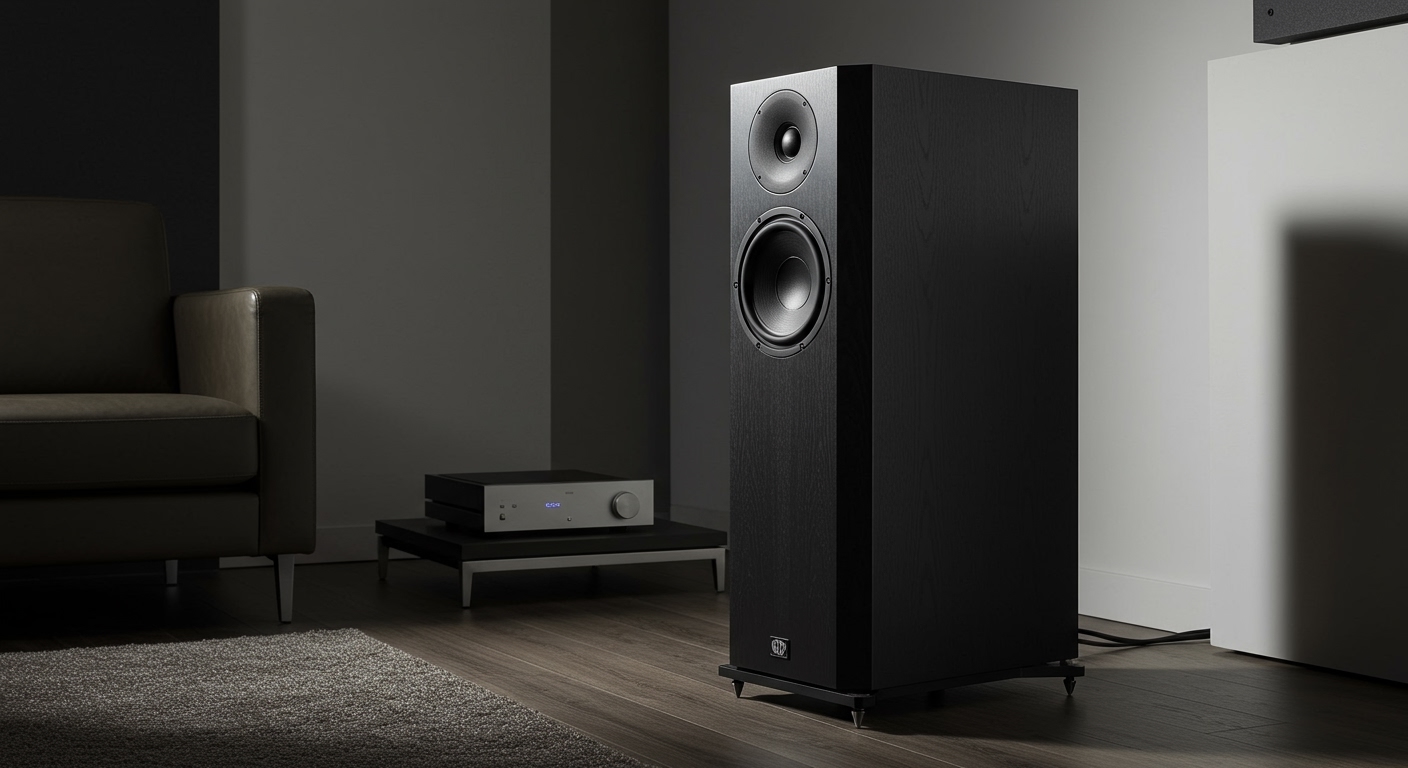
Passive speakers are the traditional workhorses of the hi-fi world. They don’t have a power cord and do nothing on their own. They are “passive” because they wait for a powerful signal to be sent to them from an external amplifier.
- How to Identify: They only have connections for speaker wire (usually two terminals, one red and one black). They do not have a power cord or plug for a wall outlet.
- Connection: They connect to an amplifier or receiver using speaker wire.
- My Experience: In my dedicated listening room, I run a pair of Bowers & Wilkins 606 S2 passive speakers. They are completely inert until I power them with my Cambridge Audio CXA81 integrated amplifier. The amp is the engine, and the speakers are the wheels.
What Are Active (Powered) Speakers?
Active speakers, often called powered speakers, are a more modern