Can You Put Component Speakers in the Back? The Short Answer
Yes, can you put component speakers in the back of your vehicle? Absolutely. You can install rear component speakers to drastically improve the audio clarity and high-frequency response for your rear passengers.
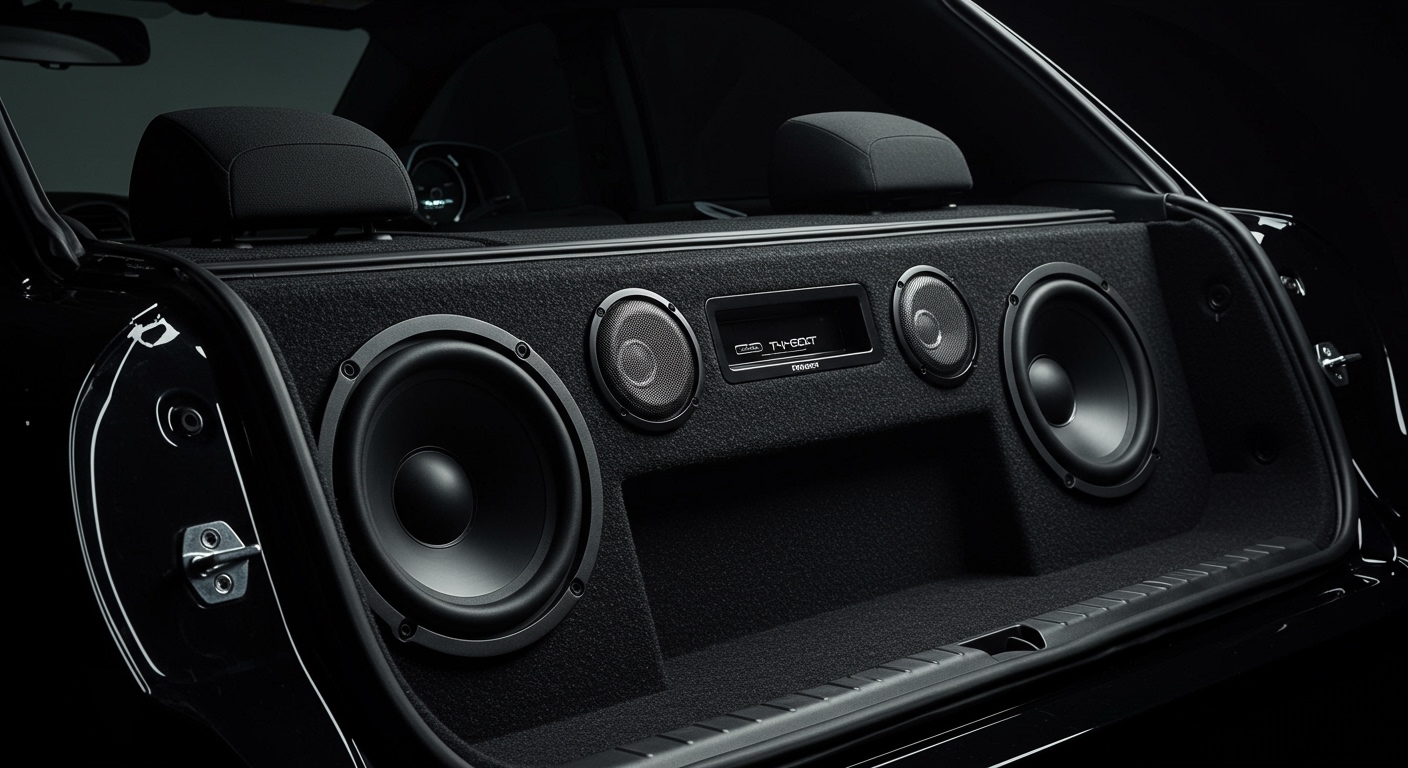
However, unlike simple coaxial speakers, putting a component speaker system in the rear requires custom mounting for the separate tweeters and finding secure space for the crossover networks. In my 15 years of custom car audio fabrication, I’ve found that while rear components elevate the overall volume and rear-seat listening experience, they must be properly tuned so they don’t overpower your front soundstage.
If you are building a loud system for a large SUV, or if you frequently carry passengers who appreciate high-fidelity audio, installing components in the back is a fantastic upgrade.
TL;DR / Key Takeaways
- Direct Answer: Yes, you can install component speakers in the rear doors or rear deck of your vehicle.
- Requires Custom Work: You will likely need to drill holes to surface-mount or flush-mount the independent tweeters.
- Crossover Placement: Finding a dry, secure spot inside the rear door panels or trunk for the passive crossovers is mandatory.
- Soundstage Impact: Audiophiles usually prefer “rear fill” (coaxial speakers) to keep the vocal image in front of the driver. Rear components are best for high-output systems or large cabins.
- Amplification is Key: Component speakers require more power; always pair them with a dedicated aftermarket amplifier rather than relying on a stock head unit.
Why Consider Rear Component Speakers? (Pros and Cons)
When deciding if can you put component speakers in the back, you must weigh the acoustic benefits against the installation challenges. Component speakers separate the mid-bass woofer and the tweeter, utilizing a crossover to direct specific frequencies to each driver.
This physical separation results in superior sound imaging and less distortion. However, car cabins are complex acoustic environments.
Here is a breakdown of why I sometimes recommend this setup, and why I sometimes advise against it.
The Advantages
- Unmatched Clarity: Separate tweeters mean high frequencies aren’t muffled by the listener’s legs (a common issue with rear door coaxial speakers).
- Customizable Soundstage: You can aim the rear tweeters exactly where you want the sound to go.
- Higher Power Handling: Component sets generally feature larger voice coils and better materials, allowing them to handle higher RMS wattage from an aftermarket amplifier.
The Drawbacks
- Front Soundstage Disruption: True audiophiles prefer the sound to originate from the front, mimicking a live concert. Loud rear tweeters can pull your ears backward, muddying the audio image.
- Complex Installation: Cutting door panels for tweeter placement requires precision and specialized tools like a hole saw.
- Increased Costs: Component sets are significantly more expensive than their coaxial counterparts.
Component vs. Coaxial: Which is Better for Rear Fill?
To fully answer the question of how can you put component speakers in the back, we must look at the alternative: coaxial speakers. Coaxials have the tweeter built directly into the center of the woofer.
In most daily-driver audio builds, we use components in the front doors and coaxials in the rear doors. This is known as “rear fill.” However, high-end builds change this dynamic entirely.
Here is a technical breakdown comparing the two options for rear placement:
| Feature | Component Speakers (Rear) | Coaxial Speakers (Rear) |
|---|---|---|
| Audio Quality | Exceptional clarity, brilliant highs | Good, but highs can be blocked by obstacles |
| Installation Difficulty | Hard (requires cutting, mounting crossovers) | Easy (Drop-in replacement for factory speakers) |
| Soundstage | Pulls soundstage rearward (requires tuning) | Blends easily into the background (Rear Fill) |
| Power Needs | High (Requires an external amplifier) | Low to Medium (Can run off head unit or amp) |
| Best For… | Large SUVs, show cars, passenger-focused audio | Budget builds, standard sedans, driver-focused audio |
Before You Start: Assessing Your Vehicle’s Rear Speaker Locations
Before purchasing gear, you need to evaluate your vehicle’s specific layout. The process for installing rear components varies wildly between a compact sedan and a three-row SUV.
You need to identify where your factory speakers are located. Are they in the rear doors, the rear pillars, or the rear deck (the parcel shelf behind the back seats)?
Rear Door Installations
If your speakers are in the rear doors, you will need to find a flat, unobstructed area on the plastic door card to mount the tweeter. You must also ensure that the crossover network can fit behind the panel without interfering with the window track mechanism.
Rear Deck Installations
If you drive a sedan with speakers in the rear deck, installing components is slightly easier. You can often mount the mid-bass drivers in the factory holes and surface-mount the tweeters directly on the deck cover. The crossovers can then be bolted securely to the underside of the deck inside the trunk.
Step-by-Step Guide: How Can You Put Component Speakers in the Back?
If you have decided to move forward, this detailed guide will walk you through the process. Whether you are upgrading an SUV or a sedan, these universal steps apply to almost every custom audio installation.
Step 1: Gather Your Tools and Materials
Having the right tools is the difference between a professional-looking installation and a damaged interior. You will need to prepare your workspace before removing any panels.
Here is what I use on a daily basis for component installations:
- Plastic trim removal tools (to prevent scratching interior panels)
- Screwdriver set (Phillips and Torx bits are common in car interiors)
- Wire strippers and crimpers
- Speaker wire (14-gauge or 16-gauge OFC – Oxygen Free Copper)
- Power drill with a hole saw attachment (sized to your specific tweeters)
- Sound deadening material (like Dynamat or Kilmat)
- Multimeter (for testing polarity and impedance)
Step 2: Remove the Rear Door Panels or Rear Deck
Start by disconnecting the negative terminal of your car battery. This prevents accidental short circuits and stops your vehicle from throwing airbag fault codes.
Carefully remove the screws holding your rear door panels in place. These are usually hidden behind the door handle trim, the window switch panel, and at the bottom edge of the door. Use your trim removal tools to gently pop the plastic retaining clips loose.
If you are working on a rear deck, you may need to fold down the rear seats and remove the C-pillar trim panels before the rear deck cover can slide out.
Step 3: Mount the Mid-Bass Woofers
Once the panels are off, unscrew and unplug the factory speakers. You will likely need aftermarket speaker mounting brackets to fit your new mid-bass woofers securely into the factory cutouts.
Before screwing the new woofer in, apply a layer of sound deadening mat around the speaker hole. This reduces metal resonance and vastly improves the mid-bass punch. Connect the speaker wire to the woofer, ensuring you leave enough slack to reach the crossover location.
Step 4: Find a Location and Mount the Tweeters
This is the most critical step when you ask, can you put component speakers in the back. You must create a home for the tweeters.
Sit in the back seat and visualize the audio path. You want the tweeters mounted as close to ear level as possible, without obstructing armrests or handles. The higher up on the door panel, the better the high-frequency dispersion will be.
Once you select a spot, check behind the door panel to ensure there is enough physical clearance for the tweeter’s magnet. Use your power drill and hole saw to carefully cut the mounting hole. Insert the flush-mount tweeter cup, run the tweeter wire through, and snap the tweeter into place.
Step 5: Wire and Mount the Crossover Networks
The passive crossover is the brain of your component system. It takes the full-range audio signal from your amplifier and splits it, sending low frequencies to the woofer and high frequencies to the tweeter.
You must mount the crossover in a location that stays completely dry. Do not mount it inside the lower door cavity where rainwater drains. Instead, use zip ties or double-sided industrial tape to secure it to the inside of the plastic door card, or behind the interior trim near the B-pillar.
Connect the incoming signal wire from your amplifier to the “Input” terminals on the crossover. Then, connect your woofer wires to the “Woofer/Mid” terminals, and the tweeter wires to the “Tweeter” terminals.
Step 6: Test the Phase and Sound Quality
Before reassembling your vehicle’s interior, reconnect the battery and turn on your audio system. Keep the volume low initially.
Listen carefully to each rear speaker. Cover the tweeter with your hand to ensure the woofer is playing, then do the reverse.
You must check for speaker phasing. If one woofer is wired backward (positive to negative), it will pull “out of phase” with the other speaker, resulting in a hollow sound with zero bass. If the bass sounds weak, check your wiring connections at the crossover. Once everything sounds clear and punchy, reinstall your door panels.
Best Practices When You Put Component Speakers in the Back
Installing the speakers is only half the battle. To get the most return on your investment, you need to optimize the acoustic environment and the power delivery.
Sound Deadening for Maximum Mid-Bass
A speaker is basically an air pump. If the air it pushes escapes through holes in the metal door frame, you experience acoustic cancellation.
Applying butyl rubber sound deadening to the inner and outer door skins transforms your flimsy car door into a solid speaker enclosure. I