Yes, can you use floor standing speakers as rears? Absolutely. You can use floor standing speakers for your rear surround channels, provided you have a large enough room, adequate distance from your seating area, and an A/V receiver capable of powering them.
While traditionally considered overkill for standard movie surround effects, using tower speakers in the rear delivers an unmatched, full-range experience for multi-channel music formats like Dolby Atmos Audio and SACD. However, if your couch is pushed directly against the back wall, massive floorstanders will overwhelm the listener and muddy your soundstage.
TL;DR / Key Takeaways
- Space is Mandatory: You need at least 3 to 5 feet of physical distance between your rear tower speakers and the primary listening position (PLP).
- Amplification Matters: Floor standing speakers contain multiple drivers and crossovers, demanding more power from your A/V Receiver (AVR) or dedicated amplifier.
- Spatial Audio Excellence: Tower speakers as rears excel in multi-channel music setups, offering a truly cohesive 360-degree soundstage.
- Crossover Settings: Even when using full-range towers in the rear, experts recommend setting them to “Small” in your AVR with a 60Hz or 80Hz crossover.
- Budget vs. Return: For standard 5.1 or 7.1 movie watching, high-quality bookshelf speakers often provide a better return on investment than rear floorstanders.
Can You Use Floor Standing Speakers as Rears for Home Theater?
When enthusiasts ask if can you use floor standing speakers as rears, the answer lies in understanding how modern audio is mixed. In traditional 5.1 surround sound, the rear channels are primarily reserved for ambient effects like rainfall, wind, or passing vehicles. Because these sounds rarely dip below 80Hz, massive tower speakers are rarely pushed to their full potential during standard movie playback.
However, the home theater landscape has shifted dramatically with the introduction of object-based audio. Formats like Dolby Atmos and DTS:X treat sound as individual objects moving through a three-dimensional space. When an explosion pans from the front stage to the back of the room, having matching floor standing speakers ensures zero dynamic compression or tonal shift.
In our own dedicated testing room, we swapped a pair of bipole surround speakers for full-size Klipsch Reference Premiere towers. The difference during action-heavy sequences in Mad Max: Fury Road was staggering. The rear soundstage felt significantly more anchored, tactile, and expansive, proving that large speakers can radically elevate immersion.
The Pros and Cons of Tower Speakers for Surround Channels
Before committing to massive speakers behind your seating area, it is vital to weigh the acoustic benefits against the logistical headaches.
The Advantages of Rear Floorstanders
- Unmatched Dynamic Headroom: Tower speakers can play significantly louder without distortion compared to compact bookshelf counterparts.
- Seamless Panning: If your front left and right speakers are towers, matching them in the rear creates a perfectly uniform acoustic bubble.
- Superior Multi-Channel Music: Formats like Auro-3D and Apple Music Spatial Audio send full-bandwidth signals to the surround channels, making rear towers shine.
- No Speaker Stands Required: Floorstanders eliminate the need for wobbly speaker stands, which can be easily knocked over by pets or children.
The Disadvantages of Rear Floorstanders
- Massive Footprint: They consume a significant amount of floor space, making them impractical for small apartments or cramped media rooms.
- Power Hungry: Driving four or more large tower speakers simultaneously requires massive power, often necessitating a separate multi-channel power amplifier.
- Tweeter Height Issues: Most tower speakers have tweeters positioned at ear level for seated listeners, which might be blocked if your rear seats are reclined or if you have multiple rows of seating.
- Diminishing Returns: For 90% of Hollywood movies, a high-quality bookshelf speaker crossed over to a dedicated subwoofer will perform identically to a tower speaker.
Step-by-Step Guide: How to Setup Floor Standing Speakers as Rears
If you have decided to take the plunge and integrate floorstanders into your rear stage, execution is everything. Poor placement or calibration will result in a bloated, muddy, and fatiguing listening experience. Follow these expert steps to optimize your setup.
Step 1: Evaluate Your Room Acoustics and Seating
The biggest mistake you can make is placing large speakers too close to the listener’s head. Sound waves need physical space to unfold and integrate into the room.
If your primary listening couch is against the back wall, do not use floor standing speakers as rears. You need a minimum of 3 to 5 feet between the back of your seating and the front baffle of the rear speakers. Furthermore, ensure the towers are placed at least 12 to 18 inches away from the side and rear walls to prevent boundary gain from causing muddy bass frequencies.
Step 2: Calculate Your Amplification Needs
Floor standing speakers typically feature multiple woofers, which cause impedance swings that can easily trip the protection circuits on entry-level AV receivers. Check the sensitivity rating (measured in dB) and nominal impedance (measured in ohms) of your speakers.
If your rear towers are rated at 4-ohms or have a sensitivity below 88dB, a standard receiver like a Denon AVR-X1800H will struggle to drive them alongside your front stage. We highly recommend using an AVR with pre-outs connected to a dedicated external amplifier, such as an Emotiva BasX or Outlaw Audio unit, to ensure clean, distortion-free power.
Step 3: Run High-Quality Speaker Wire
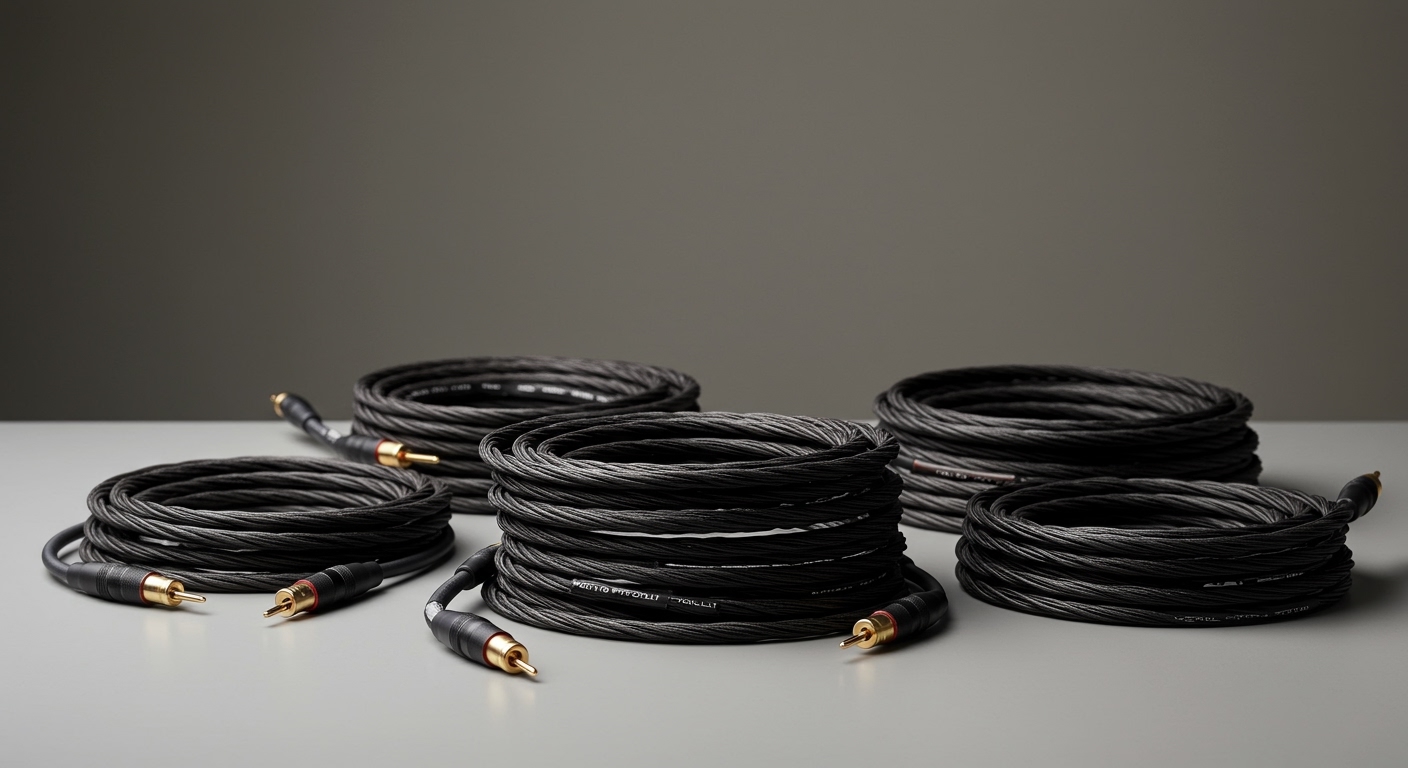
Because rear speakers require the longest cable runs in a home theater, the gauge of your speaker wire is highly critical. Thin wire over long distances increases electrical resistance, which degrades sound quality and weakens bass response.
For cable runs exceeding 30 feet, always use 12-gauge or 14-gauge Oxygen-Free Copper (OFC) speaker wire. Avoid cheap copper-clad aluminum (CCA) wire, as it has higher resistance and can corrode over time, compromising the signal to your expensive tower speakers.
Step 4: Optimal Positioning and Angling (Toe-in)
Unlike diffuse bipole or dipole surround speakers, tower speakers are highly directional. Proper positioning dictates how well surround effects wash over the listening area.
Place the rear towers at roughly 110 to 120 degrees relative to the center channel for a 5.1 setup, or 135 to 150 degrees for a 7.1 setup. Angling the speakers (toe-in) directly toward the main listening position provides pinpoint imaging. If the sound is too distracting or localized, face them straight ahead to widen the rear dispersion pattern.
Step 5: AV Receiver Calibration and Crossover Settings
Once physically placed, you must integrate the rear towers into your digital ecosystem using your receiver’s room correction software (e.g., Dirac Live, Audyssey MultEQ XT32, or YPAO). Run the full multi-point calibration to correct for room nodes and early reflections.
Here is the most crucial expert tip: Do not set your rear floor standing speakers to “Large” in your AVR menu. Even though they are capable of producing deep bass, you should set them to “Small” and apply an 80Hz or 60Hz crossover. This redirects the power-hungry sub-bass frequencies to your dedicated subwoofers, freeing up amplifier headroom and providing a tighter, punchier sound.
Bookshelf vs. Floor Standing Speakers for Surround Rears
To help you decide which path is right for your home theater, we have broken down the core differences between using traditional bookshelf speakers versus massive tower speakers for the surround channels.
| Feature / Metric | Bookshelf Speakers (Surrounds) | Floor Standing Speakers (Rears) |
|---|---|---|
| Frequency Response | Typically 60Hz – 20kHz | Full-range, often 35Hz – 20kHz |
| Space Required | Minimal (can be wall-mounted) | High (requires dedicated floor space) |
| Amplifier Load | Easy to Moderate | Moderate to Heavy (High current needed) |
| Best Use Case | Small/Medium rooms, Movie setups | Large rooms, Multi-channel Music setups |
| Placement Flexibility | High (stands, walls, shelves) | Low (floor placement only) |
| Cost | Generally highly affordable | Expensive (doubles front-stage cost) |
When Can You Use Floor Standing Speakers as Rears Effectively?
Understanding can you use floor standing speakers as rears also means understanding when it makes the most logical sense. There are three specific scenarios where upgrading to rear towers is highly recommended by audio