Understanding Why Your Honda Accord Speakers Are So Quiet
Before we dive into the fixes, it’s crucial to understand the root cause of the problem. Your Honda’s factory audio system is designed for cost-effectiveness, not for high-fidelity performance. This leads to a few key weaknesses that prevent your speakers from getting truly loud and clear.
The primary issue is a lack of power. The small, built-in amplifier in your Honda factory head unit (the stereo) only produces about 15-20 watts RMS per channel. This is just enough power to make sound, but not enough to deliver clean, loud audio, especially when you’re competing with road noise on the highway.
The Weak Links in Your Factory Audio Chain
- Underpowered Head Unit: The built-in amplifier is the biggest bottleneck. It simply can’t provide the clean power needed to drive speakers to their full potential, leading to distortion at higher volumes.
- Inefficient Factory Speakers: The speakers themselves are typically made with cheap paper cones and small magnets. They are designed to work with low power but are not capable of handling more or producing detailed sound.
- Lack of Sound Treatment: Car doors are thin, resonant metal boxes. When the speaker plays, much of its energy is wasted vibrating the door panel, causing rattles and muddy bass instead of clean audio inside the car.
- Poor Audio Source: Using low-quality Bluetooth streaming or compressed MP3 files can make even a high-end system sound weak. The audio data simply isn’t there to begin with.
Quick & Free Ways to Make Your Honda Accord Speakers Louder
Before you spend a dime, there are a few simple adjustments you can make that might provide a noticeable improvement. These free tweaks focus on optimizing the system you already have. I always recommend my clients try these steps first.
Step 1: Optimize Your Equalizer (EQ) Settings
Your Honda’s infotainment system has a built-in equalizer. Setting this correctly can make a significant difference.
- Access the Sound Settings: On your touchscreen, navigate to
Settings>Audio>Sound. - Adjust the EQ: You’ll see sliders for Bass, Mid, and Treble. Avoid the common mistake of just cranking the bass and treble way up. This “smiley face” curve often introduces distortion and makes the music sound hollow.
- Try This Setting:
* Bass: Set to +1 or +2. Factory speakers can’t handle heavy bass and will distort.
* Mid: Set to +2 or +3. Boosting the midrange can bring out vocals and instruments, making the audio feel louder and clearer.
* Treble: Set to +2 or +3. This adds crispness and detail to cymbals and high-frequency sounds.
Step 2: Improve Your Audio Source Quality
The quality of the music you play is critical. A low-quality stream will sound bad no matter how good your speakers are.
- Streaming Service Settings: Go into the settings of your music app (Spotify, Apple Music, etc.) and set the streaming quality to “High” or “Very High.” This uses more data but provides much better sound.
- Use a Wired Connection: Bluetooth compresses audio, which can reduce its dynamic range and overall volume. Whenever possible, connect your phone using a USB cable. This provides a direct, digital connection that preserves sound quality.
Step 3: Check Your Fader and Balance
This sounds obvious, but it’s a surprisingly common issue. Make sure your balance is centered and your fader isn’t pushed too far to the front or rear, as this can make the system feel quieter than it is.
The Definitive Guide on How to Make Honda Accord Speakers Louder (Paid Upgrades)
If the free tweaks didn’t give you the volume and clarity you crave, it’s time to consider hardware upgrades. We’ll approach this in stages, from the most impactful upgrade to the final touches. This is the exact process we use in our shop to transform stock audio systems.
Stage 1: Add an Amplifier (The Single Biggest Improvement)
If you only do one upgrade, this is it. An amplifier is the heart of a powerful sound system. It takes the weak signal from your head unit and boosts it with clean, stable power, allowing your speakers to play much louder without distortion.
Why an Amplifier is a Game-Changer:
- More Power, More Volume: A modest aftermarket amplifier provides 50-75 watts RMS per channel, which is 3-4 times the power of your factory head unit. This directly translates to more volume.
- Improved Clarity (Headroom): With more power on tap, the amplifier doesn’t have to work as hard. This “headroom” means the sound stays crystal clear even when you turn it up, eliminating the distortion you get from the factory unit.
Choosing the Right Amplifier:
- 4-Channel Amplifier: This is the most common choice. It powers your four main speakers (front left/right, rear left/right).
- Compact “Power Pack” Amps: Brands like Alpine and Kicker make small, powerful amps (e.g., Kicker KEY200.4) that can sometimes fit behind the dashboard for a stealthy installation. Many even have built-in processing to automatically correct the factory EQ.
- Line Output Converter (LOC): To connect an amplifier to a factory head unit that doesn’t have RCA outputs, you’ll need an LOC. This device safely converts the high-level speaker wire signal into a low-level RCA signal that the amplifier can use. Models from AudioControl are my top recommendation.
Stage 2: Upgrade Your Factory Speakers
Once you have an amplifier providing clean power, your factory paper-cone speakers become the next weak link. Upgrading them will unlock a new level of detail and clarity in your music.
Why New Speakers Matter:
- Better Materials: Aftermarket speakers use superior materials like polypropylene or carbon fiber for cones and silk or aluminum for tweeters. These materials are lighter and stiffer, allowing them to reproduce sound more accurately.
- Power Handling: They are designed to handle the higher power from your new amplifier without breaking a sweat.
Component vs. Coaxial Speakers:
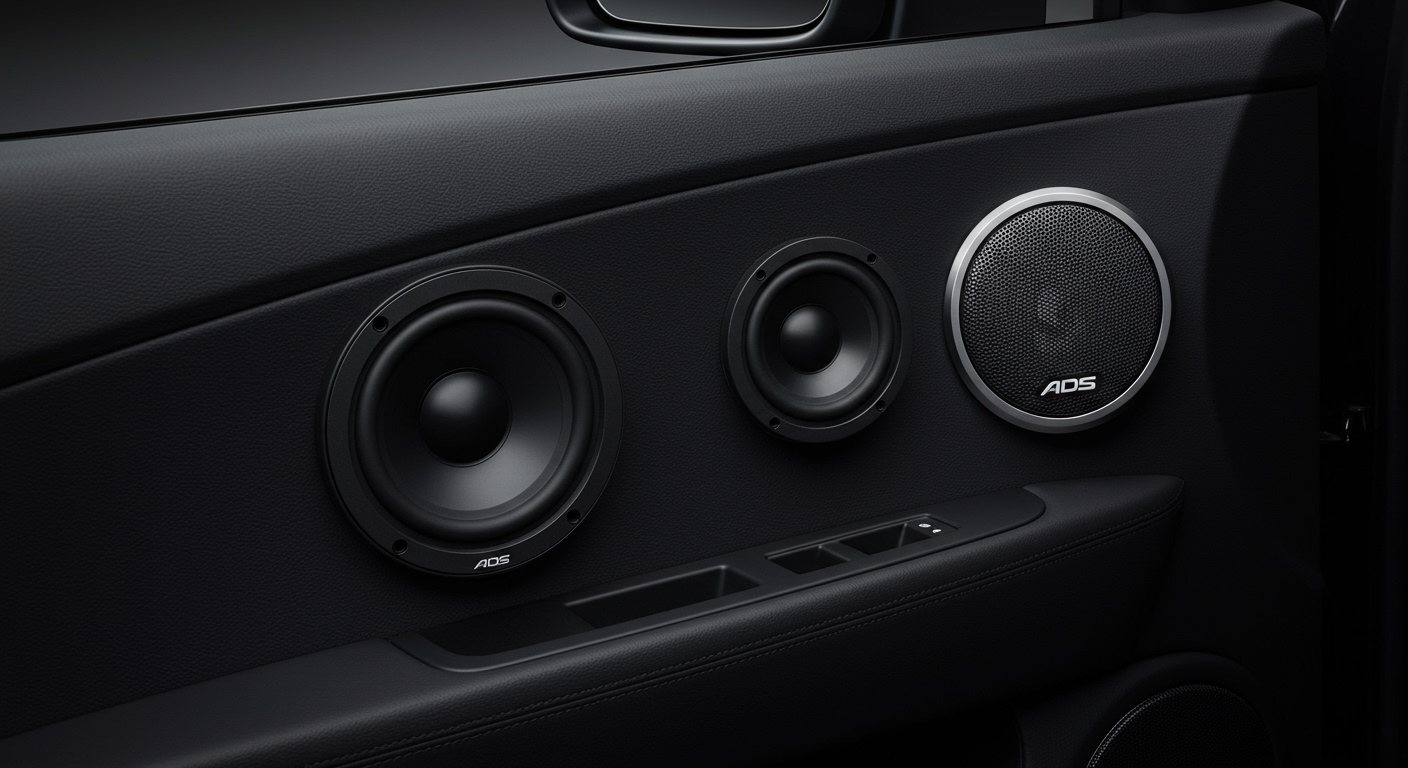
- Component Speakers (Best for Front): This is a separated system with a woofer (for mids and bass) and a tweeter (for highs). The separate tweeter can be mounted higher up on the door or dash, which raises the soundstage and makes the music sound like it’s coming from in front of you, not from your feet. This is what we install 90% of the time in the front doors.
- Coaxial Speakers (Good for Rear): These are a single unit with the tweeter mounted in the middle of the woofer. They are simpler to install and are perfect for the rear doors or deck to provide “fill” sound.
Honda Accord & Civic Speaker Size Guide
Finding the right size is crucial. While you should always double-check for your specific trim, these are the most common sizes we see.
| Vehicle & Generation | Year Range | Front Door Speaker | Rear Deck/Door Speaker |
|---|---|---|---|
| Honda Accord (10th Gen) | 2018-2022 | 6.5″ Component | 6.5″ Coaxial |
| Honda Accord (9th Gen) | 2013-2017 |