Can an Amplifier Damage Speakers? The Short and Long Answer
Yes, an amplifier can absolutely damage speakers. While it might seem counterintuitive, the most common cause isn’t necessarily having an amplifier that’s too powerful, but one that is underpowered and driven into “clipping.” This process sends a distorted, harmful signal that can quickly overheat and destroy your speaker’s delicate components, particularly the tweeter.
Of course, overpowering is also a risk. Sending a clean, massive signal that exceeds a speaker’s power handling limits can physically tear the driver apart. Understanding the relationship between power, impedance, and distortion is the key to creating a perfectly matched, safe, and incredible-sounding audio system. This guide will walk you through exactly how damage occurs and, more importantly, how to prevent it.
Key Takeaways: Protecting Your Gear
- Clipping is the #1 Killer: An underpowered amp pushed too hard sends a distorted “square wave” signal, generating extreme heat that burns out speaker voice coils.
- Overpowering is a Risk: Sending significantly more clean power than a speaker is rated for can cause physical damage to the woofer and other components.
- Impedance Mismatch is Critical: Connecting low-impedance speakers (e.g., 4 ohms) to an amplifier not designed for them can cause the amp to overheat and fail, potentially sending damaging DC voltage to your speakers.
- Proper Gain Staging is Your Best Defense: Setting the volume and gain levels correctly on your equipment prevents clipping before it ever starts.
- Your Ears are the Best Tool: If you hear distortion, harshness, or crackling, turn the volume down immediately.
Understanding the 3 Main Culprits: How Amps Damage Speakers
When an amplifier damages a speaker, it’s rarely a sudden, explosive event. It’s usually a result of heat or extreme physical force. In my experience setting up hundreds of systems, from home theaters to professional studios, the damage almost always traces back to one of these three electrical issues.
### 1. Amplifier Clipping (The Most Common Killer)
This is the big one. Amplifier clipping is the most misunderstood and frequent cause of speaker damage, especially to tweeters.
What is Clipping?
An audio signal is supposed to be a smooth, rounded sine wave. An amplifier has a maximum voltage it can produce, known as its “rails.” When you demand more power than the amp can cleanly deliver (by turning the volume up too high), it hits this limit. Instead of producing a taller, rounded wave, it “clips” the top and bottom off, creating a distorted signal that looks more like a square wave.
- The Problem with Square Waves: A pure square wave is essentially a form of Direct Current (DC) being switched on and off. Your speaker’s voice coil is designed to move back and forth with an Alternating Current (AC) audio signal. When it receives this clipped, DC-like signal, it stops moving efficiently and instead just sits there and gets incredibly hot.
- Why Tweeters Die First: The crossover network inside your speaker sends high-frequency information to the small, delicate tweeter. A clipped signal is full of high-frequency harmonics that get funneled directly to the tweeter’s tiny voice coil, which has very little mass to dissipate heat. It quickly overheats and burns out, long before the larger woofer is in danger.
My Experience: I’ve seen countless blown tweeters from party setups where someone used a small receiver to power large speakers and cranked it to “11.” They thought the amp was too weak to hurt the speakers, but in reality, the massive distortion from clipping is what did the damage.
### 2. Overpowering: Too Much Raw Power
While less common than clipping, overpowering is a more straightforward way an amplifier can damage speakers. This happens when you use an amplifier that provides significantly more clean, un-clipped power than the speaker is designed to handle.
- Continuous vs. Peak Power: Speakers have power ratings, usually “Continuous” (or RMS) and “Peak.” The continuous rating is the amount of power the speaker can safely handle for extended periods. Peak power is the maximum it can handle in very brief bursts.
- Mechanical Failure: Sending too much clean power can cause the speaker’s cone to move beyond its physical limits (a condition called “over-excursion”). This can tear the cone’s surround, damage the “spider” that centers the voice coil, or cause the voice coil to slam into the back of the magnet assembly.
You’ll often hear a loud “popping” or “bottoming out” sound just before this type of failure occurs. Unlike clipping which is a thermal (heat) failure, this is a mechanical failure.
### 3. DC Offset: The Silent Destroyer
This is a more insidious problem that stems from a malfunctioning amplifier. A healthy amplifier should only output an AC audio signal. If an internal component fails, the amp can start leaking Direct Current (DC) voltage to its output terminals, even when no music is playing.
- How it Damages Speakers: As we learned with clipping, a speaker’s voice coil is not designed to handle DC. This constant voltage pushes the woofer cone fully forward or backward and holds it there. The voice coil, now acting like a simple resistor, heats up rapidly and melts, destroying the driver without a single note ever being played.
- Warning Signs: A key sign of DC offset is seeing your woofer cone push itself out and stay there the moment you turn your amplifier on. If you ever see this, shut the system off immediately and have the amplifier serviced by a qualified technician.
The Underpowering Myth: Can a Weak Amp Damage Speakers?
This is a question I get all the time, and it leads back to our number one culprit: clipping. So, can a weak amp damage speakers? Yes, absolutely, and it’s the most common way speakers are damaged.
A 30-watt amplifier driven hard into clipping can destroy a speaker rated for 200 watts. This is because the clipped, square-wave signal can have an effective power equivalent far higher than the amp’s clean rating, and all that extra energy is pure, voice-coil-melting heat.
It’s far safer to use a high-power amplifier at a low volume than a low-power amplifier at a high volume. A powerful amp has more “headroom,” meaning it can reproduce loud dynamic peaks in music without ever approaching its limits and clipping.
| Scenario | Amplifier | Speaker | Risk Level | Primary Danger |
|---|---|---|---|---|
| The Danger Zone | 30W Amp at 100% Volume | 200W Speaker | High | Clipping (Thermal Damage) |
| The Ideal Match | 150W Amp at 50% Volume | 200W Speaker | Low | Clean power, lots of headroom |
| The Overkill | 400W Amp at 25% Volume | 200W Speaker | Moderate | Overpowering (Mechanical Damage) |
| The Mismatch | 100W Amp (8-ohm stable) | 4-ohm Speaker | High | Amp Overheating, DC Offset |
This table clearly shows that the “underpowered” scenario is ironically the most dangerous in typical use.
How to Safely Match Your Amplifier and Speakers: A 4-Step Guide
Preventing damage is all about creating a synergistic system where the components work together, not against each other. Follow these four steps to ensure a long, happy life for your audio gear.
### Step 1: Match Power Handling (Watts)
The goal is to provide enough clean power without risking mechanical damage.
- Find Your Speaker’s Power Rating: Look for the “Continuous Power Handling” or “RMS Power” rating, measured in watts. This is often found on the back of the speaker or in its manual.
- Choose an Amplifier: A good rule of thumb is to select an amplifier whose continuous power output per channel is between 80% and 150% of your speaker’s continuous power rating.
* Example: If your speakers are rated for 100W RMS, an amplifier that delivers between 80W and 150W per channel is a fantastic match. This provides plenty of headroom to avoid clipping while staying within a safe range for the speaker.
### Step 2: Match Impedance (Ohms)
Impedance, measured in ohms (Ω), is the electrical resistance of your speakers. This is arguably more critical than wattage for amplifier health.
- Find Your Speaker’s Nominal Impedance: This is almost always printed near the speaker wire terminals. Common values are 8 ohms or 4 ohms.
- Check Your Amplifier’s Compatibility: Your amp’s manual or rear panel will specify the impedance loads it can safely drive (e.g., “4-8 ohms”).
- The Rule: Never connect speakers with a lower impedance than your amplifier is rated for. Connecting 4-ohm speakers to an amp only rated for 8 ohms will force the amp to try and deliver double the current, causing it to overheat and potentially fail, sending DC to your speakers.
### Step 3: Set Your Gain Structure Correctly
“Gain” is not a volume knob. It’s meant to match the output level of your source (like a DAC or preamp) to the input sensitivity of your amplifier.
- Start Low: Begin with the gain on your amplifier turned all the way down.
- Set Source Volume: Play a familiar, high-quality track and set the volume on your source device (preamp, receiver) to about 75-80% of its maximum.
- Slowly Increase Gain: Slowly turn up the gain on your amplifier until the music reaches your desired maximum listening level. If you hear any distortion or harshness, back it off immediately. This is your new maximum safe operating point.
### Step 4: Listen for Distortion
Your ears are your final and most important safety tool. Audio distortion is a clear warning sign that something is wrong.
- Clipping sounds: Harsh, fuzzy, compressed, and lacks dynamic range. Cymbals will sound like shattering glass instead of a clean “tsss.”
- Over-excursion sounds: A distinct “thwack” or “pop” from the woofer on deep bass notes.
If you hear any of these sounds, turn the volume down immediately. You are actively damaging your equipment.
Can Speakers Damage an Amplifier? Flipping the Script
Yes, though it’s less common, the answer to can speakers damage an amplifier is also affirmative. The primary way this happens is through an impedance mismatch.
As mentioned in Step 2, connecting a low-impedance speaker (like a demanding 4-ohm model) to an amplifier not designed to handle that load is the most direct path to failure. The amplifier will try to draw more and more current to power the speaker, causing its internal components to overheat.
This can lead to two outcomes:
- Protective Shutdown: A well-designed modern amplifier will sense the thermal stress and shut itself down to prevent damage.
- Catastrophic Failure: An older or less sophisticated amp may not have protection circuits. It can overheat to the point of frying its output transistors, which can then fail “closed” and send pure DC voltage right down the speaker wire, destroying your speakers in the process.
So, while you might ask can speakers damage amp, the reality is that a speaker-induced amp failure often takes the speakers with it.
Real-World Examples: What Speaker Damage Looks and Sounds Like
In my audio repair and installation work, I’ve seen the aftermath of bad amp/speaker pairings countless times. Here’s what to look and listen for:
- The Blown Tweeter: The most common failure. The speaker will suddenly sound muffled, dull, and lifeless, as if a thick blanket has been thrown over it. All the high-frequency detail (cymbals, hi-hats, vocal “s” sounds) will be gone because the tweeter is no longer producing sound.
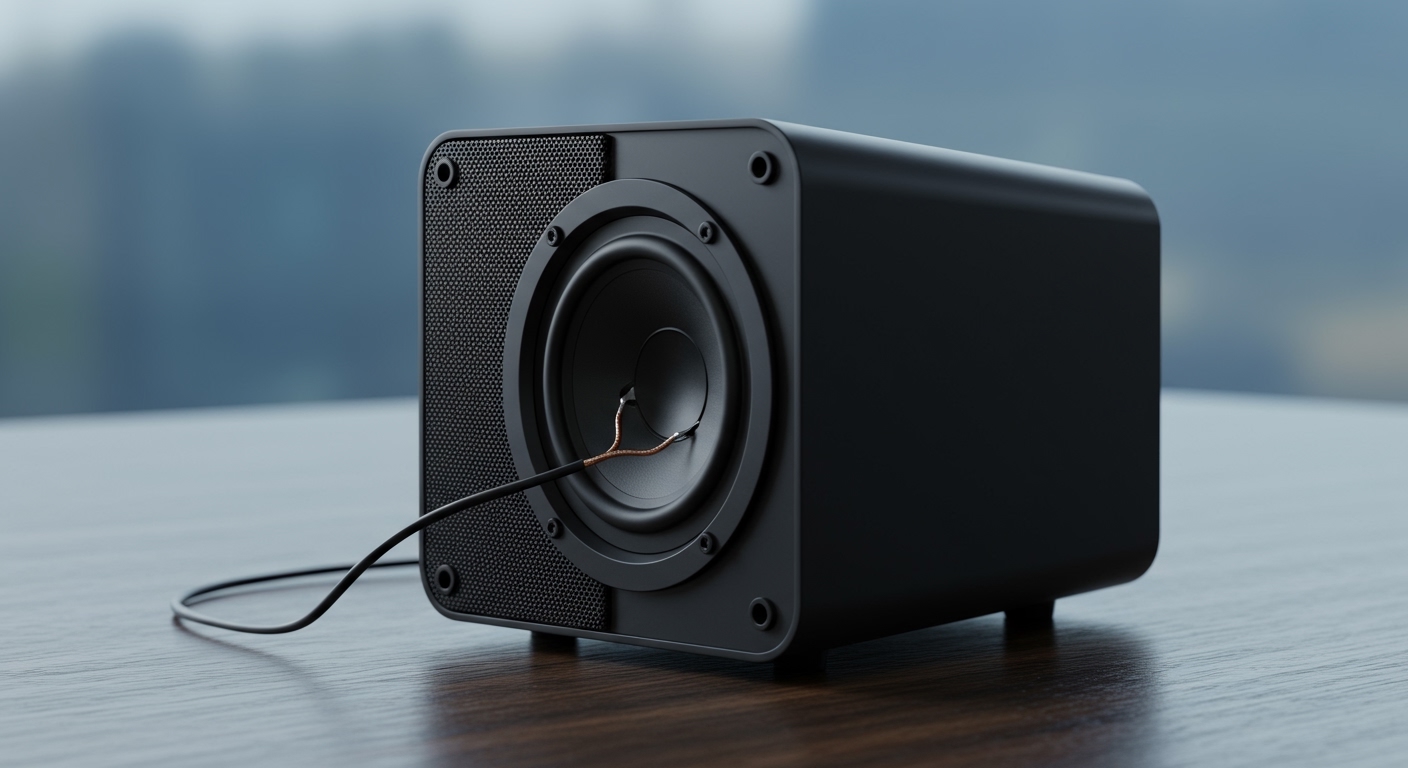
- The Fried Voice Coil: You might smell a distinct, acrid, “burnt electronics” smell coming from the driver. If you gently press on the woofer cone (with the system off!), it might feel scratchy or gritty as the melted coil wires rub against the magnet gap.
- The Mechanically Damaged Woofer: After a loud “pop” during a bass-heavy scene, the woofer might produce a rattling or buzzing sound on certain frequencies. This indicates the voice coil is now misaligned or the cone’s surround has been torn.
Seeing and hearing these signs is a clear indicator that the damage is already done. Prevention through proper matching and listening habits is always the best course of action.