Can I Use Bookshelf Speakers for Atmos? The Definitive Guide
Staring at your existing bookshelf speakers and wondering if you can avoid buying new, expensive “Atmos-enabled” modules? You’re not alone. The good news is that you absolutely can use bookshelf speakers for Atmos, and in many cases, they can outperform the dedicated, up-firing options. It all comes down to proper placement and setup.
This guide will walk you through exactly how to repurpose your bookshelf speakers for a stunningly immersive Dolby Atmos experience. We’ll cover the best placement methods, step-by-step setup instructions, and the critical calibration settings you can’t afford to skip. Forget the marketing hype; let’s focus on what actually works.
Key Takeaways / TL;DR
- Yes, you can use bookshelf speakers for Atmos. They often provide superior sound quality compared to smaller, specialized Atmos modules due to larger drivers and better cabinet construction.
- Placement is everything. The best performance comes from mounting speakers directly on the ceiling or high on the wall, angled towards the listening position.
- Up-firing is an option but has compromises. Bouncing sound off the ceiling only works well with flat, reflective ceilings and is generally less immersive than direct-firing speakers.
- AVR calibration is non-negotiable. Running your receiver’s room correction software (like Audyssey, Dirac Live, or YPAO) is essential to integrate the new height speakers properly.
- Any brand of speaker can work. While timbre-matching is ideal, it’s less critical for height channels than for your main soundstage.
Why Bookshelf Speakers Are a Smart Choice for Atmos
Before we get into the “how,” let’s cover the “why.” Using a quality pair of bookshelf speakers for your height channels isn’t just a budget-friendly workaround; it’s often a sonic upgrade.
Superior Sound Quality
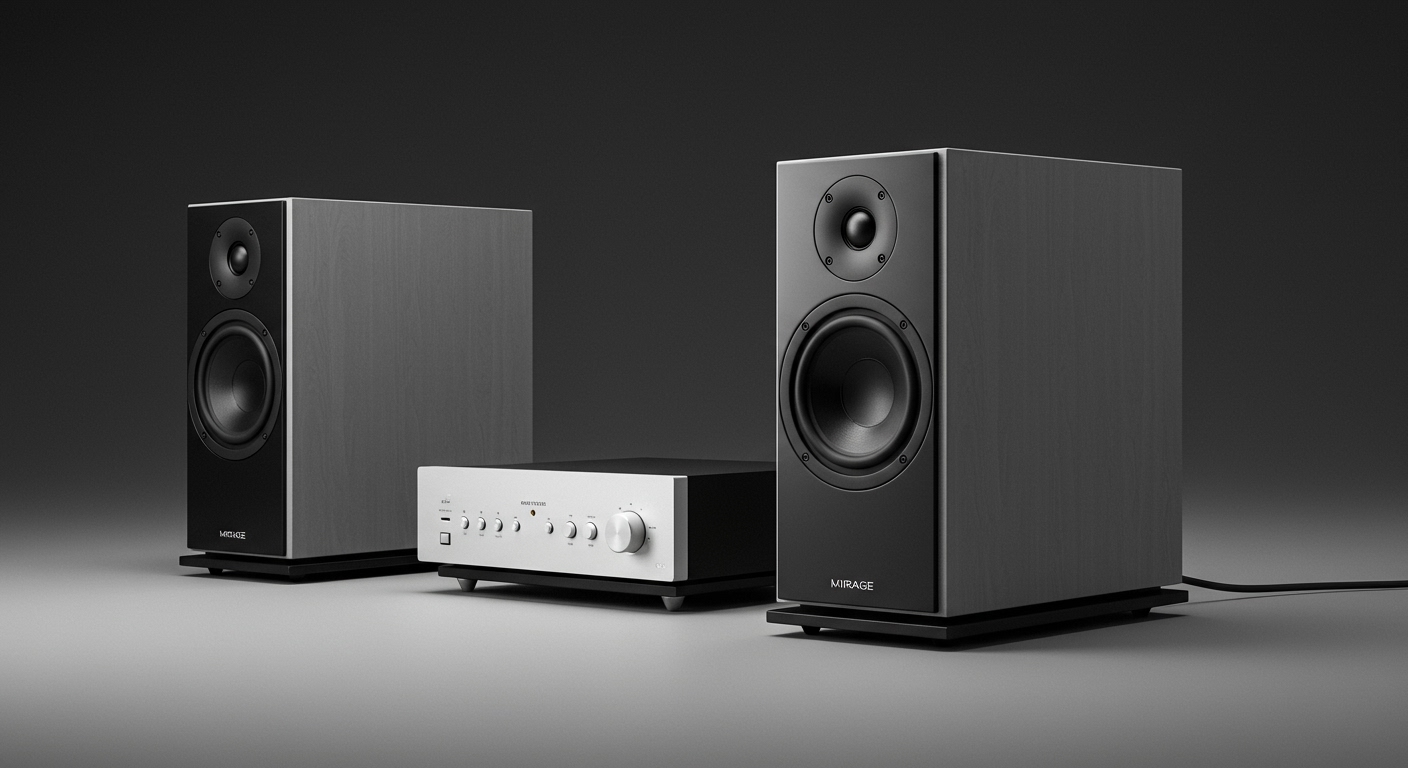
Most dedicated “Atmos-enabled” modules are essentially small, single-driver speakers placed in an angled box. A standard bookshelf speaker, by contrast, typically features a larger woofer and a separate tweeter. This two-way design allows for a fuller range of sound, more dynamic impact, and better overall clarity for overhead effects like rain, helicopters, and atmospheric music.
Unbeatable Cost-Effectiveness
This is the most obvious benefit. You may already have a spare pair of bookshelf speakers from an old stereo system. Even if you need to buy a pair, you can often find excellent models for less than the price of premium-branded Atmos modules, giving you more bang for your buck.
Future-Proof Versatility
Dedicated up-firing speakers have one job. Bookshelf speakers are audio chameleons. If you upgrade your Atmos setup later or move to a new space, those bookshelf speakers can be repurposed as main speakers in a 2.0 office setup, as surround speakers, or even for a Zone 2 system.
How to Use Bookshelf Speakers for Atmos: A Step-by-Step Guide
Ready to get started? Here’s our proven process for turning your standard bookshelf speakers into high-performance Atmos channels.
Step 1: Choose Your Placement Method
This is the most critical decision you’ll make. How you position the speakers will have the biggest impact on the quality of the Atmos effect.
- On-Ceiling (The Gold Standard): This method provides the most direct, distinct, and immersive overhead sound. You’ll mount the speakers directly to the ceiling, firing downwards towards your main listening position. This perfectly recreates how sound is mixed in a commercial cinema.
- High on the Wall (The Excellent Compromise): If ceiling mounting isn’t practical, mounting the speakers high up on the front, side, or rear walls is the next best thing. Using angled mounts, you can point them directly at your seat. This is often called the “Height” speaker configuration.
- Up-Firing (The Easiest Method): This involves placing the bookshelf speakers on top of your front tower or bookshelf speakers and angling them to bounce sound off the ceiling. This is the least effective method and is highly dependent on your room. It requires a flat, non-vaulted, non-absorptive ceiling (no acoustic tiles) that is between 8 and 12 feet high.
Step 2: Select and Install Mounting Hardware
Safety is paramount. Do not simply place a speaker on a high shelf without securing it.
- For On-Ceiling: Look for sturdy ceiling mounts that can handle the weight of your speakers. Ensure you are anchoring them into a ceiling joist or using heavy-duty drywall anchors.
- For High on Wall: Articulating wall mounts with a tilt function are perfect. This allows you to precisely angle the speaker downwards towards your listening area. Brands like Monoprice, Sanus, and Vogel’s make reliable options.
- For Up-Firing: You don’t need mounts, but you may need something to create the angle. Small foam yoga blocks or specifically designed angled foam pads can be placed under the back of the speaker to tilt it upwards.
Step 3: Run and Connect Your Speaker Wire
Once mounted, you need to connect the speakers to your AV receiver.
- Connect one end of the speaker wire to the terminals on your bookshelf speaker.
- Run the wire back to your AV receiver. For a clean look, you can use in-wall rated wire, adhesive wire channels (raceways), or simply route it neatly along baseboards and corners.
- Connect the other end to the appropriate speaker terminals on your receiver, which are typically labeled “HEIGHT,” “TOP FRONT,” “TOP MIDDLE,” or “ATMOS.”
Step 4: Configure Your AV Receiver’s Speaker Settings
Your receiver needs to know that you’ve added new speakers and where they are located.
- Turn on your receiver and navigate to the Speaker Setup menu.
- Go to the Amplifier Assign or Speaker Configuration section.
- Change the setting to reflect your new layout (e.g., from 5.1 to 5.1.2).
- Specify the location of your new speakers based on your placement (e.g., “Top Middle” for ceiling-mounted, or “Front Height” for high on the wall).
Step 5: Calibrate Your Entire System (Crucial!)
Do not skip this step! Your receiver’s built-in room correction software is essential for integrating the new speakers.
- Place the included setup microphone at your main listening position at ear level.
- Start the calibration process (Audyssey, Dirac Live, YPAO, MCACC, etc.).
- The system will play test tones through all speakers, including your new Atmos channels. It automatically measures distance, sets volume levels (trims), and applies equalization (EQ) to create a seamless, cohesive soundfield. This step ensures the overhead effects blend perfectly with the rest of your system.
Comparing Atmos Placement Options for Bookshelf Speakers
To make the decision easier, here is a direct comparison of the three primary placement methods.
| Placement Method | Pros | Cons | Best For |
|---|---|---|---|
| On-Ceiling | ✅ Most immersive & accurate | ❌ More difficult installation | Anyone seeking the absolute best, uncompromised Atmos performance. |
| High on Wall | ✅ Excellent immersion, easier install | ❌ Requires angled mounts | The most practical solution for the majority of users, offering 90% of the on-ceiling experience. |
| Up-Firing | ✅ Easiest setup, no drilling | ❌ Least effective, room-dependent | Renters or those who cannot drill into walls/ceilings, and who have the ideal room/ceiling type. |
My First-Hand Experience: A Real-World Test
In my own home theater, I was curious about this exact question. I started with a pair of dedicated, “Atmos-enabled” up-firing modules sitting on my front towers. The effect was present but felt vague—more like a general sense of “height” than precise, overhead sound.
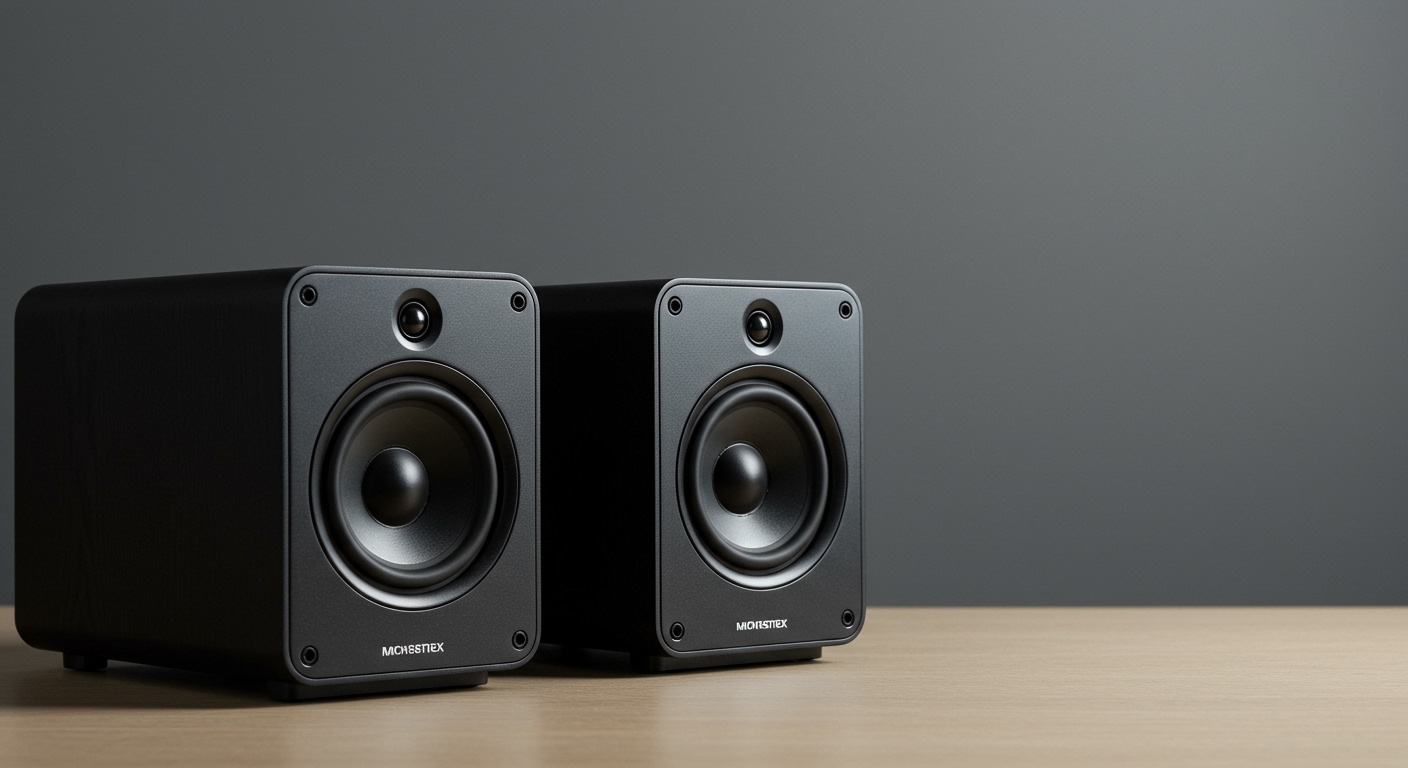
I then swapped them for a pair of SVS Prime Bookshelf speakers I had. I mounted them high on my front wall, just below the ceiling, using simple angled wall mounts. After re-running the Dirac Live calibration on my Onkyo receiver, the difference was astounding. During the opening scene of Mad Max: Fury Road, the swirling, chaotic voices were no longer just “up there” somewhere; they were distinct, localized objects of sound moving directly overhead. The larger drivers of the bookshelf speakers provided a weight and authority to helicopter flyovers and thunderclaps that the smaller modules simply couldn’t match.
Answering Key Questions About Atmos Speakers
Let’s tackle some other common questions that come up when planning an Atmos setup.
Can I use satellite speakers for Atmos?
Yes, you absolutely can use satellite speakers for Atmos. They function on the