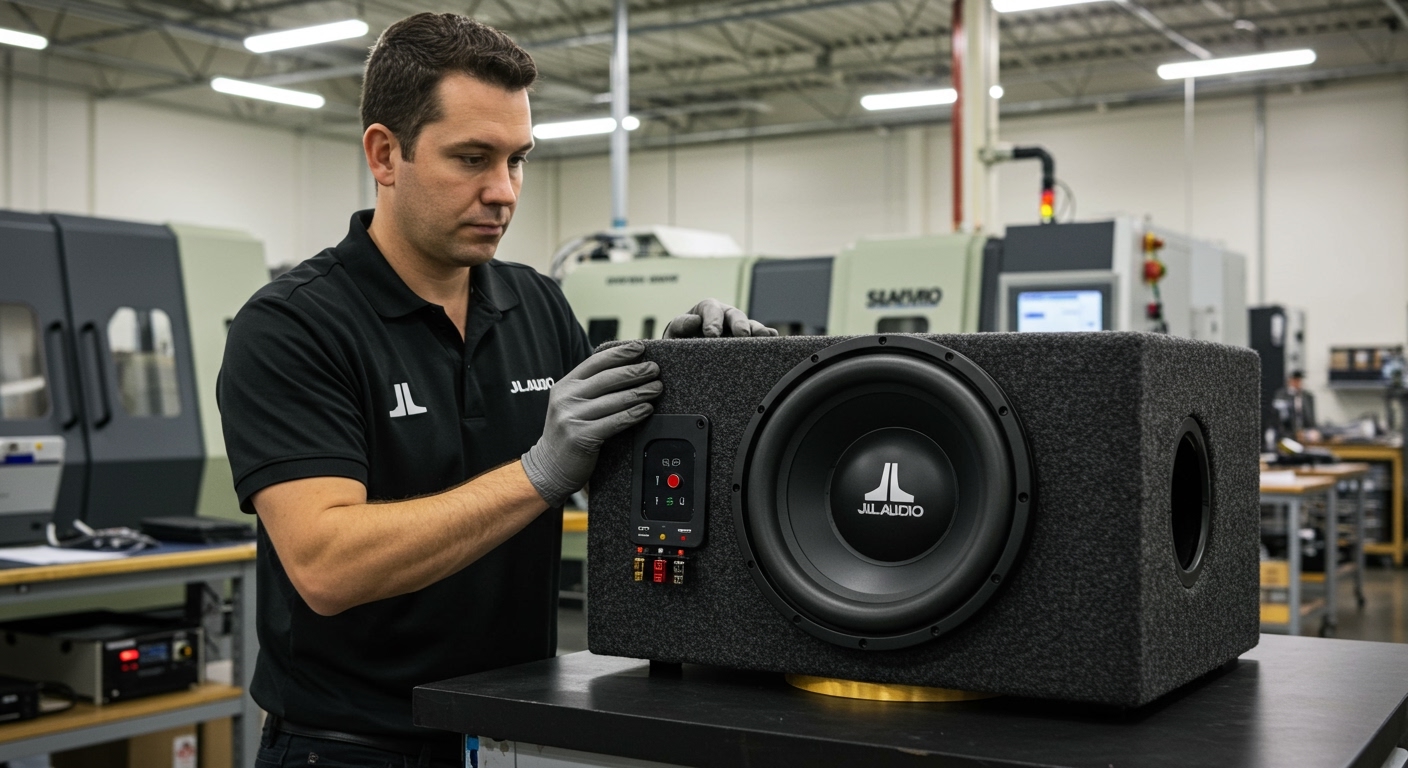
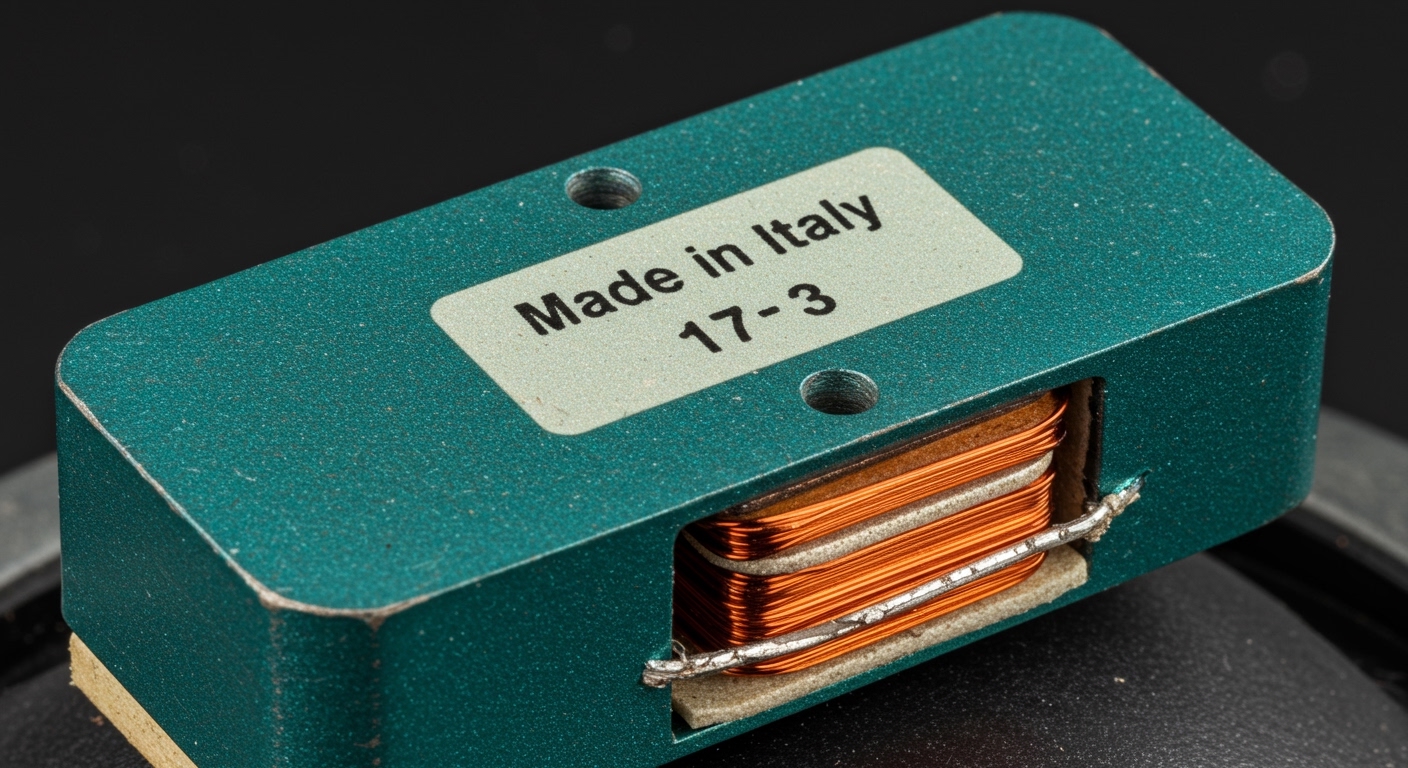
What is Coil Configuration in Speakers?
Coil configuration in speakers refers to how the voice coils within a driver are electrically arranged and wired to manage impedance (measured in Ohms) and power handling. In simple terms, it is the method of connecting one or multiple voice coils to an amplifier to ensure the system operates safely and at peak efficiency. Understanding this configuration is essential for matching your speakers to your amplifier’s capabilities to prevent hardware failure.
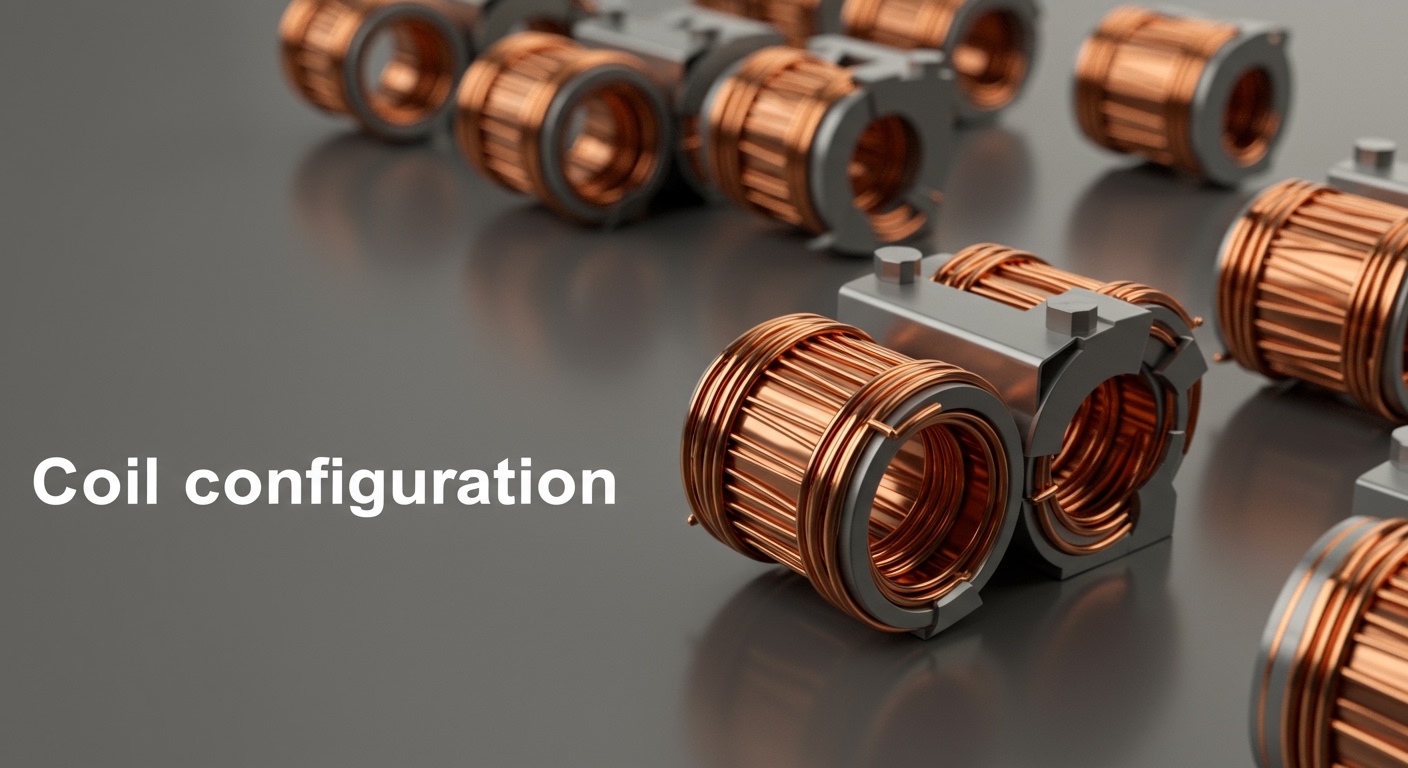
When I first started building custom car audio systems, I quickly realized that ignoring coil configuration was the fastest way to “smoke” an expensive amplifier. If you wire your coils incorrectly, you risk creating a short circuit or a load so high that your amplifier barely produces sound. This guide will walk you through everything we’ve learned from years of testing and tuning high-performance audio rigs.
Key Takeaways: Coil Configuration at a Glance
- Primary Purpose: Configuration allows you to manipulate the total Ohms (impedance) that the amplifier “sees.”
- SVC vs. DVC: Single Voice Coil (SVC) speakers offer simplicity, while Dual Voice Coil (DVC) speakers provide maximum wiring flexibility.
- Series Wiring: Increases total impedance (e.g., two 4-ohm coils become 8 ohms).
- Parallel Wiring: Decreases total impedance (e.g., two 4-ohm coils become 2 ohms).
- System Stability: Always ensure your final impedance does not drop below your amplifier’s minimum stable Ohm rating.
Understanding the Role of the Voice Coil
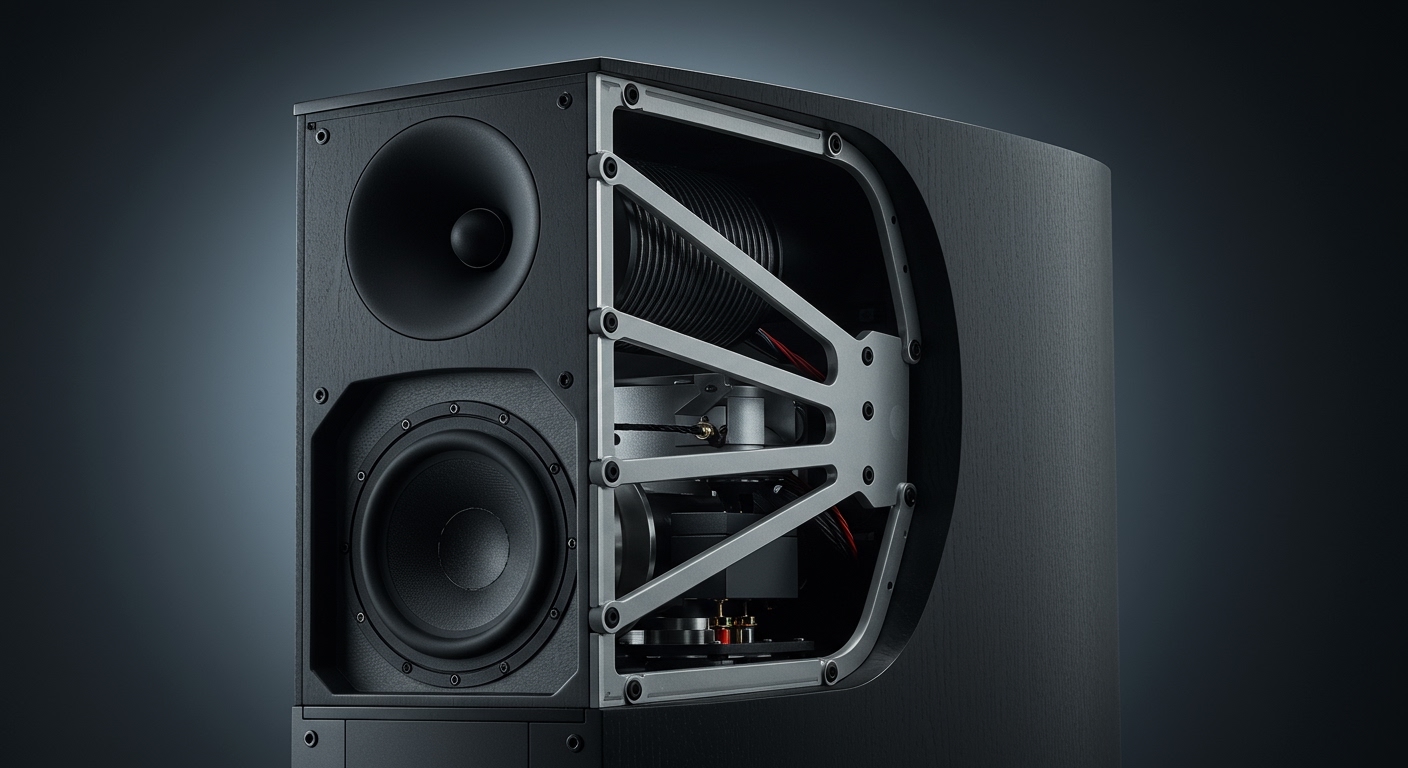
To understand what is coil configuration in speakers, we must first look at the voice coil itself. The voice coil is a length of wire wrapped around a cylinder (called a former). When an electrical current from your amplifier passes through this wire, it creates a magnetic field that interacts with the speaker’s permanent magnet.
This interaction causes the speaker cone to move back and forth, creating the air pressure changes we hear as sound. The configuration specifically deals with how the ends of these wires (the terminals) are connected to your power source.
The Physics of Impedance (Ohms)
In the audio world, impedance is the resistance a speaker offers to the current flowing from the amplifier.
- Lower Impedance (e.g., 1 or 2 Ohms): Allows more current to flow, meaning more power, but puts higher stress on the amplifier.
- Higher Impedance (e.g., 4 or 8 Ohms): Restricts current flow, resulting in less power output but cooler, more stable amplifier operation.
Why Coil Configuration Matters
We configure coils primarily to reach the “sweet spot” of an amplifier’s output. For example, if you have a Monoblock Amplifier that is stable at 1 Ohm, but your subwoofers are 4 Ohms, you need a specific configuration to drop that resistance so you can extract the full wattage you paid for.
Single Voice Coil (SVC) vs. Dual Voice Coil (DVC)
Most entry-level speakers and subwoofers are Single Voice Coil (SVC). However, high-performance subwoofers often use Dual Voice Coil (DVC) designs. Based on our bench testing, here is how they differ in real-world application.
| Feature | Single Voice Coil (SVC) | Dual Voice Coil (DVC) |
|---|---|---|
| Terminals | One set (+ and -) | Two independent sets (+ and -) |
| Wiring Options | Limited to one fixed impedance | High (Series, Parallel, or Independent) |
| Best For | Basic setups, full-range speakers | Subwoofers, high-power custom builds |
| Complexity | Very Low | Moderate to High |
| Impedance Control | None (Fixed) | High (Variable) |
Single Voice Coil (SVC) Explained
An SVC speaker has one continuous strand of wire wrapped around the former. If the box says “4-Ohm SVC,” that speaker will always be 4 Ohms. You cannot change its internal resistance. Your only option to change the load is to add more speakers to the circuit.
Dual Voice Coil (DVC) Explained
A DVC speaker has two separate strands of wire wrapped around the same former. This means you have two independent voice coils on a single driver. This is the “gold standard” for enthusiasts because it allows you to wire the coils together in different ways to suit your amplifier.
Expert Insight: A DVC 4-ohm subwoofer does not mean the sub is 4 ohms total. It means it has two 4-ohm coils. Depending on how you wire them, that single subwoofer can become a 2-ohm load or an 8-ohm load.
The Two Primary Wiring Methods
When discussing what is coil configuration in speakers, we are almost always talking about Series and Parallel wiring. These are the building blocks of every audio system.
Parallel Wiring (Lowering Resistance)
In Parallel wiring, you connect all the positive terminals together and all the negative terminals together. This path provides more “lanes” for the electricity to travel through, which reduces resistance.
- Formula: $1 / R_{total} = 1/R_1 + 1/R_2$
- Example: If you wire a DVC 4-Ohm sub in parallel, the math is $(4 times 4) / (4 + 4) = 16 / 8 = 2$ Ohms.
- When to use: Use this when you want to get more power out of a Class D Monoblock amplifier.
Series Wiring (Increasing Resistance)
In Series wiring, you connect the positive of one coil to the negative of the next coil. This creates a single, longer path for the electricity, which increases resistance.
- Formula: $R_{total} = R_1 + R_2$
- Example: If you wire a DVC 4-Ohm sub in series, the math is $4 + 4 = 8$ Ohms.
- When to use: Use this when wiring multiple subwoofers together to keep the total load from dropping too low for your amplifier’s safety.
Step-by-Step Guide: How to Configure Your Speaker Coils
Configuring your coils requires precision. A single loose wire can cause an impedance spike or a short circuit. Here is our proven process for a safe installation.
Step 1: Verify Amplifier Stability
Before touching any wires, check your amplifier’s manual. Look for the Minimum Impedance.
- If it says “2-Ohm Stable,” do NOT configure your coils to reach 1 Ohm.
- If it is a bridgeable 2-channel amp, the “Bridged” minimum is often higher (usually 4 Ohms).
Step 2: Choose Your Target Impedance
Decide what load you want the amplifier to see.
- Scenario A: You have a 1-Ohm stable amp and one DVC 2-Ohm sub. You should wire in parallel to hit 1 Ohm.
- Scenario B: You have a 2-Ohm stable amp and two SVC 4-Ohm subs. You should wire them in parallel to hit 2 Ohms.
Step 3: Execute the Wiring
For Parallel (One DVC Sub):
- Run a jumper wire from the Positive (+) of Coil 1 to the Positive (+) of Coil 2.
- Run a jumper wire from the Negative (-) of Coil 1 to the Negative (-) of Coil 2.
- Connect the main speaker wire from the amplifier to any of the positive/negative terminal sets.
For Series (One DVC Sub):
- Run a jumper wire from the Negative (-) of Coil 1 to the Positive (+) of Coil 2.
- Connect the Positive (+) from the amplifier to the Positive (+) of Coil 1.
- Connect the Negative (-) from the amplifier to the Negative (-) of Coil 2.
Step 4: Test with a Multimeter
Never skip this step. Before plugging the wires into the amp, set a Digital Multimeter to the Ohms (Ω) setting. Touch the leads to the final positive and negative wires.
- The reading should be slightly lower than the theoretical impedance (e.g., a 2-ohm load might read 1.7 or 1.8 ohms due to DC resistance).
- If it reads 0, you have a short.
- If it reads 1 (Infinity), you have a broken connection.
Advanced Configurations: Multiple Subwoofers
When you move beyond a single speaker, coil configuration becomes a game of strategy. We often see users struggle with wiring three or four subwoofers.
Wiring Two DVC Subwoofers
If you have two DVC 4-Ohm subwoofers, you have three main options:
- Parallel/Parallel (1 Ohm): All coils in parallel. Best for high-power Monoblock amps.
- Series/Parallel (4 Ohms): Wire each sub’s coils in series, then wire the two subs together in parallel. This is a very common “safe” configuration.
- Series/Series (16 Ohms): All coils in series. Rarely used in car audio, occasionally used in specific home theater or Pro Audio arrays.
The Problem with Mixed Configurations
I’ve seen many DIYers try to wire different types of speakers together—for example, a DVC 2-Ohm sub with an SVC 4-Ohm sub. Do not do this.
Mixing configurations causes uneven power distribution. One speaker will work harder than the other, leading to distortion and eventually a blown voice coil. Always use identical drivers when configuring a multi-speaker array.
Impact of Configuration on Sound Quality and Performance
There is a long-standing debate: Does coil configuration affect how a speaker sounds?
Damping Factor and Control
Technically, higher impedance (e.g., wiring to 8 ohms) provides a higher damping factor. This means the amplifier has “tighter” control over the movement of the speaker cone. In my experience, wiring to a higher impedance can result in slightly cleaner, more accurate bass.
Heat Dissipation
Wiring to a lower impedance (e.g., 1 ohm) forces more current through the voice coils. This generates significant thermal energy. If your configuration is “on the edge” of what your equipment can handle, you may experience Power Compression, where the speaker gets quieter as the coils heat up.
Sensitivity and Output
Configuring for lower impedance typically results in higher SPL (Sound Pressure Level) because the amplifier is dumping more wattage into the system. If your goal is “loudness,” parallel configurations are your best friend.
Expert Tips for Troubleshooting Coil Wiring
After years of diagnosing audio issues, we’ve found that most “broken” speakers are actually just victims of poor configuration.
- Check for Phase Issues: If you wire one coil in a DVC sub “out of phase” (positive to negative accidentally), the coils will fight each other. The sub will barely move, and it will get hot very quickly.
- Inspect Jumper Wires: Most people use thin wire for the small “jumpers” between terminals. Always use the same gauge (thickness) wire for jumpers as you do for your main speaker runs to prevent bottlenecks.
- Terminal Integrity: High-excursion subwoofers vibrate violently. Ensure your push terminals or spade connectors are tight. A loose connection in a series circuit will shut down the entire speaker array.
Frequently Asked Questions
What is the best coil configuration for bass?
For maximum bass output, a Parallel configuration is usually best because it lowers impedance, allowing the amplifier to deliver more wattage. However, this is only “best” if your amplifier is stable at that lower impedance.
Can I wire a DVC sub to a 2-channel amplifier?
Yes. You can wire each coil to its own channel (Independent configuration), or you can bridge the amplifier and wire the coils in series or parallel to match the bridged minimum impedance of the amp.
Does DVC sound better than SVC?
No, a Dual Voice Coil does not inherently sound better than a Single Voice Coil. The benefit of DVC is purely in wiring flexibility. The actual sound quality depends on the motor design, cone material, and enclosure.
What happens if I only wire one coil on a DVC sub?
Wiring only one coil on a DVC sub will change the Thiele/Small parameters (the physical specs) of the speaker. It will typically result in a loss of power handling and can cause the speaker to perform poorly in its intended enclosure. Always wire both coils.
Is it better to wire in series or parallel?
It depends on your amplifier. If your amp is a high-current 1-ohm stable mono block, parallel is better. If you are using a multi-channel amp that