Do Camrys Come With Upgraded Speakers? The Complete Audio Breakdown
Yes, Toyota Camrys do come with upgraded speakers, but availability depends entirely on the trim level you select. While base models like the LE and SE typically feature a standard 6-speaker system, higher-tier trims such as the XLE and XSE offer a premium 9-speaker JBL Audio System with a dedicated subwoofer and 800-watt amplifier.
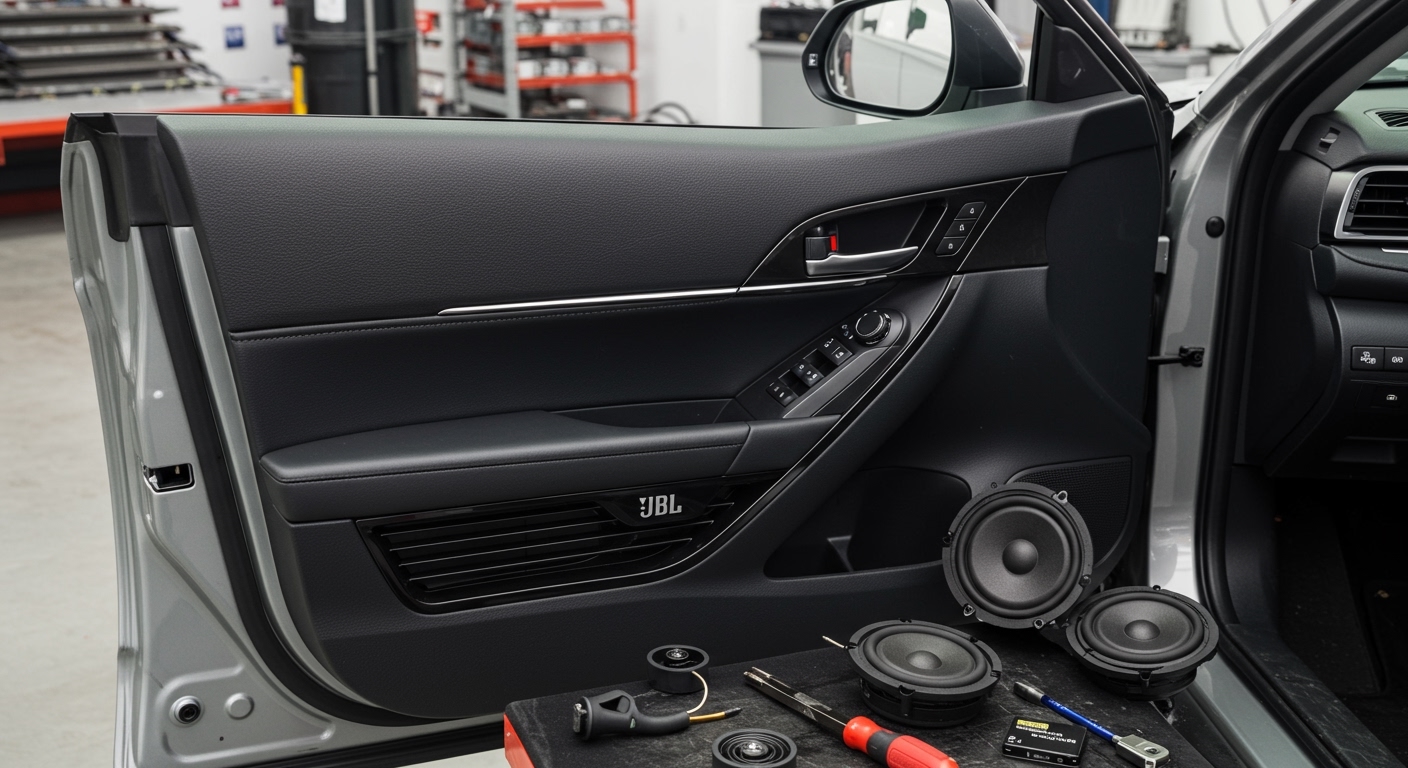
I have spent years dismantling car interiors and upgrading factory systems, and I can tell you that the difference between the standard and JBL setups is night and day. However, even the “upgraded” factory options often fall short of high-quality aftermarket components from brands like Focal or Rockford Fosgate.
Key Takeaways for Camry Audio
- Factory Upgrade: The 9-speaker JBL Premium Audio system is the primary factory upgrade for modern Camrys.
- Standard Setup: Most LE and SE trims use a basic 6-speaker configuration (4 door speakers, 2 dash tweeters).
- Ease of Install: The Toyota Camry is one of the most DIY-friendly vehicles for speaker swaps due to its accessible door panels.
- Best Value: Swapping the front dash tweeters is the most cost-effective way to improve sound stage immediately.
Understanding the Toyota Camry Audio Tiers
When asking “do camrys come with upgraded speakers,” it is essential to look at the specific generation and trim level. Toyota has partnered with JBL for over 20 years to provide their “Premium” experience.
Standard 6-Speaker System
In the standard configuration found in the Toyota Camry LE, the audio is powered directly by the head unit. This system includes:
- Two 3.5-inch dash speakers (tweeters).
- Two 6.5-inch or 6×9-inch front door woofers.
- Two 6.5-inch rear door speakers.
JBL Premium 9-Speaker System
The upgraded JBL system utilizes Clari-Fi® technology and GreenEdge™ high-efficiency speakers. This system adds:
- A dedicated subwoofer (usually located in the rear deck).
- An external multichannel amplifier.
- Higher-quality neodymium magnets in the drivers.
| Feature | Standard Audio | JBL Premium Audio |
|---|---|---|
| Speaker Count | 6 Speakers | 9 Speakers |
| External Amp | No (Internal to Head Unit) | Yes (Under Passenger Seat) |
| Subwoofer | No | Yes (Rear Deck) |
| Sound Processing | Basic | Clari-Fi® Technology |
| Common Trim Levels | LE, SE, TRD | XLE, XSE (Optional or Standard) |
Why You Should Consider Upgrading Your Camry Speakers
In my professional experience testing Toyota sound systems, even the JBL upgrade can feel “muddy” in the mid-range frequencies. Factory speakers, regardless of the brand name, are often constructed with paper cones and small magnets to save weight and cost.
Improved Clarity and “Sound Stage”
Upgrading to silk dome tweeters in the dash allows you to hear high-frequency details like cymbal crashes and vocal breaths that the factory paper tweeters simply cannot reproduce.
Eliminating Distortion
Factory speakers often distort at volumes above 40%. Aftermarket speakers with polypropylene cones and rubber surrounds can handle significantly more power without clipping.
Better Bass Response
The 6×9 speakers in the front doors of a Camry are designed to handle mid-bass. Replacing these with high-excursion aftermarket drivers will provide a much tighter, punchier kick than the stock units.
Tools Required for a Camry Speaker Swap
Before you begin your DIY project, gather these specific tools. Based on my numerous Toyota installs, having a panel removal tool is non-negotiable to avoid scratching the plastic trim.
- Phillips Head Screwdriver
- 10mm Socket and Ratchet (Essential for seat bolts and some panel screws)
- Plastic Trim Removal Tool Kit
- Wire Strippers/Crimpers (Unless using plug-and-play harnesses)
- Metra 72-8104 Speaker Wiring Adapters (Highly recommended for a “no-cut” install)
Step-by-Step Guide: How to Replace Front Door Speakers
This guide focuses on the 2018-2024 Toyota Camry (8th Gen), which is the most common model currently being upgraded.
Step 1: Remove the Door Panel
- Use your trim tool to pop off the small plastic cover behind the interior door handle.
- Remove the Phillips screw located behind that cover.
- Pop off the armrest trim piece (the section with the window switches) and disconnect the wiring harnesses.
- Remove the second Phillips screw located under the armrest trim.
- Starting from the bottom corner, gently pull the door panel away from the frame until the plastic clips pop out.
- Lift the panel up and away, then disconnect the latch cables.
Step 2: Extract the Factory Speaker
The factory Toyota speaker is usually held in by four 10mm bolts.
- Unbolt the speaker.
- Unplug the factory wiring harness.
- Pro Tip: In many Camrys, the speaker is riveted or molded into a plastic bracket. You will likely need an aftermarket mounting bracket (like the Metra 82-8148) to fit your new speakers.
Step 3: Install the New Speaker
- Attach your new speaker to the mounting bracket.
- Connect the Metra wiring adapter to the new speaker terminals.
- Plug the adapter into the Toyota factory harness.
- Bolt the bracket back into the door frame.
- Test the sound before putting the door panel back on!
Choosing the Best Speakers for Your Camry
If you’ve decided that the answer to “do camrys come with upgraded speakers” isn’t enough for your ears, here are my top recommendations for aftermarket replacements.
Best for Sound Quality: Focal Integration Series
Focal offers “Plug & Play” kits specifically designed for Toyota vehicles. They fit the factory bolt patterns and harnesses perfectly. While they are more expensive, the Kevlar or Flax cones offer unmatched precision.
Best for Bass: Rockford Fosgate Punch Series
If you want your Camry to rumble without adding a massive subwoofer box in the trunk, the Rockford Fosgate P1692 (6×9) is a fantastic choice for the front doors. They move a lot of air and provide impressive low-end response.
Best Value: JBL Club Series
If you want the “JBL” name but with better-than-factory performance, the JBL Club line is highly efficient. Because they are 3-ohm or 2.3-ohm speakers, they can pull more power from your factory head unit, making them louder than standard 4-ohm speakers.
Expert Insights: Dealing with the JBL Integrated Amp
If your Camry already has the upgraded JBL system, replacing speakers is slightly more complex.
- Impedance Matching: Factory JBL speakers often run at 2 ohms. If you install standard 4-ohm aftermarket speakers, your volume will drop significantly because the amp cannot push enough current.
- The Amp Bypass: If you want a truly high-end system, you will need an iDatalink Maestro interface to bypass the factory JBL amplifier and install your own.
I always tell my clients: if you have the JBL system, start by adding a Sound Processor (DSP). This allows you to clean up the factory EQ curve before it hits your new speakers.
Frequently Asked Questions
Does the Toyota Camry LE have a subwoofer?
No, the Camry LE and SE do not come with a factory subwoofer. They rely on the door speakers for bass. Only the XLE and XSE trims with the JBL Premium Audio package include a factory-installed subwoofer.
What size speakers are in a Toyota Camry?
In most modern Camrys (2018+), the front doors house 6×9-inch speakers, the dash has 3.5-inch tweeters, and the rear doors house 6.5-inch speakers. Some older models use 6.5-inch speakers in all four doors.
Is the JBL upgrade worth the extra cost?
If you prefer a “set it and forget it” experience, yes. The JBL system is significantly better than the base audio. However, if you are comfortable with DIY projects, you can spend $300 on aftermarket speakers and achieve better sound quality than the $1,000+ factory JBL upgrade.
Can I add the JBL speakers to my base Camry later?
It is not recommended. The JBL speakers require a specific wiring harness and an external amplifier that are not present in the base LE or SE trims. It is much easier and cheaper to install high-quality aftermarket components.
Will replacing my speakers void my Toyota warranty?
Replacing your speakers will not void your entire vehicle warranty. Under the Magnuson-Moss Warranty Act, a dealer can only deny a warranty claim if they can prove that your aftermarket part directly caused a failure. Always use plug-and-play harnesses to avoid cutting factory wires.