Do Ceiling Speakers Need Power? The Expert Guide to Powering Your Sound
Yes, ceiling speakers need power to function, but they do not typically plug into a wall outlet like a lamp. Most residential models are passive speakers, meaning they draw their electrical power and audio signal through specialized speaker wires connected to a central amplifier or AV receiver.
If you are using active (powered) ceiling speakers, which are less common, they will require a direct connection to a nearby electrical circuit or a Power over Ethernet (PoE) switch. Understanding which system you have is the first step to a successful installation.
Key Takeaways: Expert Summary
Passive Speakers: Require an external amplifier and speaker wire (most common setup).
Active Speakers: Feature built-in amplifiers and require a dedicated power source (AC outlet or PoE).
Sonos Systems: Sonos ceiling speakers are passive and must be powered by a Sonos Amp to function within the ecosystem.
Wiring Safety: Always use CL2 or CL3 rated cables for in-wall and in-ceiling runs to comply with fire safety codes.
Power Matching: Ensure your amplifier’s RMS wattage matches the speakers’ requirements to prevent hardware damage.
Understanding How Ceiling Speakers are Powered
To understand how are ceiling speakers powered, you must distinguish between the two primary types of hardware. In my experience installing home theaters, 90% of homeowners opt for passive systems because they are easier to scale and maintain.
Passive Ceiling Speakers (The Industry Standard)
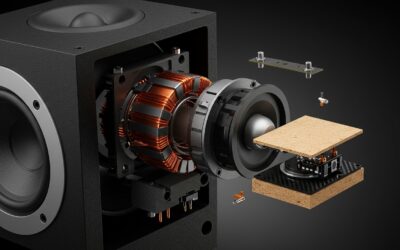
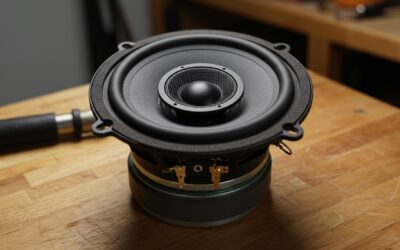
Passive speakers are essentially “dumb” devices. They have no internal power source. They rely entirely on an external amplifier to push an electrical signal through the copper strands of a speaker cable.
Pros: Reliable, thinner profile, easier to replace, no high-voltage electricity in the ceiling.
Cons: Requires a central location for the amplifier and extensive wire runs.
Active Ceiling Speakers (All-in-One)
Active speakers have a built-in amplifier. These are often sold as Bluetooth or Wi-Fi ceiling speakers. While they don’t need a separate amp, they do need power from a 110V/220V outlet or a transformer hidden in the ceiling.
Pros: No need for a bulky receiver; great for single-room setups.
Cons: Difficult to repair, requires an electrician to install outlets in the ceiling, heavier.
Comparison Table: Passive vs. Active Powering
| Feature | Passive Ceiling Speakers | Active (Powered) Ceiling Speakers |
|---|---|---|
| Power Source | External Amplifier/Receiver | AC Wall Outlet or PoE |
| Cabling Needed | Two-core speaker wire (16/2 or 14/2) | Power cable + Signal (or Wireless) |
| Installation Difficulty | Moderate (running long wires) | High (requires electrical proximity) |
| Sound Quality | High (Customizable Amp) | Variable (Limited by internal Amp) |
| Best For | Whole-home audio, Home Theater | Small apartments, Single rooms |
Do Sonos Ceiling Speakers Need Power?
A common question among smart home enthusiasts is: do sonos ceiling speakers need power? The answer is specific to the Sonos ecosystem.
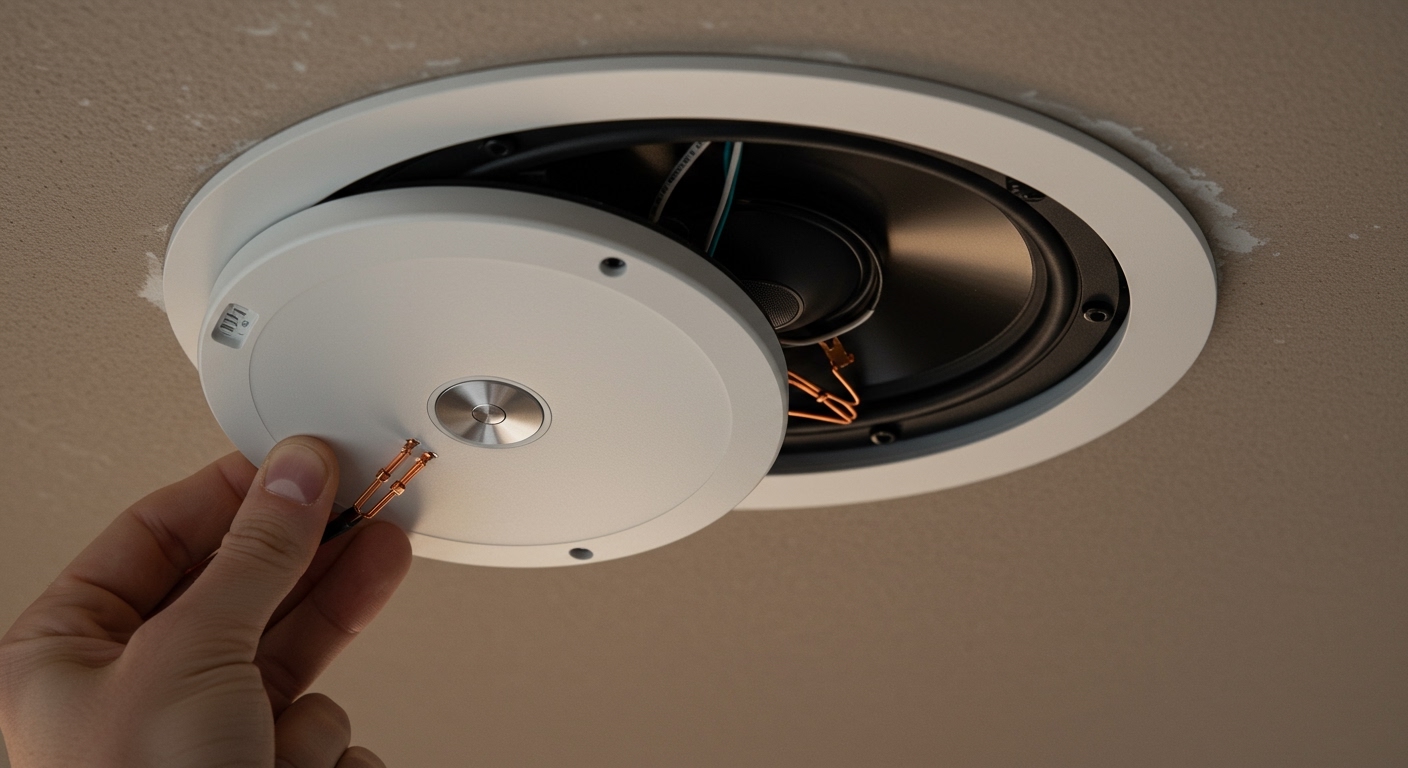
The official Sonos Architectural Speakers (made by Sonance) are passive. They do not have a power cord. Instead, how sonos ceiling speakers are powered is through a Sonos Amp.
- The Sonos Amp plugs into a standard wall outlet in your media closet.
- You run speaker wire from the Amp to the ceiling speakers.
- The Amp provides the “juice” and the smart connectivity (AirPlay 2, Spotify Connect).
If you attempt to use these speakers without a Sonos Amp (or another high-quality third-party amplifier), they will not produce sound.
How to Power Ceiling Speakers: A Step-by-Step Guide
If you are wondering how to power in ceiling speakers for a DIY project, follow this professional framework. I have used this exact process for over 50 residential installs to ensure longevity and safety.
Step 1: Calculate Your Power Requirements
Before buying hardware, check the impedance (Ohms) and Power Handling (Watts). Most ceiling speakers are 8-Ohm.
If you are connecting four speakers to one stereo amplifier, you need to understand parallel vs. series wiring to avoid overheating the amp. I recommend an amplifier that provides at least 20% more RMS power than the speaker’s rating to ensure “headroom.”
Step 2: Choose the Correct Speaker Wire
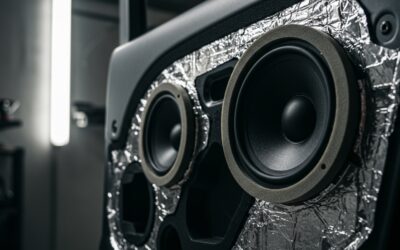
Do not use standard “zip cord.” For in-ceiling runs, you must use UL-rated cable.
16-Gauge (16/2): Perfect for runs under 50 feet.
14-Gauge (14/2): Necessary for runs over 50 feet to prevent signal loss.
CL2/CL3 Rating: This is non-negotiable for insurance and fire safety.
Step 3: Select Your Power Hub (The Amplifier)
Decide where your “brain” will live. This is how ceiling speakers are powered in a organized way.
Multi-Zone Amp: If you want different music in the kitchen and the bathroom.
AV Receiver: If the ceiling speakers are part of a 5.1 or 7.1 surround sound system.
Streaming Amp: (Like the Sonos Amp or HEOS Drive) for app-controlled music.
Step 4: Route the Cables
Fish the wires through the wall and across the ceiling joists.
Pro Tip: Keep speaker wires at least 6 inches away from AC electrical lines to avoid “60Hz hum” or interference.
- If you must cross an electrical wire, do so at a 90-degree angle.
Step 5: Termination and Testing
Strip approximately 1/2 inch of insulation from the wire. Connect the Red (Positive) and Black (Negative) leads to the corresponding terminals on both the speaker and the amplifier.
Expert Advice: Always test the connection with a small 9V battery before mounting the speaker. A quick “pop” sound confirms the circuit is complete.
Tools and Materials Needed for Powering Speakers
| Tool/Material | Purpose | Expert Recommendation |
|---|---|---|
| Amplifier | Provides the power signal | Sonos Amp or Yamaha MusicCast |
| Speaker Wire | Carries power to the speaker | Oxygen-Free Copper (OFC), CL3 Rated |
| Wire Strippers | Removes insulation safely | Klein Tools self-adjusting strippers |
| Fish Tape | Pulls wire through walls | 50ft Steel or Fiberglass tape |
| Label Maker | Identifies room zones | Dymo or Brother |
Common Mistakes to Avoid When Powering Speakers
Through years of troubleshooting, I’ve seen these three mistakes ruin expensive equipment:
- Ignoring Impedance: Wiring too many speakers to one amp can drop the impedance below 2 Ohms, which will likely trigger the “Protect Mode” or fry the amplifier’s capacitors.
- Using Thin Wire: Using 18-gauge or 22-gauge wire for long runs results in voltage drop. This makes your high-end speakers sound thin and muddy.
- Mixing Up Polarity: If you swap the positive and negative on just one speaker, the system will be “out of phase.” This cancels out the bass frequencies, making your expensive install sound like a tinny radio.
Frequently Asked Questions
(FAQs)
Do ceiling speakers need a dedicated battery?
No. Ceiling speakers never use batteries. Passive speakers get power from an amplifier, and active speakers get power from the building’s electrical grid.
How are ceiling speakers powered if they are Bluetooth?
Bluetooth ceiling speakers are almost always active. One speaker in the pair usually acts as the “Master” and contains the amplifier; it must be plugged into a 110V/220V power outlet in the attic or ceiling space. The “Slave” speaker then connects to the master via standard speaker wire.
Can I power ceiling speakers with my TV?
Most TVs do not have built-in amplifiers strong enough to drive ceiling speakers directly. You will need to run an Optical (Toslink) or HDMI ARC cable from your TV to a compact amplifier, which then powers the speakers.
Is it safe to leave the amplifier on all the time?
Modern Class D amplifiers (like the Sonos Amp) are designed to stay on. They enter a low-power “sleep mode” when no audio is detected, consuming very little electricity.
Can I use PoE (Power over Ethernet) for ceiling speakers?
Yes, but you need specific IP-based ceiling speakers. These are common in commercial settings. They receive both data and power through a single Cat6 cable connected to a PoE+ or PoE++ switch.
Conclusion
Determining do ceiling speakers need power is the first step in designing your home audio sanctuary. While the speakers themselves are usually passive, the “power” comes from a well-chosen amplifier and high-quality CL3-rated wiring.
By following the how to power ceiling speakers guide above—matching your Ohms, choosing the right gauge wire, and ensuring your Sonos components are correctly amplified—breathtaking, invisible sound is easily achievable.
Ready to start your installation? Ensure you have mapped your zones and selected an amplifier that supports your favorite streaming services before cutting any holes in your drywall.