Understanding the Core Question: Do I Need a Receiver for Ceiling Speakers?
Yes, in most cases, you absolutely need a receiver for ceiling speakers because they are typically passive speakers. Unlike active speakers (like a Bluetooth speaker or a soundbar), ceiling speakers do not have their own power source or internal amplifiers. They rely on an external AV receiver or amplifier to provide power and transmit audio signals through speaker wires.
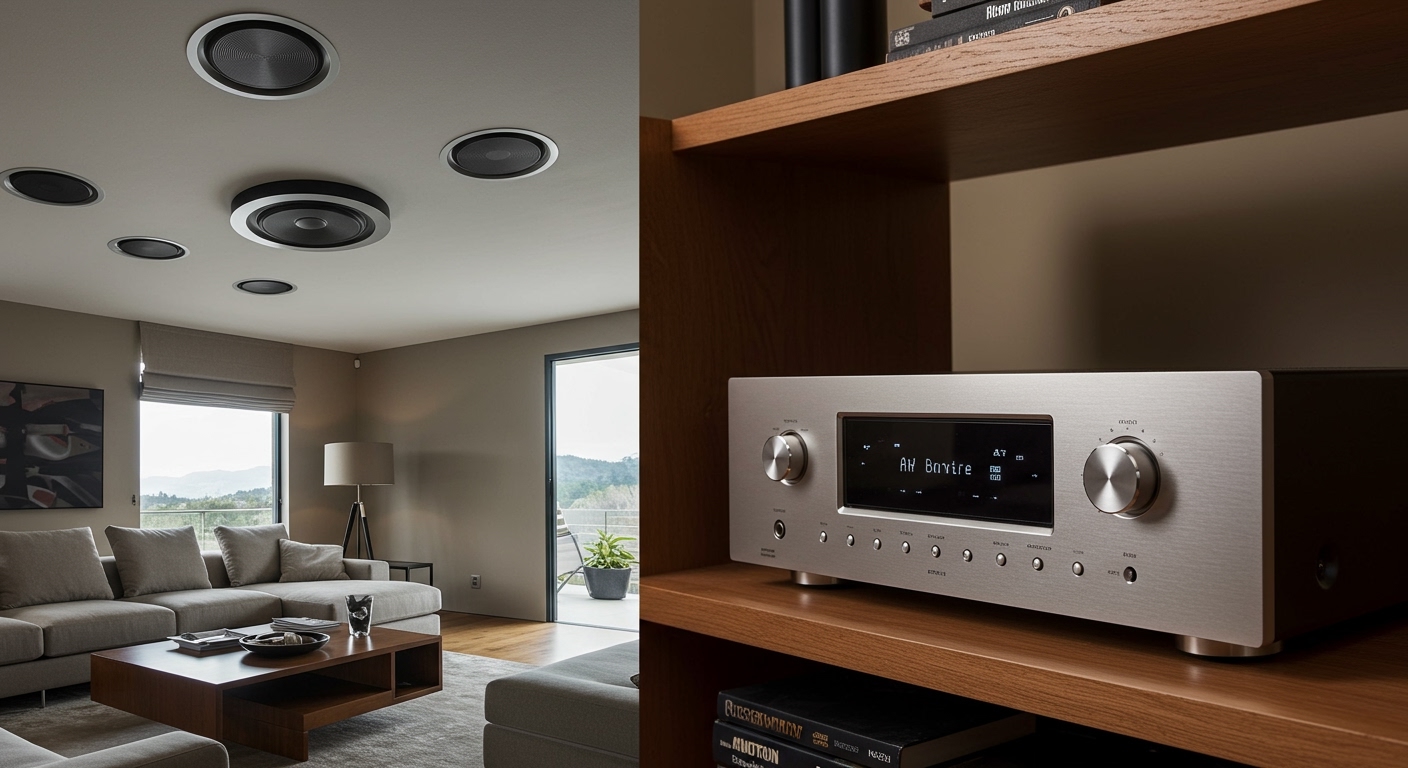
If you are wondering, “do i need a receiver for my speakers,” the answer depends on whether your speakers have a power cord. If they don’t, they are passive and require a receiver to function. This applies whether you are setting up a dedicated home theater or a simple multi-room audio system.
Key Takeaways (TL;DR)
Passive vs. Active: 95% of ceiling and bookshelf speakers are passive and require a receiver or amplifier.
Power Source: The receiver acts as the “brain,” taking in audio from your TV or phone and pushing it to the speakers.
Surround Sound: If you are building a home cinema, you do need a receiver for surround sound speakers to decode formats like Dolby Atmos or DTS:X.
Wiring: Passive speakers connect via CL2 or CL3 rated speaker wire directly to the back of the receiver.
Why You Need a Receiver for Your Audio System
To understand why people ask “do you need a receiver for speakers,” you have to look at how sound is produced. Audio signals from a source (like a streaming box or turntable) are very weak. Without an amplifier or receiver, these signals cannot physically move the drivers inside your speakers to create sound waves.
The Role of the AV Receiver
The AV Receiver (Audio/Video Receiver) performs three critical functions:
- Preamplification: It allows you to switch between different inputs (TV, Phono, Bluetooth).
- Processing: It decodes digital signals into multi-channel audio (crucial for surround sound speakers).
- Amplification: It boosts the electrical signal to a level high enough to power your bookshelf speakers or ceiling speakers.
Comparison: Passive vs. Active Speakers
| Feature | Passive Speakers (Needs Receiver) | Active Speakers (Built-in Amp) |
|---|---|---|
| Power Source | Powered by the Receiver | Plugs into a wall outlet |
| Connection | Speaker Wire (Red/Black) | RCA, Optical, or Bluetooth |
| Flexibility | High (Easily upgrade components) | Low (All-in-one system) |
| Common Types | Ceiling, In-wall, Bookshelf | Studio monitors, Soundbars |
| Best For | Custom Home Theater, Whole-home audio | Desktop setups, Simple TV audio |
Determining Your Specific Needs
Do I Need a Receiver for Bookshelf Speakers?
If your bookshelf speakers are passive (standard for brands like Klipsch, KEF, or Polk), you definitely need a receiver. However, some modern bookshelf speakers are “powered” or “active,” meaning they have the amp built-in. Check the back of the speaker: if it has a volume knob and a power plug, you don’t need a receiver.
Do I Need a Receiver for Surround Sound Speakers?
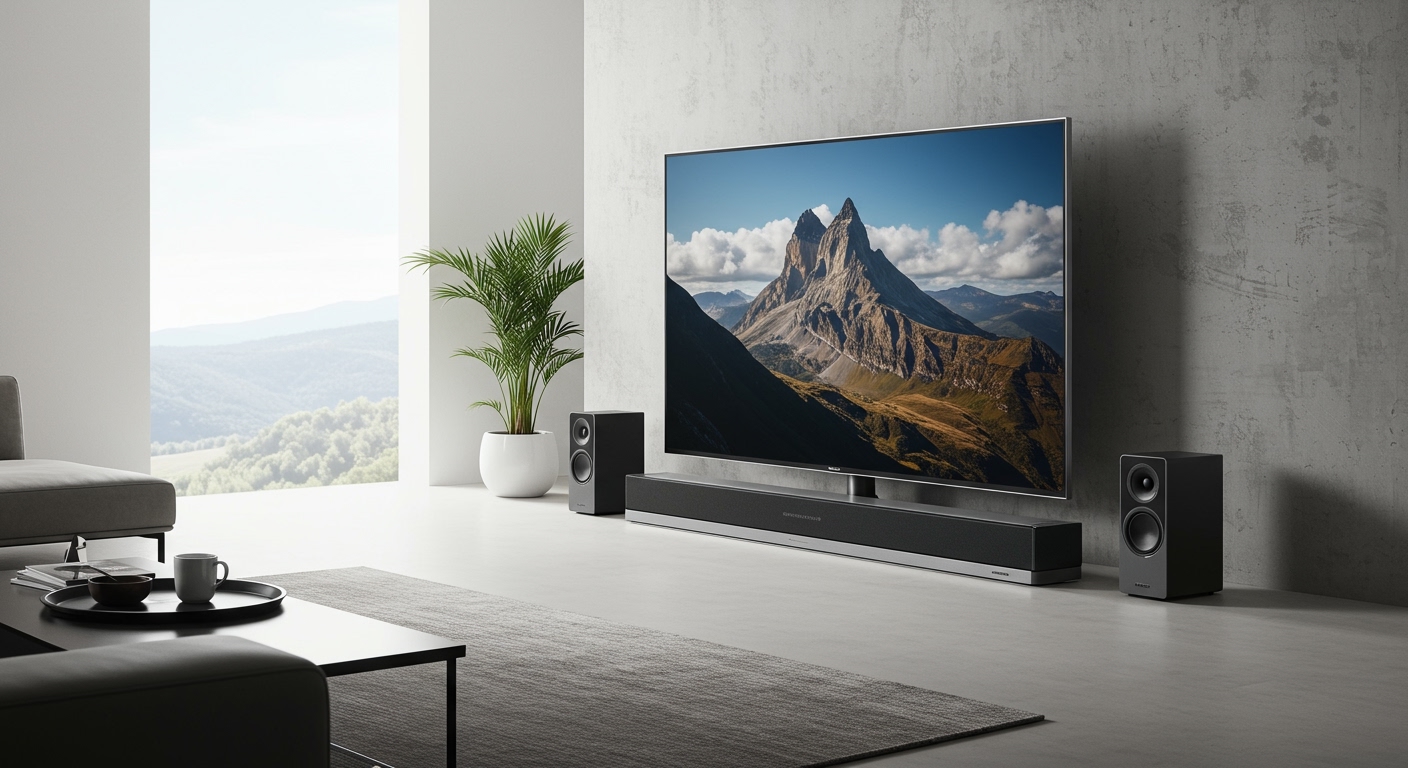
Yes, do surround sound speakers need a receiver? Always. A receiver is the only device capable of taking a single HDMI input and splitting it into 5, 7, or 9 separate channels. It ensures that the “crunch” of a footstep comes from the rear speaker while the dialogue remains in the center.
Tools and Materials Needed for Setup
Before you begin connecting your system, gather these essential items:
| Item | Purpose | Recommendation |
|---|---|---|
| AV Receiver | The central hub and power source | Denon, Marantz, or Yamaha |
| Speaker Wire | Carries the signal to the speakers | 14-gauge or 16-gauge oxygen-free copper |
| Wire Strippers | Removes insulation from the wire | Adjustable strippers for clean cuts |
| Banana Plugs | Ensures a secure, high-quality connection | Gold-plated for better conductivity |
| HDMI Cables | Connects the TV to the receiver | HDMI 2.1 for 4K/120Hz support |
Step 1: Choose the Right Receiver for Your Speakers
Match the power output. Before buying, check the RMS power rating and Impedance (Ohms) of your speakers. Most ceiling speakers are 8-ohm. Ensure your receiver is rated to handle that load to avoid overheating.
Consider the Number of Channels
2.0 or 2.1 Channel: Best for music and a pair of bookshelf speakers.
5.1 or 7.1 Channel: Required if you are asking “do i need a receiver for surround sound speakers” for a standard movie setup.
9.2 or 11.2 Channel: Necessary for high-end Dolby Atmos setups involving multiple ceiling speakers.
Understanding the Core Question: Do I Need a Receiver for Ceiling Speakers?
Yes, in most cases, you absolutely need a receiver for ceiling speakers because they are typically passive speakers. Unlike active speakers (like a Bluetooth speaker or a soundbar), ceiling speakers do not have their own power source or internal amplifiers. They rely on an external AV receiver or amplifier to provide power and transmit audio signals through speaker wires.
If you are wondering, “do i need a receiver for my speakers,” the answer depends on whether your speakers have a power cord. If they don’t, they are passive and require a receiver to function. This applies whether you are setting up a dedicated home theater or a simple multi-room audio system.
Key Takeaways (TL;DR)
Passive vs. Active: 95% of ceiling and bookshelf speakers are passive and require a receiver or amplifier.
Power Source: The receiver acts as the “brain,” taking in audio from your TV or phone and pushing it to the speakers.
Surround Sound: If you are building a home cinema, you do need a receiver for surround sound speakers to decode formats like Dolby Atmos or DTS:X.
Wiring: Passive speakers connect via CL2 or CL3 rated speaker wire directly to the back of the receiver.
Why You Need a Receiver for Your Audio System
To understand why people ask “do you need a receiver for speakers,” you have to look at how sound is produced. Audio signals from a source (like a streaming box or turntable) are very weak. Without an amplifier or receiver, these signals cannot physically move the drivers inside your speakers to create sound waves.
The Role of the AV Receiver
The AV Receiver (Audio/Video Receiver) performs three critical functions:
- Preamplification: It allows you to switch between different inputs (TV, Phono, Bluetooth).
- Processing: It decodes digital signals into multi-channel audio (crucial for surround sound speakers).
- Amplification: It boosts the electrical signal to a level high enough to power your bookshelf speakers or ceiling speakers.
Comparison: Passive vs. Active Speakers
| Feature | Passive Speakers (Needs Receiver) | Active Speakers (Built-in Amp) |
|---|---|---|
| Power Source | Powered by the Receiver | Plugs into a wall outlet |
| Connection | Speaker Wire (Red/Black) | RCA, Optical, or Bluetooth |
| Flexibility | High (Easily upgrade components) | Low (All-in-one system) |
| Common Types | Ceiling, In-wall, Bookshelf | Studio monitors, Soundbars |
| Best For | Custom Home Theater, Whole-home audio | Desktop setups, Simple TV audio |
Determining Your Specific Needs
Do I Need a Receiver for Bookshelf Speakers?
If your bookshelf speakers are passive (standard for brands like Klipsch, KEF, or Polk), you definitely need a receiver. However, some modern bookshelf speakers are “powered” or “active,” meaning they have the amp built-in. Check the back of the speaker: if it has a volume knob and a power plug, you don’t need a receiver.
Do I Need a Receiver for Surround Sound Speakers?
Yes, do surround sound speakers need a receiver? Always. A receiver is the only device capable of taking a single HDMI input and splitting it into 5, 7, or 9 separate channels. It ensures that the “crunch” of a footstep comes from the rear speaker while the dialogue remains in the center.
Tools and Materials Needed for Setup
Before you begin connecting your system, gather these essential items:
| Item | Purpose | Recommendation |
|---|---|---|
| AV Receiver | The central hub and power source | Denon, Marantz, or Yamaha |
| Speaker Wire | Carries the signal to the speakers | 14-gauge or 16-gauge oxygen-free copper |
| Wire Strippers | Removes insulation from the wire | Adjustable strippers for clean cuts |
| Banana Plugs | Ensures a secure, high-quality connection | Gold-plated for better conductivity |
| HDMI Cables | Connects the TV to the receiver | HDMI 2.1 for 4K/120Hz support |
Step 1: Choose the Right Receiver for Your Speakers
Match the power output. Before buying, check the RMS power rating and Impedance (Ohms) of your speakers. Most ceiling speakers are 8-ohm. Ensure your receiver is rated to handle that load to avoid overheating.
Consider the Number of Channels
2.0 or 2.1 Channel: Best for music and a pair of bookshelf speakers.
5.1 or 7.1 Channel: Required if you are asking “do i need a receiver for surround sound speakers” for a standard movie setup.
9.2 or 11.2 Channel: Necessary for high-end Dolby Atmos setups involving multiple ceiling speakers.
Step 2: Prepare Your Speaker Wires
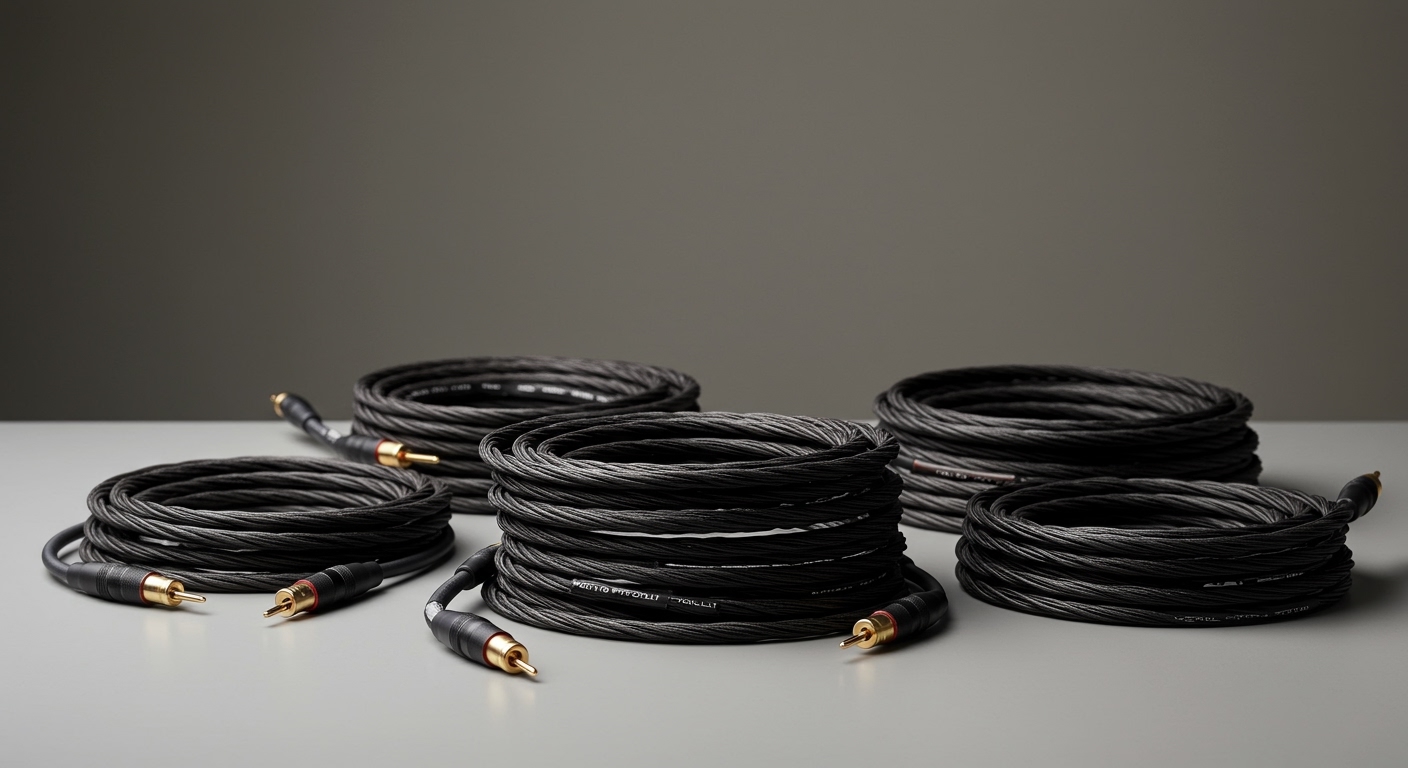
Measure twice, cut once. Run your speaker wires from the location of each speaker back to where the receiver will sit. If you are installing ceiling speakers, ensure you use UL-rated (CL2/CL3) wire to comply with local fire codes for in-wall installations.
How to Strip the Wire
- Use your wire strippers to remove about 1/2 inch of the plastic insulation from the ends of the wire.
- Twist the copper strands tightly so there are no “frays.”
- Pro Tip: I always recommend using banana plugs. They prevent the wires from touching each other (which can short out your expensive receiver) and make the back of the unit look much cleaner.
Step 3: Connect the Speakers to the Receiver
Observe proper polarity. This is the most common mistake I see. Every speaker wire has a positive (+) and a negative (-) side.
- Connect the Red (+) terminal on the speaker to the Red (+) terminal on the receiver.
- Connect the Black (-) terminal on the speaker to the Black (-) terminal on the receiver.
- If you get these reversed, your speakers will be “out of phase,” resulting in thin sound and almost zero bass.
Step 4: Connect Your Source Devices
Utilize eARC/ARC. Connect your TV to the receiver using a high-speed HDMI cable.
Plug one end into the HDMI (eARC) port on your TV.
Plug the other end into the HDMI Output (ARC) on the receiver.
This allows the TV to send audio back to the receiver and lets the receiver send a video menu to your TV screen.
Step 5: Run Room Calibration
Optimize the acoustics. Modern receivers from brands like Denon (Audyssey) or Yamaha (YPAO) include a calibration microphone.
- Plug the microphone into the front of the receiver.
- Place the mic at your primary seating position (ear level).
- Follow the on-screen prompts. The receiver will play “pings” and “whooshes” to measure the distance and volume of your ceiling speakers and surround sound speakers, automatically adjusting the EQ for your specific room.
Expert Advice: Common Mistakes to Avoid
Underpowering your speakers: Using a cheap, weak amp for high-end speakers can cause “clipping,” which actually damages the speaker drivers more than high volume does.
Ignoring Ventilation: Receivers generate significant heat. Never stack other components directly on top of the receiver’s vents, or you will significantly shorten its lifespan.
Wrong Wire Gauge: For long runs (over 50 feet) to ceiling speakers, use 14-gauge wire. Using thin 18-gauge wire over long distances results in power loss and poor sound quality.
Mixing Impedance: Don’t connect 4-ohm speakers to a receiver only rated for 8-ohms unless you want to trigger “Protection Mode” constantly.
Frequently Asked Questions
(FAQs)
Do I need a receiver for ceiling speakers if they are Bluetooth?
Most Bluetooth ceiling speakers are “active” and come with a small built-in amplifier. In this specific case, you do not need a receiver, but you will need to provide power (AC outlet) to the master speaker in the ceiling.
Can I use an amplifier instead of a receiver?
Yes. An integrated amplifier works if you only have two speakers and only care about music. However, if you want to connect to a TV or have more than two speakers, a receiver is the better, more versatile choice.
Do i need a receiver for surround sound speakers if my TV has multiple ports?
Yes. TV ports are inputs/outputs for signals, not power. A TV cannot provide the wattage required to move the magnets in surround sound speakers. You still need a receiver to act as the power plant.
How many ceiling speakers can I connect to one receiver?
A standard stereo receiver can handle 2 speakers. A 7.1 channel AV receiver can handle up to 7 speakers. If you want to power an entire house (10+ speakers), you will need a multi-zone amplifier or a speaker selector switch.
Conclusion: Setting Up Your Audio for Success
Determining if you need a receiver for speakers is the first step in building a high-quality home audio environment. For the vast majority of ceiling speakers, bookshelf speakers, and surround sound setups, a receiver is the essential “brain” that brings the system to life.
By choosing a receiver that matches your speaker’s power requirements and following a disciplined wiring process, you ensure a crisp, immersive listening experience. Whether you are watching a blockbuster movie or streaming high-fidelity music, the right receiver makes all the difference.
Ready to upgrade your sound? Start by checking the impedance on your speakers and selecting a receiver that offers at least 20% more power than the speakers’ minimum requirement for the best “headroom” and clarity.