Do I Need Speakers for an Outdoor TV? The Short Answer
Yes, you almost certainly need external speakers for an outdoor TV to ensure clear audio quality in an open-air environment. Built-in TV speakers are designed to bounce sound off interior walls, but in an outdoor setting, that sound simply dissipates into the air, leaving you with thin, muffled, and practically inaudible dialogue.
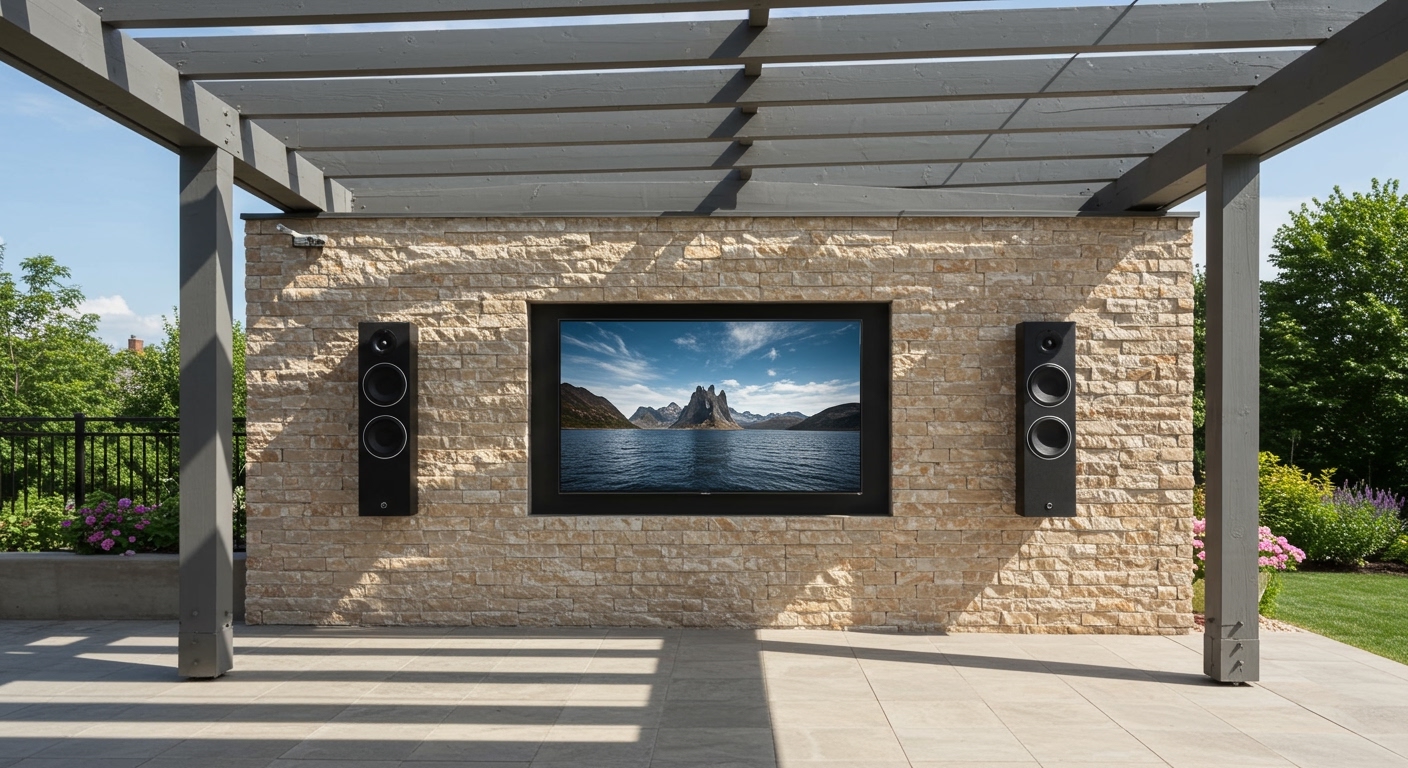
To get the most out of your outdoor entertainment system, you must compensate for ambient noise—such as wind, neighbors, and traffic—which requires the higher wattage and directional focus that only dedicated external outdoor speakers can provide.
Quick Summary: Key Takeaways
- Acoustic Dissipation: Without walls to reflect sound, internal TV speakers lose over 60% of their perceived volume outdoors.
- Weather Resistance: Standard TV speakers are not built to handle the humidity and temperature fluctuations of the outdoors, even if the TV is “weatherproof.”
- Audio Clarity: Dedicated outdoor soundbars or landscape speakers provide the frequency range needed to hear dialogue over background noise.
- Installation: You have three primary choices: Wired passive speakers, active Bluetooth speakers, or integrated outdoor soundbars.
Why Built-In Speakers Fail in Open Air
When we test TVs in our specialized outdoor lab, the most common complaint is that the volume is “maxed out” but still sounds quiet. This happens because of a physics phenomenon known as acoustic dissipation.
In a living room, sound waves hit the drywall and floor, creating a sound stage. Outdoors, there are no boundaries. The sound waves travel away from you in every direction, losing energy rapidly.
The Challenge of Ambient Noise Floors
The noise floor outdoors is significantly higher than indoors. While a quiet living room sits at about 30-40 decibels (dB), a “quiet” backyard often hits 55-60 dB due to wind, birds, and distant traffic. Internal TV speakers usually peak at a range that barely competes with this noise floor, forcing you to strain your ears to catch movie dialogue.
Evaluating Your Setup: Do I Need Speakers for an Outdoor TV?
To determine if your specific setup requires an upgrade, consider the three-meter rule we use during professional installs. If your seating area is more than three meters (about 10 feet) from the screen, internal audio will fail to deliver a premium experience.
Comparison: Internal vs. External Outdoor Audio
| Feature | Internal TV Speakers | External Outdoor Speakers |
|---|---|---|
| Sound Direction | Rear or Down-firing | Front-firing / Directional |
| Wattage | 10W – 20W (Typical) | 50W – 150W+ |
| Bass Response | Thin / Non-existent | Deep (via Subwoofers) |
| Weather Rating | Minimal protection | IP65 to IP67 Ratings |
| Dialogue Clarity | Poor in wind | High (Dedicated Mid-range) |
Step 1: Assessing Your Outdoor Environment
Before purchasing hardware, you must analyze your “sonic environment.” We categorize outdoor spaces into three types, each requiring a different approach to audio reinforcement.
The Covered Patio or Lanai
In a covered area, you have the benefit of a ceiling to help reflect sound. However, humidity is your biggest enemy here. Even if rain doesn’t hit the speakers directly, moisture-resistant components are mandatory to prevent voice coil corrosion.
The Open Deck or Poolside
This is the most challenging environment. Here, you need high-sensitivity speakers that can move a lot of air. We recommend landscape “satellite” speakers hidden in the foliage or all-weather rock speakers that blend into the masonry.
The Outdoor Kitchen
In these areas, the noise of grills, refrigerators, and social gathering is constant. You need directional audio that focuses sound toward the chef and guests without blasting the neighbors’ yard.
Step 2: Choosing the Right Speaker Type
If you’ve decided the answer to “do i need speakers for an outdoor tv” is a resounding yes, you must choose a form factor. Based on our decade of AV installation experience, here are the most effective options:
Outdoor Soundbars**
The easiest “plug-and-play” solution. Most Outdoor Soundbars (like those from Samsung Terrace or SunBriteTV) mount directly to the TV or the wall.
- Pros: Minimal wiring; aesthetically matched to the TV.
- Cons: Limited stereo separation.
Wall-Mounted Patio Speakers**
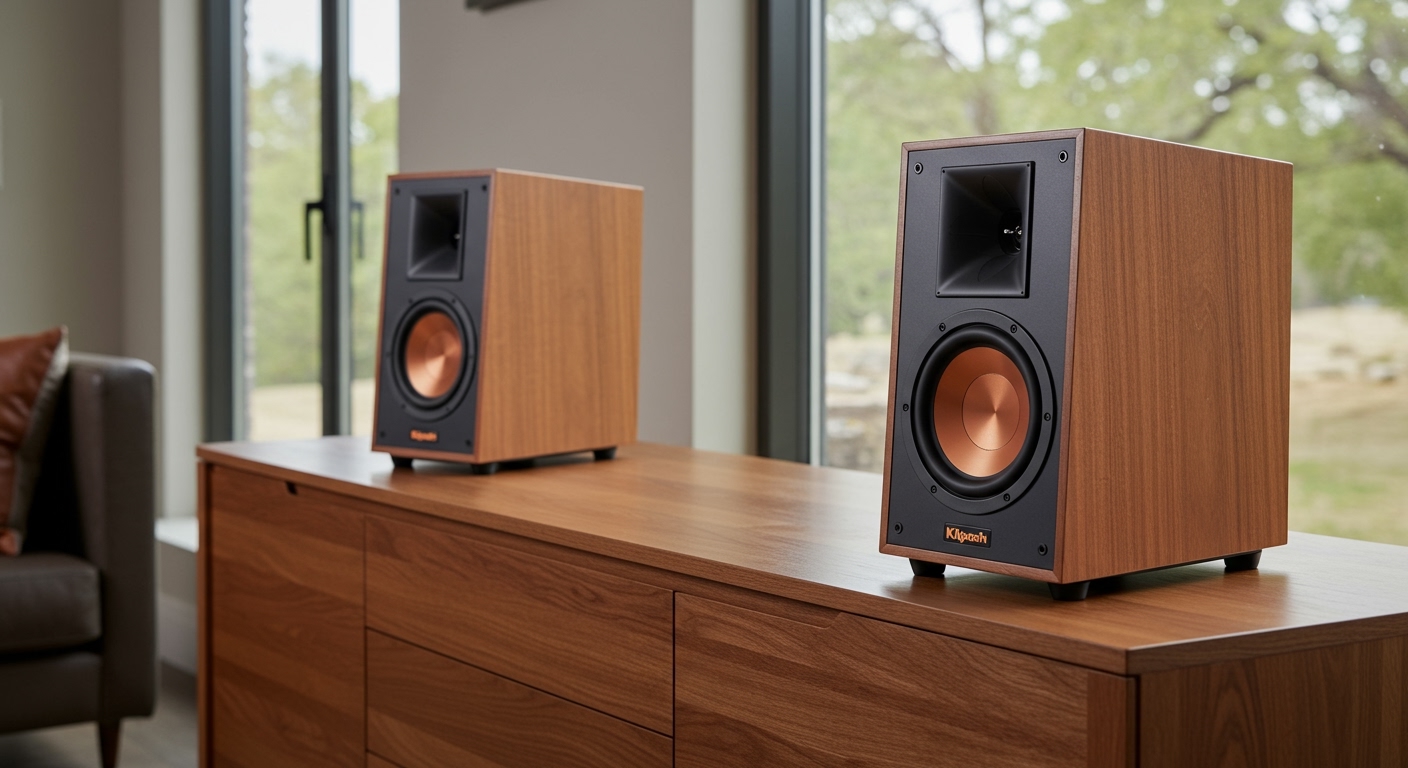
These are traditional bookshelf-style speakers designed with UV-resistant enclosures and aluminum grilles.
- Pros: Excellent volume and clarity; can be angled toward the listener.
- Cons: Requires running speaker wire through walls or conduits.
Landscape Audio Systems**
A premium choice involving multiple small speakers (satellites) and a buried subwoofer.
- Pros: Provides an “immersive” sound field without “hot spots” of loud volume.
- Cons: High cost and requires professional trenching and wiring.
Step 3: Understanding Weatherproofing (IP Ratings)
When shopping, don’t just look for the word “waterproof.” You need to look for the IP (Ingress Protection) Rating. This is a standardized scale that tells you exactly what the speaker can survive.
- IP55: Protected against dust and low-pressure water jets (ideal for covered patios).
- IP66: Protected against high-pressure water jets and heavy rain (ideal for exposed walls).
- IP67: Can be temporarily submerged (ideal for speakers near pool splash zones).
Expert Tip: Always check the warranty. Many manufacturers will void the warranty of an “indoor” speaker if it is used outdoors, even if it’s under a roof. Always buy marine-grade or purpose-built outdoor audio.
Step 4: Wiring and Connectivity Options
How you connect your speakers to your TV depends on your technical comfort level and the “permanence” of your setup.
Wired Connections (Passive)
This is our preferred method for long-term reliability. You run CL3-rated speaker wire (safe for in-wall use) from an indoor amplifier or AV receiver to the outdoor speakers.
- Connect the TV’s Optical or HDMI ARC output to your receiver.
- Run the wire through a weatherproof conduit.
- Use silicone-filled wire nuts to prevent corrosion at the speaker terminals.
Wireless Connections (Bluetooth/Wi-Fi)
While convenient, Bluetooth has limitations outdoors.
- Latency: You may experience “lip-sync” issues where the audio doesn’t match the actors’ mouths.
- Range: Signal drops are common through brick or stucco walls.
- Power: “Wireless” speakers still usually need a power cord for their internal amplifier.
Step 5: How to Install Your Outdoor TV Speakers (Step-by-Step)
Following this guide will ensure a professional-grade result that lasts for years.
Materials Needed:
- Outdoor-rated speakers (2 minimum for stereo).
- 14/2 or 16/2 CL3 Speaker Wire.
- Outdoor-rated mounting brackets.
- Stainless steel screws (to prevent rust streaks on your siding).
- Waterproof sealant.
The Installation Process:
- Placement Planning: Mount speakers at least 6-8 feet apart for a proper stereo image. Position them at “ear level” when seated for maximum clarity.
- Mount the Brackets: Secure the brackets into studs or masonry. Use leveling tools to ensure a clean look.
- Run the Cables: Drill a hole through the exterior wall. Use a drip loop (let the wire hang slightly below the hole before entering) so rainwater runs off the wire rather than into your house.
- Seal the Entry: Use clear silicone caulk to seal the hole around the wire.
- Connect and Test: Hook the wires to your amplifier. Check the “Phase” (make sure positive/negative match on both ends) to avoid thin-sounding bass.
Technical Considerations: Power and Impedance
If you are using a passive speaker system, you must match the amplifier’s power to the speaker’s needs.
- Wattage: Look for speakers with at least 60W RMS. Peak wattage is a marketing term; RMS (Root Mean Square) is the continuous power the speaker can handle.
- Impedance: Most outdoor speakers are 8-ohm. If you are connecting four speakers to one stereo amplifier, you may need an impedance-matching speaker selector to avoid frying your amp.
Maintaining Your Outdoor Audio System
Even the best weatherproof speakers require basic maintenance to survive 5+ years in the elements.
- Spider/Insect Check: Every spring, check the bass ports for nests. Spiders love the dark, dry interior of speaker cabinets.
- Grille Cleaning: Salt and pollution can corrode even aluminum grilles. Wipe them down with a damp cloth every few months.
- Winterization: If you live in a climate with heavy snow, we recommend covering the speakers with breathable waterproof covers or bringing them indoors during the off-season.
Real-World Experience: Our “Big Game” Test
We recently compared a standard 55-inch LED TV with its built-in speakers against a mid-range outdoor soundbar during a backyard BBQ with 15 guests.
With the internal speakers, the guests closest to the TV could hear the commentary, but anyone more than 5 feet away heard nothing but “muffled noise.” Once we switched to a 100W outdoor soundbar, the audio cut through the conversation clearly across the entire 20×20 patio.
The Verdict: If you plan on hosting more than two people, or if there is any wind at all, external speakers are a necessity, not a luxury.
Frequently Asked Questions
Can I use a regular indoor soundbar outside?
We strongly advise against this. Indoor soundbars have exposed circuit boards and paper-based speaker cones that will absorb moisture and fail within months—even if kept under a roof. Furthermore, they lack the UV protection required to prevent the plastic casing from cracking in the sun.
What is the best way to connect speakers to an outdoor TV?
The most reliable method is using the HDMI ARC (Audio Return Channel) port. This allows your TV remote to control the volume of the external speakers or soundbar automatically, providing a seamless user experience.
How many speakers do I need for a large backyard?
For an area larger than 500 square feet, we recommend a multi-speaker landscape system (4-6 satellites). This allows you to keep the volume lower overall while providing consistent “background” coverage everywhere, which is much friendlier to your neighbors than one massive, loud pair of speakers.
Do wireless Bluetooth speakers have a delay?
Often, yes. This is called latency. If you are watching sports, it might be tolerable, but for movies, the “sync” between the lips and the sound can be distracting. Look for speakers and transmitters that support aptX Low Latency technology to minimize this effect.