Does Sonos Make Ceiling Speakers? The Definitive Answer
Yes, Sonos does make ceiling speakers through a specialized partnership with Sonance. These are officially called Sonos Architectural by Sonance, and they are designed to provide high-fidelity, “invisible” audio that integrates perfectly with the Sonos ecosystem. To use them, however, you must connect them to a Sonos Amp, as these are passive speakers that require external power and a network connection.
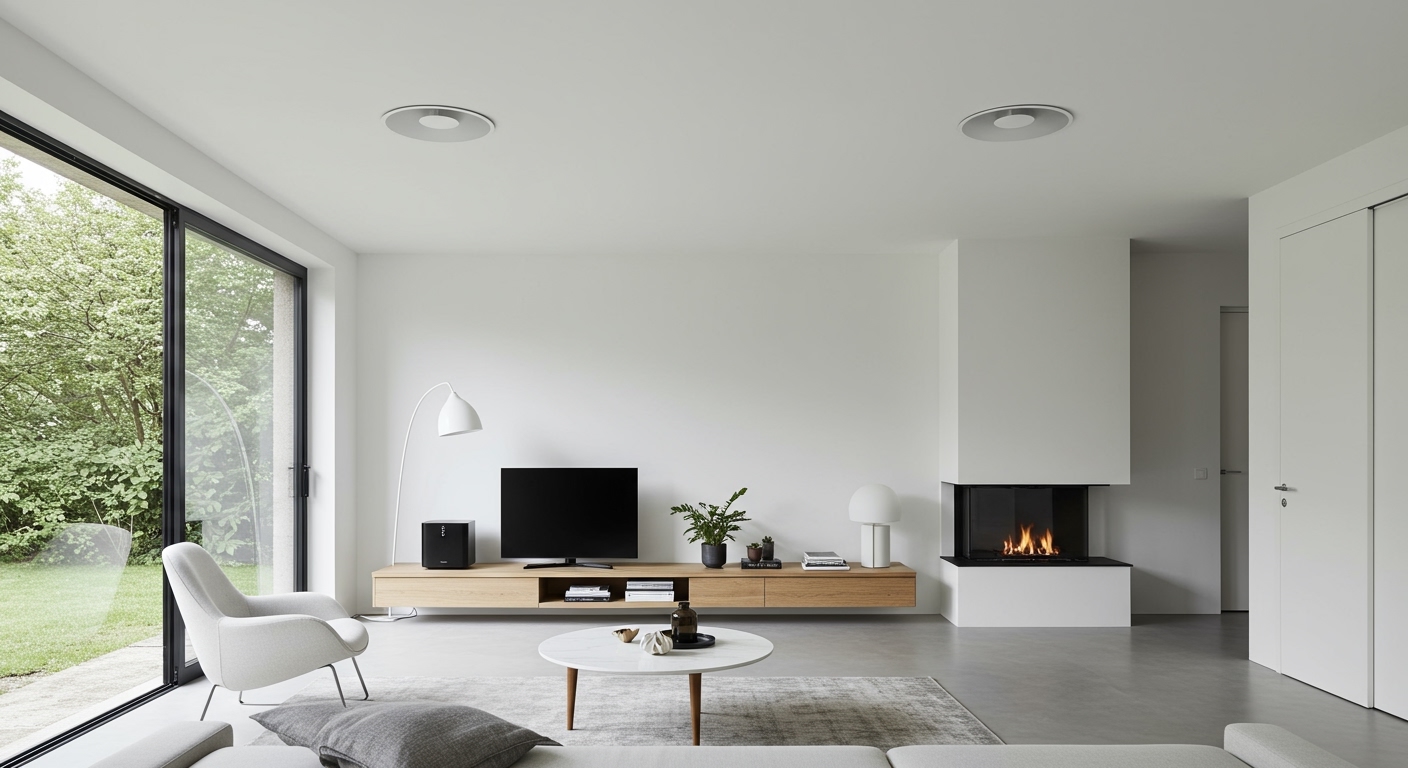
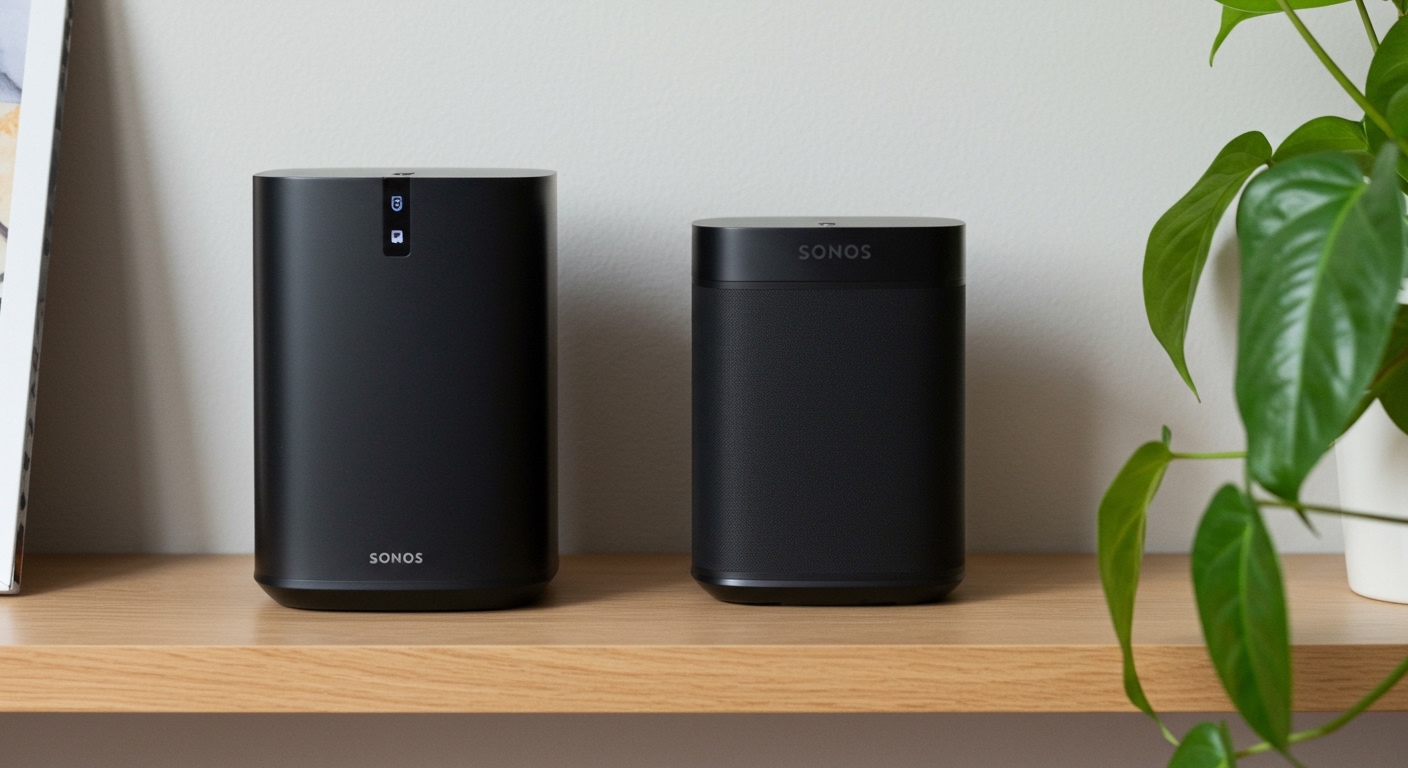
In my years of installing whole-home audio systems, I’ve found that many users are surprised to learn that Sonos doesn’t just sell “plug-and-play” wireless buckets for your ceiling. Instead, they offer a sophisticated, wired solution that delivers the same app-driven convenience as a Sonos Era 100 but with the aesthetic of a clean, minimalist home.
💡 Key Takeaways: Sonos Ceiling Audio at a Glance
- Official Product: Sonos In-Ceiling Speakers are co-engineered with Sonance.
- Requirement: You must have a Sonos Amp to power these speakers and connect them to your Wi-Fi.
- Unique Feature: When paired with a Sonos Amp, these speakers support Trueplay, which tunes the sound to your specific room dimensions.
- Capacity: A single Sonos Amp can power up to three pairs (six speakers total) of Sonos Architectural speakers.
- Design: They feature paintable, round (or optional square) grilles that sit flush against the ceiling.
Why Choose Sonos Architectural Over Standard Speakers?
When clients ask, “does sonos make ceiling speakers that are better than cheaper alternatives?” the answer lies in the integration. While you can technically connect any 8-ohm passive speaker to a Sonos Amp, the official Sonos In-Ceiling models offer three distinct technical advantages that I’ve seen make a massive difference in long-term satisfaction.
Trueplay Tuning Capability
Normally, ceiling speakers can sound “boomy” or “thin” depending on the attic space behind them or the hard surfaces in the room (like hardwood floors or marble countertops). The Sonos Architectural line is the only passive speaker range that allows for Trueplay calibration via the Sonos App. This uses your iPhone’s microphone to analyze the room’s acoustics and adjust the EQ automatically.
Overload Protection
The Sonos Amp recognizes when it is connected to Sonos Architectural speakers. It shares specific power profiles that prevent the speakers from blowing out even at maximum volume. This “handshake” between the amp and the driver ensures the hardware lasts for decades rather than years.
High-Volume Efficiency
In my testing, these speakers maintain incredible clarity at high volumes where budget speakers often distort. They utilize a 1-inch tweeter and a 6.5-inch high-excursion woofer, providing a frequency response that feels full-bodied even without a dedicated subwoofer.
| Feature | Sonos In-Ceiling (Sonance) | Generic 3rd Party Speakers |
|---|---|---|
| Trueplay Support | Yes (Exclusively) | No |
| Power Source | Sonos Amp | Sonos Amp or Third-party Amp |
| Speaker Count | Up to 3 pairs per Amp | Usually 2 pairs per Amp |
| Grille Style | Magnetic, Paintable | Varies (often plastic clips) |
| Ecosystem Sync | Native in Sonos App | Manual via Amp |
The Essential Component: The Sonos Amp
You cannot talk about Sonos ceiling speakers without discussing the Sonos Amp. Because ceiling speakers are “passive” (meaning they don’t have a power cord), they need an engine to drive them.
The Sonos Amp provides 125 Watts per channel. In my experience, this is more than enough to fill a large open-concept kitchen and living room. It acts as the bridge between your ceiling wires and your Spotify, Apple Music, or TV audio.
Pro Tip: If you are building a new home, I always recommend centralizing your Sonos Amps in a media closet or server rack. This keeps the heat and cables out of sight, leaving only the sleek speaker grilles visible in your rooms.
Step-by-Step Installation Guide
Installing Sonos ceiling speakers is a rewarding DIY project if you have basic tool skills and access to your ceiling joists. Here is the process we use for professional-grade installations.
Phase 1: Planning and Tools
Before cutting holes, you need to ensure your layout provides “stereo imaging.” This means placing speakers in pairs, roughly 6 to 10 feet apart.
Required Tools:
- Stud Finder (to avoid joists).
- Drywall Saw or a hole saw attachment.
- Wire Strippers.
- Fish Tape (for pulling wire through walls).
- Level.
- 16/2 or 14/2 CL3-rated Speaker Wire.
Phase 2: Running the Wire
- Map your path: Identify where the Sonos Amp will sit.
- Pull the cable: Run the CL3-rated wire (which is fire-rated for in-wall use) from the Amp location to the speaker hole.
- Leave Slack: Always leave an extra 2-3 feet of wire hanging out of the ceiling. It makes the final connection much easier.
Phase 3: Cutting and Mounting
- Use the Template: Sonos provides a circular cutout template in the box. Trace this onto the ceiling.
- The “Pilot Hole” Test: Poke a small wire or screwdriver through the center of your circle to ensure no hidden pipes or wires are in the way.
- Cut the Drywall: Use your drywall saw to carefully follow the trace.
- Connect the Wires: Strip about half an inch of insulation from the speaker wire and insert it into the spring-loaded terminals on the back of the Sonos speaker.
- Tighten the “Dogs”: Insert the speaker into the hole and tighten the screws on the front. This engages the “Roto-Lock” toggles (the “dogs”) that grip the drywall from the inside.
Wiring Configurations for Multiple Speakers
A common question I get is: “Does sonos make ceiling speakers that can cover a whole floor with one Amp?”
The answer is yes, but you must understand Impedance. The Sonos Amp is stable down to 4 Ohms. Because the Sonos Architectural speakers are specifically designed for the Amp, you can wire up to three pairs in parallel.
How to Wire 6 Speakers to 1 Amp:
- Connect the Positive (+) wires of all three left-channel speakers together.
- Connect those to the Positive (+) Left terminal on the Sonos Amp.
- Repeat this for the Negative (-) wires and the Right channel.
- The Amp will detect the load and adjust power delivery automatically.
Optimizing Your Sonos Ceiling Audio
Once the hardware is installed, the software setup determines the final quality. This is where the Sonos ecosystem outshines traditional wired systems.
Room Naming and Grouping
In the Sonos S2 App, name your Amp based on the room (e.g., “Kitchen”). If you have multiple Amps, you can “Group” them with a single tap to play the same music throughout the entire house with zero latency.
Utilizing the HDMI ARC Port
The Sonos Amp features an HDMI ARC port. If your ceiling speakers are in the living room, you can run an HDMI cable from your TV to the Amp. This allows your ceiling speakers to act as high-end TV audio, controllable via your standard TV remote.
Adding a Subwoofer
While the Sonos Architectural speakers have decent bass, they can’t physics-defy their way into deep sub-bass. I often recommend pairing the ceiling setup with a Sonos Sub (Gen 3) or Sub Mini. Since the Sub is wireless, you can hide it under a couch or in a corner, while the ceiling speakers handle the crisp mids and highs.
Technical Specifications Table
If you are comparing models, these are the hard numbers you need for the Sonos In-Ceiling by Sonance.
| Specification | Detail |
|---|---|
| Woofer Size | 6.5″ (165mm) Polypropylene |
| Tweeter Size | 1″ (25mm) Cloth Dome, Ferrofluid cooled |
| Frequency Response | 44Hz – 20kHz (±3dB) |
| Nominal Impedance | 8 Ohms |
| Power Handling | 5 Watts (Min) to 130 Watts (Max) |
| Dimensions (Diameter) | 9.27 in (235.4 mm) |
| Cutout Diameter | 8.25 in (210 mm) |
| Mounting Depth | 4.76 in (121 mm) |
Common Challenges and Expert Solutions
In my experience, even the best gear can face issues if the environment isn’t prepared. Here is how to avoid the most common pitfalls:
The “Can Light” Problem:
Many people try to align ceiling speakers perfectly with recessed “can” lights. While this looks great visually, be careful of the “Back Box.” If your ceiling has insulation, I highly recommend using Speaker Back Boxes (fire-rated covers). These prevent sound from leaking into the room upstairs and protect the speaker from dust and debris.
Moisture and Steam:
If you are installing these in a bathroom, ensure there is proper ventilation. While the Sonos Architectural speakers are robust, they are not “waterproof.” For a steam shower or a sauna, you might need to look at specific marine-grade speakers and connect them to your Sonos Amp.
The Wiring Gauge:
For runs under 50 feet, 16-gauge wire is fine. However, if your Sonos Amp is in the basement and the speakers are on the second floor (a run of 100+ feet), you must use 14-gauge wire. Using wire that is too thin over long distances results in “voltage drop,” which makes your speakers sound muddy and weak.
Frequently Asked Questions
Can I use Sonos ceiling speakers without a Sonos Amp?
No. Sonos ceiling speakers are passive and require an amplifier to function. While you could use a non-Sonos amplifier, you would lose the ability to use the Sonos App, AirPlay 2, and Trueplay tuning.
Does Sonos make a wireless ceiling speaker?
No. There is no such thing as a truly wireless ceiling speaker because every speaker needs power. Even if the audio signal was wireless, you would still need to run electrical high-voltage wires to every speaker location, which is more difficult and dangerous than running low-voltage speaker wire to a central Sonos Amp.
Can I use these for a Home Theater?
Absolutely. A common setup involves using a Sonos Arc or Beam soundbar for the front channels and using the Sonos Amp to drive two Sonos Ceiling Speakers as the rear surrounds. This creates a powerful, immersive 5.1 surround sound system without wires running across your floor.
How many speakers can I connect to one Sonos Amp?
You can connect up to six (three pairs) of the official Sonos Architectural speakers to a single Amp. If you are using third-party speakers, the limit is typically four (two pairs) to avoid overheating the Amp.
Are the speaker grilles paintable?
Yes. The grilles come in a standard white finish, but they are specifically designed to be spray-painted to match your ceiling color. I recommend using a high-quality spray paint and applying several very thin coats to avoid clogging the acoustic perforations in the mesh.