Does Subwoofer Need to Match Speakers? The Definitive Answer
No, your subwoofer does not need to match the brand or model of your main speakers. Unlike the front three speakers in a home theater (Left, Right, and Center), which require “timbre matching” for a seamless soundstage, subwoofers handle non-directional low frequencies that do not require identical driver materials to sound natural.
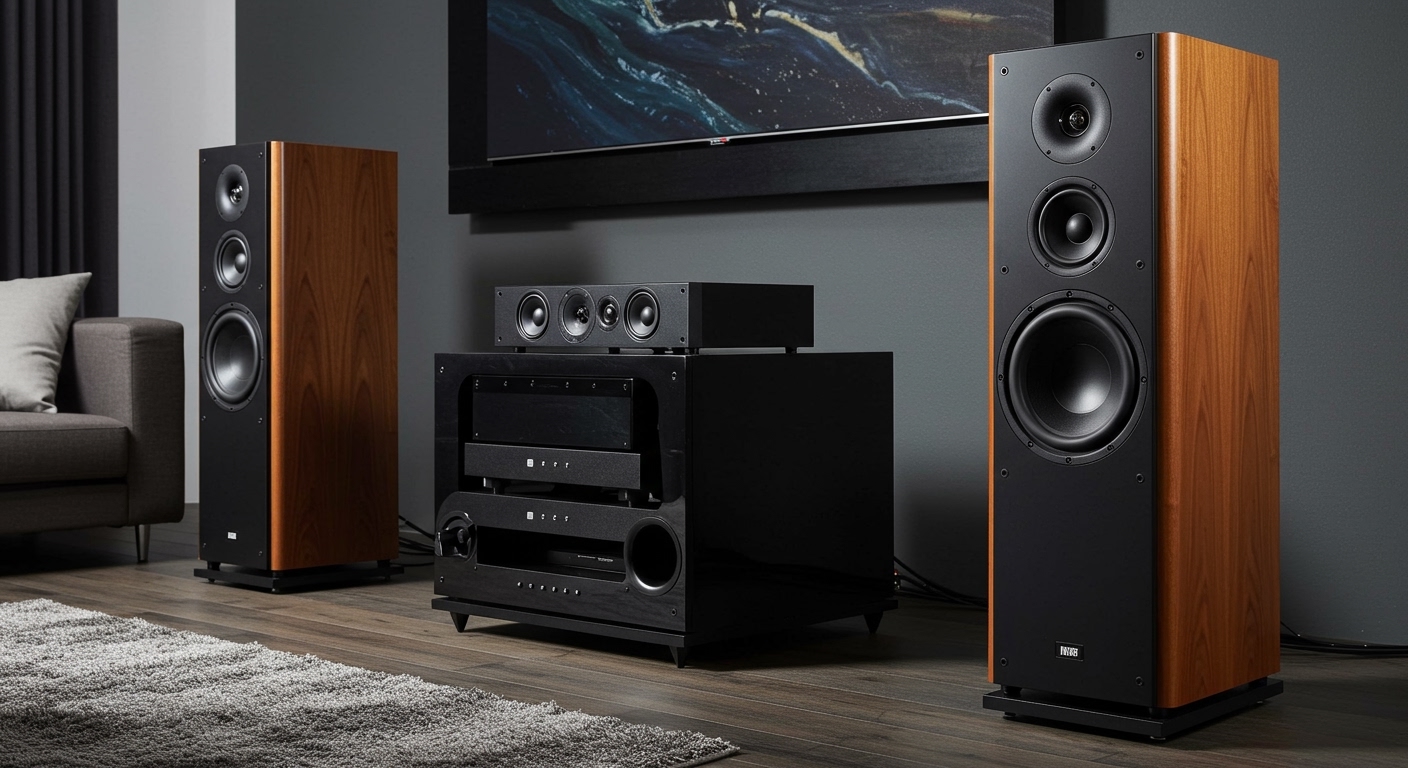
In my years of testing high-end home cinema and 2-channel Hi-Fi systems, I have found that mixing and matching brands often yields better results. This allows you to choose a speaker specialist for your mids and highs (like KEF or Bowers & Wilkins) and a dedicated bass specialist for the low end (like SVS, REL, or Rythmik).
Key Takeaways: Subwoofer Matching Essentials
- Brand Matching is Optional: Manufacturers suggest matching brands for aesthetic symmetry and easier marketing, not for superior acoustics.
- Focus on Crossover: The key to “matching” is how well the crossover frequency blends the speaker’s roll-off with the subwoofer’s output.
- Low Frequencies are Omnidirectional: Humans cannot easily locate where sounds below 80Hz are coming from, making brand-specific “voice matching” unnecessary.
- Room Interaction Matters More: Your room’s dimensions and acoustics affect bass quality significantly more than the brand name on the cabinet.
Why “Timbre Matching” Doesn’t Apply to Subwoofers
When building an audio system, you often hear about timbre matching. This ensures that as a sound moves from the left speaker to the right, the “tone” or “color” of the sound remains identical. If you use a Klipsch horn tweeter with a Sony dome tweeter, the transition will sound jarring and inconsistent.
However, subwoofers operate in the “basement” of the frequency spectrum, typically below 80Hz. At these extreme lows, the wavelengths are massive—often over 14 feet long. These waves do not carry the delicate tonal characteristics that define a speaker’s “voice.”
We have successfully integrated massive Power Sound Audio subwoofers with delicate Electrostatic speakers from MartinLogan. The result? A seamless, full-range experience that the original manufacturer’s matching sub couldn’t achieve.
The Physics of Bass Integration
- Directionality: Higher frequencies are directional, meaning you can point to the source. Bass frequencies wrap around objects and fill the room, making the source “invisible” if tuned correctly.
- Driver Material: While your main speakers might use Carbon Fiber or Kevlar, a subwoofer using Anodized Aluminum won’t sound “out of place” because it isn’t reproducing the same harmonic overtones.
Technical Factors: How to Actually Match a Subwoofer
If brand doesn’t matter, what does? To ensure your subwoofer needs to match speakers in terms of performance, you must look at technical synergy. A mismatch in “speed” or output capability can lead to “muddy” sound or “bottoming out.”
Speed and Transient Response
If you have small, fast Bookshelf Speakers, you want a subwoofer with excellent transient response. This is the ability of the woofer to start and stop instantaneously.
- Sealed Subwoofers (Acoustic Suspension) are generally “faster” and better for music.
- Ported Subwoofers (Bass Reflex) offer more “boom” and output, which is ideal for movies.
Output Capability (SPL)
You shouldn’t pair a tiny 8-inch, low-powered subwoofer with massive Floorstanding Tower Speakers. The towers will easily drown out the sub, or the sub will distort trying to keep up.
| Speaker Type | Recommended Subwoofer Size | Recommended Power (RMS) |
|---|---|---|
| Small Satellite Speakers | 8″ to 10″ | 100W – 250W |
| Bookshelf Speakers | 10″ to 12″ | 300W – 500W |
| Large Tower Speakers | 12″ to 15″+ | 500W – 1000W+ |
| Dedicated Home Theater | Dual 12″ or 15″ | 800W+ per unit |
The “Subwoofer Crawl”: Finding the Perfect Position
The most common reason people think their subwoofer doesn’t match their speakers is actually poor placement. Room “modes” (standing waves) can cause bass to sound boomy or disappear entirely.
Step-by-Step Guide to the Subwoofer Crawl:
- Place the Subwoofer in your Seat: Literally put the sub exactly where your head would be while listening.
- Play Bass-Heavy Content: Use a track with a repeating, rhythmic bass line.
- Crawl Around the Room: Move on your hands and knees along the walls and corners of the room.
- Listen for Clarity: In some spots, the bass will sound “one-note” or muddy. In others, it will sound tight and defined.
- Swap Places: Move the subwoofer to the spot where the bass sounded the best during your crawl.
How to Blend Your Subwoofer with Your Speakers (Step-by-Step)
Once you have purchased a sub (regardless of brand), follow these steps to ensure a perfect match.
Step 1: Set the Crossover Frequency
The Crossover is the “hand-off” point. Most AV Receivers default to 80Hz (the THX standard).
- If your speakers are small, set the crossover higher (100Hz – 120Hz).
- If you have large towers, you can experiment with 60Hz.
- Expert Tip: Always set your speakers to “Small” in your receiver settings, even if they are large. This offloads the heavy lifting to the subwoofer’s dedicated amplifier.
Step 2: Adjust the Phase Switch
The Phase control (usually a toggle from 0 to 180 degrees) ensures the subwoofer’s driver moves in harmony with your speakers’ drivers.
- Sit in your main listening position while a friend flips the switch.
- Choose the setting that results in the loudest, fullest bass.
- If the sub and speakers are out of phase, they will cancel each other out, leaving a “hole” in the sound.
Step 3: Level Matching
Use an SPL Meter (or a smartphone app like NIOSH SLM) to ensure the subwoofer is playing at the same volume as your speakers.
- Most modern receivers use Auto-Calibration (like Audyssey, Dirac Live, or YPAO).
- Run the microphone setup, but feel free to “tweak” the sub level up by 2-3dB after if you prefer a more “tactile” feel.
When You Should Consider Matching Brands
While not acoustically necessary, there are three specific scenarios where sticking to the same brand is beneficial:
- Aesthetic Uniformity: If you are a minimalist, having a SVS Gloss Black sub next to Walnut Klipsch speakers might bother your sense of design.
- Wireless Integration: Some brands (like Sonos or Denon HEOS) use proprietary wireless protocols. A Sonos Sub will only work with Sonos speakers.
- Manufacturer Presets: Some active speakers (like Genelec or Neumann) have specific DSP (Digital Signal Processing) profiles that perfectly integrate with their own subwoofers via XLR or proprietary data cables.
Expert Insights: Why Dedicated Subwoofer Brands Are Better
In my experience building high-performance theaters, dedicated bass companies like SVS, Hsu Research, and Rythmik almost always offer better “bang for your buck” than speaker companies like Polk or Sony.
These companies invest all their R&D into:
- High-Excursion Drivers: Designed to move massive amounts of air without distorting.
- DSP Controls: Built-in apps that allow you to adjust the EQ of the bass from your phone to fix room issues.
- Overbuilt Amplifiers: Class D amplifiers capable of 2000W peaks to handle the “explosions” in modern cinema.
Frequently Asked Questions
Does a subwoofer brand have to match the receiver brand?
No. Subwoofers are almost always “active” (powered), meaning they have their own amplifier built-in. They connect via a standard RCA LFE cable, which is a universal connection used by every receiver brand on the market.
Can I use two different brands of subwoofers?
This is generally not recommended. While matching the sub to the speakers isn’t vital, matching subwoofer to subwoofer is. Different subs have different phase responses and tuning frequencies; mixing them often causes “bass cancellation,” where they fight each other rather than helping.
What is the “80Hz Rule”?
The 80Hz rule suggests that humans cannot localize sound below this frequency. By setting your crossover at 80Hz, the bass appears to come from your main speakers rather than a box on the floor. This is why subwoofer matching by brand is unnecessary—your ears can’t tell where the brand-specific sound is coming from anyway.
Is a sealed or ported subwoofer better for matching?
It depends on your speakers. If you have “fast” bookshelf speakers for music, a sealed subwoofer usually blends more invisibly. If you have a massive home theater setup for movies, a ported subwoofer provides the physical impact that matches the scale of the visuals.