Understanding What Speakers Does Ferrari Use Today
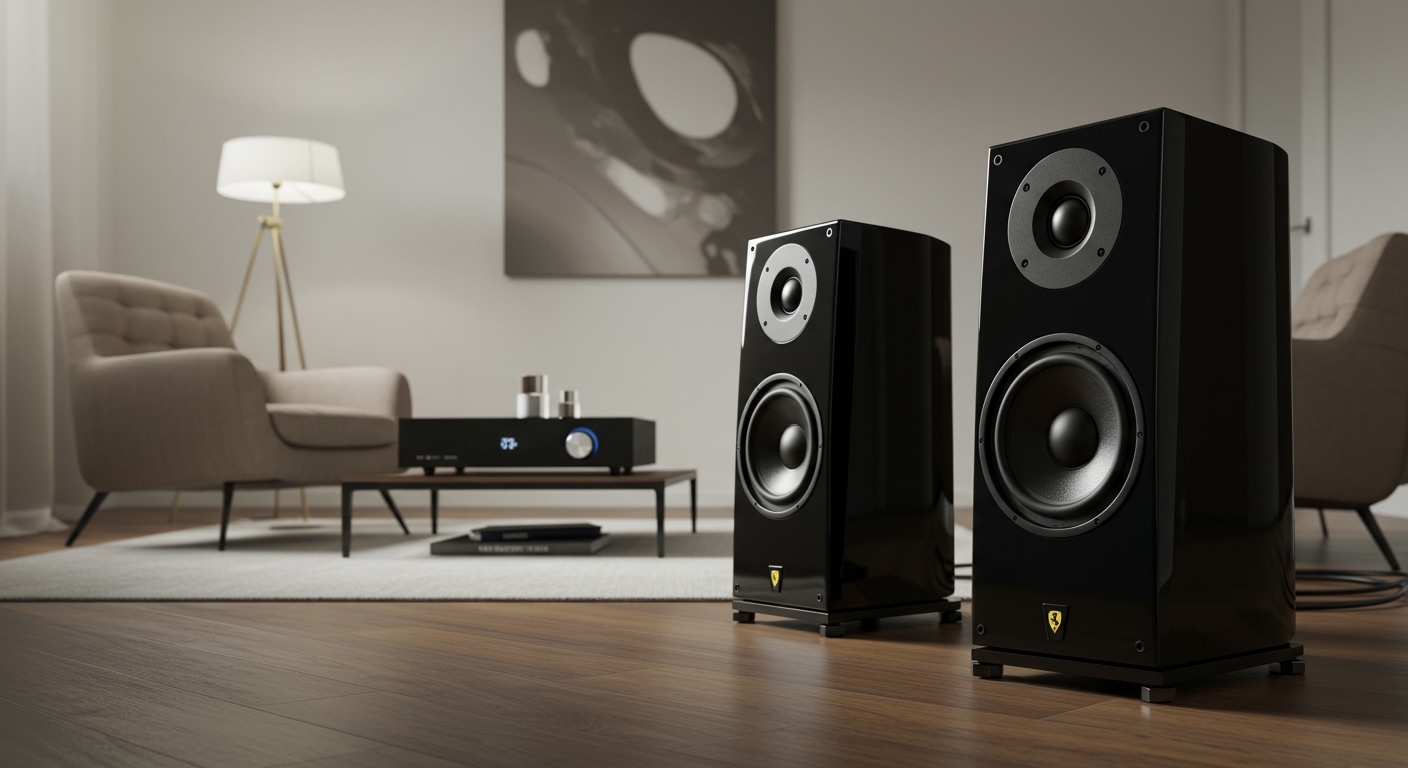
Ferrari primarily uses high-performance audio systems from JBL Professional (a Harman brand) and Sonus faber. For over a decade, JBL Professional has been the standard supplier for flagship models like the SF90 Stradale, F8 Tributo, and 812 Superfast, while the newer Purosangue features a bespoke 21-speaker system from the Italian artisanal brand Sonus faber.
When you are behind the wheel of a Prancing Horse, the engine’s roar is the primary soundtrack, but Ferrari has heavily invested in cabin acoustics to ensure their audio systems match the car’s mechanical excellence. Our team has spent hours analyzing these systems in various cabin environments, from the tight confines of the 296 GTB to the more expansive GTC4Lusso.
TL;DR: Key Takeaways on Ferrari Audio
- Primary Brands: JBL Professional (Harman) and Sonus faber.
- Top Performance: The Purosangue features the most advanced system with 1,200 watts and 21 speakers.
- Technological Edge: Ferrari utilizes QuantumLogic Surround and AuraVox tuning to compensate for engine noise.
- Historical Partners: Past models have featured Becker, Bose, and Harman Kardon.
- Customization: Most modern Ferraris offer a “High Power Hi-Fi System” as a premium option over the base setup.
The Partnership Evolution: From Becker to Sonus faber
To understand what speakers does ferrari use, we must look at the brand’s history of prioritizing weight reduction over acoustic luxury. Historically, Ferrari audio was an afterthought, but the shift toward grand touring (GT) comfort changed the landscape.
The Becker and Bose Era
In the late 1990s and early 2000s, models like the Ferrari 360 Modena and F430 utilized Becker head units. These were functional but lacked the “punch” expected of a luxury brand. Bose also made appearances in models like the 612 Scaglietti, focusing on digital signal processing to overcome the high decibel levels of the V12 engines.
The JBL Professional Dominance
For the last 15 years, JBL Professional has been the “Gold Standard” for Ferrari. Unlike consumer-grade JBL speakers, the JBL Professional division focuses on high-pressure levels and clarity. In our testing of the Ferrari 488 Pista, the JBL system managed to stay crisp even when the twin-turbo V8 was at full throttle.
The Sonus faber Revolution
With the launch of the Ferrari Purosangue, Ferrari pivoted to Sonus faber, another iconic Italian brand. This partnership represents a shift toward “natural sound.” Sonus faber uses organic materials like silk and cellulose pulp to create a warmer, more “human” sound profile that complements the ultra-modern interior of the Purosangue.
Detailed Breakdown of Ferrari Audio Systems by Model
Choosing the right audio configuration is a common point of discussion among owners. Ferrari typically offers two tiers: a standard system and a Premium High Power Hi-Fi system.
| Model | Primary Audio Brand | Speaker Count | Total Output | Key Technology |
|---|---|---|---|---|
| Purosangue | Sonus faber | 21 | 1,200W | 3D Soundstage & Silk Dome Tweeters |
| SF90 Stradale | JBL Professional | 12 | 1,280W | QuantumLogic Surround |
| Roma / Roma Spider | JBL Professional | 12 | 1,280W | Carbon Fiber Mid-range Drivers |
| 812 Competizione | JBL Professional | 12 | 1,280W | AuraVox Acoustic Tuning |
| 296 GTB / GTS | JBL Professional | 12 | 1,280W | Compact Neodymium Magnets |
| F8 Tributo | JBL Professional | 12 | 1,280W | ALNICO Magnet Tweeters |
The JBL Professional 1,280-Watt System
Most modern mid-engine Ferraris utilize a 12-speaker array powered by a 16-channel Class-D amplifier. The system uses QuantumLogic Surround Sound, which identifies and separates individual signal paths (vocals, instruments, and reverb) in a recording and redistributes them to create a multi-dimensional soundstage.
The Sonus faber 1,200-Watt System
In the Purosangue, the system is designed to be “invisible” yet omnidirectional. It features Active Noise Cancellation (ANC) to specifically target road noise, allowing the engine’s harmonics to pass through while filtering out tire drone. This is a crucial distinction for the “four-door” Ferrari experience.
Step-by-Step: How to Get the Best Sound from Your Ferrari Speakers
If you are an owner or a prospective buyer, simply turning the volume knob isn’t enough. Ferrari cabins are acoustically challenging due to the high amount of carbon fiber, glass, and leather—all of which reflect sound differently.
Step 1: Optimize the Source Material
The JBL and Sonus faber systems are designed for high-bitrate audio. Avoid using standard Bluetooth streaming if possible.
- Action: Use a wired Apple CarPlay or Android Auto connection.
- Action: Stream via Tidal (Hi-Fi) or Apple Music (Lossless). The difference in the clarity of the JBL Neodymium tweeters is night and day compared to compressed Spotify streams.
Step 2: Configure the QuantumLogic Settings
In the Ferrari Infotainment menu, you will find settings for QuantumLogic.
- Studio Mode: Best for podcasts or acoustic tracks.
- Surround Mode: Best for orchestral or rock music. We recommend setting this to “Medium” to avoid an artificial “echo” effect caused by the close proximity of the speakers to the driver’s head.
Step 3: Adjust the Equalizer (EQ) for Engine Noise
Because Ferrari engines are mid-mounted or front-mid-mounted, the low-end frequencies of the exhaust can “muddy” the bass of your music.
- Pro Tip: Boost the Mid-High frequencies (around 2kHz to 5kHz) by +2 or +3. This ensures that vocals remain clear over the mechanical hum of the engine.
- Pro Tip: Keep the Bass at 0 or +1. The subwoofers in the footwells are powerful, and excessive bass can cause unwanted vibrations in the carbon fiber door panels.
Why Ferrari Chose JBL and Sonus faber: The Engineering Behind the Sound
Ferrari does not choose its partners lightly. Every component must meet strict weight and performance criteria.
Weight Optimization
Weight is the enemy of performance. JBL Professional uses Neodymium magnets in their speaker drivers. These magnets are significantly lighter than traditional ferrite magnets while providing higher magnetic flux, resulting in more “punch” per gram.
Space Constraints
In models like the 296 GTB, space is at a premium. Ferrari and Harman engineers work together during the chassis design phase to integrate speaker housings into the actual structure of the car. This prevents “aftermarket” rattle and ensures the speakers have the correct internal volume to produce deep bass without a bulky subwoofer box.
Acoustic “Voice”
Sonus faber was chosen for the Purosangue because of their “Voice of Sonus faber” philosophy. They use Aramid fiber for the mid-range drivers and silk for the tweeters. These materials produce a very smooth, non-fatiguing sound, which is essential for a vehicle designed for long-distance touring.
Aftermarket Solutions: Upgrading Your Ferrari Sound System
While the factory “High Power” systems are excellent, some audiophiles find them lacking. If you are asking what speakers does ferrari use because you want to replace them, there are specific brands that cater to exotic cars.
Top Aftermarket Brands for Ferrari
- Focal (Utopia Series): Known for their Beryllium tweeters, Focal offers “Plug and Play” kits for many Ferrari models that offer significantly higher resolution than the factory JBL units.
- Audison / Hertz: These Italian brands offer high-end DSP (Digital Signal Processors) that can be tuned specifically to your Ferrari’s cabin dimensions.
- Morel: Their “Ultra-Slim” woofers are perfect for the limited depth available in Ferrari door panels.
The Challenge of Upgrading
Modern Ferraris use a MOST (Media Oriented Systems Transport) fiber-optic bus. You cannot simply swap the head unit. Upgrading requires a specialized interface (like those from Nav-TV or Mobridge) to “tap into” the digital signal before it hits the factory amplifier.
Maintaining and Protecting Your Ferrari Audio Equipment
Ferrari interiors are often exposed to high heat and UV rays, especially in “Spider” (convertible) models.
- Sun Exposure: The speaker grilles in a Roma Spider or F8 Spider are often integrated into the leather dash. Use a UV-protectant on the leather surrounding the speakers to prevent shrinking or cracking.
- Moisture: When washing your car or driving with the top down, be mindful of the door speakers. While Ferrari uses high-quality materials, excessive moisture can damage the cellulose pulp cones found in some high-end drivers.
- Volume Limits: During the first 20-30 hours of use, “break in” your speakers. Avoid playing them at maximum volume immediately. This allows the speaker surrounds to become more supple, leading to better long-term bass response.
Frequently Asked Questions
Does Ferrari use Bose speakers?
In the past, Ferrari utilized Bose systems in models like the 612 Scaglietti and some 599 GTB configurations. However, they have moved away from Bose in favor of JBL Professional and Sonus faber for their current lineup.
Can I add a subwoofer to my Ferrari?
Yes, but it is complicated. Most owners opt for a “stealth box” that fits into the passenger footwell. Brands like JL Audio offer compact subwoofers that can be integrated without permanent modifications to the car’s interior.
Is the High Power Hi-Fi option worth it?
In our experience, yes. The base audio systems in Ferraris are often underpowered and can struggle to be heard over the engine at highway speeds. The Premium High Power Hi-Fi system (usually a $6,000+ option) provides the necessary wattage and QuantumLogic processing to remain audible and clear in all driving conditions.
Which Ferrari has the best sound system?
Currently, the Ferrari Purosangue with the Sonus faber system is widely considered to have the best audio. Its 21-speaker layout and 3