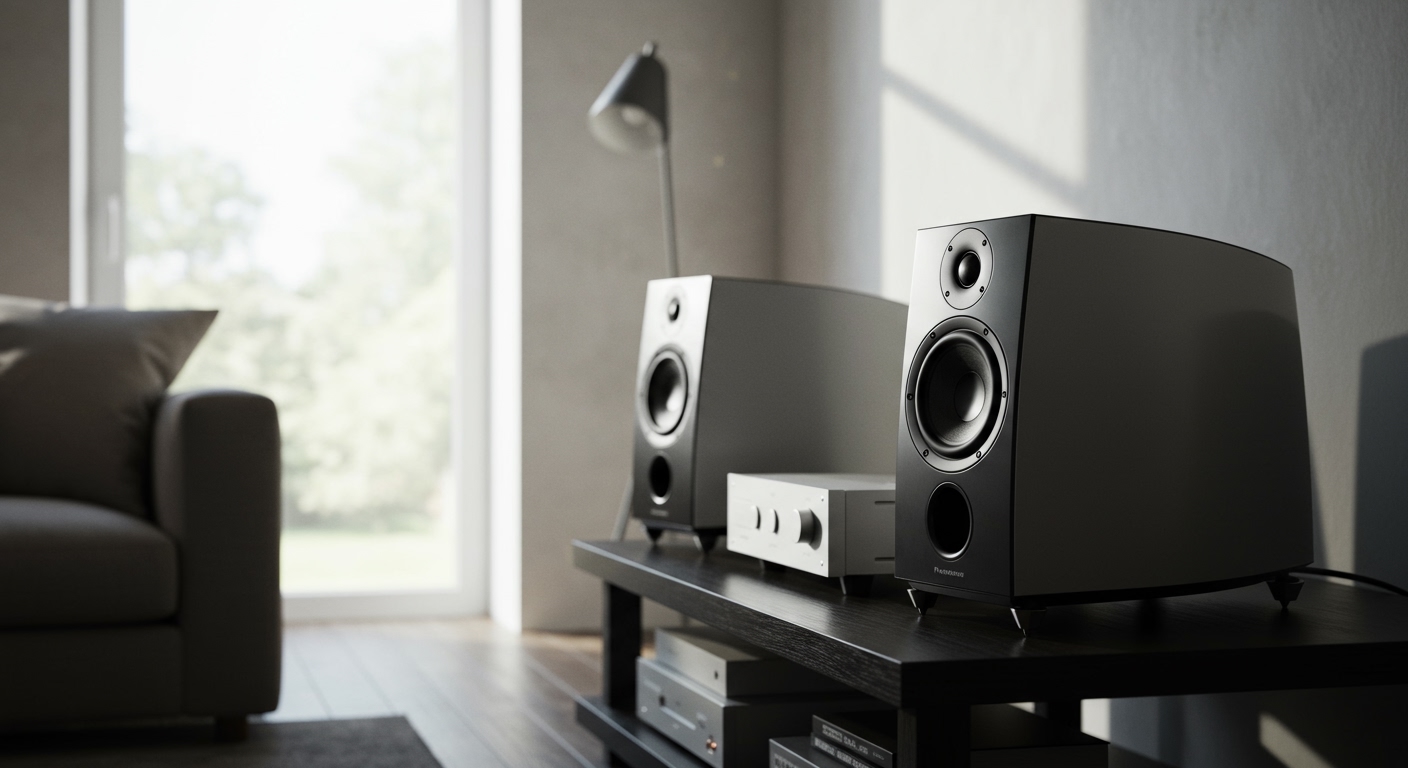
Do Floor Standing Speakers Need a Subwoofer? The Short Answer
The direct answer is: Yes, for the best experience, floor standing speakers almost always need a subwoofer. While high-quality floor standing (or tower) speakers can produce impressive bass on their own, a dedicated subwoofer is specifically designed to handle the lowest frequencies (typically 20-120 Hz) with greater authority, depth, and precision. Adding a sub frees your main speakers to focus on the mid-range and highs, resulting in a cleaner, more dynamic, and immersive soundstage for both music and movies.
You’ve invested in a fantastic pair of tower speakers, expecting room-filling, chest-thumping sound. But when you play your favorite action movie or a bass-heavy track, it feels like something is missing. That deep, guttural rumble just isn’t there, and the overall sound feels a bit thin. This is a common frustration, and the solution is almost always a dedicated subwoofer. This guide will walk you through exactly why you need one, how to choose the right one, and how to integrate it perfectly with your system.
Key Takeaways (TL;DR)
- Yes, You Need a Sub: For a full-range audio experience, especially for home theater, a subwoofer is essential.
- Subwoofers Handle Low Frequencies: They are purpose-built to reproduce the lowest audible frequencies (20-120 Hz), which most floorstanders struggle with.
- Improves Overall Sound Quality: Adding a sub allows your main speakers to work more efficiently, improving clarity in the midrange and treble.
- Essential for LFE Channel: In movies, the .1 in a 5.1 or 7.1 surround sound setup is the Low-Frequency Effects (LFE) channel, which only a subwoofer can reproduce.
- Music Benefits Too: Even for stereo music listening, a well-integrated sub adds depth, weight, and a sense of realism to the performance.
Understanding Why Floor Standing Speakers Need a Subwoofer
To grasp why a subwoofer is so crucial, we need to understand the division of labor in an audio system. Sound is a spectrum of frequencies, from the deepest rumbles to the highest shimmers. No single speaker driver can reproduce this entire range perfectly.
Floor standing speakers are excellent “full-range” speakers. Their larger cabinets and multiple drivers (tweeter for highs, midrange for vocals, woofers for bass) allow them to cover a wide frequency spectrum, often down to 40 Hz or even 30 Hz in high-end models. However, this is where their limitations often appear.
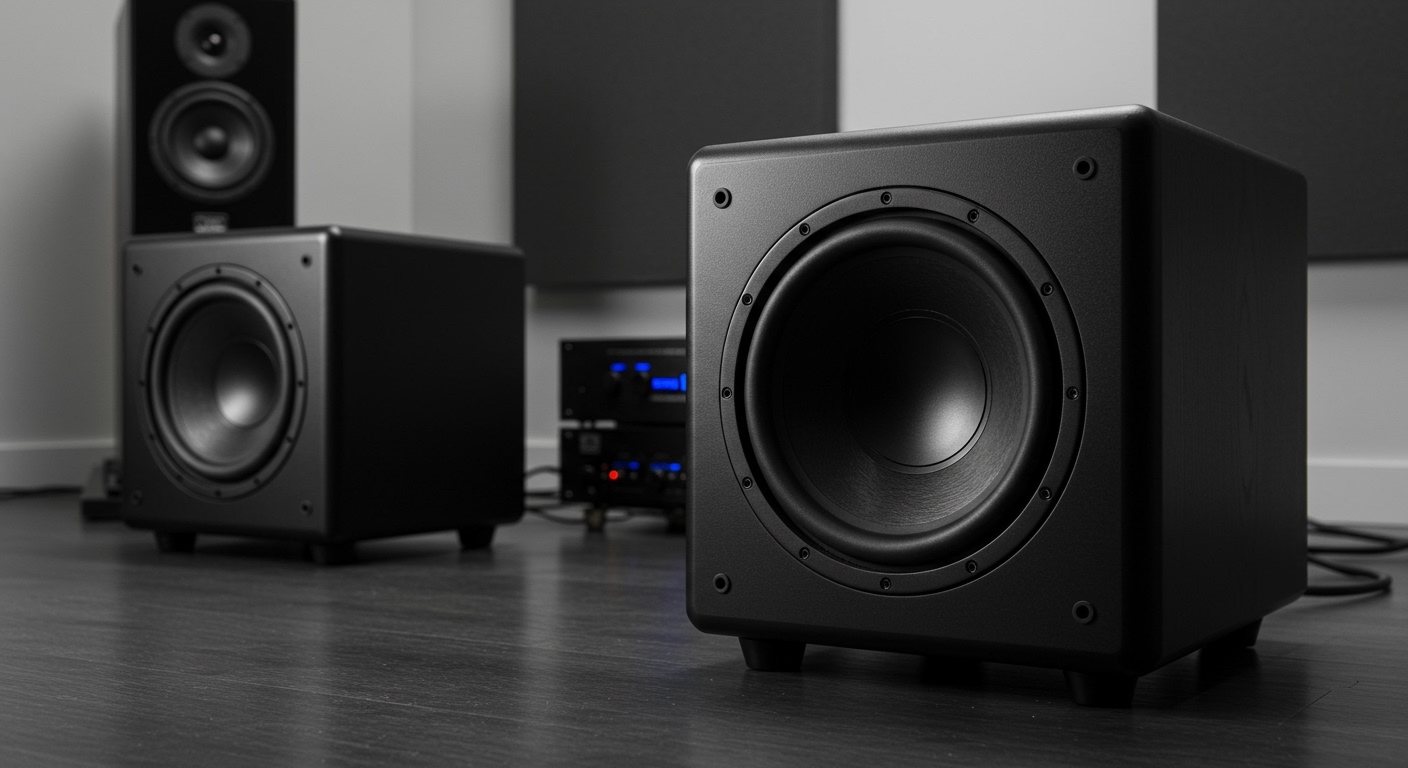
A subwoofer, on the other hand, is a specialist. Its sole job is to reproduce the very bottom end of the audio spectrum—the frequencies you often feel more than you hear.
The Division of Labor: Speakers vs. Subwoofers
Think of it like a sports team. Your floor standing speakers are the versatile all-star players who can do a bit of everything. The subwoofer is the power-lifter, brought in for one specific, heavy-duty task: moving a massive amount of air to create deep, impactful bass.
When you add a subwoofer to your system, you set a crossover frequency in your AV receiver. This crossover point acts as a traffic cop for sound.
Frequencies below the crossover (e.g., 80 Hz and lower) are sent only* to the subwoofer.
- Frequencies above the crossover are sent to your floor standing speakers.
This has two massive benefits:
- Your floorstanders sound better: Freed from the burden of reproducing difficult low frequencies, their woofers can focus on what they do best—the mid-bass and midrange. This results in clearer vocals, more detailed instruments, and less distortion at high volumes.
- You get deeper, cleaner bass: The subwoofer’s large driver and dedicated amplifier can produce low-end frequencies with more power and less distortion than the smaller woofers in your tower speakers.
Scenarios Where You Absolutely Need a Subwoofer with Floor Standing Speakers
While I almost always recommend a sub, there are specific situations where the answer to “do i need a subwoofer with floor standing speakers” is a resounding “YES.” If any of these apply to you, a subwoofer isn’t a luxury; it’s a necessity for the experience you’re seeking.
For an Authentic Home Theater Experience
This is the most critical use case. Modern movie soundtracks have a dedicated Low-Frequency Effects (LFE) channel. This is the “.1” in a 5.1, 7.1, or Dolby Atmos setup. This channel contains all the non-directional, deep bass information—explosions, spaceship rumbles, dinosaur footsteps, and the score’s underlying tension.
Without a subwoofer, your AV receiver will try to redirect this LFE information to your floor standing speakers. They simply aren’t designed to handle it. From my first-hand experience setting up dozens of home theaters, the difference is night and day. With a pair of excellent SVS Prime Towers, the sound is big and clear. But the moment we add an SVS PB-2000 Pro subwoofer, the entire room transforms. An explosion is no longer just a loud “bang”; it’s a visceral, pressure-in-your-chest event.
If You Listen to Bass-Heavy Music Genres
Are you a fan of electronic music, hip-hop, reggae, or epic film scores? These genres rely heavily on low-frequency information to create their rhythm and emotional impact.
Electronic Music (EDM, Dubstep): The sub-bass “drop” is a core element of the genre. Your tower speakers might reproduce the note, but a subwoofer will let you feel* the drop.
- Hip-Hop/R&B: The deep, rolling basslines and 808 kick drums are the foundation of the track. A subwoofer gives these elements the weight and presence they deserve.
- Organ Music & Film Scores: The lowest pedal notes on a pipe organ can dip below 20 Hz. A subwoofer is the only way to experience the true scale and power of this music.
I once tested a pair of Bowers & Wilkins 603 S2 towers with and without a sub on Hans Zimmer’s “Time.” Without the sub, the track was beautiful. With a well-integrated REL Acoustics T/9x, the building crescendo became a physical, emotional experience that the towers alone couldn’t deliver.
If You Have a Large Listening Room
Low-frequency sound waves are very long and require a lot of energy to pressurize a room and be perceived correctly. In a large, open-concept living room or a dedicated home theater, your floor standing speakers will struggle to produce enough bass energy to fill the space without sounding strained.
A subwoofer, especially a larger, ported model, is designed to move a significant volume of air. This allows it to energize a large room with deep, even bass, creating a much more enveloping and satisfying listening experience. Placing the subwoofer optimally (using a technique like the “subwoofer crawl”) also helps overcome room modes—peaks and nulls in the bass response at your listening position.
When Can You Get Away Without a Subwoofer?
While I’m a huge advocate for subwoofers, there are a few specific, limited scenarios where you might be satisfied without one.
- You ONLY Listen to Simple Acoustic/Vocal Music: If your listening diet consists exclusively of folk, classical quartets, or simple vocal jazz at low to moderate volumes, the bass demands are minimal. High-quality floorstanders can handle this gracefully.
- You Live in an Apartment with Thin Walls: In this case, a powerful subwoofer might be a liability, causing issues with your neighbors. You might opt to go without one to keep the peace, though smaller, sealed subwoofers can provide tight bass at lower volumes.
- You Own True Full-Range, High-End Towers: We’re talking about speakers with large, built-in powered subwoofers, like the Definitive Technology BP9080x or the GoldenEar Triton Reference. These are essentially tower speakers with integrated subs and are designed to perform without a separate box. However, these are the exception, not the rule.
Even in these cases, a well-calibrated external subwoofer can still provide benefits by allowing for more flexible placement to optimize bass response in the room.
How to Choose the Right Subwoofer for Your Floorstanders
Choosing a subwoofer isn’t just about getting the biggest one you can afford. It’s about finding the right match for your speakers, your room, and your listening habits.
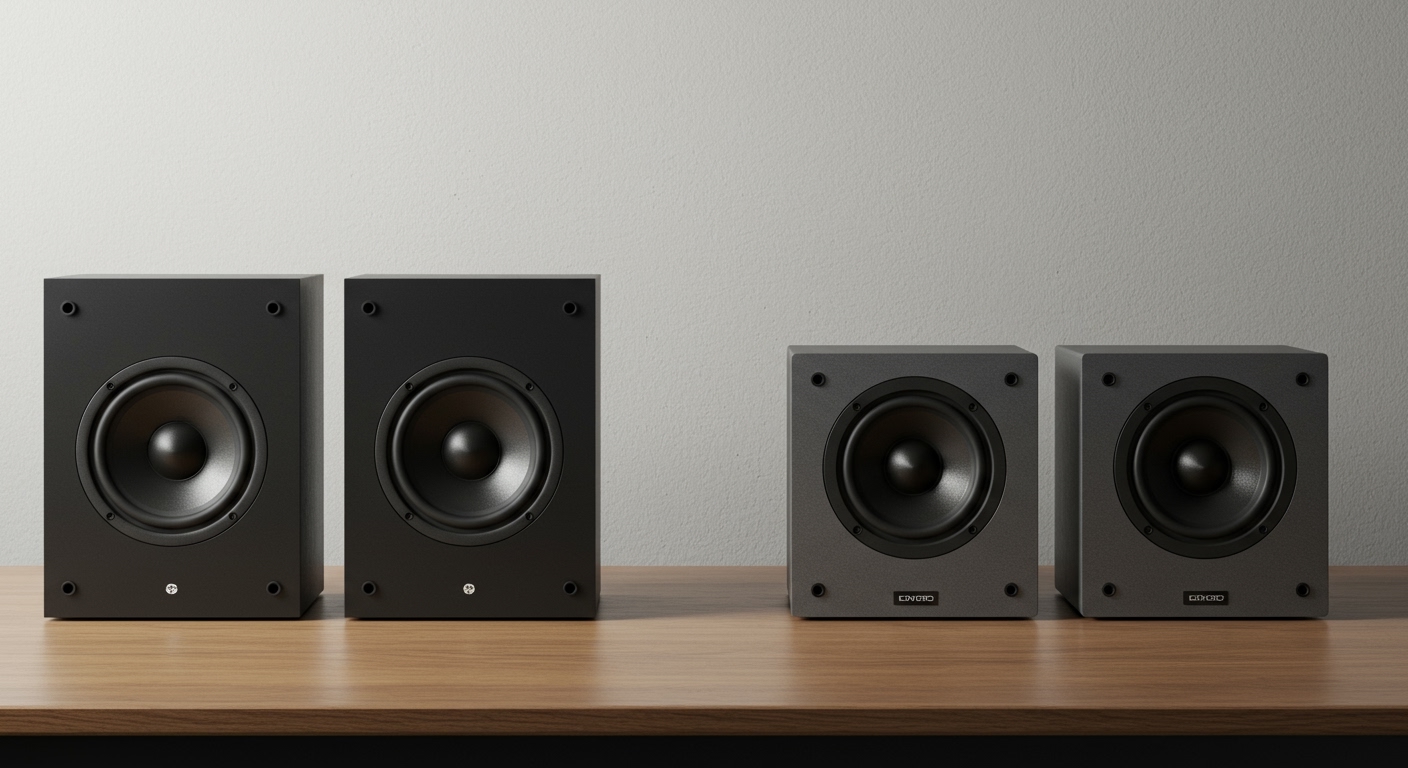
Sealed vs. Ported Subwoofers
This is the first major decision. Neither is “better,” but they have different strengths.
| Feature | Sealed Subwoofer | Ported Subwoofer |
|---|---|---|
| Design | Completely enclosed box | Has an open port or vent |
| Sound Profile | Tight, fast, accurate, “musical” | Deep, powerful, room-shaking, “cinematic” |
| Best For | Critical music listening, smaller rooms | Home theater, large rooms, bass-heavy genres |
| Size | Generally smaller and more compact | Generally larger and heavier |
| Example Models | SVS SB-1000 Pro, REL T/5x | SVS PB-1000 Pro, Klipsch SPL-120 |
My personal advice: If your usage is 80% music and 20% movies, lean towards a sealed sub. If it’s 80% movies and 20% music, a ported sub will likely give you more of the “wow” factor you’re looking for.
Size and Power Considerations
- Driver Size: A 12-inch driver is generally the sweet spot for a balance of performance and size for most rooms. Smaller 10-inch subs work well in small rooms, while 15-inch or larger subs are for dedicated home theaters and very large spaces.
- Amplifier Power (Watts RMS): Look for the RMS (continuous) power rating, not the “Peak” power. For a medium-sized room, a subwoofer with 300-500 watts RMS is a great starting point. More power provides better control over the driver, leading to cleaner, less distorted bass.
Step-by-Step Guide: Integrating a Subwoofer with Your Floor Standing Speakers
Properly integrating your new subwoofer is just as important as choosing the right one. A poorly set up sub can sound boomy, disconnected, and worse than no sub at all.
Step 1: Physical Placement (The Subwoofer Crawl)
The location of your sub has the biggest impact on its performance. Don’t just stick it in a corner! Use this tried-and-true method.
- Place the subwoofer in your main listening position (your seat on the couch). Seriously.
- Play a familiar, bass-heavy track or a test tone loop (you can find these on YouTube or Spotify).
- Get on your hands and knees and crawl around the perimeter of your room where you might realistically place the sub.
- Listen carefully. You will hear the bass sound dramatically different in various spots. In some places it will be weak (“null”), and in others, it will be overwhelmingly boomy (“peak”).
- Find the spot where the bass sounds the most even, tight, and smooth. That’s the best location for your subwoofer. Mark it with tape.
- Move the subwoofer to that spot and place your couch back. Now, the bass will sound just as good in your seat as it did when you were crawling.
Step 2: Connection
Connecting the sub is straightforward. Use a dedicated subwoofer cable (a single RCA cable) to connect the LFE Out or Sub Out on your AV receiver to the LFE In on your subwoofer.
Step 3: Setting the Crossover Frequency
This is the most critical setting. The crossover determines which frequencies go to the sub and which go to the speakers.
- Start with the THX standard of 80 Hz. This is the recommended starting point for most systems.
- In your AV receiver’s speaker setup menu, set your floor standing speakers to “Small.” This might seem counterintuitive, but “Small” tells the receiver to enforce the crossover and send low frequencies to the sub. If you