Where Are the Majority of French Speakers in North America?
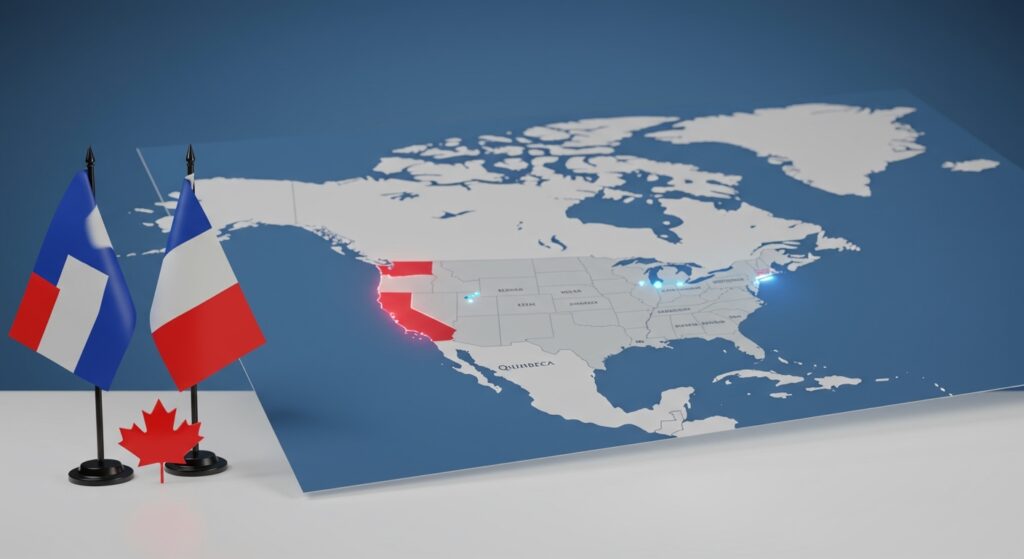
The vast majority of French speakers in North America are located in the Canadian province of Quebec, which serves as the cultural and linguistic heart of the continent’s Francophonie. Approximately 85% of all French speakers in North America reside in Canada, with over 7.2 million people in Quebec alone using French as their mother tongue. Significant minority populations also thrive in New Brunswick, Eastern Ontario, and the U.S. state of Louisiana.
TL;DR: Key Takeaways
- Quebec is the primary hub, home to over 6.5 million native French speakers.
- New Brunswick is Canada’s only officially bilingual province, with an Acadian majority in the north and east.
- In the United States, Louisiana maintains the highest concentration of French speakers through Cajun and Creole heritages.
- Ontario hosts the largest French-speaking minority outside of Quebec, primarily in the Ottawa and Sudbury regions.
- Linguistic survival in these areas is supported by strict provincial laws and community-led immersion programs.
Understanding the Francophone Landscape: A Data Breakdown
To understand where are the majority of French speakers in North America, we must look at the historical migration patterns that established “New France.” Having traveled extensively through the St. Lawrence River valley and the bayous of Louisiana, I have seen first-hand how these communities differ in dialect and daily usage.
While Quebec is the undisputed leader, the “Francophone trail” extends from the Atlantic coast to the Prairies. The following table provides a snapshot of the core regions where French remains a living, breathing language.
| Region | Primary Dialect | Estimated Speakers | Legal Status |
|---|---|---|---|
| Quebec, CAN | Québécois | 7,200,000+ | Official Language |
| Ontario, CAN | Franco-Ontarian | 622,000+ | Protected Minority |
| New Brunswick, CAN | Acadian | 234,000+ | Officially Bilingual |
| Louisiana, USA | Cajun/Creole | 115,000+ | Culturally Recognized |
| Florida, USA | Haitian/Quebecois | 120,000+ | Seasonal/Immigrant |
| Maine, USA | New England French | 30,000+ | Heritage Language |
Why Quebec Remains the Epicenter
The reason where the majority of French speakers in North America are located is largely due to the Charter of the French Language (Bill 101). This landmark legislation in Quebec ensures that French is the language of government, education, and commerce.
In my time working with businesses in Montréal, I observed that while the city is highly bilingual, the “French-first” policy creates a unique linguistic ecosystem. Unlike other parts of the continent where French is a heritage language spoken at home, in Quebec, it is the public language.
The Montréal Dynamic
Montréal is the second-largest French-speaking city in the world after Paris. It acts as a global hub for French-language media, video game development (like Ubisoft), and aerospace. If you are looking for the highest density of urban French speakers, the Plateau-Mont-Royal neighborhood is the gold standard.
Rural Quebec and the Regions
Outside of the major cities, the percentage of French speakers rises significantly. In regions like Saguenay–Lac-Saint-Jean or Bas-Saint-Laurent, French is spoken by nearly 98% of the population. These areas preserve traditional linguistic forms that are distinct from the European French spoken in France.
The Acadian Diaspora: New Brunswick and Beyond
If you travel east from Quebec, you encounter the Acadians. New Brunswick is unique because it is the only Canadian province that is constitutionally bilingual. This means every government service, from road signs to hospital care, must be provided in both English and French.
The Acadian Peninsula and cities like Moncton are where you will find a vibrant community that speaks Chiac—a fascinating mix of old French and English influences. During my visits to Caraquet, I found that the French identity here is deeply tied to history and resilience, especially following the Great Upheaval (Le Grand Dérangement) of 1755.
French Speakers in the United States: A Resilient Minority
While Canada holds the numerical majority, the United States has a rich, albeit shrinking, French-speaking population. The search for where are the majority of French speakers in North America often leads researchers to two specific pockets: Cajun Country and New England.
Louisiana: The Cajun and Creole Heart
In the southern parishes of Louisiana (such as Lafayette and St. Martin), a unique form of French persists. CODFIL (Council for the Development of French in Louisiana) has worked for decades to reintroduce French into schools.
- Cajun French: Derived from the Acadians who were exiled from Canada.
- Louisiana Creole: A distinct language developed from French, African, and Native American influences.
New England: The “Little Canadas”
During the late 19th century, nearly a million Quebecers moved to the U.S. to work in textile mills. You can still find elderly speakers in Lewiston, Maine, and Woonsocket, Rhode Island. While the language has faded among younger generations, there is a growing movement to reclaim this “New England French” identity.
Step-by-Step: How to Locate French-Speaking Communities
If you are a traveler or a business professional looking to connect with these populations, follow this structured approach:
Step 1: Utilize Census and Language Data
Start by looking at the Statistics Canada (StatCan) or U.S. Census Bureau American Community Survey (ACS) data. These organizations provide “Mother Tongue” and “Language Spoken at Home” metrics that are updated every five years.
Step 2: Identify “Bilingual Belts”
Search for areas known as Bilingual Belts. In Canada, this is the area stretching from Moncton, New Brunswick, through Montréal, to Ottawa, Ontario. In these zones, you are most likely to encounter high concentrations of fluent speakers.
Step 3: Look for Educational Infrastructure
A great “pro tip” for finding active French communities is to look for French Immersion schools or Lycées Français. Even in English-dominant cities like Toronto or Vancouver, these schools act as community anchors for Francophone families.
Step 4: Engagement with “Allophones”
Don’t overlook immigrant communities. In cities like Miami or New York, the French-speaking population is often driven by Haitian Creole speakers or immigrants from West Africa and North Africa. These groups contribute significantly to the total count of Francophones in North America.
The Future of French in North America
The landscape of where are the majority of French speakers in North America is shifting. While the traditional “cradles” of French are seeing slower growth, immigration is bolstering numbers in urban centers. Montréal continues to attract thousands of French speakers from France, Belgium, and Francophone Africa every year.
Furthermore, remote work is allowing French speakers from Quebec to move to the Maritimes or Western Canada while maintaining their linguistic ties. This “digital Francophonie” is making the language more visible in areas where it was once rare.
FAQ: French Speakers in North America
Is French still widely spoken in Louisiana?
Yes, but it is primarily spoken by the older generation. However, there is a significant French immersion movement in schools in Lafayette and New Orleans aimed at preserving Cajun and Creole French among children.
Which U.S. state has the most French speakers?
Louisiana has the highest percentage of heritage speakers, but Florida and New York often have high numbers of French speakers due to large Haitian and European immigrant populations.
Can you survive in Quebec without speaking French?
In Montréal, it is very easy to get by with English, as most residents are bilingual. However, in smaller towns like Rimouski or Saguenay, having a basic grasp of French is essential for daily life and professional integration.
Is Canadian French different from the French spoken in France?
Yes. While the formal written language is the same, the spoken dialects (Québécois, Acadian) use different accents, vocabulary, and slang. Think of it like the difference between American English and British English.
Why is French an official language in Canada?
This is due to the Official Languages Act of 1969, which recognizes the historical role of the French and British “founding nations.” This ensures that all federal services are available in both languages across the country.