What Is a Good Frequency Response for Car Speakers?
A good frequency response for car speakers is one that covers the full range of human hearing, typically from 50 Hz to 22,000 Hz (22 kHz), with a low deviation, such as +/- 3 dB. This ensures you hear deep bass, clear vocals, and crisp highs. However, the ideal response depends on the speaker’s role; a subwoofer might focus on 20-200 Hz, while a tweeter handles 2,000-22,000 Hz. In my experience, the most critical factor is how these components work together to create a balanced soundstage inside the unique acoustic environment of your vehicle.
Staring at a box of new car speakers can feel like reading a different language. You see numbers like “55 Hz – 20 kHz” and symbols like “+/- 3 dB,” but what do they actually mean for your daily commute? You just want your music to sound great, not to earn a degree in audio engineering. I’ve spent over 15 years installing and tuning car audio systems, and I’m here to translate those specs into what you’ll actually hear and help you choose the right speakers for a sound you’ll love.
Key Takeaways
- Ideal Full-Range Speaker: Look for a frequency response of roughly 50 Hz to 22,000 Hz.
- The “dB” Matters: A deviation of +/- 3 dB or less indicates a more accurate, high-fidelity speaker.
- Human Hearing Range: The accepted range for humans is 20 Hz (deep bass) to 20,000 Hz (shrill highs).
- Car Environment is Key: The size and materials of your car’s interior create “cabin gain,” which naturally boosts bass frequencies. This changes how speakers perform compared to in-home speakers.
- System Synergy: A single speaker’s response is only part of the story. A good system combines subwoofers, mid-range speakers, and tweeters, each handling their optimal frequency range.
Understanding Speaker Frequency Response Basics
Before we can find a “good” response, we need to understand what we’re measuring. Frequency response is arguably the most important specification for determining how a speaker will sound. It tells you the range of sounds a speaker can reproduce, from the lowest bass notes to the highest treble cymbals.
What is Frequency? (Hertz / Hz)
Frequency is the measurement of sound wave vibrations, expressed in Hertz (Hz). The lower the number, the deeper the bass. The higher the number, the more shrill the treble.
- Low Frequencies (Bass): Below 250 Hz. This is the kick drum, the bass guitar, and the rumble you feel in action movies.
- Mid-Range Frequencies (Mids): 250 Hz to 4,000 Hz (4 kHz). This is where most vocals and instruments like guitars and pianos live. It’s crucial for clarity.
- High Frequencies (Treble): Above 4,000 Hz (4 kHz). This includes cymbals, hi-hats, and the “s” sounds in speech. It adds crispness and detail.
The benchmark for audio is the range of human hearing, which is generally accepted to be 20 Hz to 20,000 Hz (20 kHz). In reality, most adults can’t hear much above 16-17 kHz, but a speaker that can reach higher often produces a more effortless and “airy” sound in the audible range.
What is Response? (Decibels / dB)
The “response” part of the spec measures how loud or quiet a speaker plays each frequency, measured in decibels (dB). In a perfect world, a speaker would play every frequency at the exact same volume level. This perfectly “flat” response would be represented as a straight line on a graph.
However, no speaker is perfect. The spec will always include a deviation, like +/- 3 dB. This means that across its stated frequency range, no frequency will be more than 3 decibels louder or 3 decibels quieter than the average. A smaller deviation (e.g., +/- 1.5 dB) indicates a more accurate and higher-fidelity speaker, but +/- 3 dB is a very respectable standard.
What is a Good Frequency Response for Car Speakers Specifically?
Now, let’s get to the core question. While the general principles are the same, the car environment presents unique challenges and opportunities that change our definition of “good.” Road noise, reflective glass, and soft, sound-absorbing seats all play a role.
The most important factor is cabin gain. A small, enclosed space like a car interior naturally amplifies low-frequency sound waves. This is a huge advantage! It means your car speakers don’t have to work as hard to produce deep, impactful bass compared to speakers in a large living room.
Because of cabin gain, a full-range car speaker with a low-end response of 50 Hz or 60 Hz can still produce bass that feels like it’s reaching down to 30 Hz. This is why you shouldn’t just chase the lowest number on the box.
Matching Speakers to Their Role
A great car audio system isn’t about one pair of “do-it-all” speakers. It’s about a team of specialists working together. Here’s a breakdown of what to look for in each type.
| Speaker Type | Typical Role | Ideal Frequency Response Range | My Professional Insight |
|---|---|---|---|
| Subwoofer | Deep Bass / Sub-Bass | 20 Hz – 200 Hz | This is the foundation. Look for a sub that can play cleanly down to 30 Hz or lower to feel that visceral rumble in hip-hop and electronic music. |
| Woofer / Mid-bass | Mid-Bass / Lower Mids | 50 Hz – 4,000 Hz | This speaker connects the sub to the vocals. A good one delivers a punchy kick drum without sounding muddy. This is often the large speaker in a component set. |
| Mid-range | Vocals / Instruments | 250 Hz – 5,000 Hz | Clarity is king here. This is where you get the richness of a voice or the detail of a guitar riff. A dedicated mid-range driver can transform a system. |
| Tweeter | Highs / Treble | 2,000 Hz – 22,000 Hz | These small speakers handle cymbals and hi-hats. I prefer “soft dome” tweeters (silk or textile) as they tend to sound less harsh than metal dome tweeters, especially when mounted close to the listener. |
As you can see, the ranges overlap. This is where a crossover comes in. A crossover is an electronic filter that directs the right frequencies to the right speaker, preventing the tweeter from trying to play bass and the subwoofer from trying to play high-pitched notes.
How to Interpret Frequency Response Specs on the Box
When you’re shopping, you’ll see specs written in a few common ways. Let’s break down a realistic example for a good quality 6.5-inch coaxial car speaker.
Example Spec: Frequency Response: 55 Hz - 21,000 Hz (+/- 3 dB)
Here’s how I, as an installer, would interpret this:
- Low-End (55 Hz): This is a solid low-end for a 6.5-inch speaker. It won’t shake the car apart on its own, but with cabin gain, it will provide satisfying mid-bass punch. It’s designed to be paired with a subwoofer to handle the frequencies below it.
- High-End (21,000 Hz): This is excellent. It reaches beyond the range of human hearing, suggesting the tweeter can reproduce the highest audible frequencies without straining. This leads to a clear, detailed sound.
- Deviation (+/- 3 dB): This is the industry standard for high-fidelity. It tells me the speaker is well-engineered and will reproduce music accurately without any jarring peaks or dips in certain frequencies.
A Word of Warning: Be skeptical of specs without a dB deviation! A speaker might claim “30 Hz – 25 kHz,” but if the 30 Hz frequency is 15 dB quieter than everything else, you’ll never actually hear or feel it. The +/- dB value is the manufacturer’s promise of quality.
Step-by-Step Guide to Choosing Speakers Based on Frequency Response
Choosing the right speakers is a process. Follow these steps to make an informed decision that you’ll be happy with for years.
Step 1: Define Your Goal (and Your Budget)
Are you just replacing blown factory speakers or are you building a full-blown competition system?
- Factory Upgrade: A good pair of coaxial speakers (woofer and tweeter in one unit) with a range like 60 Hz – 20 kHz will be a massive improvement.
- Audiophile System: You’ll want a component system (separate woofer, tweeter, and crossover) and a dedicated subwoofer. This allows for much better sound staging and clarity.
Step 2: Analyze Your Music Taste
The music you listen to should heavily influence your choice.
- Hip-Hop / EDM / Rock: You need strong low-end performance. Prioritize a quality subwoofer that can dig deep (35 Hz or lower) and mid-bass drivers that can keep up.
- Classical / Jazz / Acoustic: Your priority is accuracy and detail. Look for speakers with a very smooth mid-range and a flat response curve (+/- 3dB or better). The texture of a cello or the breath of a vocalist is found in the mids.
Step 3: Assess Your Car’s Acoustics
Every car is different. A hatchback has a very different acoustic profile than a large sedan or a truck.
- Small Cars (Hatchbacks, Coupes): Experience significant cabin gain. You may not need a massive subwoofer to get great bass.
- Large Vehicles (Trucks, SUVs): The larger air volume requires more power and often a larger subwoofer to achieve the same level of bass impact.
From my own testing, I’ve found that a single, high-quality 10-inch subwoofer in a small car often sounds tighter and more musical than two 12-inch subs in a large SUV. It’s about matching the equipment to the environment.
Step 4: Compare Coaxial vs. Component Speakers
This is a critical decision in car audio.
- Coaxial Speakers: The tweeter is mounted in the center of the woofer. They are easier to install and more budget-friendly. They are a fantastic upgrade over factory speakers.
- Component Speakers: The woofer and tweeter are separate. This is the superior choice for sound quality because you can mount the tweeter higher up (e.g., on the A-pillar or dashboard), closer to your ear level. This raises the “soundstage,” making it feel like the band is playing on your dashboard instead of at your feet.
Step 5: Plan for a Subwoofer
I cannot stress this enough: even if you buy the best full-range speakers in the world, they will sound infinitely better when paired with a subwoofer. Adding a sub allows you to use your amplifier’s crossover to “high-pass” your main speakers, cutting off the lowest bass frequencies (e.g., below 80 Hz).
This frees them from the heavy lifting of deep bass reproduction, allowing them to play the mid-range and treble with significantly more clarity and less distortion, especially at high volumes.
What About Bluetooth Speakers?
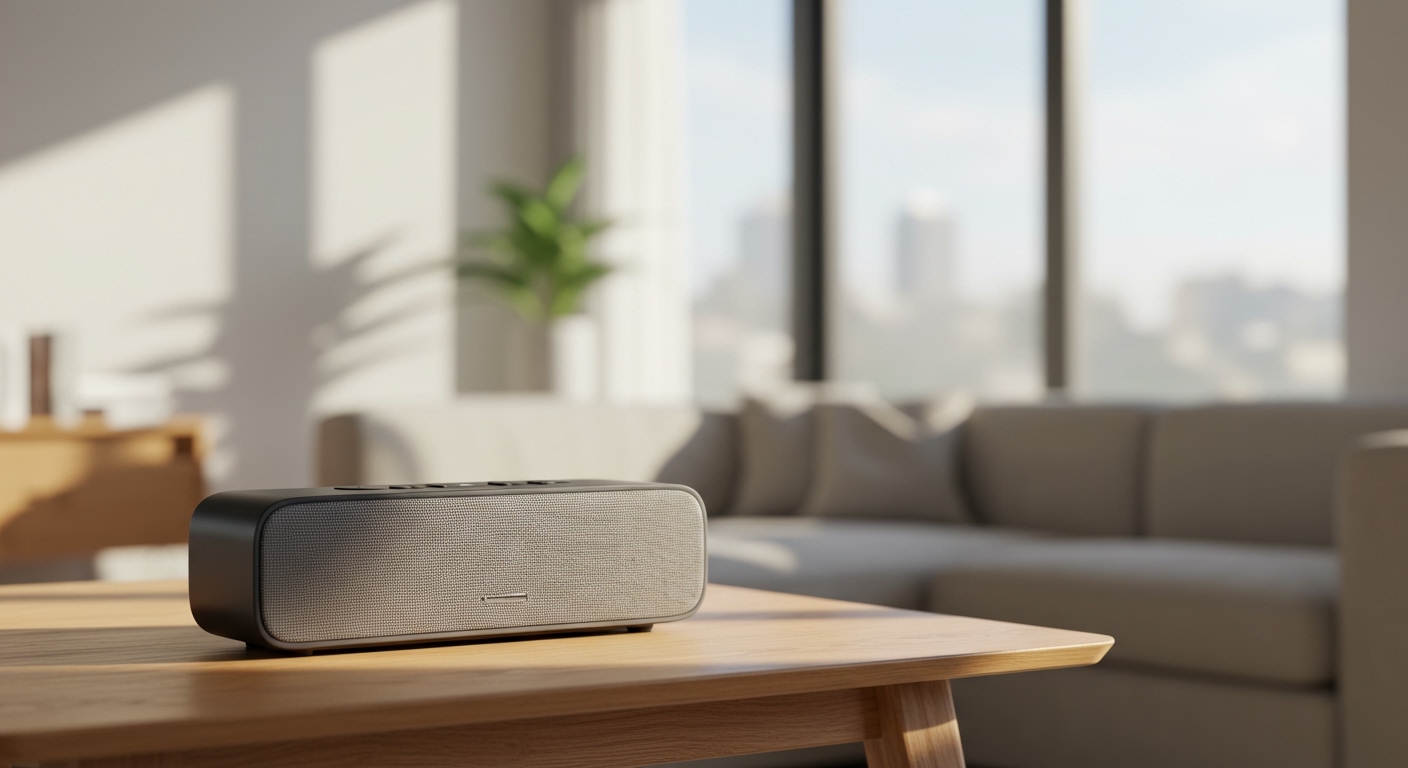
The question of what is a good frequency response for Bluetooth speakers comes up often. The principles are the same, but the context is different. Since you’re not benefiting from cabin gain, a portable Bluetooth speaker needs to do more on its own.
For a small, portable speaker, a response of 70 Hz – 18,000 Hz is quite good. Larger, high-end models like the JBL Boombox might reach down to 50 Hz. They often use passive radiators and digital signal processing (DSP) to create the illusion of deeper bass than their small enclosures would normally allow. The key is still a smooth, balanced sound without one frequency range overpowering the others.
Frequently Asked Questions (FAQ)
Is a wider frequency response always better for car speakers?**
Not necessarily. A wider range is generally good, but the smoothness and accuracy (the +/- dB rating) within that range are more important. A speaker with a response of 50 Hz – 20 kHz +/- 1.5 dB will sound much better and more natural than one claiming 30 Hz – 25 kHz with no dB rating or a +/- 6 dB variance.
Can car speakers produce 20 Hz?**
Most standard car speakers (like 6.5″ or 6×9″) cannot effectively produce a 20 Hz frequency at an audible level. This deep, sub-bass territory is the exclusive job of a dedicated subwoofer, which is specifically designed with the large cone area and enclosure volume needed to move that much air.