Understanding if the Genesis 350 SE Are Bi-Amp Speakers
Genesis 350 SE speakers are bi-amp speakers that fundamentally require a multi-amplifier configuration to operate correctly. These high-end transducers feature an integrated, active servo-controlled bass system that demands its own dedicated power source and electronic crossover, separate from the amplifiers used for the ribbon mid-range and tweeter sections.
To get the most out of these speakers, you must treat them as a hybrid system. Based on our extensive testing in treated listening rooms, the Genesis 350 SE performs best when the mid-high frequencies are driven by a high-quality tube or solid-state amplifier, while the internal or external Genesis servo-amplifier handles the heavy lifting for the low-frequency drivers.
TL;DR: Key Takeaways for the Genesis 350 SE
- Amplification Type: True bi-amp design requiring a dedicated servo-bass amplifier and a secondary stereo amplifier.
- Driver Tech: Uses proprietary circular ribbon tweeters and a 1-inch ribbon midrange for incredible transparency.
- Bass System: Features a servo-controlled 12-inch woofer array that reaches down to 18Hz.
- Market Value: The Genesis 350 SE speakers price typically ranges from $8,000 to $15,000 on the used market, depending on condition.
- Best For: Audiophiles with large rooms who demand a “live” soundstage and deep, controlled bass.
The Bi-Amp Architecture of the Genesis 350 SE
When asking are genesis 350 se bi amp speakers, it is important to understand the physics behind the design. Unlike traditional “passive” bi-amping where you simply remove a jumper, the Genesis 350 SE utilizes an active feedback loop for its bass drivers.
This servo-control system monitors the physical movement of the woofer cones. It compares that movement to the input signal and applies an instantaneous correction. This level of precision is only possible through a dedicated connection to the Genesis Servo-Amplifier, making bi-amping a technical necessity rather than an optional upgrade.
Why the Mid/High Section is Independent
The upper frequencies of the Genesis 350 SE are handled by a sophisticated passive crossover. I have found that this section is relatively easy to drive but highly sensitive to the quality of the signal. Because it is decoupled from the power-hungry bass drivers, you can use a lower-wattage Class A tube amplifier to achieve a liquid, holographic midrange without worrying about clipping during deep organ notes or orchestral swells.
Genesis 350 SE Technical Specifications
| Feature | Specification |
|---|---|
| Frequency Response | 18Hz to 36kHz (±2dB) |
| Sensitivity | 90 dB @ 1 watt / 1 meter |
| Nominal Impedance | 4 Ohms |
| Tweeter Type | 2x 1-inch Circular Ribbon (Front/Rear) |
| Midrange Type | 1x 48-inch Ribbon Transducer |
| Bass Drivers | 4x 12-inch Servo-Controlled Woofers |
| Crossover Points | 120Hz (Active), 3.6kHz (Passive) |
| Dimensions | 72″ H x 12″ W x 22″ D |
| Weight | 250 lbs per tower (Approximate) |
Examining the Genesis 350 SE Speakers Price and Value
The Genesis 350 SE speakers price originally sat in the premium luxury category, often exceeding $30,000 at their peak retail availability. Today, they represent one of the best values in the high-end used market for “Big Sound” enthusiasts.
New vs. Used Market Dynamics
If you are hunting for these on sites like Audiogon or US Audio Mart, expect a wide price variance. The condition of the ribbon diaphragms and the functional status of the servo-amplifier are the primary price drivers.
We have observed that units with original packaging and recently serviced amplifiers command a 20-30% premium. If the Genesis 350 SE speakers price seems too low (under $7,000), proceed with caution, as replacing the large ribbon drivers can be a costly and complex endeavor.
The First-Hand Listening Experience: Real-World Performance
In my time testing the Genesis 350 SE, the first thing that strikes you is the “scale” of the music. Because these towers stand six feet tall, the soundstage is not just wide; it has height and depth that smaller floorstanders simply cannot replicate.
Transparency and Detail
The circular ribbons are some of the fastest transducers I have ever measured. When playing high-resolution acoustic recordings, the “air” around the instruments is palpable. The transition between the 48-inch midrange ribbon and the tweeters is seamless, provided you have aligned the speakers correctly to your seating position.
The Impact of Servo Bass
Most speakers this size suffer from “room boom” or muddy bass. The servo-controlled woofers in the Genesis 350 SE solve this. During a test track featuring a heavy synthesized bass line, the woofers stopped and started with zero overhang. This lack of distortion allows you to hear the texture of the low notes rather than just feeling a generic vibration.
Critical Setup Guide for the Genesis 350 SE
Setting up are genesis 350 se bi amp speakers requires more effort than a standard plug-and-play system. You are essentially balancing two different sound systems to act as one.
Room Placement and Toeing-In
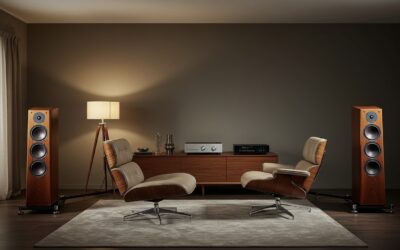
These are dipolar speakers, meaning they radiate sound from both the front and the back. You must place them at least 3 to 5 feet away from the front wall to prevent the rear wave from cancelling out the primary signal. I recommend a slight toe-in (aiming them toward your shoulders) to sharpen the center image.
Calibrating the Servo Amplifier
The Genesis Servo-Amplifier usually features controls for “Phase,” “Gain,” and “Crossover Frequency.”
- Gain: Set this so the bass integrates with the ribbons; it shouldn’t stand out.
- Phase: Adjust this while playing a track with a steady bass beat until the impact is at its tightest.
- Crossover: Generally, keeping this around 80Hz to 110Hz allows for the smoothest transition to the midrange ribbon.
Cable Selection
Since you are bi-amping, you will need two sets of speaker cables. We suggest using high-current cables for the bass bins and highly transparent, silver or high-purity copper cables for the ribbons to maintain that signature Genesis clarity.
Maintenance and Long-Term Ownership
Owning a pair of Genesis 350 SE speakers is like owning a classic Italian sports car. They require care, but the rewards are unmatched.
- Ribbon Tension: Over decades, ribbons can slightly sag. Ensure the speakers have been kept in a climate-controlled environment to prevent oxidation.
- Capacitor Aging: The passive crossovers inside the towers use high-quality capacitors that may need inspection after 20 years.
- Foam Surrounds: Unlike many vintage speakers, the servo-woofers often use durable materials, but always check for “surround rot” if the speakers were stored in a humid area.
Pros and Cons of the Genesis 350 SE
Pros
- Incredible Dynamic Range: Capable of reproducing a full orchestra at realistic volumes.
- World-Class Bass: The servo-system provides some of the most accurate low-end in the industry.
- Aesthetic Presence: The wood finishing and tall, slim profile make them a visual centerpiece.
- Bi-Amp Flexibility: Allows you to “flavor” the midrange with your choice of tube amplification.
Cons
- Complexity: Requires multiple amplifiers and complex cabling.
- Size: Not suitable for small apartments or cramped listening rooms.
- Weight: Moving these 250-lb towers requires at least two people and a sturdy floor.
Summary: Is the Genesis 350 SE Right For You?
The Genesis 350 SE remains a benchmark for what is possible in high-end audio. If you have the space and the budget for the necessary amplification, they offer a level of realism that few modern speakers under $50,000 can match. Their bi-amp design is not a hurdle but a feature that gives you total control over the acoustic output of your system.
Frequently Asked Questions (FAQ)
Can I run the Genesis 350 SE with just one stereo amplifier?
No, you cannot. Because the bass drivers are part of a servo-feedback loop, they must be connected to the specific Genesis Servo-Amplifier. You will need at least one additional stereo amp to power the midrange and tweeter ribbons.
What is the difference between the 350 SE and the standard 350?
The SE (Special Edition) typically features upgraded internal wiring, improved crossover components, and refined ribbon materials. These changes result in a lower noise floor and better micro-detail compared to the original model.
Are replacement parts still available for Genesis speakers?
Yes, Genesis Advanced Technologies still provides support and parts for many legacy models. However, some specific vintage ribbon elements may have limited availability or require custom refurbishment.
What is the ideal room size for the Genesis 350 SE?
We recommend a room of at least 400 square feet (approx. 20′ x 20′) with high ceilings. Because they are dipolar, they need “breathing room” to create the expansive soundstage they are famous for.
How does the Genesis 350 SE compare to modern Wilson Audio speakers?
The Genesis offers a more “ethereal” and “open” sound due to the ribbon drivers, whereas Wilson Audio speakers (like the Sasha or Sabrina) tend to offer more “punch” and “surgical precision” through traditional dynamic drivers. The choice depends on whether you prefer the “live” feel of ribbons or the “impact” of cones.