What Size Speakers Are in a Harley Fairing? The Definitive Guide
If you are wondering what size speakers are in a harley fairing, the answer depends on your bike’s production year: 2014 and newer models (Rushmore) use 6.5-inch speakers, while 1998 to 2013 models typically use 5.25-inch speakers. Upgrading older models to the modern 6.5-inch standard is a common modification that significantly improves highway audio clarity.
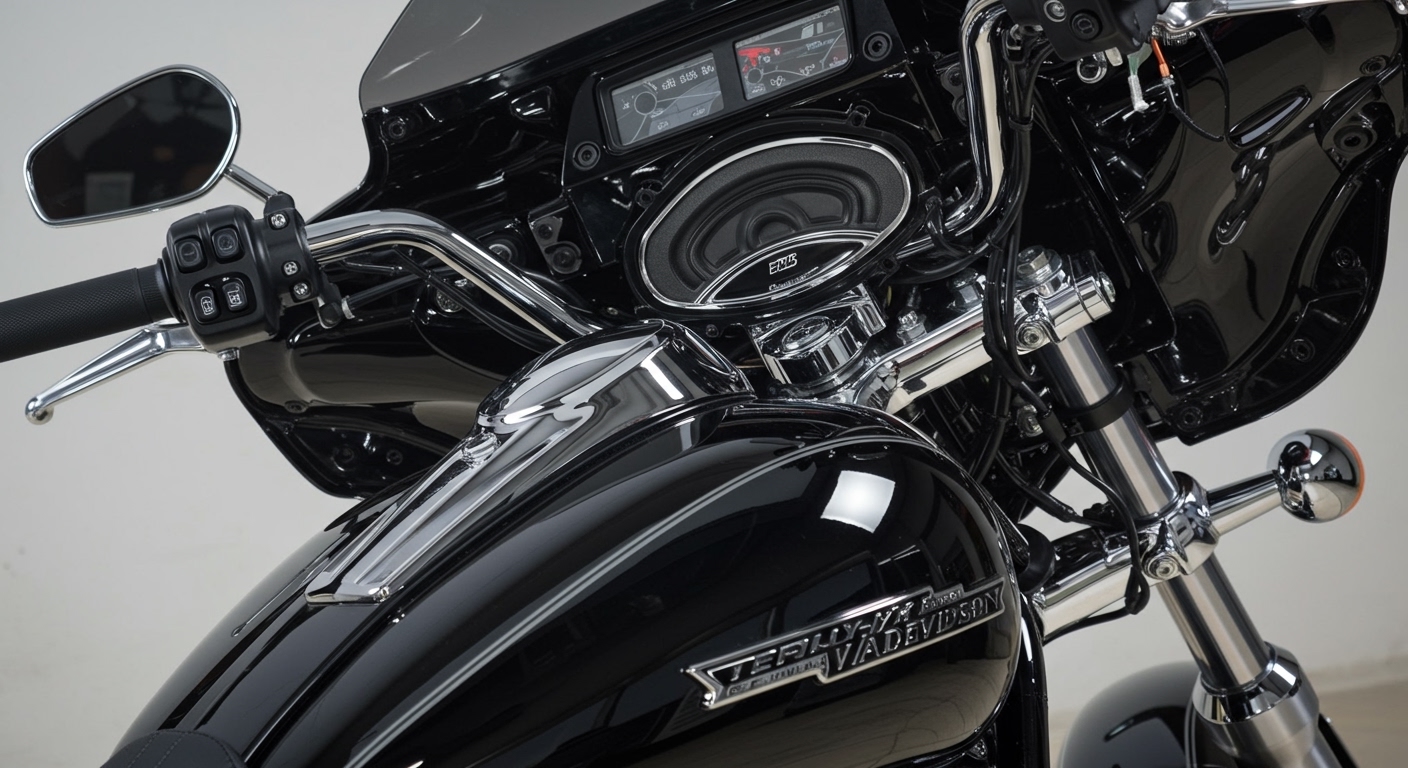
Upgrading your Harley-Davidson audio system is the single best way to improve your riding experience. In my years of wrenching on touring bikes and testing various setups in high-wind environments, I’ve found that the factory “paper cone” speakers simply can’t compete with exhaust roar and wind turbulence at 70 mph. Knowing your exact harley speaker size and mounting depth is the first step toward achieving “concert on wheels” audio quality.
Key Takeaways for Harley Owners
- 2014–Present (Rushmore Platform): Factory-equipped with 6.5-inch speakers in both Batwing and Sharknose fairings.
- 1998–2013 (Pre-Rushmore): Factory-equipped with 5.25-inch speakers; requires adapter rings for 6.5-inch upgrades.
- Impedance Matters: Modern Harley systems usually run at 2 ohms, while many aftermarket speakers are 4 ohms.
- Mounting Depth: Fairing space is limited; always check for magnet clearance against the inner fairing support brackets.
Understanding Harley Speaker Size by Model and Year
Determining what size speakers are in a harley fairing requires looking at the generation of your touring platform. Harley-Davidson made a massive shift in 2014 with “Project Rushmore,” which changed the fairing dimensions and speaker mounting configurations.
Harley-Davidson Speaker Size Reference Table
| Model Year Range | Fairing Type | Factory Speaker Size | Recommended Upgrade Size |
|---|---|---|---|
| 1998 – 2013 | Batwing (Street/Electra Glide) | 5.25″ | 6.5″ (with adapters) |
| 1998 – 2013 | Sharknose (Road Glide) | 5.25″ | 6.5″ (with adapters) |
| 2014 – 2023 | Batwing (Street/Electra Glide) | 6.5″ | 6.5″ (Drop-in) |
| 2014 – 2023 | Sharknose (Road Glide) | 6.5″ | 6.5″ (Drop-in) |
| 2024+ | New Fairing Design | 6.5″ | 6.5″ / 5×7″ Variations |
The 1998–2013 Generation (The 5.25″ Era)
If you own a classic Twin Cam touring bike, your factory speakers are likely 5.25 inches. While these were adequate for city cruising, they lack the surface area to push enough air for highway speeds.
Pro Tip: I highly recommend using a 5.25″ to 6.5″ adapter ring kit. In my experience, the jump in mid-bass response when moving to a 6.5-inch driver is night and day. Brands like Metra and Scosche make affordable brackets that allow a 6.5-inch speaker to bolt directly into the factory holes.
The 2014–Present Generation (The 6.5″ Era)
The Rushmore bikes (Street Glide, Road Glide, Ultra) corrected the volume issues by making 6.5-inch speakers the standard. These speakers use a “basket” style mount. While the size is better, the factory Boom! Audio speakers are still made of materials that degrade over time when exposed to UV rays and rain.
Batwing vs. Sharknose: Does the Fairing Change the Speaker?
When customers ask me what size speakers are in a harley fairing, they often worry that the Road Glide (Sharknose) and Street Glide (Batwing) require different parts. While the speaker size (6.5″) is often the same, the installation process and depth clearance differ.
Street Glide (Batwing) Specifics
The Batwing fairing is handlebar-mounted. This means the weight of your speakers and magnets affects your steering feel.
- Mounting Depth: You have roughly 2.75 to 3 inches of depth before you hit the fairing support brackets.
- Vibration: Because the fairing moves with the bars, ensure all mounting screws are treated with blue Loctite.
Road Glide (Sharknose) Specifics
The Sharknose fairing is frame-mounted. It is much deeper than the Batwing, offering more room for massive magnets.
- Ease of Access: Removing the Road Glide outer fairing is generally faster (only 4 bolts on older models, 6 on newer ones).
- Soundstage: The speakers sit further away from the rider, often requiring a slightly higher wattage amplifier to maintain the same perceived volume as a Street Glide.
Step-by-Step Guide: How to Replace Your Harley Fairing Speakers
Replacing your speakers is a straightforward DIY project. I have performed this swap in under 45 minutes on many occasions. Follow these steps for a professional-grade install.
Tools Required
- T25 & T27 Torx Drivers (Essential for Harley hardware)
- Phillips Head Screwdriver
- Soldering Iron or Crimp Connectors
- Microfiber Towels (To protect your front fender)
Step 1: Fairing Removal
For a Street Glide, remove the three windshield bolts first. Then, remove the four bolts on the inner fairing (two near the forks, two near the speakers).
Expert Advice: Always place a thick towel over your front fender. I’ve seen too many beautiful paint jobs ruined by a fairing slipping off during removal.
Step 2: Disconnecting the Factory Wiring
Gently pull the spade connectors from the back of the factory speakers. Note that Harley uses different sized spades for positive and negative to prevent phase issues.
Step 3: Installing the New Speaker
If you are working on a 1998–2013 model, bolt your 6.5-inch adapter ring to the fairing first. Then, screw the new speaker into the adapter. For 2014+ models, the speaker drops directly into the factory pod.
Step 4: Weatherproofing
Use a closed-cell foam gasket between the speaker and the fairing. This prevents “acoustic short-circuiting,” where sound waves from the back of the speaker cancel out the sound from the front. This simple step drastically improves bass response.
Step 5: Testing and Reassembly
Turn the ignition to “ACC” and check for sound before putting the outer fairing back on. Ensure there are no rattles or loose wires that might buzz against the plastic.
Technical Considerations: Ohms, Sensitivity, and Magnets
Knowing what size speakers are in a harley fairing is only half the battle. You also need to match the electrical specs to your head unit.
Impedance (Ohms)**
Most aftermarket car speakers are 4-ohm. However, the factory Harley Boom! Box infotainment systems are designed for 2-ohm or 1-ohm loads depending on the year and trim (CVO models are especially picky).
- Mismatching: If you put a 4-ohm speaker on a 2-ohm factory radio, your volume will be cut in half.
- Solution: Use an external amplifier to bridge the gap and provide the necessary power.
Sensitivity (dB)**
Look for speakers with a Sensitivity rating of 90dB or higher. Because motorcycles are an “open air” environment, you need speakers that are efficient at converting power into sound. I recommend the Hertz SX 165 Neo or Rockford Fosgate Power Series for their high efficiency in wind.
Magnet Type: Neodymium vs. Ferrite**
- Neodymium: Lighter and smaller, but more expensive. Ideal for Batwing fairings to keep steering light.
- Ferrite: Heavier and larger. Usually offers deeper bass but may require modifications to the fairing brackets to fit.
Beyond the Fairing: Completing Your Audio System
While the fairing is the primary source of sound, a complete Harley audio stage often includes other locations.
| Location | Typical Speaker Size | Purpose |
|---|---|---|
| Lower Fairings | 6.5″ | Fills in the “mid-range” gaps near your legs. |
| Saddlebag Lids | 6×9″ | Provides the deep bass and “thump” at stoplights. |
| Tour-Pak Pods | 5.25″ or 6.5″ | Essential for passenger comfort and surround sound. |
If you are upgrading your fairing to 6.5-inch drivers, I strongly recommend adding saddlebag lid speakers (6×9″) next. The combination of the two sizes provides a full-frequency range that a single pair of fairing speakers simply cannot achieve.
Common Problems and Expert Solutions
The “Tinny” Sound Problem
Many riders install high-end speakers and complain they sound “thin.” This is usually due to the factory EQ curve programmed into the Harley GTS radio. The factory head unit heavily reduces bass as volume increases to protect the cheap stock speakers.
- Fix: You may need a flash from a TechnoResearch or Diag4Bike tool to “flatten” the EQ.
Water Damage
Motorcycle speakers are exposed to rain and pressure washing. Ensure your chosen speakers are IP65 rated or “Marine Grade.”
My Experience: I’ve seen Polk Audio DB+ Series and Kicker PS Series survive torrential downpours that would have fried standard car speakers in minutes.
Frequently Asked Questions (FAQ)
Can I put 6.5 speakers in a 5.25 Harley fairing?**
Yes, you can. You will need a speaker adapter ring kit specifically designed for your year and model. These kits are inexpensive and allow you to use much higher-quality 6.5-inch speakers in the older 1998–2013 fairings.
Are Harley fairing speakers waterproof?**
Factory speakers are water-resistant but not fully waterproof. Most high-quality aftermarket speakers designed for Harleys are Marine Grade, meaning they feature treated cones and sealed magnets to withstand rain and UV exposure.
Do I need an amp for 6.5 speakers on my Harley?**
While you can run 6.5-inch speakers off the factory head unit, I highly recommend an amplifier. The stock radio usually puts out less than 25 watts per channel, which isn’t enough to drive high-quality aftermarket speakers at highway speeds. An amp provides the “headroom” needed for clear audio.
What size speakers are in a 2024 Street Glide fairing?**
The 2024 Street Glide features a redesigned fairing but continues to utilize a 6.5-inch speaker standard, though the mounting depth and internal architecture have been updated for the new Skyline OS infotainment system.
What is the best brand for Harley fairing speakers?**
Based on real-world testing and durability, the top brands currently are Rockford Fosgate, Hertz, Cicada Audio, and Diamond Audio. These brands specifically engineer their products to handle the vibration and environmental stress unique to motorcycles.
**
**
**
**