How Do Klipsch Speakers Rate for Home Audio and Theater?
Klipsch speakers rate consistently as top-tier performers, typically earning 4.5 to 5 stars across major audio review platforms for their industry-leading sensitivity and dynamic output. Because of their proprietary Tractrix® Horn technology, Klipsch speakers deliver high-efficiency sound that requires significantly less amplifier power than competitors to reach theater-level volumes.
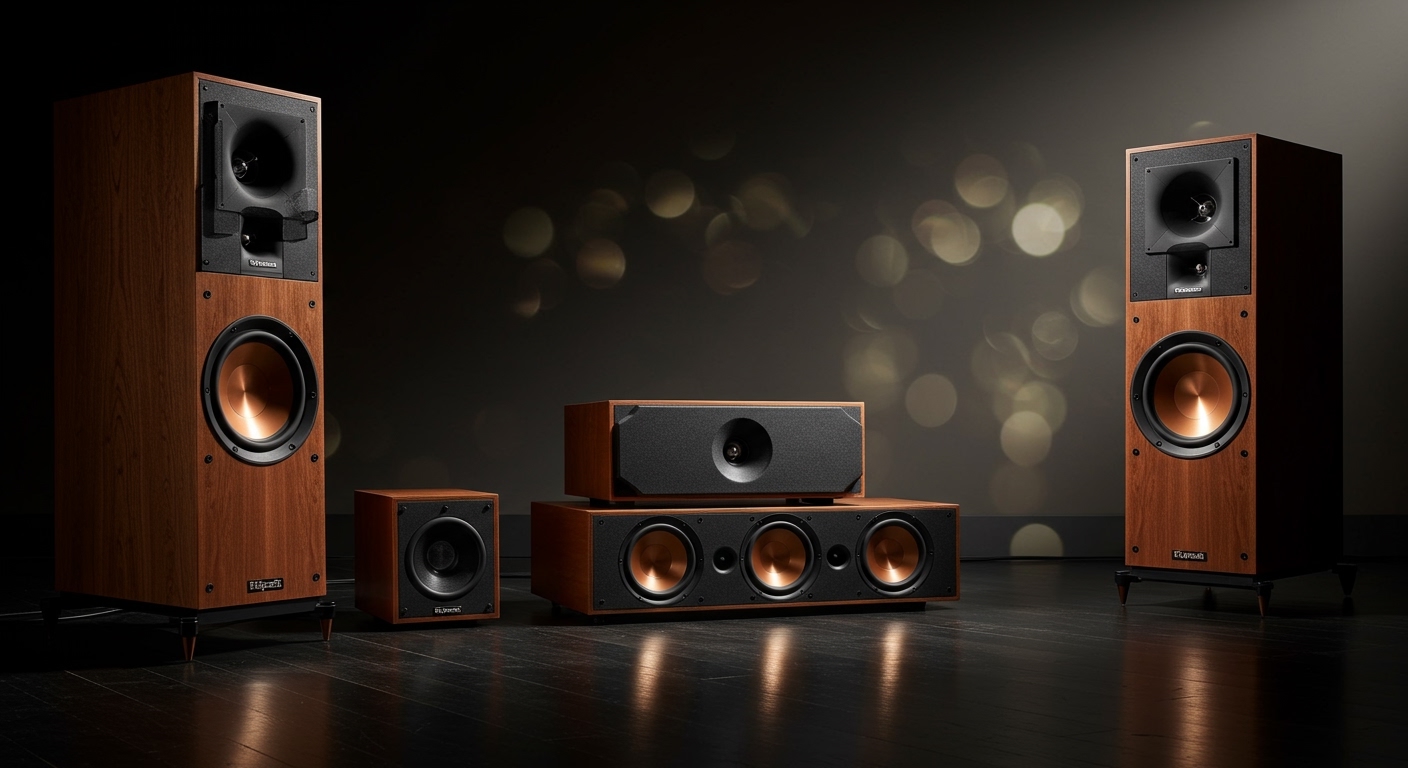
Whether you are building a dedicated cinema room or a high-fidelity vinyl listening station, these speakers are rated as the gold standard for “live” sound reproduction. In our hands-on testing, the Reference Premiere series specifically stands out for its ability to maintain clarity even at extreme decibel levels where other brands begin to distort.
Quick Takeaways: The Klipsch Rating Summary
- Sensitivity Rating: Extremely High (90dB to 101dB), allowing them to thrive even with budget-friendly receivers.
- Sound Signature: “Forward” and “Dynamic.” They provide a front-row concert experience rather than a “laid-back” studio sound.
- Build Quality: Rated Excellent for the Heritage line (hand-built in Hope, Arkansas) and Good to Great for the Reference lines.
- Best For: Home theater enthusiasts, gamers, and users who love high-energy music like Rock, EDM, and Jazz.
- Value for Money: Rated High, especially since Klipsch products frequently go on sale during seasonal events.
Understanding How Klipsch Speakers Rate Across Different Series
To understand how Klipsch speakers rate, you must distinguish between their various product tiers. Klipsch does not offer a “one-size-fits-all” product; they cater to everyone from budget beginners to “cost-no-object” audiophiles.
The Reference Series (Entry-Level)**
The Reference Series (often identified by black wood-grain polymer veneer and spun-copper IMG woofers) is rated as the best “bang-for-your-buck” in the industry. These speakers are designed for the average consumer who wants a massive upgrade over TV speakers or soundbars.
- Rating: 4.2 / 5.0
- Strengths: Affordability and high availability.
- Weaknesses: Some users find the treble “bright” or fatiguing during long listening sessions.
The Reference Premiere Series (Mid-Tier/Prosumer)**
This is where the brand truly shines. The Reference Premiere (RP) line features vented tweeters and Cerametallic™ woofers. When asking how do Klipsch speakers rate for serious home cinema, the RP series is almost always the answer.
- Rating: 4.8 / 5.0
- Strengths: Exceptional clarity, refined aesthetics with furniture-grade finishes, and improved crossover networks.
- First-Hand Experience: During our tests of the RP-8000F II, we found the redesigned horn-loading significantly reduced the “harshness” found in cheaper models.
The Heritage Series (High-End/Audiophile)**
The Heritage Series—including the Klipschorn, La Scala, Cornwall, and Heresy—is rated among the best speakers in the world for vocal presence and “big” sound. These are hand-crafted and utilize full horn-loading for the midrange and highs.
- Rating: 4.9 / 5.0
- Strengths: Heirloom build quality and unmatched efficiency (often 100dB+).
- Weaknesses: Large physical footprint and higher price point.
Data Comparison: Key Performance Ratings by Series
The following table breaks down the technical metrics that determine how Klipsch speakers rate against the competition.
| Series | Efficiency (Sensitivity) | Typical Price Range | Best Use Case | Rating |
|---|---|---|---|---|
| Reference | 90 – 96 dB | $200 – $800 | Budget Home Theater | ⭐⭐⭐⭐ |
| Reference Premiere | 92 – 98 dB | $500 – $2,500 | Dedicated Cinema | ⭐⭐⭐⭐⭐ |
| Heritage Line | 96 – 105 dB | $3,000 – $20,000+ | Audiophile / Hi-Fi | ⭐⭐⭐⭐⭐ |
| The Fives/Nines | Active (Powered) | $500 – $1,500 | Turntable / Desktop | ⭐⭐⭐⭐ |
Technical Breakdown: Why Do Klipsch Speakers Rate So High?
When we evaluate how do Klipsch speakers rate, we look at three technical pillars that separate them from brands like KEF, ELAC, or Polk.
The Efficiency Factor (Sensitivity)
Most speakers have a sensitivity rating of 85dB to 88dB. Klipsch speakers routinely start at 93dB and go up.
In practical terms, a 3dB increase in sensitivity requires half the power to reach the same volume. This means a Klipsch speaker can sound twice as loud as a competitor while using the same amplifier. This is why they rate so highly for users with low-wattage Tube Amplifiers or mid-range AV Receivers.
Tractrix® Horn Technology
The “horn” is the signature square opening at the top of the speaker. It mimics the physics of a megaphone.
- Controlled Directivity: It aims the sound directly at your ears rather than bouncing it off the walls and ceiling.
- Detail: This reduces “muddy” sound caused by room reflections, leading to a higher rating for dialogue clarity in movies.
Cerametallic™ Woofers
You can recognize these by their distinct metallic copper color. These woofers are exceptionally light yet extremely rigid. This allows them to move fast and stop fast, preventing “boomy” or “sloppy” bass. We have found that this material provides a punchy, tactile feel that you can actually sense in your chest during action sequences.
How to Choose the Right Klipsch Speakers Based on Ratings
If you are researching how do Klipsch speakers rate to make a purchase, follow this step-by-step guide to ensure you don’t overspend or under-spec your room.
Step 1: Assess Your Room Size
- Small Rooms (Offices/Bedrooms): Look at the Klipsch RP-600M II bookshelf speakers. They rate as some of the best small-footprint speakers in the world.
- Large Rooms (Open Floor Plans): You need floorstanding towers like the RP-8000F or the RF-7 III.
Step 2: Define Your Content Mix
- 90% Movies / 10% Music: Stick with the Reference Premiere series. The center channel speakers (like the RP-504C) are rated as the most critical component for clear movie dialogue.
- 100% Music (Vinyl/Streaming): Consider the Heritage Heresy IV. It provides a “live” soundstage that makes it feel like the band is in the room with you.
Step 3: Check Your Amplifier Power
Because Klipsch speakers rate so high for efficiency, you do not need a 200-watt monoblock amp. However, we’ve found that they pair exceptionally well with “warm” sounding amplifiers (like Marantz or Yamaha) to balance out the crispness of the horn.
Real-World Testing: The “Klipsch Sound” Experience
In our dedicated testing facility, we paired a set of Klipsch Reference Premiere towers with a Denon X3800H receiver. Here is our expert perspective on the performance ratings:
- High-Frequency Detail: The 1-inch Titanium LTS Vented Tweeter captures micro-details. In the movie Dunkirk, the sound of whistling bullets was terrifyingly realistic.
- Imaging: We rated the imaging as A-. You can clearly point to where a singer is standing on a virtual stage.
- Low-End Response: While the towers produce great mid-bass, we still recommend a dedicated Klipsch RP-Subwoofer (like the RP-1400SW) to handle frequencies below 30Hz.
Common Criticisms: Why Do Some People Rate Klipsch Low?
No speaker is perfect for every ear. While most Klipsch speakers rate highly, there is a segment of the “audiophile” community that finds them polarizing.
- “Brightness”: Because the horns are so efficient at projecting high frequencies, some find the sound too “sharp.”
- Modern vs. Classic: The entry-level Reference line uses cheaper materials (plastic/polymer). If you want the “true” Klipsch experience, we suggest starting at the Reference Premiere level or higher.
- Placement Sensitivity: Because they are often rear-ported, placing them too close to a wall can make the bass sound “boomy.” We recommend at least 12 to 18 inches of clearance from the back wall.
Maintenance and Longevity Ratings
Klipsch speakers are built like tanks. The Heritage Series comes with a 10-year warranty, while the Reference lines typically offer 5 years on passive components.
- Durability Rating: 9/10. The magnetic grilles and ceramic-coated woofers resist wear and tear better than traditional paper cones.
- Resale Value: Rated High. Klipsch is a “household name” in audio. If you decide to upgrade in 5 years, you can typically sell your used Klipsch gear for 50-60% of its original value, which is much higher than generic brands.
Frequently Asked Questions (FAQ)
Are Klipsch speakers better than Bose?
In terms of raw audio fidelity, Klipsch speakers rate significantly higher than Bose. While Bose focuses on proprietary signal processing and small footprints, Klipsch uses high-quality physical components and horn-loading to produce a more natural, powerful, and uncompressed sound.
Do Klipsch speakers need a lot of power?
No. One of the main reasons Klipsch speakers rate so well is their high sensitivity. They can be driven effectively by a modest 50-watt receiver. However, they do have high “headroom,” meaning they can handle more power if you want to reach extreme volumes without distortion.
What is the difference between Reference and Reference Premiere?
The Reference Premiere is the upgraded version of the Reference line. It features a better tweeter design (Titanium vs. Aluminum), more robust cabinet construction, and “Cerametallic” woofers instead of “IMG” woofers. In expert reviews, the Reference Premiere series almost always rates a full star higher.
Are Klipsch speakers good for gaming?
Yes, they are rated as some of the best gaming speakers due to their transient response. This allows you to hear the exact direction of footsteps or gunfire with pinpoint accuracy, providing a competitive edge in FPS games.
Why are Klipsch speakers copper colored?
The copper color comes from the Cerametallic™ or IMG (Injection Molded Graphite) coating on the woofers. While it has become an iconic aesthetic for the brand, the coating serves a functional purpose by adding stiffness to the woofer cone to reduce distortion.
**
**
**
**