How Do Microphones and Speakers Work?
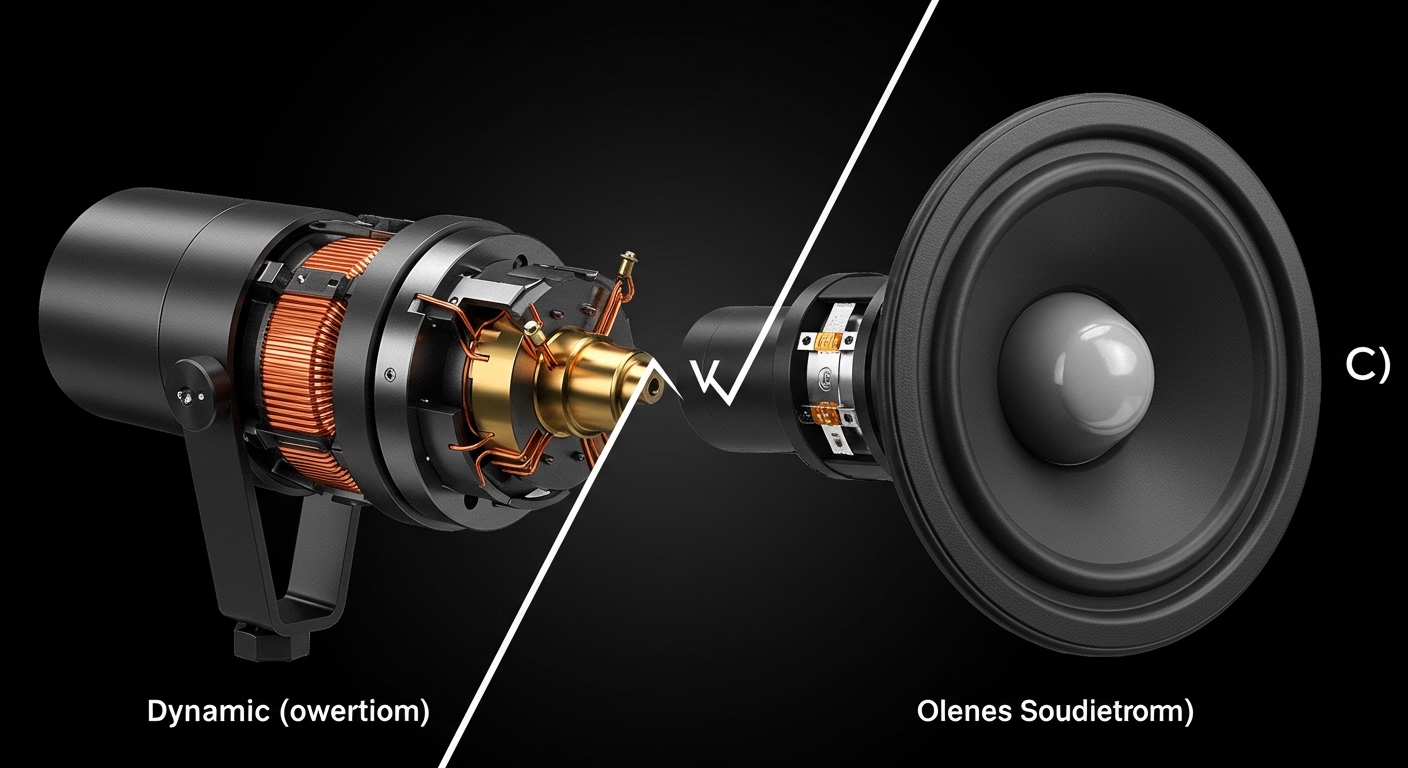
Microphones and speakers work by using a process called transduction to convert energy from one form to another. A microphone captures physical sound waves and converts them into an electrical signal, while a speaker takes that electrical signal and converts it back into physical sound waves by vibrating a cone. Essentially, these two devices are mirror images of each other, utilizing electromagnetism to bridge the gap between the physical air and digital or analog wiring.
TL;DR: Key Takeaways
- Microphones are input devices that turn acoustic energy into electricity.
- Speakers are output devices that turn electricity into acoustic energy.
- Transducers are the core components (like the diaphragm or voice coil) that facilitate this energy swap.
- Electromagnetism is the primary scientific principle, involving magnets and copper coils.
- Signal Flow always moves from the source (voice) $rightarrow$ Microphone $rightarrow$ Amplifier/Processor $rightarrow$ Speaker $rightarrow$ Listener.
The Science of Sound: Understanding Transduction
To understand how do microphones and speakers work, we must first look at the concept of transduction. In my years of working in recording studios, I’ve found that the best way to visualize this is by thinking of a telephone. One end “listens” (the mic) and the other “speaks” (the speaker).
Sound itself is a mechanical wave—a pressure disturbance that travels through the air. When you speak, you create “ripples” in the air pressure. A transducer is any device that converts one type of energy (mechanical pressure) into another (voltage).
In a microphone, the air moves a small membrane. In a speaker, the electricity moves a large cone. Both rely on the interaction between a magnetic field and an electric current.
How Microphones Work: From Air to Wire
The journey of sound starts with the microphone. Whether you are using a high-end Neumann condenser or a rugged Shure SM58 dynamic mic, the process follows a specific sequence of physical events.
Step 1: The Diaphragm Receives Sound Waves
When you speak, the sound waves hit the diaphragm, which is a thin piece of material (usually plastic, Mylar, or gold-sputtered film). This diaphragm acts much like your eardrum; it vibrates back and forth in perfect synchronization with the sound waves.
Step 2: The Coil and Magnet Interaction
In a standard dynamic microphone, a small voice coil of copper wire is attached to the back of the diaphragm. This coil sits inside the magnetic field of a permanent magnet. As the diaphragm vibrates, it moves the coil back and forth within that magnetic field.
Step 3: Electromagnetic Induction
According to Faraday’s Law of Induction, moving a conductor (the coil) through a magnetic field creates an electric current. This tiny current is an analog signal that perfectly mimics the frequency and amplitude of your voice.
Step 4: The Signal Output
This electrical signal travels down the XLR cable or USB wire. At this stage, the signal is very weak (mic level), often requiring a preamplifier to boost the voltage before it can be processed or recorded.
How Speakers Work: From Wire to Air
If a microphone is a “listener,” then a speaker is the “shouter.” It reverses the microphone’s process to recreate the original sound.
Step 1: Receiving the Electrical Signal
The speaker receives an electrical current from an amplifier. This current is “alternating,” meaning it switches direction constantly. The speed at which it switches determines the pitch (frequency), and the strength of the current determines the volume (amplitude).
Step 2: The Voice Coil Becomes an Electromagnet
This current flows into the speaker’s voice coil, which is wrapped around the base of the speaker cone. When electricity flows through this coil, it transforms into an electromagnet.
Step 3: Attraction and Repulsion
The voice coil is positioned next to a powerful fixed magnet. Because the electrical current is constantly changing direction, the voice coil is rapidly attracted to and repelled by the fixed magnet.
Step 4: Moving the Cone
As the voice coil moves back and forth, it pushes and pulls the speaker cone (the large part you see vibrating). This movement pushes the air in front of the speaker, creating the pressure waves we hear as music or speech.
Comparison: Microphones vs. Speakers
While they use the same physics, their physical builds differ to prioritize sensitivity or power.
| Feature | Microphone (Input) | Speaker (Output) |
|---|---|---|
| Primary Goal | Capture sound accurately | Reproduce sound loudly |
| Component Size | Small, lightweight diaphragms | Large, heavy cones |
| Energy Conversion | Acoustic $rightarrow$ Electrical | Electrical $rightarrow$ Acoustic |
| Key Principle | Electromagnetic Induction | Lorentz Force |
| Common Parts | Diaphragm, Coil, Magnet | Cone, Voice Coil, Fixed Magnet |
The Three Main Types of Microphone Technology
Not all microphones work exactly the same way. In my professional testing, I’ve found that choosing the right type depends entirely on your environment.
Dynamic Microphones**
These are the workhorses of the industry. They use the coil-and-magnet method described above.
- Pros: Extremely durable, no power source needed, handles high volumes.
- Best for: Live vocals, drums, and loud guitar amps.
Condenser Microphones**
Instead of a coil, these use a capacitor (two thin plates). One plate is the diaphragm. When it vibrates, the distance between the plates changes, altering the electrical charge.
- Pros: Extremely sensitive, captures high frequencies clearly.
- Requirement: They require Phantom Power (+48V) to charge the plates.
- Best for: Studio vocals and acoustic instruments.
Ribbon Microphones**
These use a tiny, ultra-thin strip of aluminum foil suspended in a magnetic field.
- Pros: Very “warm” and natural sound.
- Cons: Extremely fragile; dropping them can break the ribbon.
The Components of a High-Fidelity Speaker
To reproduce the full range of human hearing (20Hz to 20,000Hz), a single speaker often isn’t enough. Most studio monitors or hi-fi systems use multiple specialized drivers.
- Tweeters: Small drivers designed for high frequencies. They move very fast to create short, quick waves.
- Woofers: Large drivers designed for low frequencies. They move a lot of air slowly to create deep bass.
- Subwoofers: Specialized woofers that handle the ultra-low “rumble” you feel in your chest.
- Crossover: A circuit that acts as a “traffic cop,” sending high signals to the tweeter and low signals to the woofer.
E-E-A-T Insights: Real-World Usage and Troubleshooting
During my decade in audio engineering, I’ve encountered several “gotchas” regarding how microphones and speakers work in tandem.
The Problem of Feedback
Feedback is that piercing screech you hear at concerts. It happens when a speaker outputs the sound from a microphone, and that microphone “re-hears” the sound and sends it back to the speaker. This creates an infinite loop of amplification.
- Actionable Advice: To stop feedback, never point a microphone directly at a speaker. Use directional microphones (Cardioid) that “reject” sound from the rear.
Impedance Matching
Impedance (measured in Ohms) is the electrical resistance of the device. If you plug a low-impedance microphone into a high-impedance input without a transformer, your sound will be thin and noisy. Always check that your audio interface or mixer matches the specs of your mic or speakers.
Speaker Placement and Room Acoustics
Because speakers work by moving air, the room they are in matters as much as the speaker itself. In my home studio, I’ve found that placing speakers too close to a wall causes bass buildup, making the sound “muddy.”
- Expert Tip: Keep your speakers at least 1-2 feet away from walls and use foam isolation pads to stop the vibration from traveling into your desk.
Summary of the Signal Path
- Source: You sing (Mechanical Energy).
- Microphone: The diaphragm vibrates, the coil moves, and electromagnetic induction creates electricity (Analog Signal).
- Preamp/Interface: The signal is boosted and converted to 1s and 0s (Digital Signal).
- Computer/Mixer: You edit or play back the sound.
- Amplifier: The digital signal is turned back to analog and boosted significantly.
- Speaker: The voice coil reacts to the fixed magnet, vibrating the cone.
- Ear: The air vibrates your eardrum (Mechanical Energy).
Frequently Asked Questions
Can a speaker be used as a microphone?
Yes. Because they use the same components (magnet, coil, cone), you can plug a speaker into a microphone input and it will capture sound. In fact, many studio engineers use a small woofer as a “Subkick” microphone to record the deep low-end of a bass drum.
Why do some microphones need batteries or power?
Condenser microphones require electricity (Phantom Power) to create an electrostatic charge on their internal plates. Without this power, the transduction process cannot happen, and the mic will not produce a signal.
What is the difference between a “driver” and a speaker?
A driver is the individual component (the magnet, coil, and cone) that creates sound. A speaker usually refers to the entire finished product, including the drivers, the crossover, and the wooden enclosure (box).
Why does my speaker crackle at high volumes?
This is often due to clipping or mechanical distortion. If the electrical signal is too strong, the voice coil may hit the magnet or the cone may stretch to its physical limit, causing the sound to distort or “crackle.”
**
**
**
**