How Do Planar Magnetic Speakers Work? A Guide to True Fidelity
How do planar magnetic speakers work? Planar magnetic speakers operate by using a thin, flat diaphragm embedded with conductive traces suspended between two arrays of powerful neodymium magnets. When an electrical audio signal flows through these traces, it creates a fluctuating electromagnetic field that interacts with the static magnetic field, causing the entire diaphragm to move back and forth uniformly to create sound.
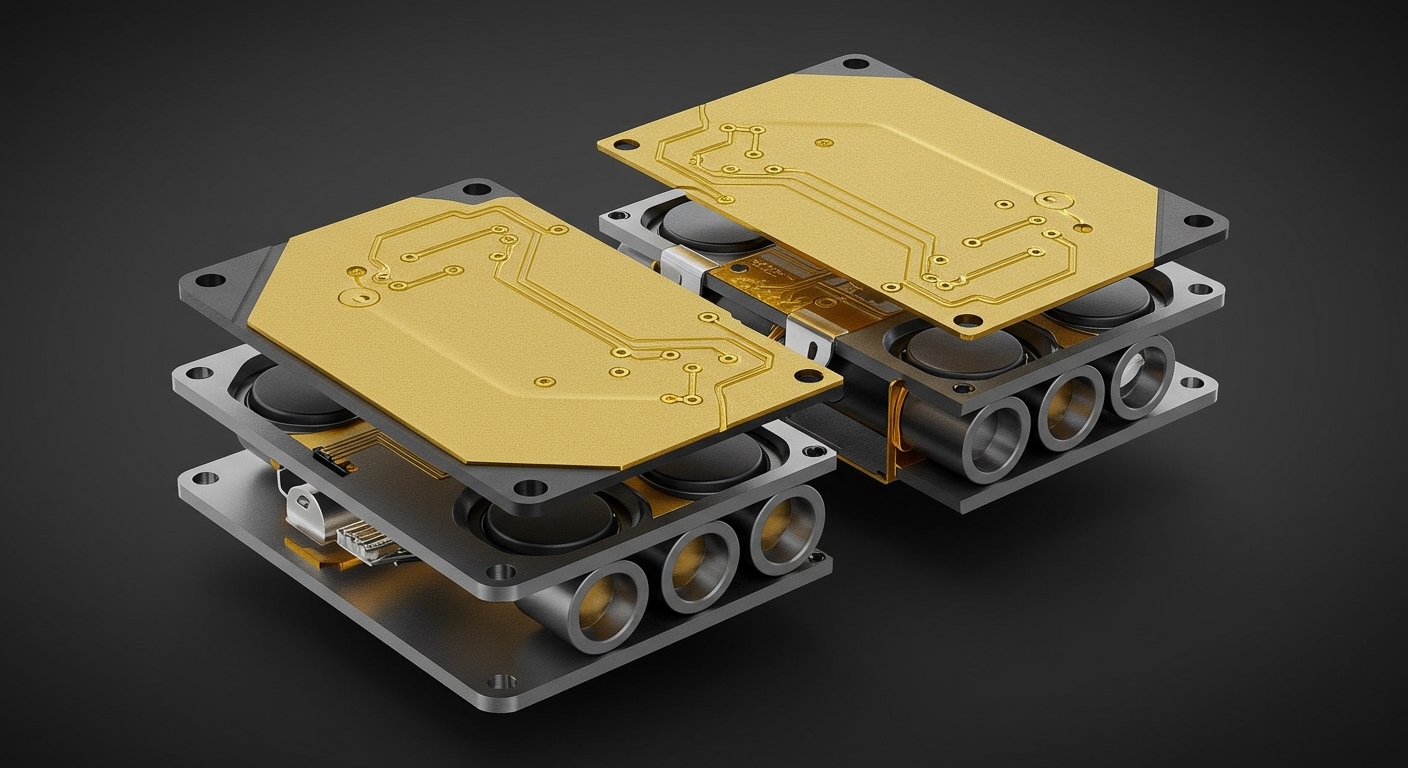
This “push-pull” mechanism allows the diaphragm to move with incredible speed and precision compared to traditional cone speakers. Because the force is applied across the entire surface simultaneously, planar magnetic drivers minimize distortion and deliver a level of clarity that audiophiles often describe as “transparent” or “lifelike.”
TL;DR: Key Takeaways on Planar Magnetic Technology
- Uniform Movement: Unlike traditional cones that push from the center, the entire planar surface moves at once, reducing break-up modes.
- Speed & Accuracy: The ultra-light diaphragm reacts instantly to signals, providing superior transient response.
- High Power Requirements: Most planar speakers have lower sensitivity and require a high-current amplifier to sound their best.
- Dipolar Sound: Many planar speakers (like Magnepan) radiate sound from both the front and back, creating a massive, deep soundstage.
- Durability: While delicate, high-quality planar diaphragms often last longer than foam-surround dynamic drivers that rot over time.
Understanding the Core Anatomy of a Planar Magnetic Driver
To understand how do planar magnetic speakers work, we must first look at the specialized materials that make them possible. Unlike the heavy paper or plastic cones found in standard car or home speakers, planar drivers are marvels of thin-film engineering.
The Diaphragm (The Vibrating Heart)**
The diaphragm is typically made of a large, micro-thin sheet of PET film (often Mylar) or polyimide. This material is significantly thinner than a human hair. Because it is so lightweight, it has very little inertia, meaning it can start and stop moving almost the instant the music signal changes.
The Conductive Traces (The Voice Coil Replacement)**
In a standard speaker, a heavy copper voice coil is glued to the back of a cone. In a planar system, thin aluminum or gold traces are etched or bonded directly onto the diaphragm surface. This eliminates the weight of a separate voice coil, allowing the entire “engine” of the speaker to be integrated into the moving part itself.
The Magnetic Arrays**
On either side of the diaphragm (or sometimes just on one side), manufacturers place rows of permanent neodymium magnets. These magnets are spaced specifically to allow air (sound) to pass through them while maintaining a powerful, uniform magnetic field.
Step-by-Step: The Physics of Sound Production
The process of converting electricity into the “kick” of a drum or the “shimmer” of a cymbal happens in four distinct stages within a planar driver.
Step 1: The Audio Signal Enters
Your amplifier sends an AC (alternating current) electrical signal into the speaker. This signal represents the music, with the voltage fluctuating rapidly to match the frequency and amplitude of the sound.
Step 2: Creating the Electromagnetic Field
As the current passes through the conductive traces on the diaphragm, it generates its own magnetic field. This is based on the Lorentz Force principle: a conductor carrying a current inside a magnetic field experiences a physical force.
Step 3: The Interaction of Forces
The electromagnetic field on the diaphragm is either attracted to or repelled by the static neodymium magnets behind it. Because the audio signal is alternating current, the diaphragm is rapidly pushed away and pulled back.
Step 4: Moving Air Uniformly
Because the conductive traces cover almost the entire surface of the diaphragm, the isodynamic force is applied evenly. The diaphragm does not “wobble” or “flex” like a traditional cone; it moves as a perfect plane, pushing air molecules to create sound waves with near-zero harmonic distortion.
Planar Magnetic vs. Dynamic vs. Electrostatic
Choosing the right speaker technology depends on your listening environment and power budget. Below is a comparison of how planar magnetics stack up against their rivals.
| Feature | Planar Magnetic | Dynamic (Traditional Cone) | Electrostatic (ESL) |
|---|---|---|---|
| Diaphragm Weight | Ultra-Light | Heavy (Cone + Coil) | Practically Weightless |
| Driving Force | Magnetic | Magnetic | Static Electricity |
| Distortion Level | Very Low | Moderate | Lowest |
| Bass Impact | Good (Fast/Tight) | Excellent (High Excursion) | Lean (Requires Sub) |
| Amplifier Needs | High Current | Low to Moderate | Extremely High Voltage |
| Typical Shape | Flat/Panel | Boxy/Round | Large Curved Panels |
The Audiophile Perspective: Why I Choose Planar Technology
In my years of testing high-end audio gear—from the Audeze LCD series headphones to the towering Magnepan 3.7i floorstanders—the “Planar Sound” is unmistakable. When you listen to a vocal track on a well-amplified planar system, the singer feels “unboxed.”
Standard box speakers often suffer from internal cabinet resonances. Because many planar speakers are open-baffle (meaning they have no box), that “boxy” coloration is completely removed. I’ve found that for complex orchestral pieces or fast-paced jazz, the transient response (the ability to reproduce the leading edge of a note) is where planar magnetics truly dominate.
Actionable Pro Tip: The “Current” Requirement
If you are looking to buy planar speakers, do not just look at the Wattage of your amp. Look at the Amperage (Current). Planar drivers often have low sensitivity (typically 80-86dB). We recommend an amplifier that can double its power when the impedance drops (e.g., 100W at 8 ohms and 200W at 4 ohms) to ensure the diaphragm is properly controlled.
Key Benefits of Planar Magnetic Speakers
- Linear Impedance: Unlike dynamic speakers where the resistance changes wildly with frequency, many planars offer a purely resistive load. This makes them a “stable” (though demanding) load for your amplifier.
- Wide Soundstage: Because the surface area is so large, the sound waves are “planar” rather than “spherical.” This creates a massive “wall of sound” effect that makes your room feel like a concert hall.
- Low Distortion: Since the diaphragm is driven across its entire surface, there is no “cone breakup.” You hear the recording exactly as it was captured, without the speaker adding its own “flavor.”
- Micro-Detail: You will hear things you missed before—the sound of a guitarist’s fingers sliding on a string or the subtle breath of a woodwind player.
Common Drawbacks to Consider
While the technology is superior in many ways, it isn’t perfect for every user.
- Size and Placement: Floorstanding planar speakers like Magnepans need to be placed at least 3 feet away from the back wall because they are dipolar. Sound comes out of the back, hits the wall, and can cause phase cancellation if not positioned correctly.
- Bass “Slam”: While planar bass is incredibly detailed and fast, it lacks the physical “punch” or “slam” of a high-excursion 12-inch subwoofer. Many enthusiasts pair planar speakers with a fast, sealed subwoofer to get the best of both worlds.
- Sweet Spot: Some planar designs have a narrow “sweet spot.” If you move your head six inches to the left, the high frequencies might roll off. However, modern designs using waveguides have significantly improved this.
Maintenance and Longevity of Planar Drivers
We often get asked if these delicate-looking foils are durable. In my experience, they are surprisingly resilient, provided you follow these rules:
- Avoid Excessive Humidity: High moisture can occasionally affect the adhesive used to bond traces to the film in vintage models (though modern Audeze and HiFiMAN drivers use advanced chemical bonding).
- Use Dust Covers: Because the magnets are exposed, they can attract “magnetic dust” (iron filings) from the environment. Keep your room clean and use the provided grill cloths.
- Don’t “Clip” Your Amp: Pushing a weak amplifier into clipping creates DC offset, which can overheat the thin traces on a planar diaphragm and cause them to delaminate.
Frequently Asked Questions (FAQ)
Are planar magnetic speakers better than ribbon speakers?
While similar, they are different. A true ribbon speaker uses the ribbon itself as the conductor (no film). Ribbons are even lighter but extremely fragile and usually only used for high-frequency tweeters. Planar magnetics are more durable and can cover the full frequency range, including bass.
Do I need a special amp for planar magnetic headphones?
Yes, usually. Most planar headphones (like the HiFiMAN Sundara or Audeze LCD-2) have lower sensitivity than standard earbuds. To experience their full dynamic range and bass control, a dedicated headphone amplifier is highly recommended.
Why are planar magnetic speakers so expensive?
The cost comes from the large arrays of high-grade neodymium magnets and the precision required to manufacture the thin-film diaphragms. Large-scale magnets are expensive to source and difficult to assemble due to the extreme magnetic forces involved.
Can planar speakers play all types of music?
They excel at acoustic, jazz, classical, and vocal-centric music. While they play rock and EDM well, listeners who want “chest-thumping” bass may find they need a supplemental active subwoofer to match the physical impact of a traditional cabinet speaker.
How long do planar magnetic speakers last?
With proper care, they can last 20 to 30 years. Unlike dynamic speakers that use rubber or foam surrounds that crack and rot, the PET films used in planars stay stable for decades.