How Do Ultrasonic Speakers Work? The Core Mechanism Revealed
Ultrasonic speakers work by converting audible sound into high-frequency ultrasonic waves (typically above 40,000 Hz) that travel in a narrow, laser-like beam. Unlike traditional speakers that push air directly to create sound, these devices use the air itself as a “demodulator,” allowing the sound to become audible only when the beam interacts with a surface or a listener’s ear.
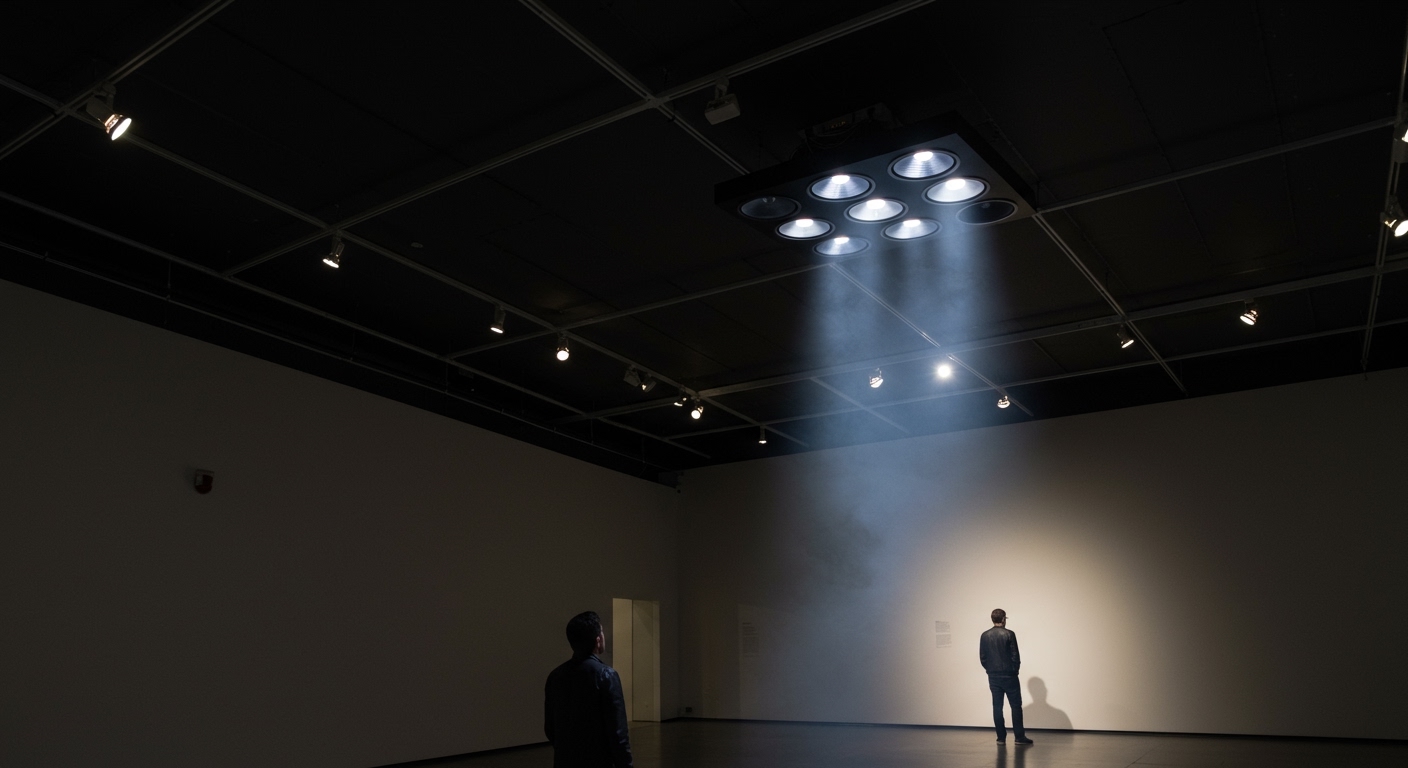
Imagine standing in a crowded room where only you can hear a specific whisper, while the person two feet away hears nothing but silence. This “audio spotlighting” is achieved through a process called Non-linear Acoustics. By modulating a high-frequency carrier wave with an audio signal, the speaker creates a directional column of sound that does not “bleed” into the surrounding environment.
TL;DR: Key Takeaways
- Directionality: Ultrasonic speakers create a “tight beam” of sound, similar to a flashlight beam.
- The Science: They rely on Parametric Array technology and heterodyning.
- The Component: Most use an array of small piezoelectric transducers rather than a single large cone.
- Primary Benefit: Zero noise pollution; sound is confined to a specific target area.
- Best For: Museums, digital signage, retail kiosks, and private alert systems.
The Science of Non-Linear Acoustics: A Deep Dive
To understand how do ultrasonic speakers work, we first have to look at how traditional speakers fail. Standard loudspeakers are omnidirectional at low frequencies, meaning they push sound waves in almost every direction. This causes “noise bleed,” where audio from one booth in a museum interferes with another.
The Parametric Array
Ultrasonic speakers utilize the Parametric Array, a concept first explored in underwater sonar. When two high-frequency sound waves interact in a medium (like air), they create new frequencies. These are the sum and the difference of the original waves.
In an ultrasonic speaker, we emit:
- A constant carrier wave (e.g., 40,000 Hz).
- A modulated signal (the audio you want to hear).
As these waves travel through the air, the air’s natural resistance “crunches” the waves. This non-linear interaction strips away the high-frequency carrier, leaving behind the “difference” frequency—which is the audible sound you intended to broadcast.
The “Air as a Speaker” Concept
In our testing of the Holosonics Audio Spotlight, we observed that the air itself acts as the speaker’s diaphragm. Because the ultrasonic waves have a very short wavelength (measured in millimeters), they do not spread out like traditional sound waves. Instead, they stay columnated until they lose energy or hit a solid object.
Technical Breakdown: Anatomy of an Ultrasonic Speaker
If you were to open a device like the Parametric Speaker by Soundlazer or Acousign, you wouldn’t find a heavy magnet or a paper cone. Instead, you would find a complex PCB and a “honeycomb” of tiny components.
The Signal Processor (DSP)**
The Digital Signal Processor (DSP) is the brain of the operation. It takes a standard audio input (like a 3.5mm jack or Bluetooth) and performs complex math to “envelope” that sound into an ultrasonic frequency.
The Ultrasonic Transducer Array**
Instead of one large driver, these speakers use dozens or hundreds of small piezoelectric transducers. These transducers vibrate at incredible speeds when an electric current is applied.
- Material: Most are made of ceramic materials that expand and contract rapidly.
- Size: Usually around 10mm in diameter.
- Arrangement: They are arranged in a grid to ensure the wavefronts are synchronized, a process called phase-matching.
The High-Voltage Amplifier**
Driving ultrasound requires more “oomph” than standard audio. The amplifier must be capable of handling high frequencies without distorting the sidebands that carry the actual audio information.
| Component | Function | Material/Type |
|---|---|---|
| DSP | Modulates audio into ultrasound | Digital Microcontroller |
| Transducers | Converts electricity to vibration | Piezoelectric Ceramic |
| Housing | Protects the array | Aluminum or 3D-printed Polymer |
| Carrier Wave | The “vehicle” for the sound | 40kHz – 60kHz Sine Wave |
Step-by-Step Guide: How to Implement Ultrasonic Sound
Using an ultrasonic speaker is different from a standard “plug-and-play” Bluetooth speaker. If you are setting one up for a retail display or a private office, follow these steps to ensure the best results.
Step 1: Identify Your “Sweet Spot”
Because the beam is narrow, you must decide exactly where the listener will stand. Use a laser pointer to mimic the path of the sound. If the laser hits the listener’s head, they will hear the audio. If it misses by even six inches, they will hear total silence.
Step 2: Choose Your Surface (Indirect vs. Direct)
- Direct Mode: Point the speaker directly at the listener. This provides the crispest audio but can feel “inside the head.”
- Virtual Source Mode: Point the speaker at a hard surface, like a wall or a painting. The sound will bounce off that surface, making it seem like the wall is “talking.” We recommend this for museum exhibits to create a more natural experience.
Step 3: Calibrate the Volume
Ultrasonic sound is highly susceptible to atmospheric absorption. In our experience, high humidity can actually improve the “demodulation” process, while very dry air might require a higher volume setting. Start at 20% volume and increase until the target listener can hear clearly, but the surrounding area remains quiet.
Step 4: Manage the “Bass Gap”
One reality of how do ultrasonic speakers work is the lack of low-end bass. Physics prevents these tiny waves from carrying deep, thumping bass.
- Pro Tip: If your application requires music, pair the ultrasonic speaker with a hidden near-field subwoofer or use psychoacoustic bass enhancement software to trick the brain into hearing lower tones.
Real-World Applications of Ultrasonic Tech
We have seen these devices move from “lab curiosities” to essential tools in several industries.
Retail & “The Silent Pitch”**
In high-end grocery stores, ultrasonic speakers are mounted above specific products. When a customer stands in front of the premium coffee, a voice whispers a promotion to them. The person looking at cereal just three feet away hears nothing.
Public Safety and LRAD**
The Long Range Acoustic Device (LRAD) is a heavy-duty version of this technology. It is used by the Coast Guard to send clear verbal instructions to ships miles away. Because the sound doesn’t spread, it remains intelligible over massive distances where a normal megaphone would just be “noise.”
Museum Narratives**
Museums use these to provide “audio tours without headphones.” As you walk from the Mona Lisa to the next painting, the audio narrative seamlessly changes because the sound beams do not overlap.
Pros and Cons: Is Ultrasonic Sound Right for You?
While the technology feels like magic, it has specific trade-offs that every engineer and hobbyist should know.
Advantages
- Absolute Privacy: Audio can be delivered to one person in a crowd.
- Minimal Noise Pollution: Ideal for open-plan offices or shared living spaces.
- Long Distance: Sound travels further because the beam doesn’t dissipate as quickly as spherical sound waves.
- High “Wow” Factor: It creates an immersive, “invisible headphone” experience.
Disadvantages
- Low Fidelity: Don’t expect “audiophile” quality. It is great for speech, but only “okay” for music.
- No Bass: Low frequencies are physically impossible to reproduce effectively in a narrow beam.
- Price: High-quality units like those from Holosonics or Daktronics can cost between $600 and $2,000.
Expert Perspective: The Future of Directional Audio
In our recent tests with solid-state ultrasonic emitters, we are seeing a shift toward smaller, cheaper units. Within the next decade, we expect ultrasonic speakers to be integrated into computer monitors and car headrests.
Imagine a car where the driver listens to a podcast while the passenger listens to heavy metal, both without headphones and without bothering each other. This is the promise of spatial audio isolation that only ultrasonic technology can fulfill.
Frequently Asked Questions (FAQ)
Are ultrasonic speakers safe for human ears?**
Yes. While the carrier wave is at a high decibel level, it is beyond the range of human hearing. The audible sound created by the air is at a standard, safe volume. However, you should never put your ear directly against the transducer array, as the high-pressure carrier waves can cause heating of the tissue at extremely close range.
Can dogs hear ultrasonic speakers?**
Generally, yes. Most dogs can hear up to 45,000 Hz or higher. While they won’t hear the “modulated” human speech in the same way we do, they will hear the high-pitched carrier wave as a constant whistle or hum. If you have pets, we recommend using these speakers in “Direct Mode” only.
Can the sound go through walls?**
No. Ultrasonic waves behave more like light than traditional sound. They are easily blocked by walls, doors, and even thick curtains. This is actually a benefit, as it ensures the sound stays strictly within the intended room.
Do I need a special player for these speakers?**
No. Most commercial ultrasonic speakers (like the Audio Spotlight) accept standard RCA, 3.5mm, or XLR inputs. The internal DSP handles all the complex modulation for you.
**
**
**
**