

Understanding the Reality: How Hard is Danish for English Speakers?
If you are wondering how hard is danish for english speakers, the answer is a paradoxical “very easy to read, but challenging to speak.” According to the Foreign Service Institute (FSI), Danish is a Category I language, meaning it is among the easiest for English speakers to learn, requiring roughly 600-750 class hours to reach proficiency. While the grammar is surprisingly simple and shares thousands of cognates with English, the phonetic system—featuring the infamous “potato in the mouth” sound—presents a unique hurdle for many learners.
### Expert Summary: Key Takeaways Linguistic Proximity: Danish is a Germanic language, meaning is danish easy for english speakers to read? Yes, because of high lexical similarity. Grammar Simplicity: Danish grammar is often simpler than English, with no verb conjugation by person or number. The Pronunciation Wall: The biggest challenge is the “Stød” (glottal stop) and the “Blødt D” (soft D), which make listening comprehension difficult initially. Time Investment: Expect to spend about 24-30 weeks of intensive study to reach professional working fluency.
Step 1: Deconstruct the Danish Phonetic System
The most common reason people ask is danish hard for english speakers is the pronunciation. Unlike Spanish or German, Danish is not a phonetic language; how a word looks is rarely how it sounds.
Master the Vowels
Danish has one of the largest vowel inventories in the world. While English has about 20 vowel sounds, Danish can have up to 40 distinct vowel sounds depending on the dialect.
Æ (ae): Sounds like the ‘e’ in “bet.”
Ø (oe): Sounds like the ‘u’ in “burn” or the French ‘eu.’
Å (aa): Sounds like the ‘o’ in “fort.”
Conquer the “Soft D” (Blødt D)
The Blødt D is the ultimate test of how hard is danish to learn for english speakers. It is not a “D” or a “th” sound. It is produced by placing the tip of your tongue behind your lower teeth and making a vowel-like resonance.
Understand the “Stød”
The Stød is a glottal squeeze or a “creaky voice” that distinguishes words that otherwise sound identical. It is a subtle catch in the throat that takes months of active listening to identify.
Step 2: Leverage English-Danish Cognates
When asking is danish easy for english speakers to learn, look no further than your own vocabulary. Both languages are Germanic, meaning you already know thousands of words before you even start.
| English Word | Danish Word | Similarity Level |
|---|---|---|
| House | Hus | High |
| Green | Grøn | High |
| School | Skole | High |
| Problem | Problem | Identical |
| Apple | Æble | High |
Expert Tip: Focus on SVO (Subject-Verb-Object) patterns. Danish follows this same structure in main clauses, making basic sentence construction feel very natural to an English brain.
Step 3: Master the “V2 Rule” and Genders
While grammar is generally easy, two specific areas require focused attention. If you’ve wondered is danish hard to learn for german speakers, they often find these parts easier because German shares the same logic.
The V2 Rule
In Danish, the finite verb must always be the second element in a declarative sentence.
English: “Today I am going to the store.”
Danish: “I dag går jeg i butikken” (Today go I to the store).
Noun Genders
Danish has two genders: Common (En) and Neuter (Et). Unlike German, which has three, Danish is simpler. However, there are no consistent rules for which noun belongs to which gender. You must memorize the article with the noun (e.g., en kat, et hus).
Step 4: Utilize High-Efficiency Learning Tools
To overcome the barrier of how hard is danish for english speakers, you need tools that focus on audio-visual recognition.
| Tool Name | Best For | Cost |
|---|---|---|
| Duolingo | Vocabulary & Basic Syntax | Free / Premium |
| Babbel | Practical Conversations | Subscription |
| Pimsleur | Mastering Pronunciation | Subscription |
| DR.dk | Immersion (News/TV) | Free |
| Sprogskole | Official Government Classes | Free (for residents) |
Step 5: Implement the “Immersion First” Strategy
Danes are world-class English speakers (often ranking in the top 3 globally for non-native proficiency). This makes it difficult to practice because they will often switch to English the moment they hear you struggle.
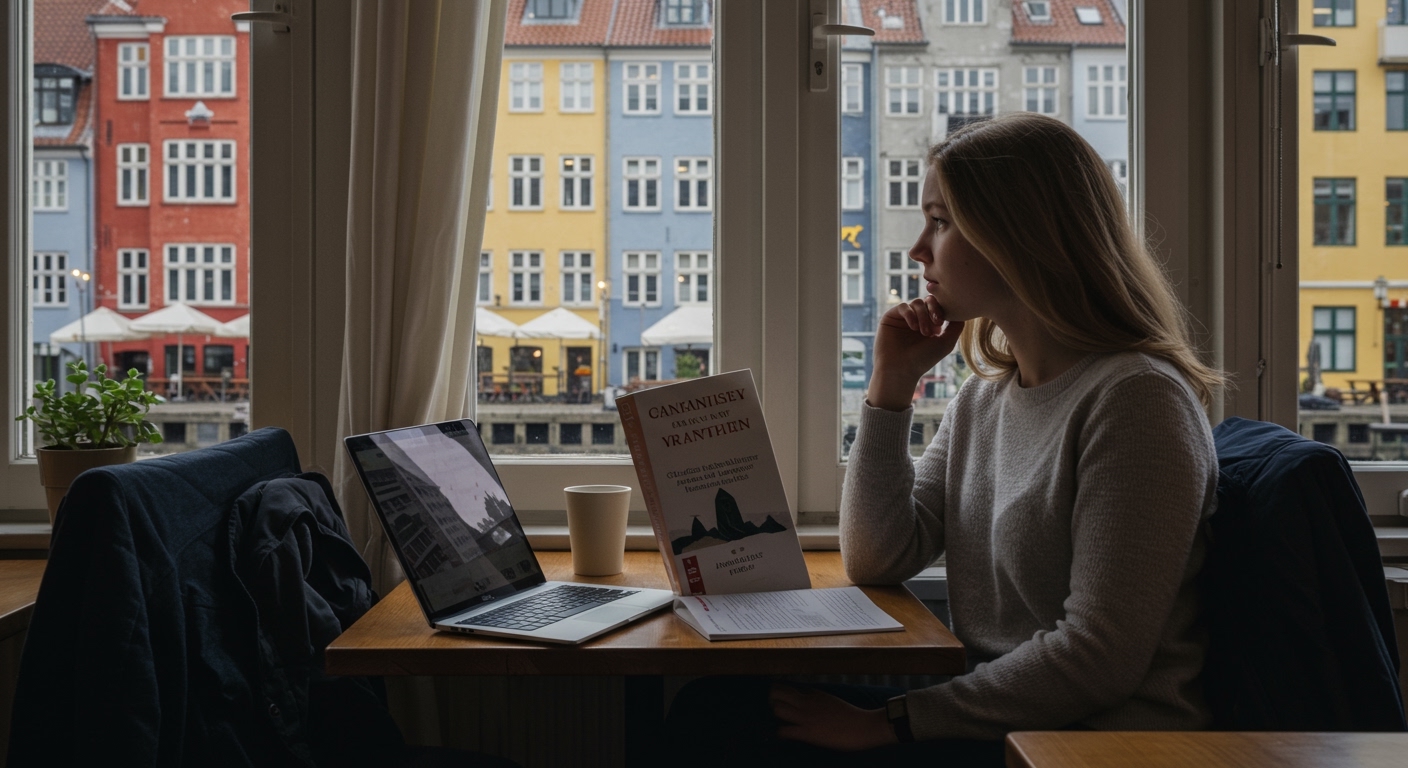
- Consume Danish Media: Watch “Borgen” or “The Bridge” with Danish subtitles. This helps bridge the gap between written and spoken Danish.
- Listen to Podcasts: Try “Danskerbakke” or “Radio4” to get used to the natural cadence of the language.
- The “No-English” Rule: When in Denmark, politely ask: “Må vi tale dansk? Jeg prøver at lære” (Can we speak Danish? I am trying to learn).
Pro Tips for Rapid Progress
Don’t over-pronounce: Danish is a “mumbled” language. If you try to enunciate every letter like you do in English, you won’t be understood.
Learn the fillers: Words like “jo,” “vel,” and “nok” are used constantly to add nuance to sentences. Mastering these makes you sound like a native.
Focus on the 1,000 most common words: 80% of daily Danish conversation uses a very limited vocabulary.
Ignore the spelling: Focus on how words sound in clusters rather than individual letters.
Common Mistakes to Avoid
Pronouncing the final ‘r’: In Danish, the final ‘r’ often turns the preceding vowel into a deep, throaty sound rather than being a distinct consonant.
Using English ‘D’: Using a hard ‘D’ in words like “mad” (food) will make you sound foreign. Practice the “soft D” daily.
Overcomplicating Verbs: Do not try to conjugate verbs for “I,” “You,” or “They.” In Danish, the verb stays the same for everyone (e.g., Jeg er, Du er, Vi er).
FAQs: Your Danish Learning Questions Answered
Is danish hard to learn for english speakers reddit users often suggest?
The consensus on platforms like Reddit is that Danish is easy to read but very hard to understand aurally. Many learners complain about the “monotone” nature of the language and the lack of phonetic consistency. However, most agree that if you can push past the first three months of listening “fog,” the language opens up quickly.
Is danish hard to learn for german speakers?
Generally, no. Is danish hard to learn for german speakers is a common question because both are Germanic. German speakers have a massive advantage with vocabulary and the V2 word order. The main challenge for Germans is the lack of cases (Danish has no Der/Die/Das/Den cases) and the much softer pronunciation compared to German’s staccato sounds.
Is danish difficult to learn for english speakers compared to Swedish or Norwegian?
Danish is often considered the most difficult of the three Scandinavian languages for English speakers. While the grammar is nearly identical to Norwegian and Swedish, the pronunciation is significantly more complex. Norwegian is often cited as the easiest because its pronunciation is much more phonetic and “sing-songy.”
How long does it take to become fluent in Danish?
If you study for 1 hour a day, you can reach a conversational level in about one year. If you are living in Denmark and attending Sprogskole (Danish language school) full-time, you can achieve B2 level proficiency in 6 to 9 months.
Conclusion: Is the Effort Worth It?
So, how hard is danish for english speakers? It is a challenge of the ear, not the brain. The grammar is a gift, the vocabulary is familiar, but the sounds require a complete rewiring of your vocal cords.
By following a structured path—focusing on vowels first, leveraging cognates, and insisting on speaking even when Danes switch to English—you can master this beautiful, minimalist language. Start today by listening to Danish news and mimicking the sounds. Held og lykke! (Good luck!)
Ready to start your journey? Check out our guide on the best Danish language apps for 2024 or sign up for a trial with a native tutor to perfect your “Soft D” today!
