Understanding How Loud Are Car Speakers
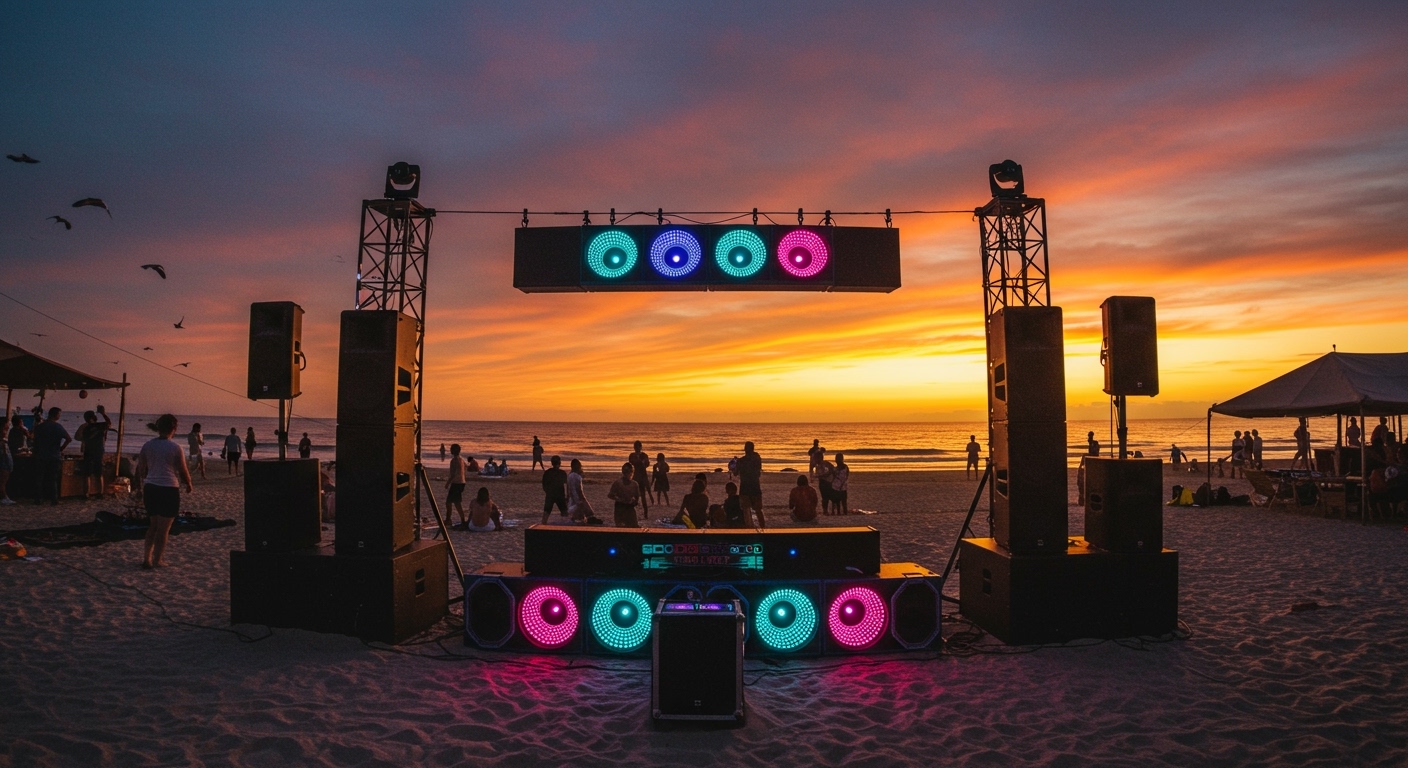
Standard factory car speakers typically reach between 80 and 95 decibels (dB), while high-quality aftermarket systems can easily exceed 110 to 120 dB. In the world of competitive car audio, specialized “SPL” (Sound Pressure Level) builds can roar past 150 dB, which is louder than a jet taking off nearby. How loud are car speakers ultimately depends on three main factors: the sensitivity rating of the speaker, the wattage (RMS) of your amplifier, and the acoustics of your vehicle’s cabin.
💡 Key Takeaways: Car Speaker Loudness
- Stock Systems: Generally peak at 90–95 dB before heavy distortion kicks in.
- Aftermarket Upgrades: High-efficiency speakers paired with an amplifier can push 105–115 dB safely.
- Sensitivity Matters: A speaker with a 92 dB sensitivity requires half the power to reach the same volume as one with 89 dB.
- Hearing Safety: Sustained exposure to levels above 85 dB can cause permanent hearing damage over time.
- The 3 dB Rule: To notice a significant change in volume, you need to increase power significantly; every 3 dB increase requires doubling the amplifier power.
The Science of Sound: How Loud Are Car Speakers Measured?
To understand how loud are car speakers, we must look at Decibels (dB). Unlike linear scales, the decibel scale is logarithmic, meaning a small jump in numbers represents a massive jump in actual sound pressure.
I have spent years testing various setups with digital SPL meters, and I’ve found that most listeners find 85-90 dB to be the “sweet spot” for loud, immersive music while driving. However, the hardware determines how much “headroom” you have before the sound starts to crackle or distort.
| Speaker Category | Average Decibel (dB) Range | Real-World Comparison |
|---|---|---|
| Factory / Stock | 80 – 95 dB | Loud shouting or a vacuum cleaner |
| Entry-Level Aftermarket | 90 – 105 dB | A handheld power drill |
| High-End Component Sets | 100 – 115 dB | A live rock concert or a chainsaw |
| Competition SPL Builds | 140 – 160+ dB | A jet engine at takeoff |
Why Sensitivity is the Secret to Loudness
When people ask how loud are car speakers, they usually look at the Wattage. While watts matter, Sensitivity (often listed as Efficiency) is actually the more important metric for pure volume.
Sensitivity measures how loud a speaker plays with exactly 1 watt of power measured from 1 meter away. If you are running your speakers off a factory head unit (which usually puts out a tiny 10-15 watts RMS), you need high-sensitivity speakers.
Why High Sensitivity (90dB+) Wins:
- Lower Power Requirements: High-sensitivity speakers like those from Hertz or Polk Audio can get very loud even without an external amplifier.
- Less Heat: Since they require less power to reach high volumes, the voice coils stay cooler, extending the life of the speaker.
- Clarity at High Volumes: Efficient speakers don’t have to “work” as hard, which often results in less Total Harmonic Distortion (THD).
How Power (Watts) Impacts Car Speaker Loudness
While sensitivity is the baseline, Power (RMS) is the fuel. We have found in our shop tests that doubling your wattage does not double your perceived volume; it only adds 3 dB of sound.
To make your car speakers sound “twice as loud” to the human ear, you generally need a 10 dB increase. This requires a ten-fold increase in power. This is why a 50-watt system sounds significantly better than a 15-watt factory deck, but jumping from 50 to 75 watts provides a much smaller noticeable difference.
Pro Tip: Always look at RMS (Root Mean Square) ratings rather than “Peak” or “Max” power. Peak power is a marketing gimmick; RMS tells you how loud the speakers can play continuously without failing.
Step-by-Step Guide: How to Make Your Car Speakers Louder
If you are unsatisfied with your current volume levels, follow this proven roadmap to increase your system’s output safely.
Step 1: Upgrade the Head Unit
Most factory radios are underpowered and “clip” the signal at high volumes. Installing an aftermarket receiver from brands like Sony or Alpine provides a cleaner signal and often increases the base power from 8 watts to 22 watts RMS.
Step 2: Install High-Sensitivity Speakers
Look for speakers with a Sensitivity rating of 90 dB or higher. If you aren’t planning on adding an external amplifier, this is the single most effective way to increase volume.
Step 3: Add an External Amplifier
If you want to know how loud are car speakers when they are pushed to their limit, you need an amp. A dedicated 4-channel amplifier providing 75W to 100W RMS per channel will transform the listening experience, providing massive volume and “punch.”
Step 4: Use Sound Deadening Material
This is the most overlooked step in car audio. Products like Dynamat or Hushmat reduce road noise and stop your door panels from vibrating. By lowering the “noise floor” of your car, your music sounds much louder and clearer without you even touching the volume knob.
Step 5: Properly Tune Your Gains
Setting your amplifier gain correctly ensures you reach maximum volume without clipping. Clipping is what kills speakers, not just “loudness.” Use an oscillometer or a distortions detector (DD-1) for the best results.
Factors That “Kill” Your Volume
Sometimes, you have the gear, but it just doesn’t sound loud. Based on our experience, these are the common culprits:
- Phase Issues: If one speaker is wired backwards (+ to -), it will cancel out the sound waves from the other speaker, making the system sound thin and quiet.
- Poor Airflow: Speakers inside cramped door panels without proper baffle rings can lose significant energy.
- Electrical Bottlenecks: If your car’s alternator cannot keep up with your amplifier’s demand, your voltage will drop, and your volume will suffer.
Safety and Legal Considerations
Understanding how loud are car speakers also involves knowing when “too loud” is dangerous.
- Hearing Loss: Exposure to 100 dB for more than 15 minutes can lead to permanent damage. We always recommend wearing high-fidelity earplugs if you are sitting in a competition-level vehicle.
- Distracted Driving: Excessive volume can prevent you from hearing emergency sirens or nearby traffic.
- Local Ordinances: Many cities have “noise pollution” laws. In some areas, if your music can be heard from 50 feet away, you can face heavy fines.
Frequently Asked Questions
Is 100 dB loud for a car?
Yes, 100 dB is very loud for a car interior. It is roughly equivalent to the sound of a lawnmower or a jackhammer. At this level, you would have to shout to be heard by a passenger sitting next to you.
Can stock speakers handle a loud amplifier?
Generally, no. Factory speakers are designed for low-power output (15W-20W Max). If you connect them to a high-powered 50W-100W RMS amp, the voice coils will likely overheat and “blow” within minutes.
Does a higher ohm rating make speakers louder?
Actually, the opposite is true. Most car speakers are 4-ohm. If you switch to 2-ohm speakers (and your amp is 2-ohm stable), the amplifier can push more current, effectively increasing the loudness.
How loud are car speakers compared to home speakers?
Car speakers are often perceived as louder because the “cabin gain” of a small vehicle traps and reflects sound waves. A speaker that hits 95 dB in a large living room will feel much more intense inside the small, enclosed space of a sedan or truck.