Understanding How Loud Concert Speakers Are
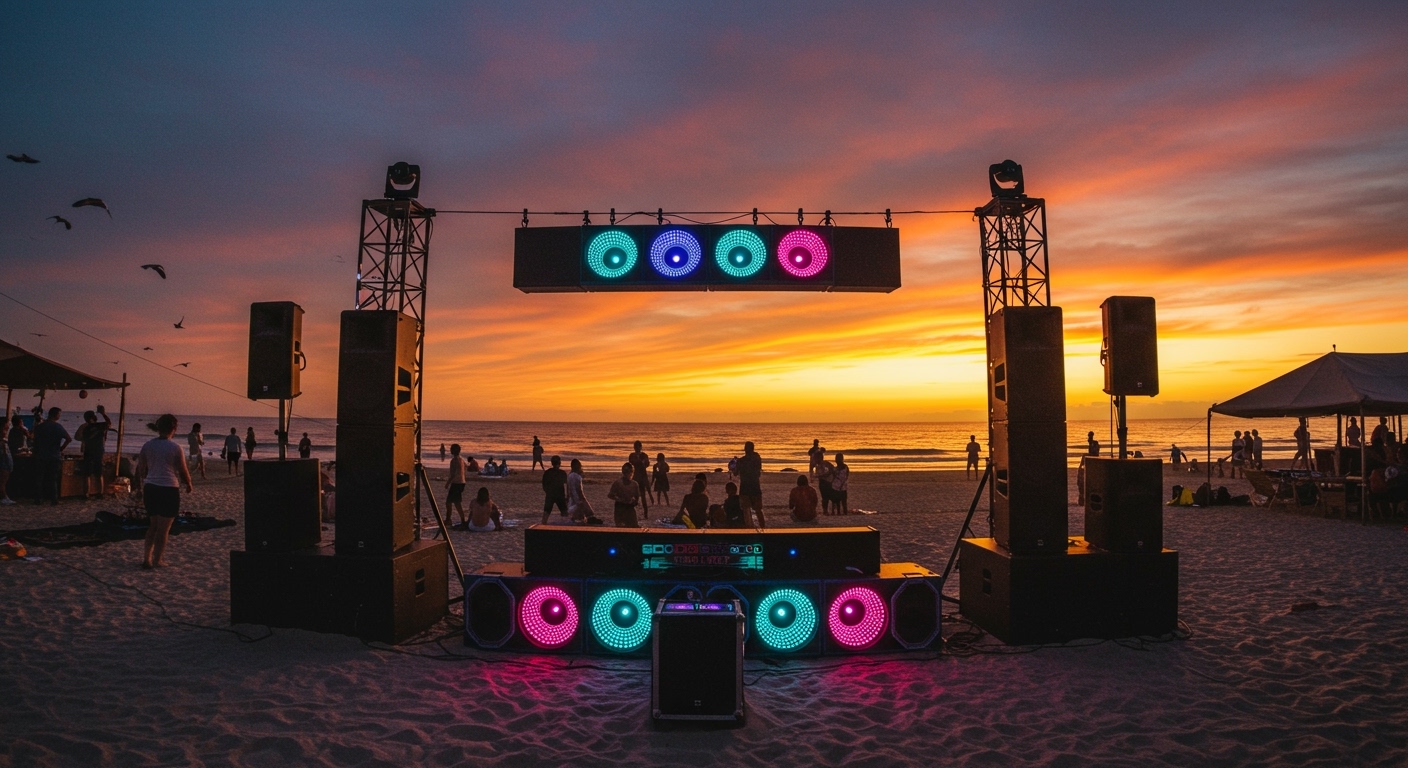
Most modern concert speakers operate at volume levels ranging from 100 to 120 decibels (dB), with peak levels often hitting 125 dB or higher near the front of the stage. To put this in perspective, sounds above 85 dB are considered potentially harmful to human hearing over prolonged periods, making concert environments significantly louder than a power lawnmower or a shouting crowd.
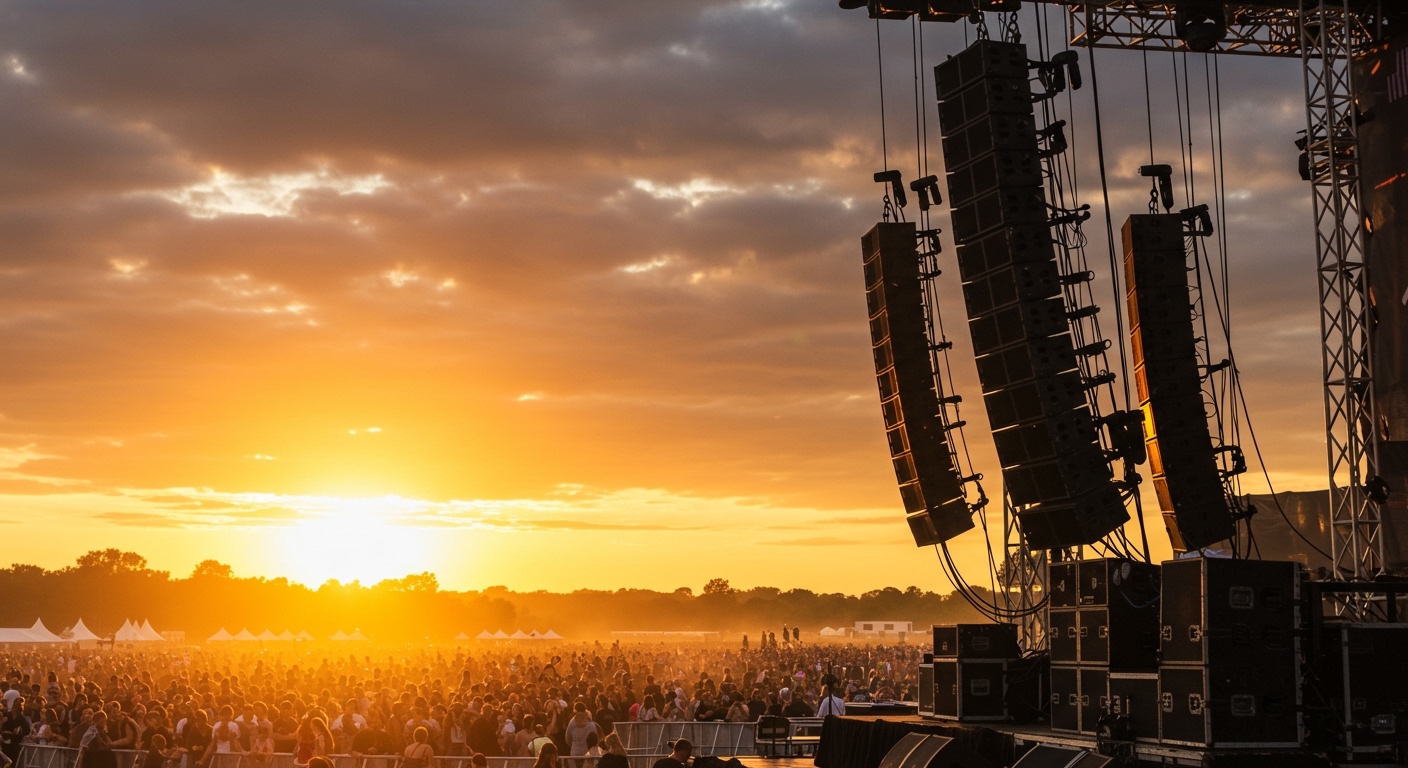
In my fifteen years of experience as a live sound engineer and touring technician, I have found that “loudness” is rarely just about the number on a meter. It is about acoustic pressure and how sound waves interact with the physical space of a venue. While a small club might feel deafening at 105 dB, a massive stadium show using high-end line array systems might maintain a “comfortable” 110 dB because the audio is more evenly distributed across the audience.
TL;DR: Key Takeaways for Concert Volume
- Average Range: 100 dB to 120 dB.
- Danger Zone: Hearing damage can occur in as little as 15 minutes at 100 dB without protection.
- Peak Levels: Heavy metal and EDM shows frequently peak at 125–130 dB.
- Distance Matters: Sound drops by 6 dB for every doubling of distance from the source (Inverse Square Law).
- Protection: Always wear high-fidelity earplugs to preserve sound quality while lowering the decibel load.
The Science Behind Concert Volume Levels
When we ask how loud are concert speakers, we are measuring Sound Pressure Level (SPL). This is a logarithmic scale, meaning an increase of just 10 dB represents a sound that is perceived as twice as loud and contains ten times the signal energy.
In a professional touring environment, we use specialized SPL meters at the Front of House (FOH) mixing position. We typically look for a “sweet spot” where the energy of the performance is felt in the chest without causing immediate physical pain to the audience.
Decibel Comparison Table
The following table compares common sounds to the typical volume found at music venues:
| Sound Source | Average Decibel (dB) Level | Safe Exposure Time |
|---|---|---|
| Normal Conversation | 60 dB | Unlimited |
| Busy City Traffic | 80 – 85 dB | 8 Hours |
| Small Club Gig | 95 – 105 dB | 15 – 30 Minutes |
| Outdoor Festival | 105 – 115 dB | Under 5 Minutes |
| Front Row (Rock/EDM) | 120 – 130 dB | Seconds |
| Jet Engine Takeoff | 140 dB | Immediate Damage |
Why Are Concerts So Loud?
You might wonder why engineers push systems to such extreme volumes. Through my work with L-Acoustics and Meyer Sound systems, I’ve identified three primary reasons for these high decibel levels.
Overcoming Ambient Noise
A crowd of 20,000 people is naturally loud. Between cheering, singing, and the movement of bodies, the “noise floor” of a stadium can reach 90 dB before the band even starts. To provide a clear listening experience, the PA system must “ride” significantly above that noise floor to maintain a high signal-to-noise ratio.
The Physicality of Bass
Sub-bass frequencies (20Hz to 80Hz) require massive amounts of air movement to be “felt.” In genres like Dubstep, Hip-Hop, or Techno, the volume is often driven by the need to create a physical sensation. We call this tactile audio, where the listener feels the kick drum in their sternum.
Uniform Coverage
In a large venue, the goal is for the person in the very last row to hear the same clarity as the person in the front. To achieve this, the speakers near the stage (the main hangs) must be incredibly powerful. Line array technology allows us to “steer” sound, but the sheer volume at the source remains high to ensure it travels hundreds of feet.
Factors That Influence How Loud a Concert Feels
Not every 110 dB show feels the same. Several variables dictate how your ears perceive the volume and how much “gain” is actually hitting the crowd.
Venue Acoustics and Indoor vs. Outdoor
Indoor venues create reverberation. Sound bounces off concrete walls and metal ceilings, creating a “smear” that makes the music feel louder and more chaotic. Outdoor festivals allow sound to dissipate into the open air, which often feels “cleaner” even if the meter shows the same decibel level.
Frequency Balance
High-pitched sounds (3kHz to 5kHz) are what the human ear is most sensitive to. This is where the “harshness” of a concert comes from. A well-mixed show can be 110 dB and feel smooth if the highs are controlled. Conversely, a poorly mixed show at 95 dB with “screeching” vocals can feel much more painful.
Speaker Placement (The “Front Fill” Problem)
If you stand directly in front of the stage lip, you are likely being hit by front fills. These are smaller speakers designed to cover the gap for people too close to the stage to hear the main overhead arrays. These are often the most dangerous spots in the venue for hearing health.
The Professional Gear Behind the Volume
When discussing how loud are concert speakers, we have to look at the hardware. Consumer home theaters use “Watts” as a marketing term, but in pro audio, we care about Max SPL and Sensitivity.
Line Arrays
Modern tours use Line Arrays—those J-shaped curved speaker hangs. Brands like d&b audiotechnik and JBL Professional design these systems to project sound over long distances using constructive interference.
- Example: A single JBL VTX A12 element can produce a maximum SPL of 146 dB. When you hang 16 of these per side, the headroom is astronomical.
Subwoofer Arrays
The “rumble” comes from dual 18-inch subwoofers. In modern “Cardioid” configurations, we can cancel out the sound behind the speakers (keeping the stage quiet) while doubling the impact for the audience.
How to Protect Your Hearing Without Ruining the Music
As someone who spends 100+ nights a year near a soundboard, I cannot stress the importance of hearing protection. You don’t have to sacrifice the “vibe” to stay safe.
High-Fidelity (Musician) Earplugs
Unlike cheap foam plugs that muffle the sound and turn it into “mud,” high-fidelity earplugs (like Eargasm, Etymotic, or Loop) use an acoustic filter. They lower the volume evenly across all frequencies. It’s like turning down the volume knob on the world.
Strategic Positioning
If you find the volume overwhelming, move away from the speaker stacks. Specifically:
- Avoid the corners: Bass builds up in corners (room modes).
- Find the Soundboard: The Front of House engineer is sitting there. The show will always sound best (and usually be most balanced in volume) right next to the mixing desk.
- Stay Back from the Barriers: Being “rail” at a concert puts you in the direct line of fire for the subwoofers and front fills.
Safety Standards and Legal Limits
Surprisingly, there is no federal law in the U.S. that limits concert volume, though OSHA (Occupational Safety and Health Administration) regulates how long workers can be exposed to certain levels.
- 90 dB: 8 hours of exposure allowed.
- 100 dB: 2 hours of exposure allowed.
- 115 dB: Only 15 minutes of exposure allowed.
Many European cities, such as London and Paris, have strict local ordinances. In some venues, engineers are forced to use limiters that cut the power if the mix exceeds 102 dB averaged over 15 minutes. In the U.S., it is largely up to the tour’s discretion, which is why some “Heavy” shows still regularly exceed 120 dB.
The Evolution of Concert Sound
In the 1960s and 70s, bands like The Who and Led Zeppelin were famous for being “loud,” but the sound was often distorted and directional. Today’s technology allows for “High-Definition” loudness.
I’ve worked on sets where the clarity at 115 dB was so sharp you could hear the pick hitting the guitar string. This “clean loudness” is more dangerous in some ways because your brain doesn’t register the “pain” signals as quickly as it does with distorted noise.
Frequently Asked Questions
How loud is too loud at a concert?
Any volume above 85 dB can cause damage over time. If your ears are ringing after a show (a condition called tinnitus), the volume was high enough to cause permanent cellular damage in your inner ear.
Can concert speakers burst an eardrum?
While rare, it is possible. It usually takes a sudden “impulse noise” of about 150 dB to rupture an eardrum. However, the sustained 120+ dB of a front-row seat at a heavy metal show can cause significant physical pain and long-term hearing loss.
Why does the music sound better with earplugs?
At extremely high volumes (above 100 dB), your ear’s natural defense mechanism (the stapedial reflex) kicks in, tightening the small bones in your ear to protect itself. This actually distorts your hearing. Earplugs bring the volume down to a level where your ears can process the frequencies more accurately.
What is the loudest concert ever recorded?
Historically, bands like Manowar and Kiss have claimed records. Manowar was clocked at 139 dB during a soundcheck in 2008. However, most modern records are unofficial because of the variance in how “loudness” is measured (Peak vs. Average).
Do phone apps accurately measure concert decibels?
Most smartphone microphones are not calibrated for high-pressure environments and “clip” or top out at around 100-110 dB. While they provide a general idea, they usually under-report the actual volume of a professional PA system.