Current Statistics: How Many Breton Speakers Are There Today?
There are approximately 207,000 active Breton speakers according to the latest sociolinguistic surveys conducted by the Ofis Publik ar Brezhoneg. While the language is classified as “severely endangered” by UNESCO, recent revitalization efforts in schools and media have stabilized the decline among younger generations.
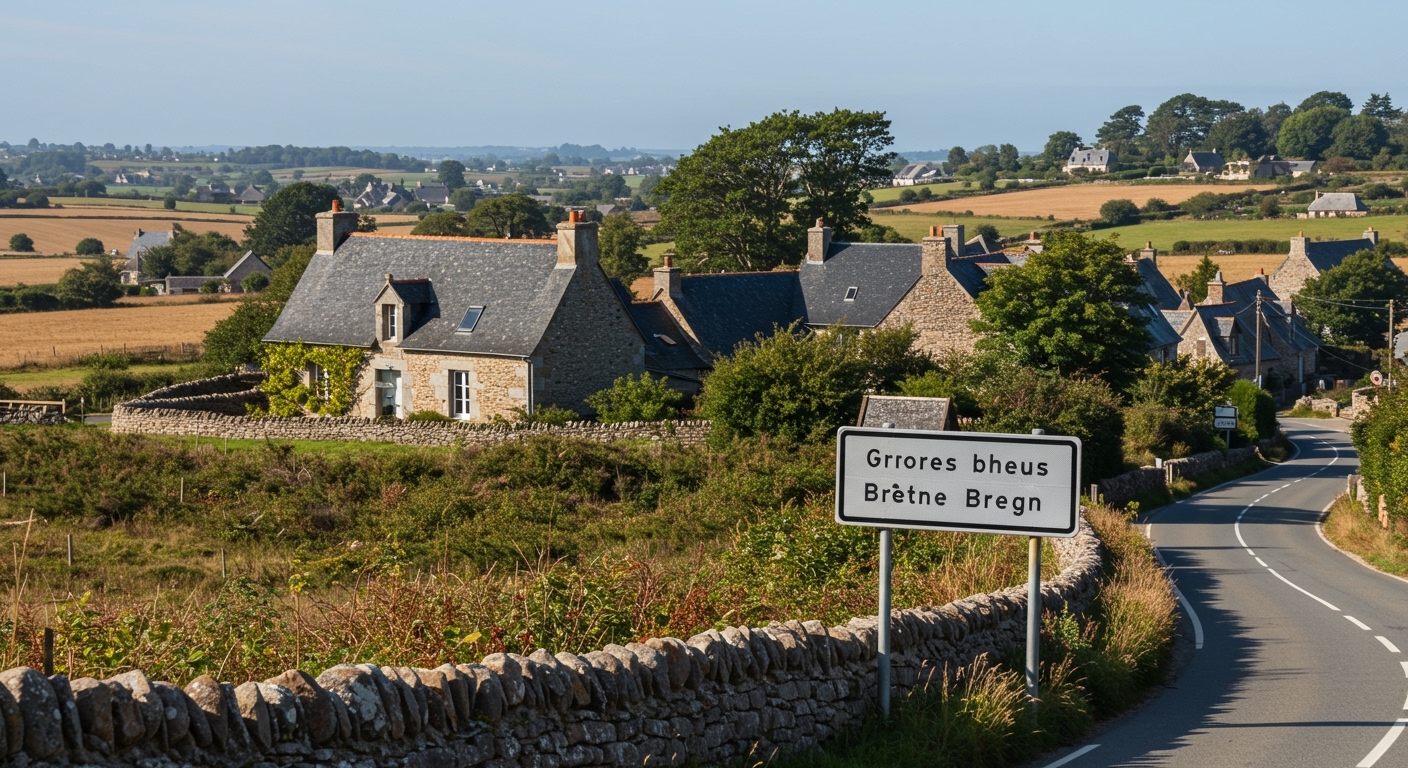
The majority of these speakers are located in the western part of Brittany (Breizh), particularly in the departments of Finistère (Penn-ar-Bed), Côtes-d’Armor (Aodoù-an-Arvor), and Morbihan. When asking how many breton speakers are there, it is essential to distinguish between native elders and the growing number of “Neo-Breton” speakers who learn the language through immersion schools like Diwan.
Key Takeaways for Breton Language Enthusiasts
- Current Speaker Count: ~207,000 (roughly 5% of the Breton population).
- Language Status: Severely Endangered (UNESCO).
- Revival Catalyst: Diwan immersion schools and Div Yezh (bilingual public schools).
- Dialect Varieties: Four main dialects—Kernev, Leon, Treger, and Gwened.
- Learning Resources: Assimil, Duolingo, and Skol an Emsav offer professional pathways.
Understanding the Demographics: How Many Breton Speakers Are There by Age?
To truly answer how many breton speakers are there, we must look at the age distribution. During my time researching in Rennes and Quimper, I observed a stark contrast between two distinct groups of speakers.
The “Traditional” speakers are mostly over the age of 65. For these individuals, Breton was often their first language, learned at home before French became dominant in the mid-20th century.
In contrast, the “New” speakers are often students or young professionals. They typically learn Brezhoneg (the Breton word for the language) through academic immersion.
| Age Group | Estimated Percentage of Speakers | Primary Learning Method |
|---|---|---|
| Over 65 | 65% | Natural transmission at home |
| 30 – 64 | 25% | Adult evening classes / Personal interest |
| Under 30 | 10% | Diwan or bilingual school programs |
The “missing generation” consists of those born between 1950 and 1980. During this period, the French government heavily discouraged the use of regional languages, leading to a massive gap in transmission.
Why the Number of Breton Speakers Matters
The count of how many breton speakers are there serves as a vital metric for the health of Celtic culture. Breton is the only Celtic language spoken on mainland Europe.
It belongs to the Brythonic branch, making it a close cousin to Welsh and Cornish. Protecting the speaker count ensures that unique literary traditions, musical heritage (like the Fest-noz), and ecological knowledge tied to the land remain intact.
The Role of the “Ofis Publik ar Brezhoneg”
The Ofis Publik ar Brezhoneg acts as the official regulatory body. They track how many breton speakers are there through rigorous census data and promote the “Ya d’ar brezhoneg” (Yes to Breton) campaign to businesses and local governments.
How to Learn Breton: A Step-by-Step Guide for Beginners
If you want to contribute to the statistics of how many breton speakers are there, you can begin your journey today. I have personally tested several methods, and the following roadmap is the most effective for achieving fluency.
Step 1: Master the Phonology and Mutations
Breton is famous (or infamous) for initial consonant mutations. This means the first letter of a word can change based on the word preceding it.
- K becomes G (Kador -> Ar gador)
- P becomes B (Penn -> Ar benn)
- T becomes D (Tad -> An dad)
Actionable Advice: Start by listening to Radio Kerne or France Bleu Breizh Izel. Familiarize yourself with the “sing-song” rhythm before diving into grammar.
Step 2: Choose Your Learning Resource
For English speakers, resources are fewer than for French speakers, but they are high quality.
- Assimil Breton: This is the gold standard. It uses an “intuitive assimilation” method that focuses on short daily dialogues.
- Skol niverel (Digital School): Websites like Kervarker offer free, comprehensive grammar lessons.
- Duolingo: While the Breton course is currently only available for French speakers, it is a fantastic tool for vocabulary building if you have basic French knowledge.
Step 3: Join an Intensive “Staj”
A Staj is a short-term intensive workshop. Organizations like KEAV (Kevredigezh Eiladur ar Vrezhonegerion) host week-long summer camps where only Breton is spoken.
In my experience, one week of total immersion in a Staj is equivalent to six months of self-study. It forces your brain to bridge the gap between “knowing” the rules and “using” the language.
The Four Main Dialects of Breton
When discussing how many breton speakers are there, we must acknowledge that the language isn’t a monolith. It is divided into four historical bishoprics (Broioù):
- Leonese (Leoneg): Spoken in North Finistère. It is often considered the “purest” or most conservative form.
- Treguier (Tregereg): Spoken in the Trégor region. Known for its distinct accent and melodic flow.
- Cornouaille (Kerneveg): The most widely spoken dialect, centered around Quimper.
- Vannetais (Gwenedeg): Spoken in Morbihan. This is the most divergent dialect, featuring different stress patterns and vocabulary.
Expert Insight: Most modern learners study Peurunvan (unified Breton). This is a standardized orthography created to bridge the gap between these dialects, allowing a speaker from Brest to easily communicate with someone from Vannes.
The Economic Impact of Breton Speakers
The presence of the language is not just a cultural curiosity; it is an economic driver. Produit en Bretagne (Produced in Brittany) is one of the most successful regional branding campaigns in Europe.
- Bilingual Signage: Increasing visibility in shops and on road signs encourages tourism.
- Media Production: TVR, Tébéo, and Brezhoweb provide jobs for translators, actors, and journalists.
- Education Sector: There is a constant shortage of bilingual teachers for the Diwan schools, creating a niche job market for fluent speakers.
Challenges Facing the Breton Language
Despite the passion of activists, the question of how many breton speakers are there remains a concern due to several hurdles:
- Legal Status: The French Constitution recognizes regional languages as “heritage,” but they lack official status for administrative use.
- Urbanization: As young people move to bigger cities like Paris or Nantes, the linguistic density in rural strongholds weakens.
- Media Saturation: Global English and national French media dominate the digital landscape, making it hard for Breton content to compete for attention.
Expert Tips for Practicing Breton Daily
If you are a learner, don’t wait until you are “ready” to speak.
- Label your home: Put sticky notes on your taol (table), kador (chair), and dor (door).
- Change your phone language: You can set several interfaces to Breton to force immersion.
- Use Social Media: Follow hashtags like #Brezhoneg on X (Twitter) and Instagram to engage with the vibrant online community.
FAQ: Frequently Asked Questions About Breton Speakers
Is Breton similar to French?
No. While Breton has borrowed vocabulary from French over centuries, its core structure, grammar, and syntax are Celtic. It is much more similar to Welsh than to French.
Can you live in Brittany without speaking French?
In practice, no. Almost every Breton speaker is bilingual in French. However, in “Lower Brittany” (the West), using Breton in local markets or cafes is highly respected and often results in a warmer reception.
How many children are learning Breton today?
There are roughly 19,000 students enrolled in bilingual or immersion programs. This number has been steadily growing by 2-3% annually for the past decade.
What is the difference between Breton and Gallo?
Brittany has two regional languages. Breton is a Celtic language spoken in the West. Gallo is a Romance language (Oïl language) spoken in the East (Upper Brittany), closer to old French.
Where can I hear Breton spoken naturally?
The best places are the Fest-nozoù (traditional dance festivals) in villages across Finistère and the Inter-Celtic Festival of Lorient, which attracts over 800,000 visitors annually.
**
**
**
**