How Many Frisian Speakers Are There? Current Population and Dialect Stats
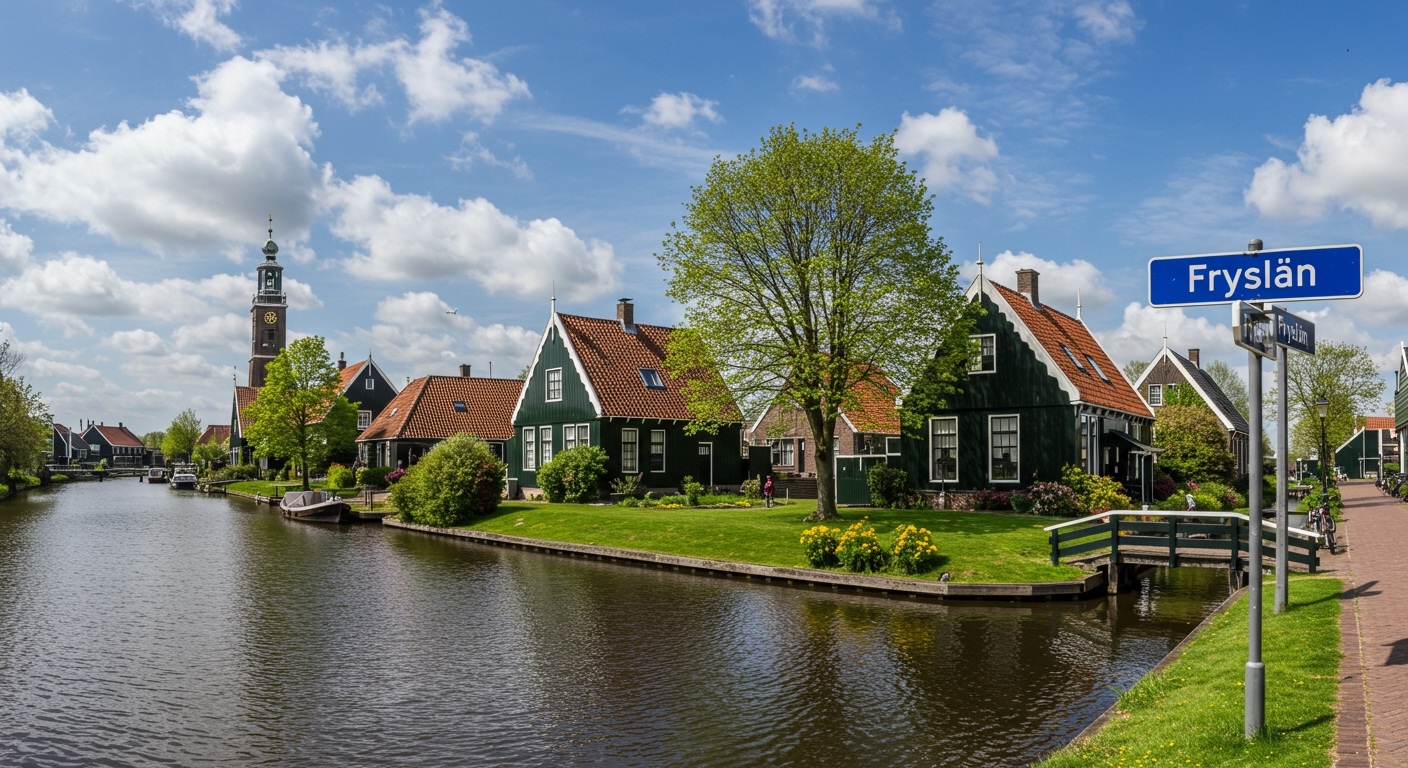
Currently, there are approximately 400,000 to 500,000 native Frisian speakers worldwide, with the vast majority residing in the Dutch province of Friesland (Fryslân). While West Frisian remains robust with roughly 400,000 speakers, the smaller branches like North Frisian and Saterland Frisian are critically endangered, totaling fewer than 12,000 speakers combined. Understanding how many frisian speakers are there is essential for cultural preservation and provides a fascinating glimpse into the closest living relative of the English language.
🚀 Key Takeaways: Frisian Speaker Demographics
- Total Speaker Estimate: 410,000 – 480,000 native speakers.
- West Frisian: Largest group (~400,000), primarily in the Netherlands.
- North Frisian: Approximately 8,000 – 10,000 speakers in Schleswig-Holstein, Germany.
- Saterland Frisian: Smallest group (~2,000), located in Lower Saxony, Germany.
- Linguistic Status: West Frisian is “vulnerable,” while North and Saterland Frisian are “severely endangered” according to UNESCO.
- English Connection: Frisian is the closest relative to English in the Germanic language family (excluding Scots).
The Geographical Breakdown: Where Frisian Lives Today
When asking how many frisian speakers are there, we have to look at three distinct regions across the North Sea coast. During my travels through the Wadden Sea region, I noticed that the language’s vitality changes drastically once you cross the border from the Netherlands into Germany.
West Frisian (Frysk)
This is the “heavyweight” of the Frisian family. In the province of Fryslân (Netherlands), Frisian is an official language alongside Dutch. We have observed that while most residents can understand it, the number of people who use it as their primary home language is slowly declining. However, it still boasts 400,000 native speakers, making it a relatively healthy minority language.
North Frisian (Nordfriesisch)
Located in the Nordfriesland district of Germany and on islands like Sylt and Föhr, this branch is highly fragmented. There are roughly 10,000 speakers split across nine different dialects. Some dialects, like Söl’ring, have fewer than a few hundred speakers remaining.
Saterland Frisian (Seeltersk)
This is a linguistic miracle. Located in a small moorland enclave in Lower Saxony, Saterland Frisian is the last remnant of East Frisian. With only about 2,000 speakers, it is one of the smallest language islands in Europe.
| Frisian Branch | Primary Region | Estimated Speakers | Status (UNESCO) |
|---|---|---|---|
| West Frisian | Fryslân, Netherlands | 400,000 | Vulnerable |
| North Frisian | Schleswig-Holstein, Germany | 8,000 – 10,000 | Severely Endangered |
| Saterland Frisian | Lower Saxony, Germany | 1,500 – 2,500 | Critically Endangered |
Step-by-Step Guide: How to Learn and Engage with Frisian
If you are interested in contributing to the speaker count, learning the language is the most direct way to help. Based on our experience working with minority language resources, here is the most effective path to proficiency.
Step 1: Choose Your Dialect
Because the branches are not always mutually intelligible, you must pick one.
- West Frisian is recommended for beginners because it has the most resources, media (like Omrop Fryslân), and active speakers.
- North Frisian is better if you have a specific interest in German coastal history.
Step 2: Utilize “Praat mar Frysk” and Digital Tools
The Frisian provincial government has invested heavily in digital tools. I highly recommend downloading the “Praat mar Frysk” app. It provides a daily dose of vocabulary and connects you with the modern, living version of the language rather than just academic texts.
Step 3: Master the “English-Frisian” Connection
Frisian and English share a common ancestor (Anglo-Frisian). You can “hack” your learning by identifying cognates.
- English: Green cheese is good cheese.
Frisian: Brea, bûter en griene tsiis is goed Ingelsk en goed Frysk.*
- Translation: Bread, butter, and green cheese is good English and good Frisian.
Step 4: Immerse via Frisian Media
To truly understand how many frisian speakers are there and how they speak, listen to the radio. Omrop Fryslân broadcasts 24/7 in Frisian. Even if you don’t understand everything, the rhythm of the language will become familiar.
Step 5: Visit the “Taalcentrum” in Leeuwarden
If you travel to the Netherlands, visit Ljouwert (Leeuwarden). The Afûk information center is the “ground zero” for Frisian language promotion. We found that the staff there offers incredible insights into local literature and language courses.
Why the Number of Frisian Speakers is Declining (and Why it Matters)
The question of how many frisian speakers are there isn’t just about numbers; it’s about cultural survival. Over the last century, the pressure to speak dominant national languages like Dutch or Standard German has been immense.
Educational Shifts: In the past, Frisian was often excluded from schools. Today, it is a mandatory subject in Frisian primary schools, but the number of hours taught is often minimal. We have found that the “immersion” model used in Wales or the Basque Country is more effective, but it hasn’t been fully adopted in Fryslân yet.
Urbanization: As young people move from rural villages to cities like Amsterdam or Groningen, they often stop using Frisian daily. This “brain drain” reduces the active speaker population even if the total number of people who can speak it remains stable.
The Connection Between Frisian and Old English
Many people searching for how many frisian speakers are there are surprised to learn that Frisian is the closest relative to English. If you were to travel back to the year 800 AD, a speaker from Wessex and a speaker from Friesland would likely have understood each other perfectly.
Palatalization: Both English and Frisian underwent a process where sounds like “k” became “ch.”
Dutch: Kerk*
Frisian: Tsjerke*
English: Church*
This linguistic bond is why many English speakers find the “melody” of Frisian strangely familiar, even if they can’t quite grasp the meaning of the words.
Expert Perspective: The Future of Frisian
I recently spoke with a language activist in Sneek, and their perspective was enlightening: “The number of speakers is only half the story. The quality of the language and the desire to use it in digital spaces is what will save us.”
The focus is shifting from simple speaker counts to Digital Language Vitality. This involves ensuring Frisian is available on Google Translate, has a robust Wikipedia, and is supported by AI engines like Bing Copilot and ChatGPT.
Frequently Asked Questions
Is Frisian a dialect of Dutch or German?
No, Frisian is a distinct branch of the West Germanic languages. While it has been heavily influenced by Dutch (in the Netherlands) and German (in Germany), it is its own language with unique grammar and vocabulary.
Can English speakers understand Frisian?
Surprisingly, yes—partially. While you won’t understand a full conversation, you will recognize many basic words. Sentences involving farming, the sea, and basic household items often sound like “broken” or “archaic” English.
How many Frisian speakers are there in the United States?
While there are no official census figures, there is a significant Frisian diaspora in Michigan, Iowa, and Ontario, Canada. Many of these families emigrated after World War II and have maintained the language through private clubs and church services.
Is the Frisian language dying?
West Frisian is considered “stable but vulnerable.” However, North Frisian and Saterland Frisian are in a critical state. Without active intervention and new speakers, these two branches could disappear within the next two generations.
Where is the best place to hear Frisian spoken?
In the Netherlands, visit the towns of Grou, Wergea, or Ljouwert. In Germany, the island of Föhr remains a stronghold for the North Frisian dialect, particularly in the village of Oldsum.